Project Info
Project Name: Thom Yorke Rome Apartment
Lead Architect: Serena Mignatti
Location: Rome, Italy

Dark plaster and terracotta arch frame wabi-sabi thresholds
The heart of Rome holds a profound capacity to weave different epochs into a single tapestry. Architect Serena Mignatti recently embraced this temporal convergence while renovating a historic duplex for Radiohead frontman Thom Yorke and actress Dajana Roncione. The residence sits gracefully within a classic nineteenth century building nestled in the bustling city center. It carries a heavy cultural legacy because it once served as the creative refuge for the celebrated Italian novelist Italo Calvino. Mignatti approached this layered history with immense reverence. She sought to cultivate a space that honors its literary ghosts while providing a serene harbor for modern artistic minds.

Sculpted lime bath emerges from continuous terracotta plaster
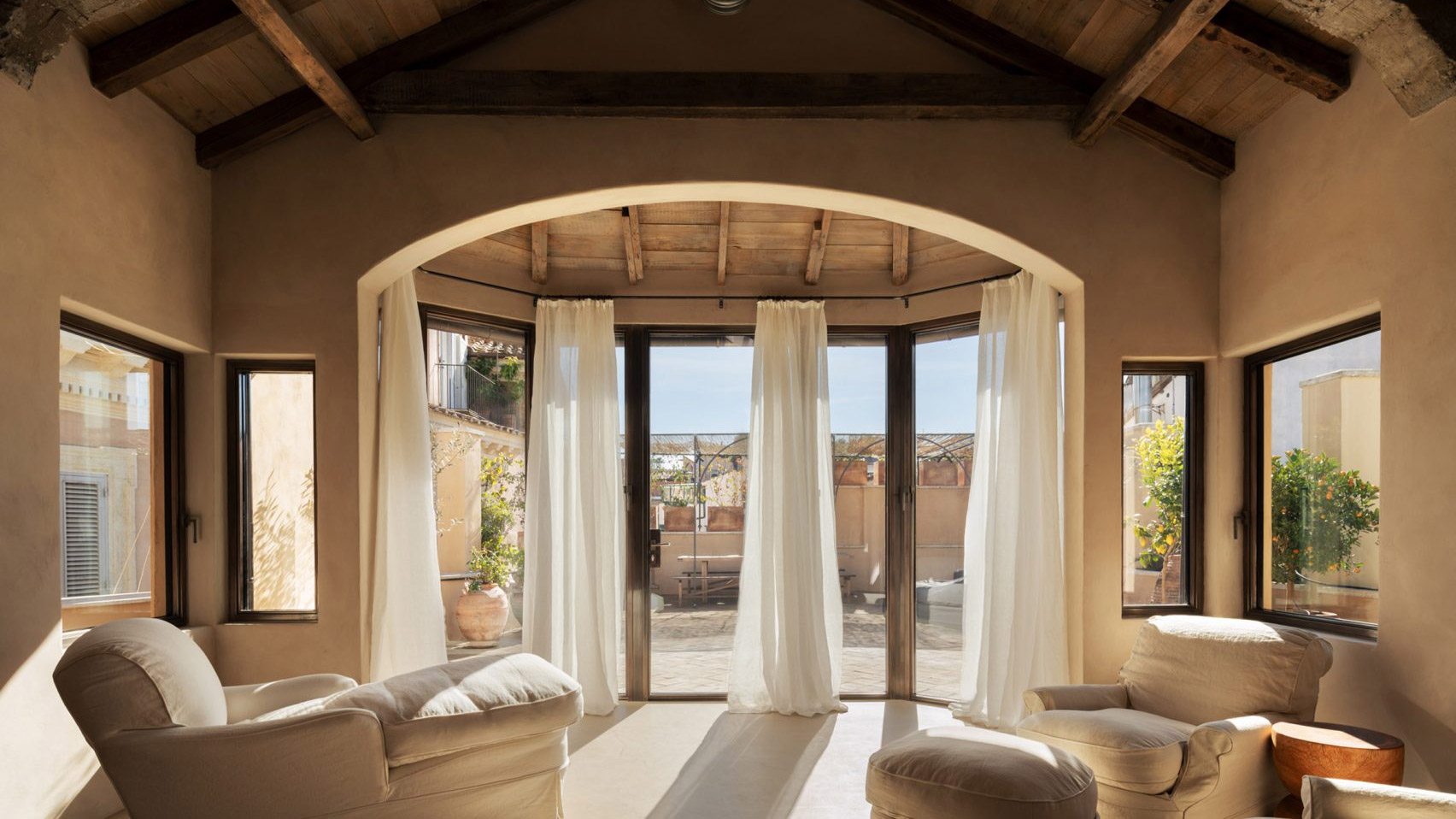
The guiding light for the renovation was the Japanese philosophy of wabi sabi. This ancient aesthetic worldview finds profound beauty in imperfection and the inevitable cycle of decay. Mignatti translated this concept into a physical reality by entirely rejecting glossy finishes and artificial perfection. She opted instead for a deeply tactile and earthly material palette. The walls are swathed in warm lime based paints that reflect the golden Roman sunlight with a soft and diffused glow. These breathable surfaces create a tranquil backdrop that allows the inherent character of the architecture to speak clearly.

Skylight floods ancient beams with Roman afternoon light
Original details were meticulously preserved and celebrated rather than concealed. Weathered wooden ceiling beams stretch across the rooms to provide a rustic counterpoint to the refined furnishings. The existing parquet floors bear the subtle marks of previous generations. They whisper stories of the past with every step. Mignatti collaborated closely with local artisans and skilled joiners to craft bespoke interventions that blend seamlessly with these historical elements. The goal was to establish a quiet equilibrium between the aged beauty of antiquity and the crisp clarity of the present moment.

Bookshelves line a passage between library and kitchen
Furniture selection played a crucial role in cementing the wabi sabi atmosphere of the home. Mignatti incorporated deeply textured upholstery and sculptural antique pieces sourced directly from the renowned Belgian gallerist Axel Vervoordt. Vervoordt is globally celebrated for his mastery of the wabi sabi interior style. His curated objects anchor the apartment with a sense of grounded permanence. They transform the living areas into contemplative sanctuaries designed for introspection and quiet conversation.

Worn timber doors preserve the patina of history
The spatial layout flows intuitively across the two floors to accommodate spaces for reading and cinematic viewing alongside areas for musical creation. The transition between the private quarters and the social zones is fluid and unobtrusive. Mignatti designed the floor plan to encourage a seamless journey from quiet reading corners to open areas meant for hosting intimate gatherings.

Rounded oak staircase bridges two floors with quiet elegance
Large windows invite abundant natural daylight to wash over the uneven textures of the masonry and wood. This dynamic interplay of light and shadow changes constantly throughout the day to remind the inhabitants of the fleeting nature of time. Every room is thoughtfully curated to provide Yorke and Roncione with a sanctuary for artistic discovery.

Leaded glass casts fractured light onto raw plaster
Serena Mignatti has ultimately crafted far more than a simple residential renovation. She has designed an intimate vessel that actively cares for the soul of its occupants. The apartment stands as a poetic testament to the idea that true luxury lies in authenticity and a deep connection to the passage of time. It is a harmonious retreat where the echoes of Italian literature finally meet the resonant chords of contemporary music.

A turntable and armchair define a musician's contemplative corner
PHOTO CREDIT: Danilo Scarpati
Save this story. A free account keeps your reading list and the 07:00 email in one place.
CREATE FREE ACCOUNT →SIGN IN