As Vietnam’s maritime tourism sector expands, the design of cruise interiors has emerged as a distinctive discipline shaped by mobility, climate, and guest experience. Within this evolving landscape, Landco Corporation’s work on Grand Pioneers I, Grand Pioneers II, and Saquila Yacht offers a window into how Vietnamese designers are negotiating the technical and sensory dimensions of life at sea.
Designing for Movement: Interiors in a Maritime Environment
Unlike land-based hospitality settings, cruise interiors confront an entirely different set of parameters. Humidity, salt exposure, shifting loads, and constant vibration require designers to combine aesthetic aspirations with a rigorous technical approach. Materials must withstand corrosion; joints and fixings must accommodate motion; lighting strategies must be adaptable and energy-efficient. Beyond durability, these interiors must also provide guests with a sense of calm and orientation - an atmosphere that counters the inherent restlessness of the sea.
In this context, cruise interior design becomes a negotiation between engineering and ambience, a balance between robustness and refinement. LandCo’s work demonstrates how these constraints can shape an architectural language suited to maritime hospitality.

Grand Pioneers Cruise I: Environmental Sensitivity in Halong Bay
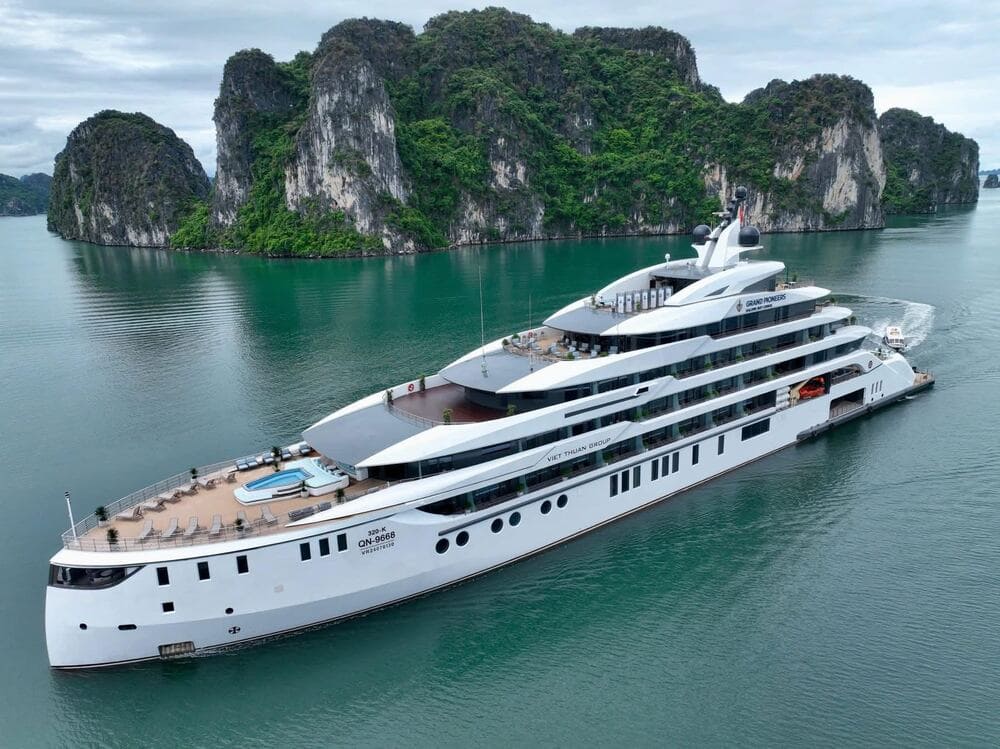
Launched in late 2023, Grand Pioneers Cruise I operates in Ha Long Bay, a UNESCO-recognized landscape where tourism increasingly intersects with ecological responsibility. The vessel’s interior palette reflects an interest in softer, nature-driven cues - quiet tones, filtered daylight, and materials chosen for resilience in a marine climate. The intention is not to replicate a terrestrial resort environment but to craft spaces that acknowledge their proximity to protected waters.
The result is an interior typology that foregrounds calmness and balance, reinforcing the operator’s emphasis on low-impact tourism.

Grand Pioneers Cruise II: Constructing Luxury Through Precision
On Grand Pioneers Cruise II, the interior narrative is anchored in precision. Technical performance informs the project at every scale: reinforced joinery, moisture-resistant substrates, anti-corrosive coatings. Yet these measures recede into the background, enabling a more intuitive architectural logic.
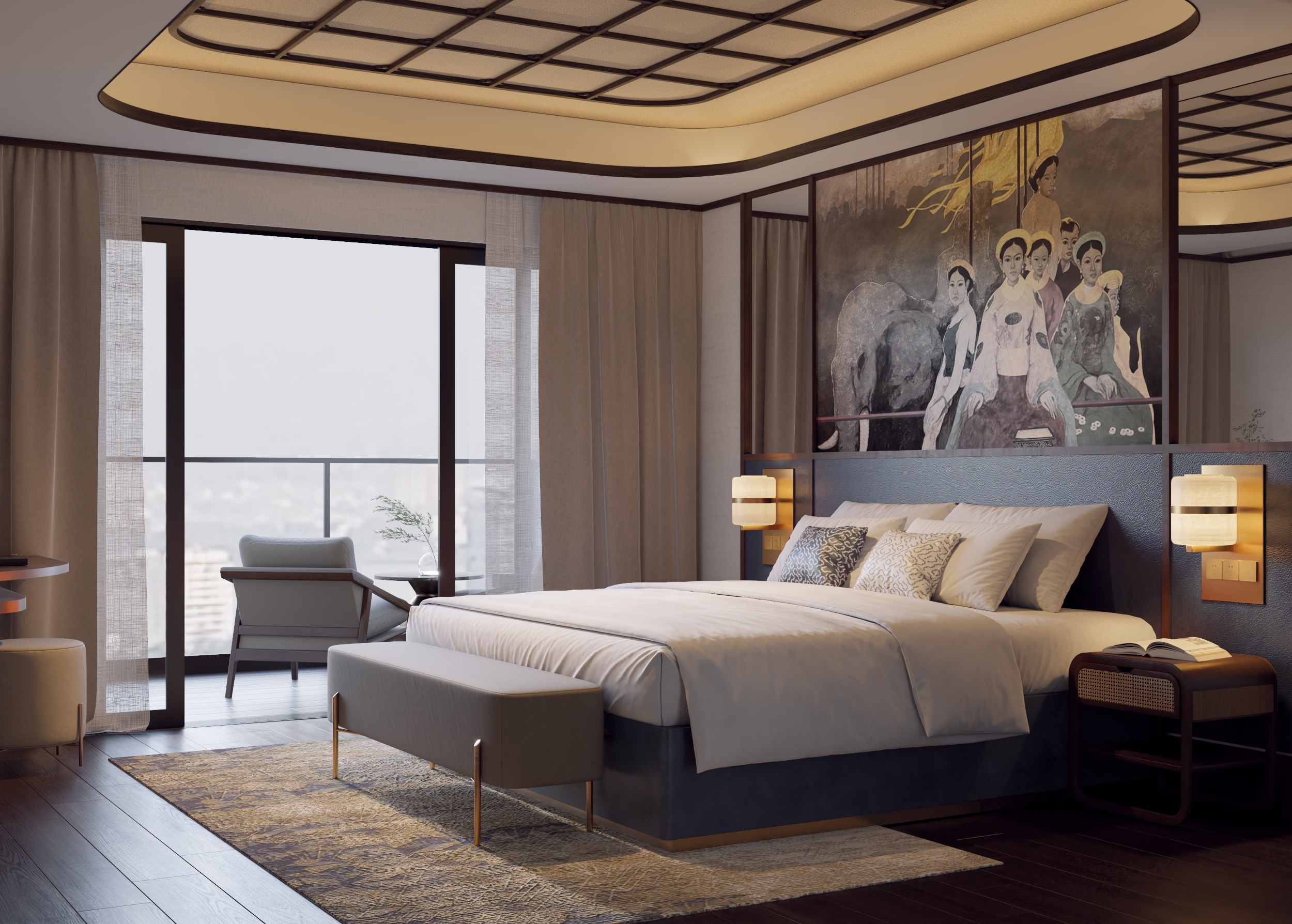
Public lounges are arranged around light shafts and framed perspectives, producing a subtle rhythm of compression and release. Cabins adopt a quieter, more intimate posture - warm surfaces, softened corners, and lighting calibrated to counteract the sea’s constant motion. Here, luxury is understood not as embellishment but as spatial clarity and sensory ease.

Saquila Yacht: A Dialogue Between Interior Architecture and Open Water
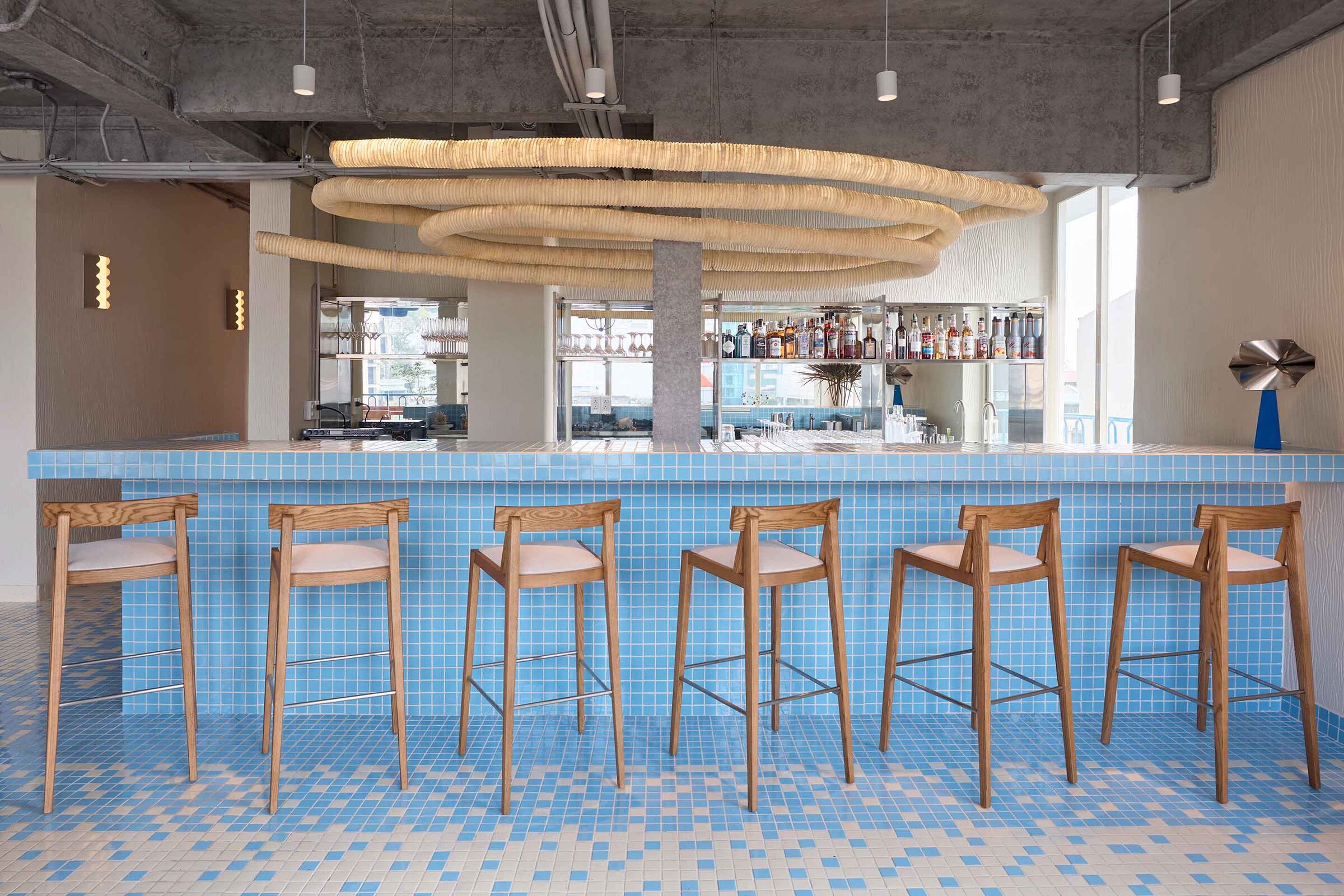
Saquila Yacht represents a more intimate engagement with the maritime environment. Here, the interior approach leans toward continuity: neutral textiles, muted metallic accents, and warm woods create a palette that responds subtly to changing daylight and reflections from the sea.
The spatial composition avoids excess in favor of fluidity - soft curves, subdued ornament, and a measured distribution of light. Technical detailing plays a critical role: stabilized cabinetry, corrosion-resistant metalwork, and vibration-conscious construction ensure longevity without compromising the yacht’s visual coherence. The result is an interior where the sensation of proximity to the water is ever-present but never overwhelming.

A Developing Vocabulary for Vietnamese Cruise Interiors
The emergence of Vietnam’s cruise and yacht sector has brought visibility to a design typology still in formation. Landco Corporation’s projects illustrate how local firms are adapting global maritime standards to regional contexts, balancing engineering, climate resilience, and cultural sensibility.
These vessels suggest a broader shift within Vietnamese interior design, where durability and sustainability are increasingly framed as aesthetic opportunities rather than restrictions. As the industry grows, the dialogue between craft, technology, and the maritime environment will continue to shape how interior spaces at sea are imagined and built.
PHOTO CREDIT: Landco Corporation
Save this story. A free account keeps your reading list and the 07:00 email in one place.
CREATE FREE ACCOUNT →SIGN IN