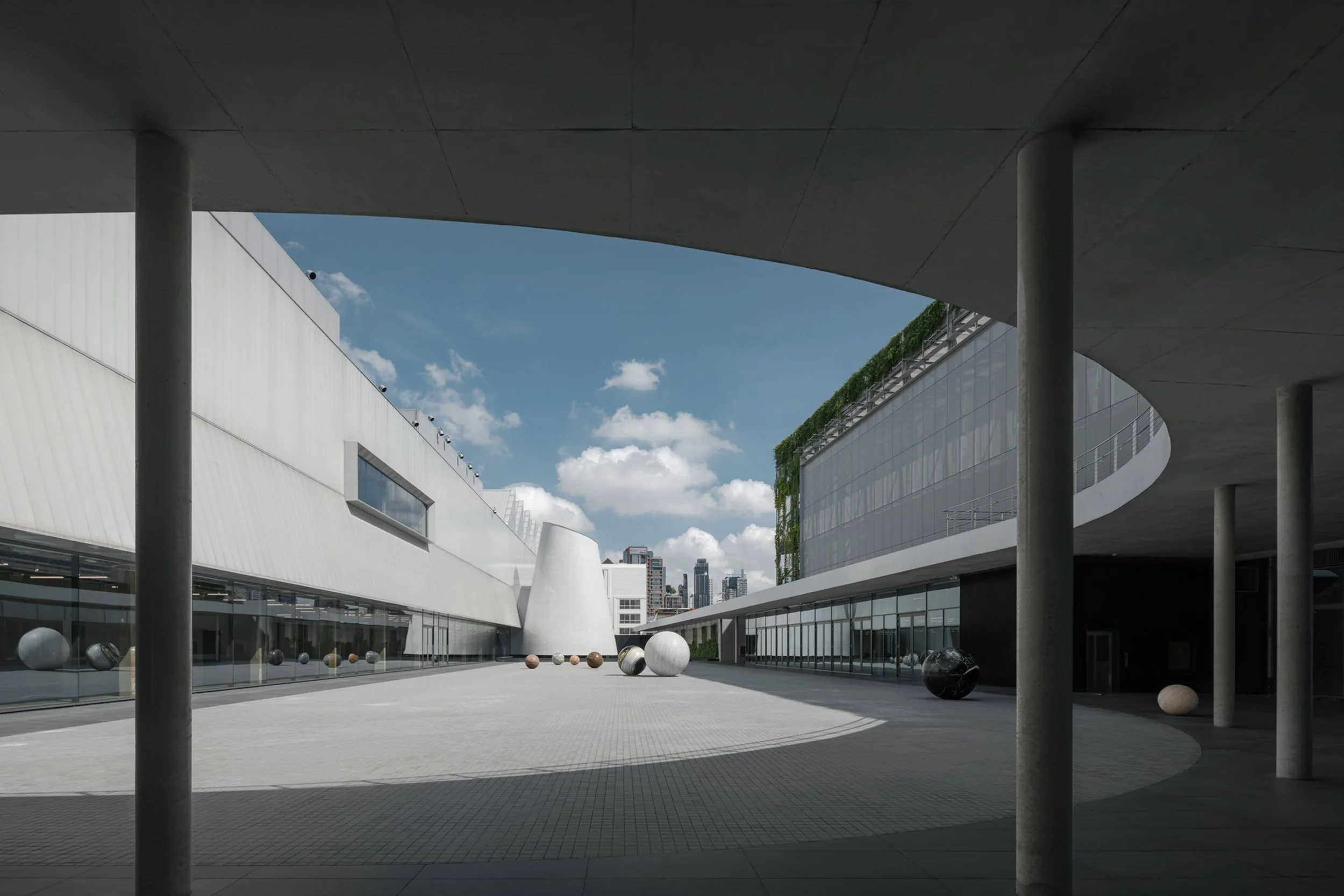
Bangkok is soon to unveil a cultural landmark that reimagines both its industrial past and its artistic future. Dib Bangkok - poised to open on 21 December 2025 - is Thailand’s first major international contemporary art museum, occupying an adaptive-reuse warehouse in the heart of the city’s bustling Khlong Toei district.
Project Info
Project Name: Dib Bangkok
Location: Bangkok, Thailand
Architects/Designers: Kulapat Yantrasast
From Warehouse to World-class Museum
What was once an unremarkable concrete structure from the 1980s has now been transformed into a serene yet powerful architectural space by Thai architect Kulapat Yantrasast of WHY Architecture. Rather than erase the building’s history, the design celebrates it, preserving original elements like Thai - Chinese window grilles and raw structural features to keep the character of the site palpable. The museum’s name, Dib, aptly translates to “raw,” “authentic,” or even “unfinished,” capturing this ethos of honesty and ongoing evolution.
The adaptive-reuse project spans around 7,000 sqm across three floors, arranged to guide visitors on a subtle spatial journey. On the ground level, exposed concrete and industrial bones provide a rooted, immersive experience. Ascending through the second floor, the atmosphere becomes more intimate, before reaching luminous white-cube galleries on the top floor, softened by natural light and framed by sawtooth skylights.

The gallery façade features rhythmic sawtooth roof forms, filtering daylight into the interior while giving Dib Bangkok a quiet yet distinctive architectural silhouette

Raw materials and precise proportions define Dib Bangkok’s architectural language
A Quiet Heart Amid Urban Energy
At the museum’s core lies a generous central courtyard - a calm oasis designed for reflection and gathering. Inspired by traditional Zen gardens, it and other architectural features, such as a long reflecting pool and sculpture garden, anchor the building’s minimalist aesthetic while offering spaces for contemplation and dialogue. Unique spaces like the conical tiled gallery, called The Chapel, reference traditional Thai pagoda forms while creating a distinct place for immersive works.
The museum’s monochrome palette of whites, grays, and industrial tones provides a neutral backdrop that allows art to breathe, yet the design is far from sterile - visionary details and fluid transitions between spaces encourage visitors to explore, engage, and reflect.

The courtyard acts as a quiet pause within the museum’s spatial journey, highlighted by Alicja Kwade’s “Pars pro Toto” sculpture

Exposed concrete and preserved structural elements celebrate the building’s industrial past

“Incubate” sculpture by Subodh Gupta on display inside The Chapel

Paloma Varga Weisz’s “Bumpman on a tree trunk”
Global Ambition, Local Roots
Dib Bangkok doesn’t just redefine a building, it reflects a broader cultural ambition. Founded by Purat “Chang” Osathanugrah in honor of his late father, Petch Osathanugrah, the museum’s collection of over 1,000 works by more than 200 artists bridges Thai and international contemporary art. Its opening exhibition, (In)visible Presence, curated by Dr. Miwako Tezuka, underscores this mission by presenting a compelling mix of local and global voices.
For Yantrasast, Dib Bangkok is deeply personal: it marks his first major cultural commission in Thailand after a career designing celebrated institutions worldwide. With its raw elegance and thoughtful spatial choreography, the museum is set to become a new cultural nucleus, not only for Bangkok, but for Southeast Asia’s vibrant art landscape.
PHOTO CREDIT: Ketsiree Wongwan, Dib Bangkok
Save this story. A free account keeps your reading list and the 07:00 email in one place.
CREATE FREE ACCOUNT →SIGN IN