The Verticality of Geology and Steel
Beauty in the built and natural environment often hinges on the same principle: verticality. Whether we're examining the soaring massing of Manhattan's glass towers or the ancient granite peaks that define the Rocky Mountain range, height commands attention and shapes experience. At World Archi Design, we've been tracking how designers and travelers alike respond to these dramatic elevations, and the pattern is clear. Spaces that force our gaze upward, that dwarf human scale, tend to lodge themselves in memory.
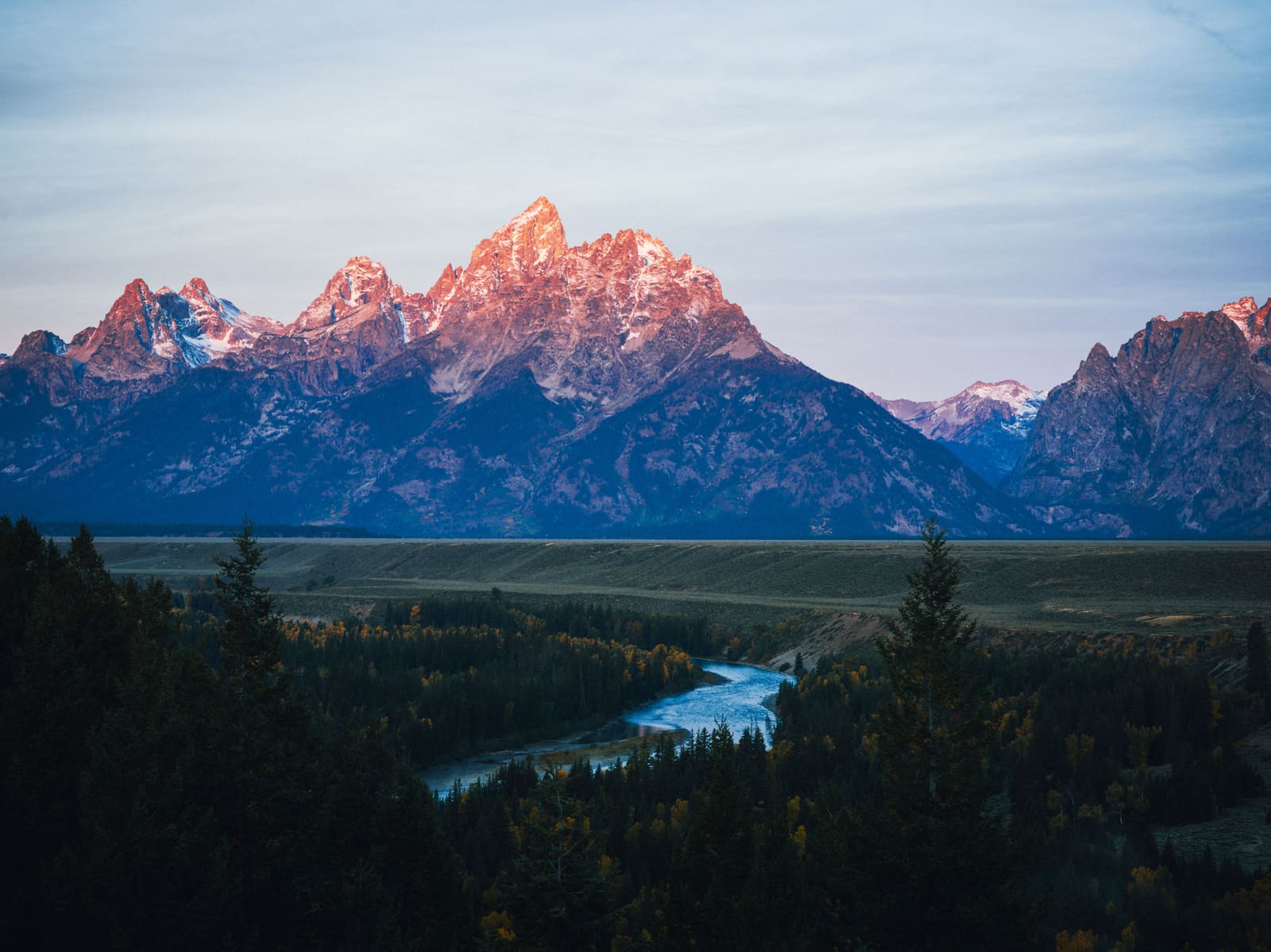
The Teton range in Wyoming offers one of the purest expressions of this phenomenon. Twelve peaks rise above 12,000 feet, their forms shaped by glacial action over millennia. The rock itself dates back 2.7 billion years, and the landscape surrounding Jenny Lake showcases multiple waterfalls that cascade down sheer faces. This is massing at its most primal, tectonic forces made visible. Nearby Jackson offers a counterpoint: wooden boardwalks, historic galleries, and saloon architecture that speaks to vernacular building traditions of the American West.
Colorado's premier alpine preserve presents a similar study in elevation. Over 350 miles of trails wind through terrain marked by 40-foot waterfalls, granite outcroppings, and meadows that shift character seasonally. Golden aspen foliage transforms the palette in autumn; winter brings frozen lakes and conditions ideal for cross-country movement through snow-covered forest. The landscape functions as a year-round spatial experience, its beauty tied to constant transformation.
Collision Zones and Inaccessible Beauty
Some of the most compelling landscapes occupy liminal spaces where geological systems meet. Big Sur, a 90-mile coastal stretch along California's central edge, is frequently described as a collision between the Santa Lucia Mountains and the Pacific. The term is apt. Dramatic cliffs rise directly from churning water, creating a compressed vertical transition that Highway 1 navigates through constant curves. The road itself is vulnerable, frequently closed due to landslides and coastal erosion. This inaccessibility enhances the site's appeal, a reminder that not all beauty can be easily consumed.
Hawaii's Nāpali Coast presents an even more extreme case of designed inaccessibility, though here the design is entirely geological. On Kauai's northwest shore, emerald cliffs meet turquoise water in a system that receives over 400 inches of annual rainfall. The result is extraordinary lushness, valleys thick with vegetation, waterfalls that run continuously. No roads penetrate the area. White-sand beaches remain reachable only by boat, a natural form of preservation that keeps the coastline unspoiled.
The architect Mickey Muennig understood this collision dynamic when he designed Post Ranch Inn above Big Sur. Perched 1,200 feet above the Pacific, the hotel embraces the contours of surrounding mountains rather than fighting them. This is organic architecture in the truest sense, building forms that acknowledge and amplify the site's inherent drama rather than competing with it.
Water as Sculptor
The Grand Canyon remains the country's most iconic example of water as architectural force. The Colorado River carved this 277-mile-long, one-mile-deep gorge over millions of years, creating a landscape so visually arresting that painters from Thomas Moran to David Hockney have attempted to capture its likeness. Theodore Roosevelt called it the great wonder every American should see. Charles Frederick Whittlesey, trained under Louis Sullivan, designed the El Tovar Hotel in 1905 to sit directly on the South Rim, a hybrid of Swiss chalet and Norwegian villa that frames views of the canyon.
Zion in Utah offers a more intimate version of water's sculptural capacity. The Virgin River carved slot canyons through sandstone over geological time, creating the Narrows, a gorge where 1,000-foot walls rise on either side and hikers wade through water that can reach waist height. Hanging gardens of moss and fern cling to vertical surfaces, a microclimate created by constant moisture. The sculptural arches throughout the park demonstrate how erosion creates form.
New River Gorge in West Virginia, the country's newest national park as of late 2020, centers on one of the continent's oldest waterways. The area is known for exceptional whitewater rafting and rock climbing, yet it remains relatively uncrowded compared to more established parks. This combination of quality terrain and low visitor density creates a different kind of spatial experience, one where solitude enhances the landscape's impact.
Urban Density and Engineered Views
New York City earned recognition in a recent study as the top location in America for sunset viewing, surpassing Maui, San Diego, and Miami. The finding surprises only if you consider natural landscapes inherently superior to urban ones. In reality, the city's architectural massing creates a unique optical environment. Glass towers, particularly in developments like The Dominick's 46-story structure in SoHo, frame western light through floor-to-ceiling windows. The Hudson River reflects color. The density of vertical elements creates multiple viewing planes.
Twenty-seven percent of the city's acreage is dedicated to parks and open space, a statistic that reshapes how we understand urban design. This isn't beauty despite density but because of it. The contrast between built and natural, between engineered skyline and managed green space, creates visual tension that purely natural or purely urban environments cannot achieve.
Regional Vernacular and Seasonal Transformation
The Green Mountains of Vermont, a subrange of the Appalachians running 250 miles from Massachusetts to Quebec, demonstrate how seasonal change functions as a design element. The fall foliage display, a kaleidoscope of red, yellow, and orange, attracts visitors precisely because it represents temporary transformation. The same slopes that serve hikers in summer become ski terrain in winter at resorts like Stowe and Killington. The landscape's beauty is inseparable from its cyclical nature.
Door County in Wisconsin offers a different kind of regional character. The peninsula's 300 miles of shoreline along Lake Michigan and Green Bay, combined with five state parks, create an environment where water defines spatial experience. The culinary culture here, centered on cherry pies and cheese curds, reflects agricultural traditions tied to the land. The Hillside Waterfront Hotel in Ephraim, a reimagined 19th-century property with rooms named after flowers, exemplifies how vernacular hospitality architecture can frame natural beauty without overwhelming it.
Island Chains and Distributed Beauty
The Florida Keys stretch 202 miles and comprise over 1,700 islands, 800 of them named. This distributed geography creates varied spatial experiences within a single system. Key West's pastel-colored houses and literary history (the Hemingway Home functions as both museum and architectural artifact) offer one character. Key Largo's John Pennekamp Coral Reef State Park shifts focus underwater, making diving the primary spatial activity. Islamorada centers on sportfishing, a different relationship to marine environment.
This archipelagic model contrasts sharply with the concentrated verticality of mountain ranges or the linear drama of coastal collision zones. Beauty here is about repetition with variation, island after island presenting slightly different configurations of sand, water, and vegetation. The Ridley House, dating to 1884 with its boho decor and daily Cypress Sangria Soiree by the pool, represents adaptive reuse that maintains historical character while accommodating contemporary hospitality needs.
Precedent and Innovation
When we examine these eleven landscapes collectively, patterns emerge. Vertical drama commands attention whether geological or engineered. Water functions as both sculptor and frame. Inaccessibility, whether by design or by geological circumstance, enhances perceived value. Seasonal transformation adds temporal dimension to spatial experience. Regional vernacular, in both architecture and landscape, creates distinct character.
The Stanley Hotel in Colorado, built in 1909 to bring East Coast luxury to the Rockies and later inspiring Stephen King's The Shining, demonstrates how hospitality architecture can amplify a landscape's narrative power. The 1 Hotel Hanalei Bay in Hawaii, with its sustainability focus and electric Audi fleet, shows how contemporary design can engage environmental beauty through operational ethos as much as through form. Black Desert Resort in Utah, surrounded by ancient lava fields and anchored by a Tom Weiskopf golf course, illustrates how recreational programming can create new relationships to seemingly inhospitable terrain.
Hill Hall Hotel in Fayetteville, West Virginia, occupies a restored 1923 school campus with 40 light-filled rooms and a restaurant serving blackberry cobbler. This adaptive reuse project at the gateway to New River Gorge shows how small-scale interventions can support access to natural landscapes without overwhelming them. The scale feels appropriate, the architectural language modest.
Why Topography Still Matters
In an era of digital imagery and virtual experience, physical topography continues to exert powerful influence on how we understand beauty. These eleven sites, from Nāpali's boat-accessed beaches to Manhattan's engineered sunset views, remind us that spatial experience cannot be fully replicated. The compressed vertical transition of Big Sur's cliffs meeting ocean, the slot canyon immersion of Zion's Narrows, the distributed island logic of the Keys - each creates sensory conditions that demand physical presence.
For designers, these landscapes offer lessons in scale, material, and context. The glacial carving of the Tetons demonstrates patient subtraction. The layered urban fabric of New York shows additive complexity. The Green Mountains' seasonal palette illustrates how time-based transformation can be as compelling as static form. Studying how natural systems create beauty through geological process, and how built interventions either enhance or diminish that beauty, remains essential work for anyone concerned with shaping space.
Photo: Gary Yeowell / Getty Images
Save this story. A free account keeps your reading list and the 07:00 email in one place.
CREATE FREE ACCOUNT →SIGN IN