The Posture Paradox
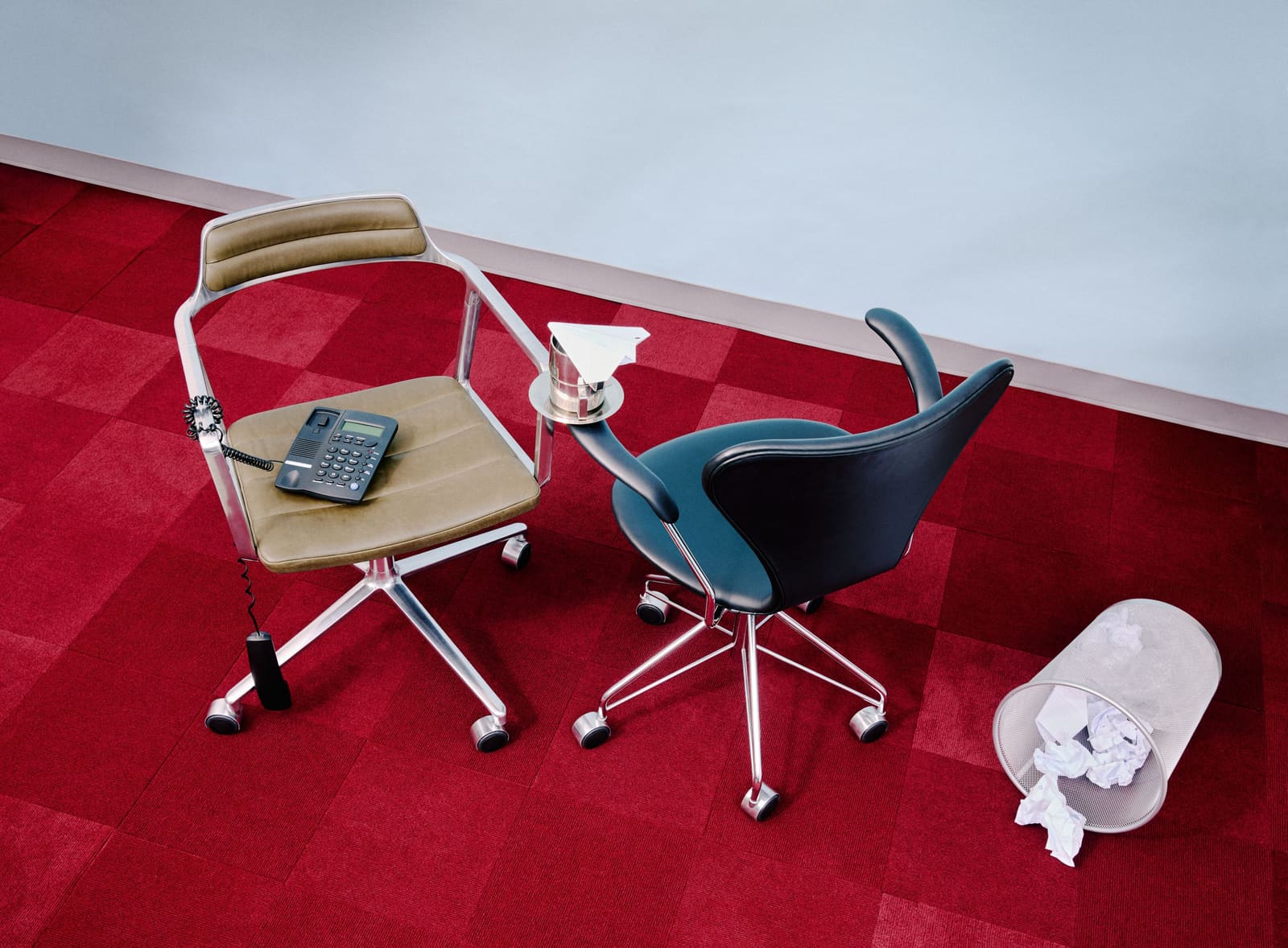
For decades, the office chair occupied a peculiar position in interior space planning: essential, expensive, yet somehow invisible. Architects and designers lavished attention on desks, lighting, and storage systems while accepting that seating would either resemble medical equipment or corporate castoffs. The assumption held that ergonomic function and refined aesthetics existed in separate realms, that one necessarily sacrificed beauty for back support.
That compromise is dissolving. Across the projects we've covered this year at World Archi Design, we've tracked a meaningful convergence in workplace furniture. The most compelling recent releases marry structural biomechanics with formal restraint, acknowledging that the chair you occupy for eight hours daily shapes both your spine alignment and your spatial experience. The question is no longer whether a chair can be comfortable and beautiful, but rather which design approaches best achieve both.
Material Intelligence and Ventilation Strategy
Contemporary office seating increasingly deploys engineered textiles that balance breathability with structural integrity. Three-dimensional knit fabrics and elastomeric suspension systems have replaced foam-and-vinyl constructions that trap heat and collapse under sustained use. These materials respond dynamically to body weight and movement, distributing pressure across a broader surface area while allowing air circulation.
The Branch Verve exemplifies this material shift. Its 3D knit back panel stretches across an aluminum frame in a single continuous plane, eliminating the hard edges and pressure points common in traditional upholstered designs. The chair supports up to 275 pounds while maintaining visual lightness, a balance achieved through careful attention to frame geometry and textile engineering. The S-curved armrests, formed from slender aluminum tubes, reduce the chair's visual mass without compromising structural performance.
Similarly, Herman Miller's pellicle suspension system, refined over multiple decades, uses a layered elastomeric mesh that flexes independently across eight zones. This approach distributes weight more evenly than foam cushioning, which compresses unevenly and retains heat. The result is a seat that remains supportive through extended use without the gradual sagging that plagues conventional padding.
Adjustability as Architectural Principle
The most significant ergonomic advances involve not singular innovations but rather systems of incremental adjustment. Modern task chairs incorporate multiple pivot points and sliding mechanisms that allow users to calibrate seat depth, lumbar height, armrest position, and recline tension. This granular control acknowledges that bodies vary substantially in proportion and that static dimensions cannot accommodate diverse physiology.
The Branch Ergonomic Chair Pro offers fourteen independent adjustment points, from headrest angle to forward tilt. This level of customization approaches the complexity of automotive seating systems, where multiple actuators fine-tune position across numerous axes. The chair's lumbar mechanism adjusts both vertically and in depth, allowing users to position support precisely where the spine curves most acutely. Seat depth adjustment accommodates leg length variation, preventing either compressed thighs or unsupported lower legs.
The Haworth Breck, priced below $500, incorporates similar adjustability within a more conventional formal vocabulary. Its tilt mechanism offers infinite locking positions rather than fixed increments, enabling users to find their preferred recline angle with precision. The armrests slide forward and backward in addition to adjusting vertically, a feature particularly valuable for those working with raised laptop stands or dual monitor configurations.
This emphasis on adjustability reflects a broader design philosophy: that furniture should adapt to the user rather than forcing the user to adapt to predetermined dimensions. It represents a shift from universal sizing toward individualized calibration, acknowledging that ergonomic comfort depends on granular fit.
Formal Language and Spatial Context
Office chair aesthetics have historically oscillated between two poles: austere minimalism or overwrought executive styling. The former prioritizes visual discretion at the expense of comfort features; the latter piles on leather upholstery and chrome accents in pursuit of status signaling. Both approaches fail to integrate the chair meaningfully into residential or contemporary office interiors.
Recent designs navigate a middle path. The Herman Miller Aeron, now in its third decade of production, established a visual vocabulary that reads as neither clinical nor corporate. Its exposed frame and mesh suspension create a technical aesthetic that complements both modernist and industrial spaces. The chair's proportions remain balanced across multiple size options, maintaining consistent visual character whether scaled for a 100-pound or 350-pound user.
The Asari, also from Herman Miller, explores a different formal direction. Its upholstered shell and concealed mechanisms create a softer silhouette that integrates more naturally into residential settings. The chair's leather upholstery and sculpted foam construction recall mid-century lounge seating while incorporating contemporary lumbar support systems. This hybrid approach suggests that task seating need not announce its ergonomic function through visible mechanical components.
Color selection has expanded beyond the traditional black, gray, and beige palette. The Branch Verve ships in six finishes, including coral, mint, and cobalt options that allow the chair to function as an accent element rather than neutral background. This chromatic range acknowledges that workspace furniture increasingly occupies living areas and should coordinate with broader residential palettes.
The Economics of Long-Term Use
Price stratification in office seating remains stark. Entry-level mesh chairs retail below $200, while Herman Miller's flagship models approach $2,500. This range reflects not only brand positioning but also fundamental differences in materials, engineering, and durability.
Higher-tier chairs typically carry extended warranties, ten to twelve years in many cases, that guarantee frame integrity and mechanism function. These products are designed for continuous use in commercial environments where a single chair might serve multiple shifts across years of operation. The cost per year of use becomes more comparable when amortized across a chair's functional lifespan.
The Branch Ergonomic Chair Pro, priced at $499, occupies a strategic middle position. It incorporates many premium features such as dual-density foam, adjustable lumbar support, and a seven-year warranty while remaining accessible to individual buyers rather than institutional procurement budgets. This pricing reflects both the brand's direct-to-consumer distribution model and a calculated decision to compete on value rather than prestige.
The Haworth Breck follows a similar strategy, offering extensive adjustability and a twelve-year warranty at $435. Its traditional silhouette may lack the visual distinction of more sculptural designs, but its mechanical performance and durability match chairs costing twice as much. For users prioritizing function over form, or working within tighter budgets, such options provide genuine ergonomic benefit without aesthetic compromise.
Assembly, Maintenance, and Material Longevity
The shift toward flat-pack shipping and user assembly has transformed office chair logistics. Premium models once arrived fully constructed; contemporary designs increasingly ship in compact boxes requiring twenty to thirty minutes of assembly. This approach reduces freight costs and packaging waste while allowing manufacturers to reach consumers directly rather than through retail intermediaries.
The Branch Ergonomic Chair Pro exemplifies both the advantages and challenges of this model. The chair arrives in components that assemble with basic tools, allowing it to be disassembled for relocation or storage. This modularity benefits urban residents who move frequently or lack freight elevator access. However, the assembly process requires following multi-step instructions and manipulating unfamiliar hardware, a barrier for some users.
The Herman Miller Aeron, conversely, ships fully assembled and rolls directly from packaging to use. This convenience comes at a logistical cost: larger shipping containers, higher freight expenses, and greater difficulty navigating narrow hallways or staircases. The tradeoff reflects different market priorities, with the Aeron targeting institutional buyers and affluent consumers willing to pay for turnkey delivery.
Material maintenance requirements vary substantially across chair categories. Mesh and elastomeric suspensions require minimal care beyond occasional vacuuming, while leather upholstery demands periodic conditioning to prevent cracking. Mechanism lubrication, though rarely addressed in manufacturer guidance, extends the functional life of tilt and height-adjustment systems. The chairs most likely to remain serviceable across their warranty periods are those with replaceable components: casters, armrest pads, and gas cylinders that can be swapped without specialized tools.
Precedent and Innovation in Task Seating
Contemporary office chair design builds on a lineage extending back to the Eameses' aluminum group chairs of 1958 and Niels Diffrient's Liberty chair of 1999. These precedents established principles that remain relevant: the integration of seating and support mechanisms, the use of advanced materials to reduce weight, and the pursuit of formal elegance within functional constraints.
The Aeron, introduced in 1994, represented a watershed by eliminating foam and fabric entirely in favor of mesh suspension. This decision was initially controversial; early reviews questioned whether the chair could be comfortable without cushioning. Three decades later, mesh backs have become standard across the industry, validating Herman Miller's material gamble.
More recent innovations focus on incremental refinement rather than paradigm shifts. The Branch Verve's curved armrests improve on conventional right-angle designs by following the natural arc of arm movement. The Ergonomic Chair Pro's dual-layer lumbar system provides both broad lower-back support and targeted pressure at the spine's natural curve. These advances are subtle but meaningful, addressing specific ergonomic pain points through careful observation of how bodies actually interact with seating.
The trajectory suggests that future developments will continue along this path: better materials, more refined adjustability, and forms that integrate support mechanisms more seamlessly. The fundamental typology of the task chair, a seat on a wheeled base with independent back support, appears stable. Innovation occurs within that framework rather than by replacing it.
Calibrating Expectation and Performance
The challenge for buyers lies in distinguishing meaningful ergonomic features from marketing language. Terms like "lumbar support" and "breathable mesh" have been applied to chairs across the quality spectrum, making it difficult to assess genuine performance differences. Warranty length provides one useful proxy for durability expectations; adjustability range offers another.
Testing remains essential. Bodies vary in ways that specification sheets cannot capture. A chair that supports one user's lumbar curve may press uncomfortably against another's spine. Seat depth that feels perfect for someone with short legs may cut circulation for a taller person. The proliferation of adjustment mechanisms addresses this variation, but only if users take time to calibrate settings properly.
For those unable to test chairs in person, return policies become critical. Direct-to-consumer brands typically offer trial periods of thirty to sixty days, allowing extended evaluation in actual work conditions. This approach reduces purchase risk but requires patience with assembly, adjustment, and potential return logistics.
The investment in a well-designed task chair pays dividends in reduced discomfort and maintained focus. Poor seating contributes to back pain, neck strain, and the postural collapse that accumulates across years of desk work. A chair that actively supports proper alignment mitigates these effects, making the difference between sustainable and damaging work habits. The question is not whether such support matters, but rather which design approach best delivers it within your budget and aesthetic preferences.
We've reached a point where the office chair need not be an apologetic presence in residential or professional interiors. The best current designs demonstrate that structural integrity, ergonomic sophistication, and visual refinement can coexist in a single object. The compromise between comfort and appearance has dissolved, replaced by a more demanding standard: furniture that performs invisibly, supporting the body while enhancing the space it occupies.
Save this story. A free account keeps your reading list and the 07:00 email in one place.
CREATE FREE ACCOUNT →SIGN IN