Project Info
Project Name: The Ritz-Carlton, Masai Mara Safari Camp
Architect: LW Design Group
Location: Masai Mara National Reserve, Kenya

Canvas walls and hanging swings in the lounge dissolve boundaries to the savannah, embodying reverence for ecosystems through elevated, open-air design
A Dialogue with the Wild
The Ritz-Carlton, Masai Mara Safari Camp is an architectural statement that redefines the very essence of safari luxury. Conceived by LW Design, the project rejects the imposition of permanent structures and instead embraces a philosophy of "architecture as retreat," where every design decision is rooted in reverence for the fragile Greater Mara Ecosystem and the culture of the Maasai people.
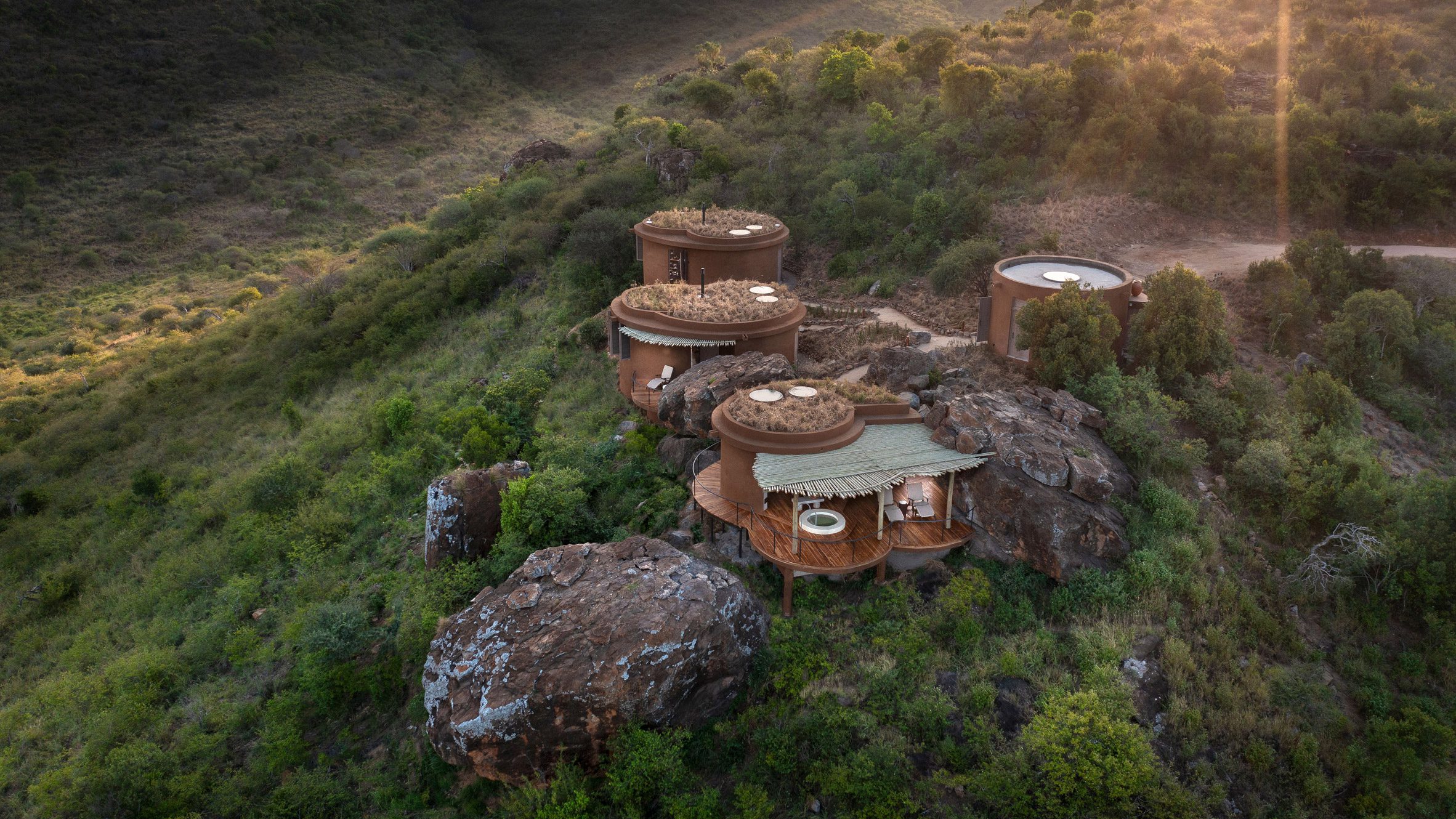
The most defining architectural feature is the strategic three-meter elevation of all 20 tented suites. This groundbreaking design choice serves a trio of critical functions: it safeguards the camp from seasonal flooding of the Sand River, minimizes disturbance to the delicate soil and vegetation, and, most poetically, places guests at eye level with the forest canopy. This elevated perspective provides an immersive vantage point, shifting the experience from passively observing the wilderness to actively inhabiting its edge.

Aerial view of tented suites linked by meandering walkways safeguards the fragile Mara terrain, fusing cultural authenticity with environmental harmony
The Canvas of Biophilia: Dissolving Boundaries
The camp’s design narrative is deeply embedded in Biophilic principles. The structure intentionally blurs the line between built form and natural context. The suites are not rigid rooms but elegant hooded tents where canvas walls roll up completely, transforming the interiors into open-air verandas. This dissolution of the barrier allows the sensory elements of the Mara—the golden light, the sounds of the savanna, the scent of acacia—to flow freely through the space, making the experience multi-sensory and dynamic.

Textured stone walls and woven ceilings in the library blend Maasai craftsmanship with biophilic integration, elevating sensory immersion in sustainable safari luxury
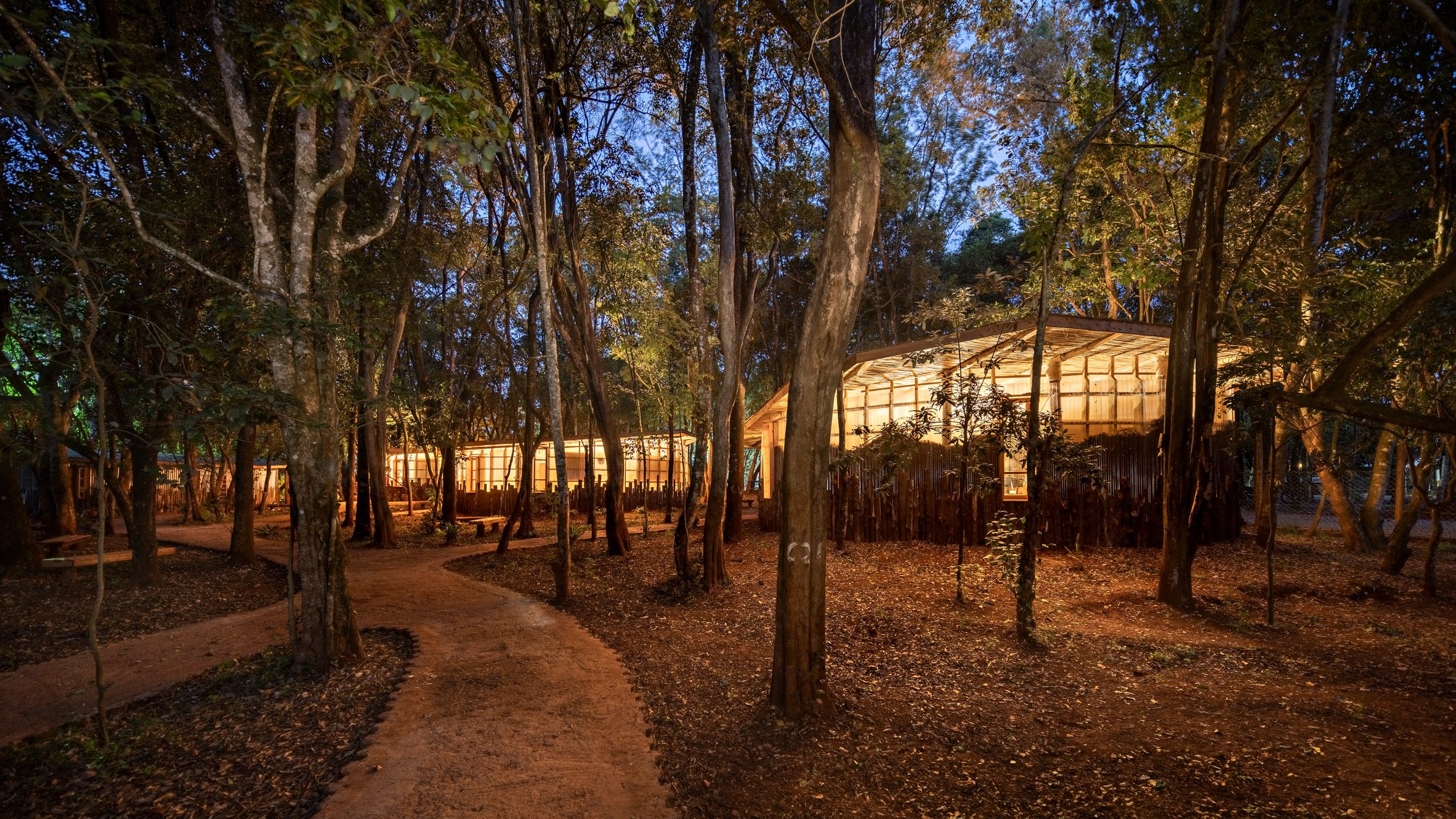
Timber walkways wind gently through the contours of the land, demonstrating humility and allowing the natural movement of wildlife and water flow to proceed undisturbed beneath the structures. The architecture dictates the journey based on the landscape's terms, not the other way around.

Sunset pool deck overlooks the river, showcasing solar-powered elegance that respects nature's rhythms in biophilic retreat
Sustainability: A Foundation of Responsibility
Building within a national reserve made sustainability a non-negotiable cornerstone. The camp functions as a leader in ecological stewardship:
- Energy Autonomy: The camp is fully solar-powered, featuring an advanced solar farm and significant battery storage capability, making it one of the most energy-efficient camps in East Africa.
- Water Management: A closed-loop water treatment system recycles greywater and harvests rainwater, radically minimizing reliance on external municipal supplies.
- Construction Ethics: Avoiding heavy machinery, much of the construction, including the foundations and pools, was meticulously dug by hand to preserve soil health and minimize ground impact.

Curved wooden pods with panoramic views honor local materials, positioning guests amid the canopy for a dynamic dialogue with the wild
The Cultural Anchor: Handcrafted Authenticity
If the architecture is a dialogue with nature, the interiors are a rich conversation with local culture. The design avoids generic luxury, anchoring its aesthetic in Kenyan craftsmanship. Hand-carved wood, semi-volcanic stone quarried near Narok, and woven textiles handloomed by local women are utilized throughout. This commitment to local artisans not only supports the regional economy but imbues the camp with an authenticity that transforms the guest experience from passive consumption to cultural engagement.
The Ritz-Carlton, Masai Mara is ultimately an architectural manifesto: it proves that true luxury in the modern era is defined not by extravagance, but by respect—for the land, the culture, and the planet.

Open spa pavilion with forest vistas incorporates stone baths and rope details, promoting cultural engagement and ecological stewardship in luxurious seclusion
PHOTO CREDIT: The Ritz-Carlton, Masai Mara
Save this story. A free account keeps your reading list and the 07:00 email in one place.
CREATE FREE ACCOUNT →SIGN IN