The Bench That Sparked a Conversation
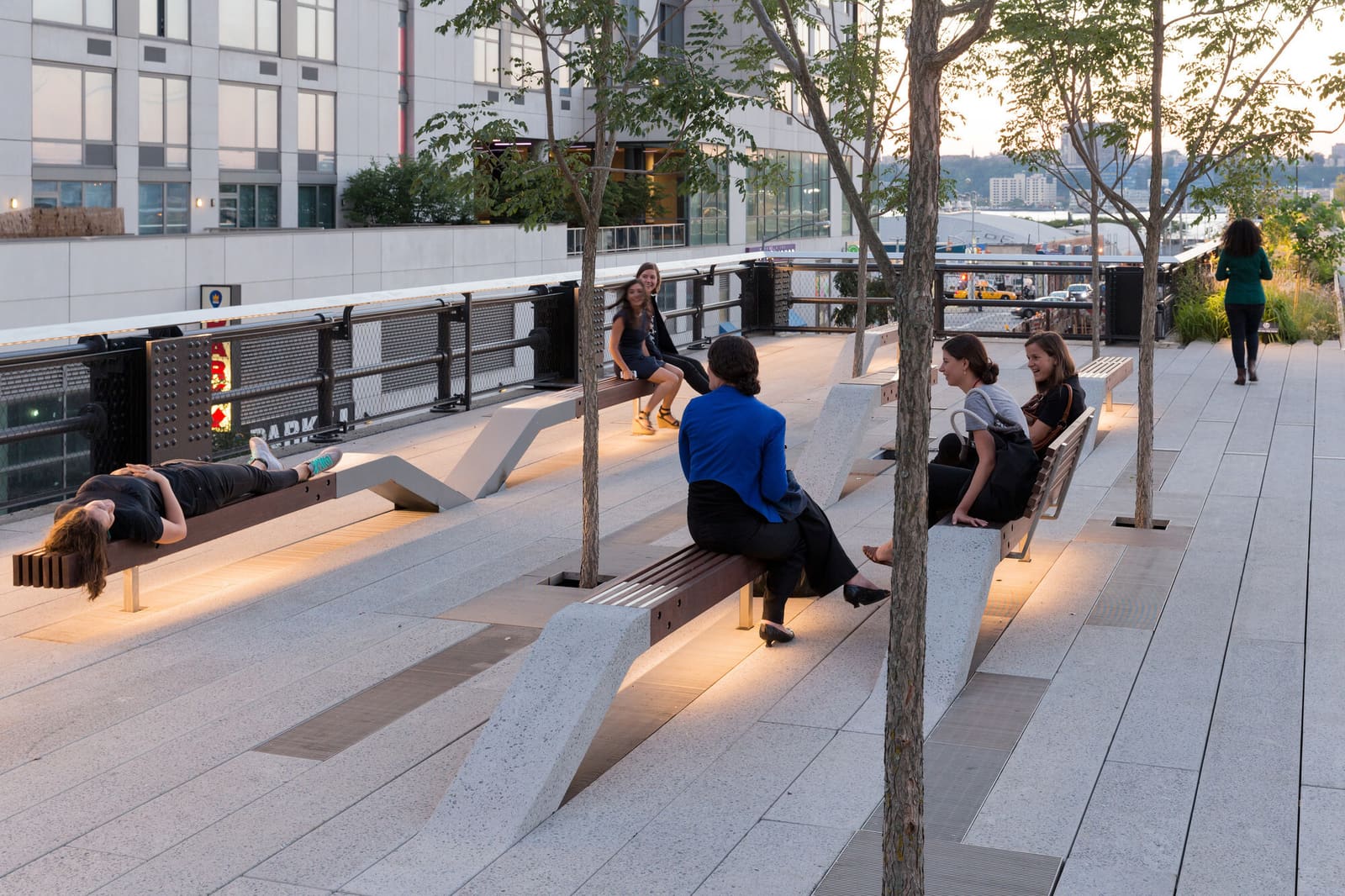
When Diller Scofidio + Renfro completed the High Line in New York, the park's diagonal benches became an immediate icon. Rising from the same modular grid as the paving, they shifted from concrete to timber in a single gesture, echoing the railway tracks that once defined the elevated structure. The wood chosen for those benches was ipe, a Brazilian hardwood prized for its density and resistance to moisture. Its slow growth in Amazonian forests produces timber that can endure decades of weather without chemical treatment. Yet the selection triggered debate about forest certification and the ethics of sourcing rare timber for urban amenities.
That controversy revealed something larger than a single material choice. It exposed the complex geography underlying every building component and raised questions about how far materials should travel and what responsibilities accompany those journeys.
Hidden Networks Beneath the Forest Floor
The Amazon rainforest where ipe grows depends on a surprising source of nutrients. Each year, winds carry approximately 27.7 million metric tons of dust from the Sahara Desert across the Atlantic Ocean, depositing roughly 22,000 metric tons of phosphorus over the Amazon Basin. Because Amazonian soils naturally contain limited phosphorus and heavy rainfall continuously leaches nutrients away, this transatlantic dust replenishes what the forest loses annually. The trees that produce ipe rely on particles that began their journey thousands of miles away in North Africa.
This ecological exchange mirrors the material flows that shape contemporary architecture. Buildings assemble components from dispersed origins into single locations, creating temporary concentrations of resources that will eventually disperse again. The forest offers a template for thinking about materials not as static objects but as participants in ongoing cycles of movement and transformation.
When Local Sand Is Not Enough
Dubai's Burj Khalifa, designed by Skidmore, Owings & Merrill, required sand imported from Australia despite the city's location amid vast desert expanses. Millennia of wind erosion had rounded local sand grains until they became too smooth for concrete production, which demands angular particles that interlock mechanically. The tower's structure therefore incorporates Australian sand shipped across the Indian Ocean, illustrating how even abundant materials can be unsuitable when their geological history does not match construction requirements.
This example underscores a broader pattern. At World Archi Design, we have observed that material suitability often depends less on proximity than on specific properties shaped by formation processes. Italian marble, German steel, and Japanese cypress gained reputations not merely because they existed in those locations but because particular geological or climatic conditions produced desirable characteristics. Global supply chains now make those materials accessible almost anywhere, but the question of whether they should travel so far has become more urgent.
Documenting the Journey
European initiatives such as Buildings as Material Banks have begun creating digital passports that document the origin, composition, and reuse potential of building components. These passports record not only where materials came from but also how they can be recovered when a structure reaches the end of its service life. The project's name reflects a fundamental shift in thinking: buildings function as temporary repositories rather than final destinations for the materials they contain.
This approach acknowledges that steel rolled in one industrial region, glass manufactured in another, and timber harvested in a third will eventually leave the building that assembled them. Designing for disassembly and reuse requires anticipating those future movements as carefully as architects have historically considered material origins. The passport model treats buildings as nodes within extended material cycles rather than endpoints.
Ancient Precedents for Global Supply Chains
Material movement across long distances has deep historical roots. Ancient Rome constructed its monumental architecture with marble transported from quarries throughout the Mediterranean. Greek Pentelic marble, Egyptian porphyry, and stone from present-day Türkiye traveled thousands of miles by sea to clad temples, forums, and imperial palaces. The logistics were slower and more constrained by seasonal navigation, but the principle of assembling materials from dispersed sources was already well established.
What distinguishes contemporary practice is the scale, speed, and traceability of these movements. Certification systems and digital documentation now allow architects to verify not only a material's origin but also the conditions under which it was extracted, processed, and transported. This visibility creates both opportunities and obligations. Architects can make more informed choices, but they also bear greater responsibility for the consequences of those decisions.
Reclaimed Timber and Circular Flows
Later phases of the High Line replaced the original ipe with reclaimed teak salvaged from demolished buildings, bridges, and other structures across Southeast Asia. This timber arrived not from forests but from previous architectural lives. The substitution demonstrated that materials can maintain their performance characteristics while cycling through multiple applications, reducing demand for newly extracted resources.
Reclaimed wood introduces its own complexities. Its previous uses may have exposed it to treatments or conditions that affect its suitability for new applications. Verifying its structural integrity requires testing that newly milled lumber does not need. Yet these challenges are increasingly manageable as material testing methods improve and markets for salvaged components expand. The teak benches represent a shift from linear material flows toward circular models where buildings source from and contribute to an ongoing inventory.
The Question of Architectural Identity
This raises a persistent tension in contemporary practice. If nearly every component in a building originates elsewhere, transported through global supply networks, what does regional or local architecture mean? A structure may use stone quarried nearby, yet its mechanical systems, glazing, finishes, and fixtures likely traveled from distant manufacturing centers. Even projects committed to vernacular expression often depend on imported elements.
One response emphasizes not the origin of individual materials but how they are assembled and adapted to specific climates, cultures, and contexts. Japanese timber construction, for instance, derives its distinct character less from the species used than from joinery techniques, proportional systems, and spatial organizations developed over centuries. Swiss Alpine architecture employs stone and wood common to many mountain regions but arranges them according to local building traditions shaped by topography and weather patterns.
Another approach focuses on material processing and labor. Buildings that engage local fabrication methods, even when using imported raw materials, can express regional identity through craft practices and construction knowledge. This shifts the definition of local from geographic origin to cultural technique.
Designing for Departure
Across the projects we have covered at World Archi Design, a recurring theme has emerged: architects increasingly design not only for a building's occupation but also for its eventual disassembly. This requires selecting materials and connection methods that allow components to be separated without destruction. Mechanical fasteners replace adhesives. Modular systems replace monolithic assemblies. Layered construction replaces composite materials that cannot be separated into constituent parts.
These strategies acknowledge that buildings have finite lifespans and that materials should outlive individual structures. Steel framing can be unbolted and reused. Timber beams can be extracted and remilled. Brick can be cleaned and relaid. Designing for departure means treating every material as a temporary loan rather than a permanent fixture.
The Incomplete Archive
Material passports and certification systems provide valuable information, but they can document only part of a material's history. Timber salvaged from a demolished warehouse may carry traces of earlier uses that records do not capture. Recycled steel may have been alloyed from sources that remain unidentified. Complete traceability remains an aspiration rather than a current reality.
Yet even partial knowledge changes design decisions. Knowing that timber was harvested under certified forest management, that concrete incorporates recycled aggregate, or that aluminum comes from post-consumer sources allows architects to make more considered choices. The goal is not perfect information but sufficient transparency to weigh environmental and social consequences alongside performance and cost.
Where Materials Will Go
For most of architectural history, the primary question about materials was where they came from. Architects specified marble from Carrara, slate from Wales, or limestone from Indiana based on origin and reputation. Today an equally important question asks where materials will go after a building is demolished or renovated.
This shift reflects growing awareness that construction and demolition generate significant waste streams and that many discarded materials retain substantial value. It also reflects recognition that extracting virgin resources carries environmental costs that can be reduced through reuse and recycling. Designing with material futures in mind requires anticipating disassembly sequences, documenting component specifications, and selecting materials with established recovery pathways.
Movement as Constant
Materials have always moved. Forests depend on dust from distant deserts. Cities assemble components from scattered manufacturing centers. What has changed is our capacity to track those movements and our willingness to consider them as design criteria. The benches on the High Line, whether ipe or reclaimed teak, embody this awareness. They acknowledge that architecture participates in material flows that extend beyond any single project or location.
The challenge is not to eliminate material movement but to design systems where those movements create value rather than waste. Buildings should function as careful stewards of the materials they temporarily hold, maintaining them in conditions that allow future use and documenting them in ways that facilitate recovery. This requires thinking beyond the building's lifespan to the longer cycles in which materials participate.
Architecture remains an act of assembly, bringing together elements from diverse origins. The difference is that we now understand those origins more clearly and recognize that assembly is not the end of the story. Every building is both a destination and a point of departure for the materials it contains.
Credit: Iwan Baan
Save this story. A free account keeps your reading list and the 07:00 email in one place.
CREATE FREE ACCOUNT →SIGN IN