The Question Beneath the Surface
Walk through most discussions of Arts and Crafts influence and you'll encounter a familiar catalog: exposed wood structure, tactile joinery, natural finishes, carefully proportioned rooms. These visual signatures persist across contemporary practice, readily identifiable in residential projects from California to Scandinavia. Yet focusing on these formal characteristics misses the movement's more radical proposition. For the architects and thinkers who shaped this nineteenth-century response to industrialization, the central question was never what buildings should look like. It was how they should be made, and by whom, and whether the process could sustain human dignity alongside architectural quality.
At World Archi Design, we've been tracking how these concerns resurface in practices that operate under entirely different technological and economic pressures. The persistence suggests that Morris, Ruskin, and Webb identified something fundamental about the relationship between design intent and construction reality, a tension that remains unresolved despite a century of innovation in materials science, fabrication technology, and project delivery methods.
Production Systems Under Scrutiny
Nineteenth-century Britain witnessed manufacturing transform from workshop-based craft into factory-floor specialization. What changed wasn't simply the speed of output or the availability of goods. The entire structure of work itself underwent reconfiguration. Tasks that once required a maker to understand a complete object from conception through completion became fragmented into discrete steps, each performed by workers who never touched the other phases. Intellectual labor separated from manual execution. Efficiency metrics replaced quality benchmarks.
The social critics who articulated Arts and Crafts principles saw this reorganization as more than economic evolution. Ruskin argued that meaningful work required the freedom to improvise, to make small decisions within a larger framework, to see one's intelligence reflected in the finished piece. Morris pushed further, insisting that beauty and production conditions were inseparable. A chair or a building carried the marks of the system that produced it, whether that system honored or degraded the people doing the work.
Their response wasn't to propose a particular architectural vocabulary. It was to argue that design thinking must account for fabrication relationships, material sourcing, labor conditions, and the accumulation of skill over time. Style became secondary to method.
Rethinking the Designer-Builder Divide
Contemporary practices continue to wrestle with the separation between those who conceive spaces and those who construct them. Studio Mumbai has developed a model that collapses this boundary, bringing masons, carpenters, and metalworkers into early design conversations so that material knowledge and construction logic inform spatial decisions from the outset. Their Belavali House demonstrates how this integration produces architecture that feels coherent precisely because it was imagined and built through continuous dialogue rather than sequential handoffs.
Rural Studio approaches the same problem through pedagogy, requiring architecture students to participate directly in construction for communities in Alabama's Black Belt. The educational model refuses the assumption that architects need only produce drawings while others translate them into physical form. Students learn that material behavior, structural systems, and assembly sequences aren't constraints to work around but fundamental aspects of design thinking itself.
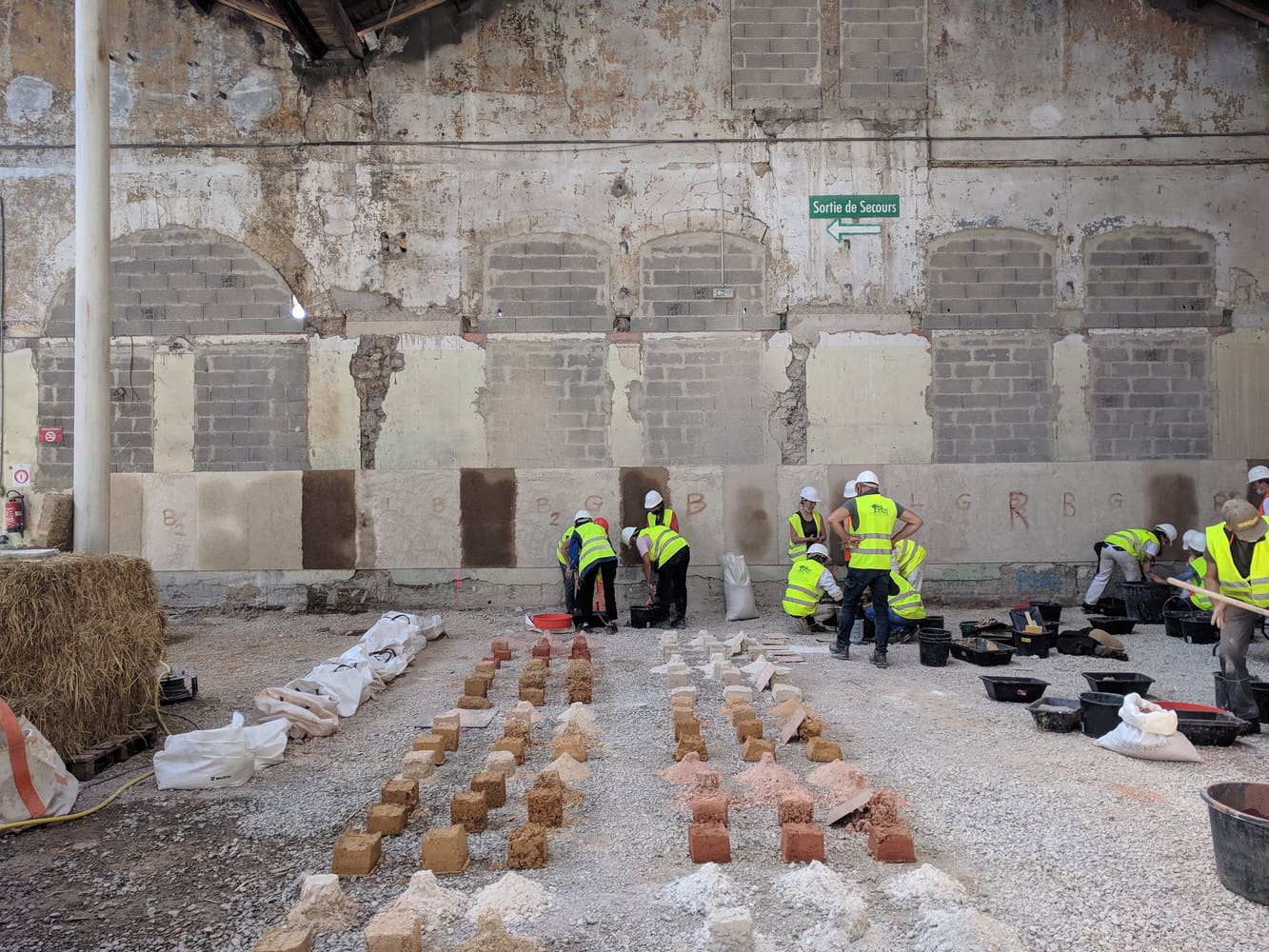
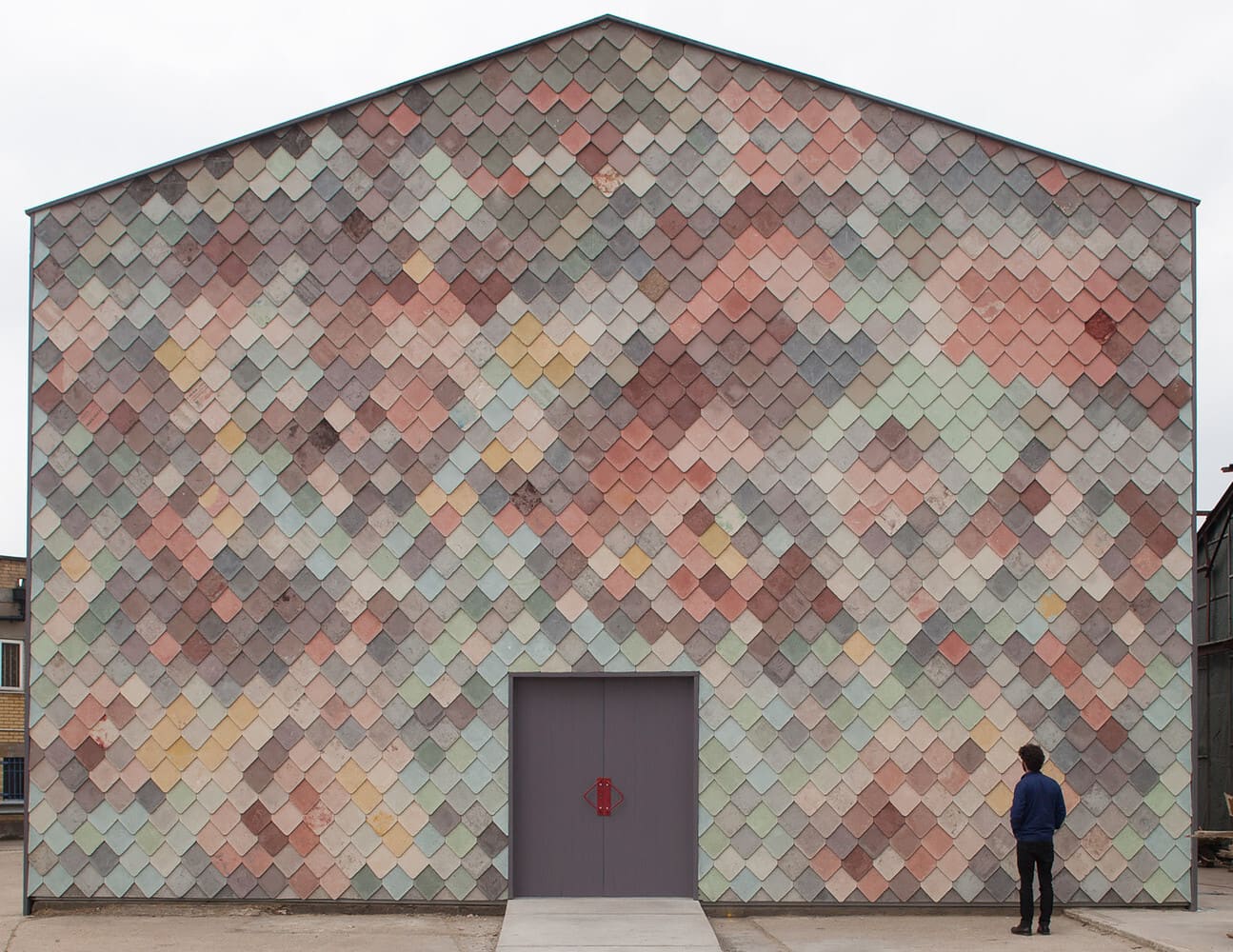
Assemble has taken a different path, treating collective authorship and participatory construction as core to architectural practice rather than supplementary community engagement. Their Yardhouse and Cineroleum projects emerged from collaborative making processes that blurred professional roles, allowing design to evolve through the act of building rather than being fixed in advance.
These approaches don't replicate nineteenth-century workshop conditions. Digital fabrication, engineered timber systems, and prefabrication technologies would be unrecognizable to Morris. But the underlying conviction remains: that architecture improves when design intelligence and fabrication knowledge occupy the same conversations, when the people shaping materials have agency in how those materials come together.
Longevity Against Disposability
Morris understood industrial production's economic logic: maximize output, minimize cost per unit, accelerate turnover. This calculus made perfect sense for manufacturers seeking competitive advantage. It made less sense for architecture, where the consequences of decisions compound over decades. Buildings require enormous resource investment, material extraction, energy for transformation and transport. If that investment produces structures designed for short lifespans or narrow programmatic uses, the waste becomes environmental as well as economic.
The Arts and Crafts response was to design for permanence, to build things worthy of the resources consumed and the labor invested. This wasn't romanticism about the past. It was a practical argument that architecture should justify its existence through extended usefulness.
Contemporary practice confronts parallel pressures under different terminology. Embodied carbon calculations, lifecycle assessments, and circular economy frameworks all point toward designing buildings that last longer and adapt more readily. Adaptive reuse has shifted from niche specialty to mainstream consideration. Architects increasingly ask whether new construction is necessary or whether existing building stock can be transformed to meet program requirements.
These priorities emerge from climate science rather than social criticism, but they arrive at similar conclusions. Architecture that treats construction as a one-time event rather than an ongoing relationship with materials and occupants generates waste at every scale. Buildings designed with fixed programs resist the changes that would extend their usefulness. The movement's emphasis on durability and adaptability resonates because the environmental stakes make those qualities urgent rather than merely desirable.
Material Choices as Ethical Positions
The phrase "truth to materials" has become shorthand for Arts and Crafts material philosophy, but the concept deserves more nuance. Morris and his contemporaries weren't advocating for unfinished surfaces or minimal intervention. They were arguing against deception: against veneers that mimicked expensive stone, painted finishes that pretended to be carved wood, machine-made ornament that imitated handwork. Industrial production made these imitations economically rational. The Arts and Crafts movement considered them ethically compromised.
Their alternative was to work with materials in ways that acknowledged their origins and respected the skill required to transform them. Stone should be cut and laid to reveal its geological character. Timber joinery should express how pieces connect rather than conceal the logic of assembly. Metal should be forged and finished in ways that show the maker's hand.
Contemporary architects face different material questions but similar ethical territory. Specifying concrete means accounting for cement production's carbon intensity. Choosing tropical hardwoods requires understanding forestry practices and supply chain transparency. Even recycled materials demand scrutiny about processing energy and transportation distances.
Rural Studio's work in Alabama demonstrates how material ethics can shape entire projects. Their Rose Lee House and Lions Park Scouts building utilized salvaged materials, locally sourced timber, and low-embodied-energy components not as aesthetic gestures but as fundamental design commitments. The buildings look the way they do because the material choices came first, driven by resource availability and environmental responsibility rather than formal preferences.
Studio Mumbai's approach to material selection prioritizes regional sourcing and traditional fabrication methods, not out of nostalgia but because these choices support local craft economies and reduce transportation impacts. Their work shows that material honesty today means understanding extraction, processing, labor conditions, and end-of-life scenarios, expanding the scope of what architects must know about the substances they specify.
Place as Active Participant
Industrialization's promise was location independence: identical products manufactured anywhere, shipped everywhere, assembled without regard to local conditions. Architecture participated in this model through standardized components, universal building systems, and designs that could be replicated across climates and cultures.
Arts and Crafts architects argued for the opposite: buildings that emerged from specific sites, responded to local climates, used regionally available materials, and engaged vernacular construction knowledge. This wasn't about copying historical precedents. It was about recognizing that every place presents distinct opportunities and constraints that should inform design decisions.
Contemporary practice returns to these ideas through sustainability frameworks that prioritize passive climate response, daylighting strategies, natural ventilation, and material sourcing radius. But the deeper principle is about attentiveness. A building that ignores its context treats place as an abstract site rather than an active participant in architectural thinking.
Studio Mumbai's Belavali House sits in rural Maharashtra, its thick masonry walls, deep overhangs, and courtyard organization responding to regional climate patterns and building traditions. The architecture doesn't replicate vernacular forms, but it learns from the accumulated environmental knowledge embedded in local construction practices.
Rural Studio's projects in rural Alabama engage similar questions about regional identity, climate response, and material availability. The work acknowledges that architecture in the Deep South faces different thermal loads, humidity levels, and cultural contexts than projects elsewhere, and that these differences should shape spatial organization and material assembly.
Persistent Questions
More than a century separates us from the Arts and Crafts movement's formation, and nearly every aspect of architectural practice has transformed. Digital modeling tools, parametric design, robotic fabrication, building information management, and global material supply chains would be incomprehensible to Morris and Ruskin. Yet the questions they posed remain unresolved.
How should architects engage with the people who build their designs? What responsibility do designers bear for the labor conditions and environmental impacts of construction? Should buildings be conceived as permanent contributions to the built environment or as temporary responses to immediate program needs? How do material choices reflect values beyond performance specifications?
These aren't nostalgic inquiries about returning to pre-industrial craft production. They're active challenges that contemporary practices must navigate within current economic and technological systems. The Arts and Crafts movement's enduring contribution isn't a set of formal characteristics to emulate. It's the insistence that architecture communicates values through production methods, material ethics, and labor relationships as much as through spatial organization or aesthetic expression.
The practices we've examined here, Studio Mumbai, Rural Studio, Assemble, approach these questions through different methods and cultural contexts. None attempt to recreate nineteenth-century workshop conditions. But all share the conviction that how buildings are made matters as much as what they look like when finished, that design intelligence should remain connected to fabrication knowledge, and that architecture bears responsibility for the systems that bring it into being.
That conviction, more than any stylistic legacy, represents the movement's continuing influence on contemporary practice. It poses uncomfortable questions about supply chains, labor equity, resource consumption, and professional boundaries. It suggests that architecture's ethical dimensions extend beyond program fulfillment and code compliance into the relationships created through the act of building itself. And it reminds us that the choices architects make about production, materials, and collaboration reveal what we value beyond the finished object.
Save this story. A free account keeps your reading list and the 07:00 email in one place.
CREATE FREE ACCOUNT →SIGN IN