The Paradox of the Suburban Dome
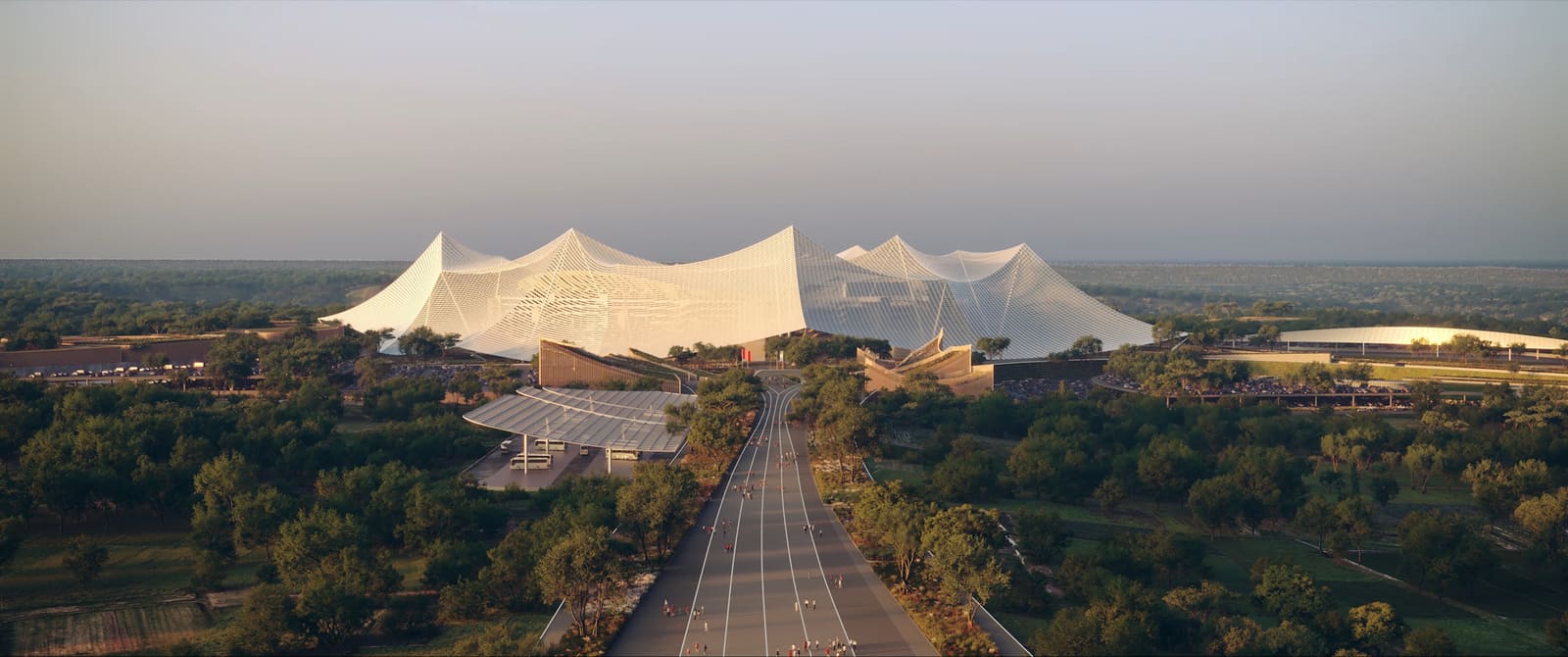
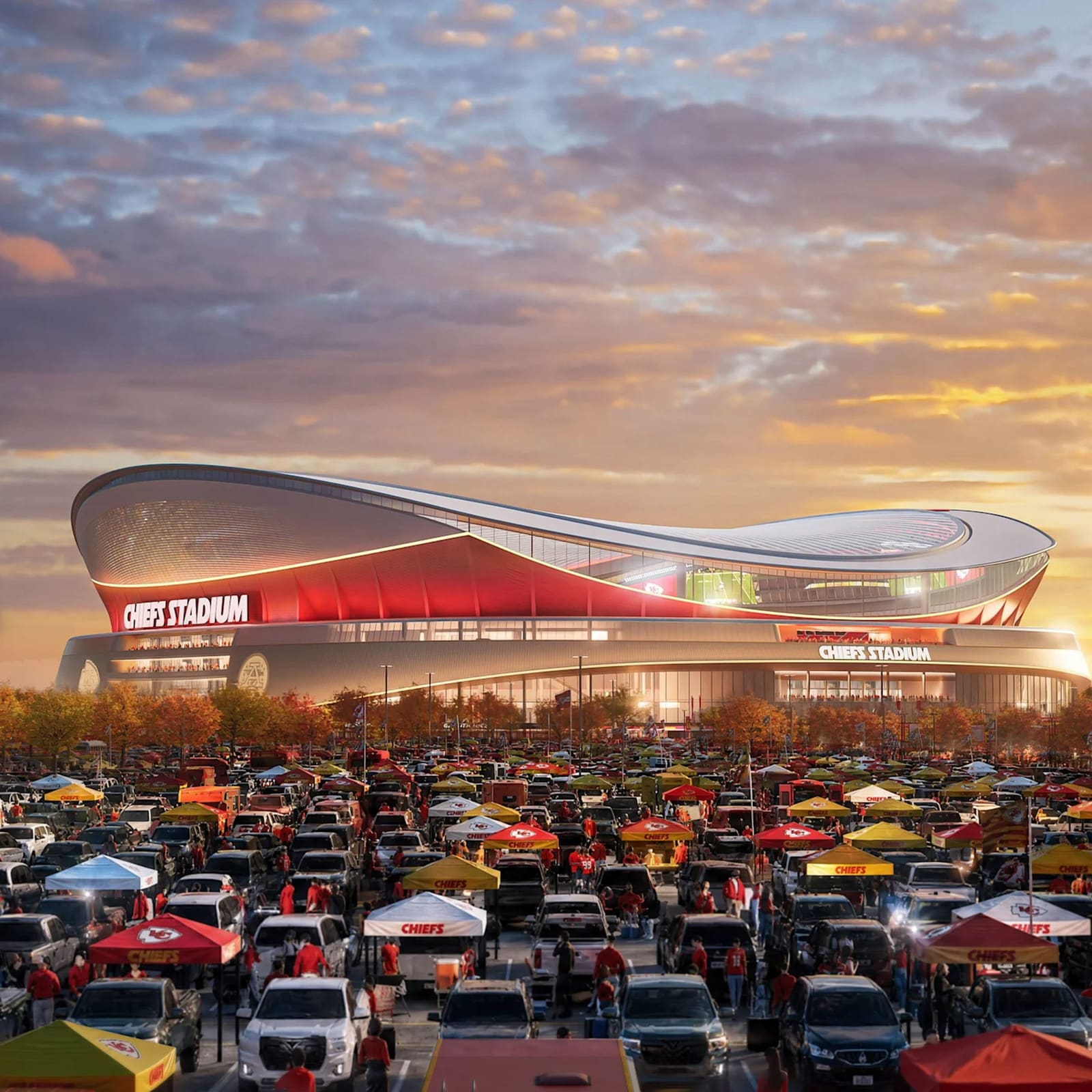
Most contemporary stadium projects chase density. They seek downtown parcels, mixed-use podiums, pedestrian plazas. Manica's proposal for the Kansas City Chiefs does the opposite. The 70,000-seat venue, scheduled to open in 2031 at a cost of $3 billion, will remain in its suburban context, ringed by parking lots explicitly designed to preserve tailgating rituals. Yet it will also be fully enclosed, topped by 37,000 square meters of translucent ETFE panels. The question the design poses is whether a dome can still feel like Arrowhead.
At World Archi Design, we've been tracking the NFL's stadium boom for years. What stands out here is not the enclosure itself but the deliberate resistance to urbanization. While franchises from Washington to Buffalo have either moved downtown or explored denser sites, the Chiefs are doubling down on the suburban model. The parking lots are not incidental; they are programmatic. The tailgate, in this reading, is as essential to the architectural brief as sightlines or acoustics.
Acoustic Geometry and the Legacy of Arrowhead
Arrowhead Stadium, opened in 1972, is famous for noise. Its design, a bowl with steep upper decks, funnels sound back onto the field. The new stadium, according to Kansas City Chiefs CEO Clark Hunt, aims to replicate that acoustic intensity. Manica's geometry borrows from the existing structure, maintaining the steep rake and compact footprint that have made Arrowhead one of the loudest venues in professional sports.
The translucent roof adds a variable Arrowhead never had: reverberation. Enclosed stadiums amplify crowd noise differently than open-air bowls. AT&T Stadium in Arlington, for instance, uses its roof to trap sound, though critics argue it sacrifices atmosphere for climate control. Manica's approach appears to split the difference. The ETFE panels allow natural light to flood the seating bowl, preserving some of the visual qualities of an outdoor venue while containing the acoustic energy. The material choice is telling. ETFE, a fluoropolymer film, is lightweight and highly transparent, used in projects from the Allianz Arena in Munich to the Beijing National Aquatics Center. It ages well, resists weathering, and can span large distances without heavy substructure.
The roof's design also accommodates military flyovers, a tradition at Chiefs games. This is a constraint rarely articulated in stadium briefs, but it shapes the tectonic expression. The transparency is not purely aesthetic; it is ceremonial.
Preserving the Drum Deck and the Roll of Honor
Two spatial elements from Arrowhead will carry over: the drum deck and the roll of honor. The drum deck, a dedicated section for the team's drumline, functions as both a performative space and an acoustic amplifier. Its inclusion in the new design signals that Manica is treating sound as a material, not just an effect. The roll of honor, a ribbon of names circling the upper bowl, serves as collective memory. These are not decorative gestures. They are spatial anchors that tie the new building to its predecessor.
This kind of continuity is rare in stadium design, where clients often prefer clean breaks. The trend has been toward branded suites, club lounges, and amenity-heavy interiors that prioritize revenue over tradition. Manica's proposal, at least in its public presentation, foregrounds the fan experience. Whether that holds through value engineering and phased construction remains to be seen.
The Tailgating Brief
The decision to remain suburban and prioritize parking is contentious. Urban planners and transit advocates have long critiqued stadium developments that rely on cars, pointing to congestion, environmental impact, and missed opportunities for transit-oriented design. Yet tailgating is a vernacular practice with deep roots in American sports culture, particularly in the Midwest. For Chiefs fans, the parking lot is as much a part of game day as the game itself.
Manica's design treats this seriously. The parking lots are not generic asphalt fields but purpose-built spaces intended to enhance pre-game gatherings. Details remain scarce, but the implication is infrastructure: shade structures, utility hookups, designated zones. This is landscape architecture operating at the scale of ritual.
There is precedent. Lambeau Field in Green Bay has long been celebrated for its tailgating culture, and the Packers have invested in parking infrastructure that supports it. The difference here is scale and intentionality. The Chiefs are building a new stadium from scratch with tailgating as a core requirement. It is a bet that suburban fan culture will endure, even as demographic and transportation patterns shift.
Manica, HNTB, and the Local Design Ecosystem
Manica, working with HNTB as architect of record, was selected over Populous, another Kansas City firm with a deep portfolio in sports architecture. Populous designed the original Arrowhead renovation and has built stadiums worldwide, from Tottenham Hotspur in London to Allianz Stadium in Sydney. The choice of Manica suggests the Chiefs wanted a different vision, one that balances legacy with spectacle.
David Manica, the studio's founder, framed the commission as a hometown project. Both Manica and HNTB are based in Kansas City, which matters in a city with a strong design community and a history of civic pride. Chiefs president Mark Donovan emphasized the local talent pool, noting the "world-class sports and entertainment design" available in the region. This is not just rhetoric. Kansas City has long been a center for stadium design, and keeping the project in-house reinforces that identity.
What the Dome Changes
Enclosed stadiums alter more than climate. They change how fans perceive scale, how light behaves, how noise moves. The best examples, like the retractable-roof Mercedes-Benz Stadium in Atlanta by HOK, integrate enclosure into a broader environmental strategy, using natural ventilation, daylighting, and material efficiency to offset the energy penalty of conditioned air. Manica's ETFE roof is a step in that direction, though without details on mechanical systems or energy performance, it is difficult to assess the full environmental footprint.
The roof also shifts the building's presence. A dome reads differently from a distance than an open bowl. It becomes an object, a volume, rather than a carved-out void. This has implications for the site, which will remain suburban but may gain a new visual identity. The translucency of the ETFE means the building will glow at night, a lantern on the plains. Whether that enhances or competes with the surrounding landscape is a question of proportion and detailing.
A Stadium for Generations or a Hedge Against Change?
Hunt and Donovan have both described the new venue as a legacy project, designed not just for today's fans but for future generations. This is standard developer language, but it raises real questions. What does it mean to build for the future while anchoring the design so firmly in the past? Arrowhead's identity is tied to a specific era of stadium design, one that prioritized capacity and noise over amenities and flexibility. The new building attempts to carry that forward, but the world around it is changing.
NFL attendance has been volatile. Younger fans prefer different experiences. Climate concerns are reshaping how we think about large gatherings and the infrastructure that supports them. A suburban, car-dependent stadium is a bet that these trends will not fundamentally alter the economics or culture of professional football. It may be a safe bet in Kansas City, where fan loyalty runs deep. But it is still a bet.
The Future of the Suburban Sports Venue
If Manica's design succeeds, it will prove that the suburban stadium is not obsolete, just evolving. The translucent dome offers a way to enclose without erasing the sky. The tailgating infrastructure acknowledges that fan culture extends beyond the seating bowl. The acoustic geometry honors a specific place and history. These are not minor details. They are arguments about what sports architecture can be when it resists the pull of urbanization and instead invests in the rituals and landscapes that already exist.
Whether that vision holds through construction, use, and the inevitable shifts in how we gather and move remains to be seen. But as a proposition, it is worth watching. The stadium is not trying to be something it is not. It is trying to be Arrowhead, only more so.
Credit: Manica
Save this story. A free account keeps your reading list and the 07:00 email in one place.
CREATE FREE ACCOUNT →SIGN IN