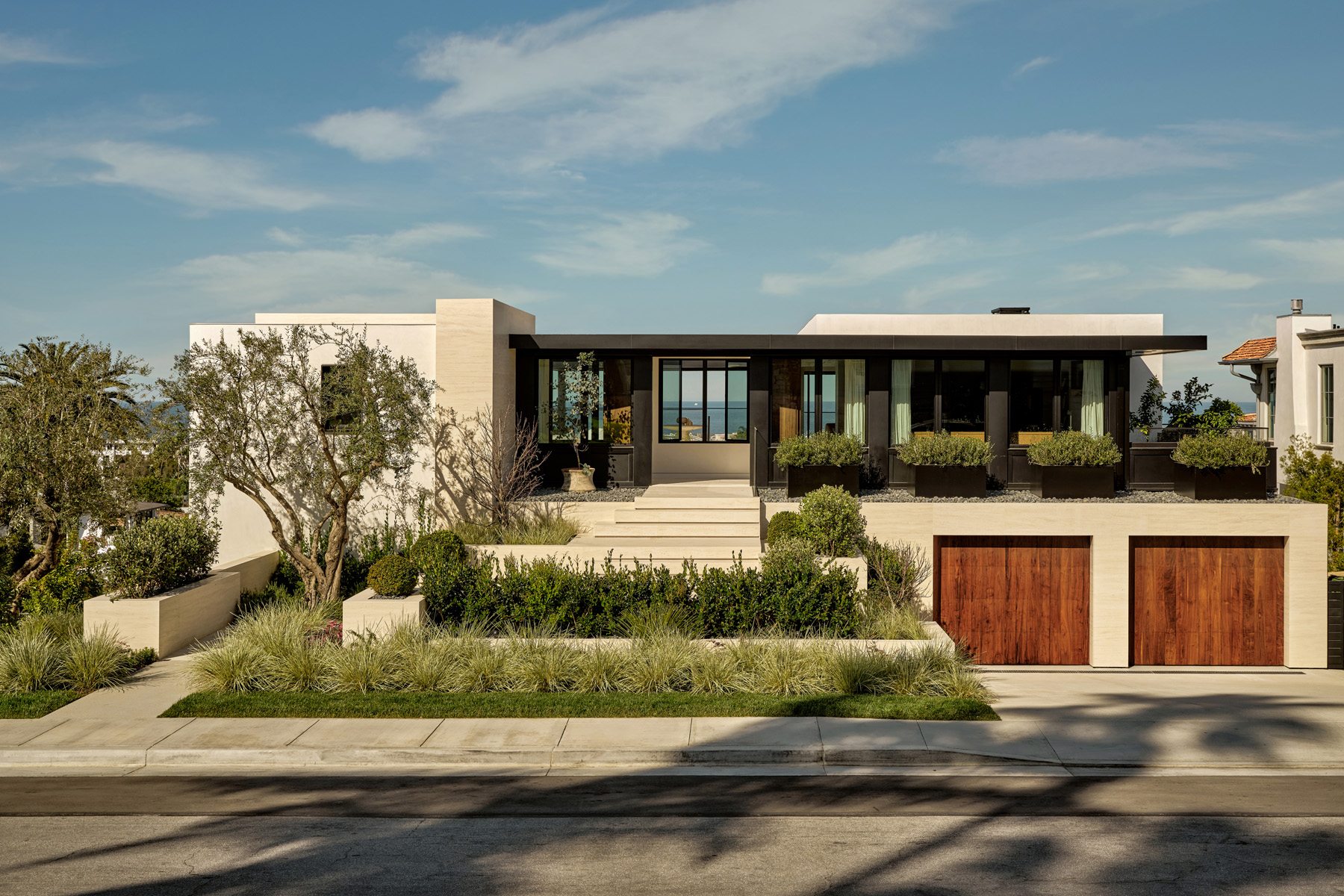
Project Info
Project Name: Beach Residence
Location: Manhattan Beach, California, USA
Designers: Teo Yang Studio
Lead Designer: Teo Yang

Herringbone timber ceiling frames sculptural seating beneath layered linen curtains
In the heart of one of California’s most energetic coastal communities, a new residence emerges as a silent masterpiece of soft modernism. Seoul based designer Teo Yang reinterprets the beach house as a vessel for spiritual restoration and cultural dialogue.

Walnut millwork cradles fireplace within intimate symmetrical living arrangement
Manhattan Beach is a location frequently defined by its architectural density and its high energy coastline. To build in this environment often involves a race to maximize views and square footage through rigid and glass heavy structures. However, the Beach Residence by Teo Yang Studio offers a profound counterpoint to this local trend. As the first major project on the United States West Coast for the celebrated Korean designer, the home serves as a bridge between the vastness of the Pacific and the intimacy of a private sanctuary.

Skylit stairwell draws natural light down through minimalist vertical shaft
Teo Yang is known for a design language that honors history while embracing the contemporary. In this project, he rejects the traditional sharp edges of coastal modernism. He chooses instead to embrace a language of organic fluidity. The interior spaces are defined by sinuous lines and rounded forms that echo the movement of the ocean waves nearby.

Built-in banquette nestles beneath walnut wall creating intimate passage niche
A central spiral staircase acts as the architectural backbone of the residence. Its sculptural form guides the eye upward while softening the transition between the various levels of the home. Rounded walls and arched doorways replace the standard grid. This choice creates a sense of continuous motion and psychological ease. The inhabitants are encouraged to slow their pace and engage with the space in a way that feels natural and intuitive.

Cane paneling and figured walnut wrap bedroom in textured warmth
The material and color choices within the Beach Residence are a departure from the typical nautical clichés of the region. Yang avoids the sterile whites and bright teals that dominate many local homes. He opts for a sophisticated palette of deep indigo and warm timber.

Limestone vanity extends into spa-like bathing chamber with terrazzo detailing
The use of blue in this residence is particularly significant. It is not a superficial decorative choice. It is a deep and meditative navy that anchors the social spaces of the home. This color creates a sense of depth and security. It provides a cool relief from the intense Californian sun. When combined with the tactile warmth of natural wood and bronze accents, the interior becomes an environment of balanced luxury. The materials are chosen for their ability to evoke a sense of permanence and calm.

Glass-fronted cabinetry organizes wardrobes around sculptural upholstered bench centerpiece
A core principle of Teo Yang’s work is the Korean concept of Ma, which refers to the importance of negative space. In the Beach Residence, this idea is translated into a layout that feels expansive yet focused. The furniture is not merely functional. Every piece is treated as a curated sculpture within a larger gallery.

Ambient cove lighting dissolves boundaries between ceiling and walnut headwall
The living areas are arranged to facilitate both social gathering and solitary meditation. Large and plush seating invites conversation while quiet corners are reserved for introspection. The design does not attempt to fill every square inch with objects. It allows the architecture to breathe. This intentional restraint creates an atmosphere of "soft power." It is a home that whispers rather than shouts. It demonstrates that the greatest luxury in a modern world is the gift of silence and the space to simply be.

Mirrored closet corridor multiplies walnut cabinetry into symmetrical dressing gallery
The Beach Residence stands as a significant milestone in the dialogue between East and West. It proves that the principles of traditional Asian design can find a perfect and poetic home on the shores of California.
PHOTO CREDIT: Jonathan Leijonhufvud
Save this story. A free account keeps your reading list and the 07:00 email in one place.
CREATE FREE ACCOUNT →SIGN IN