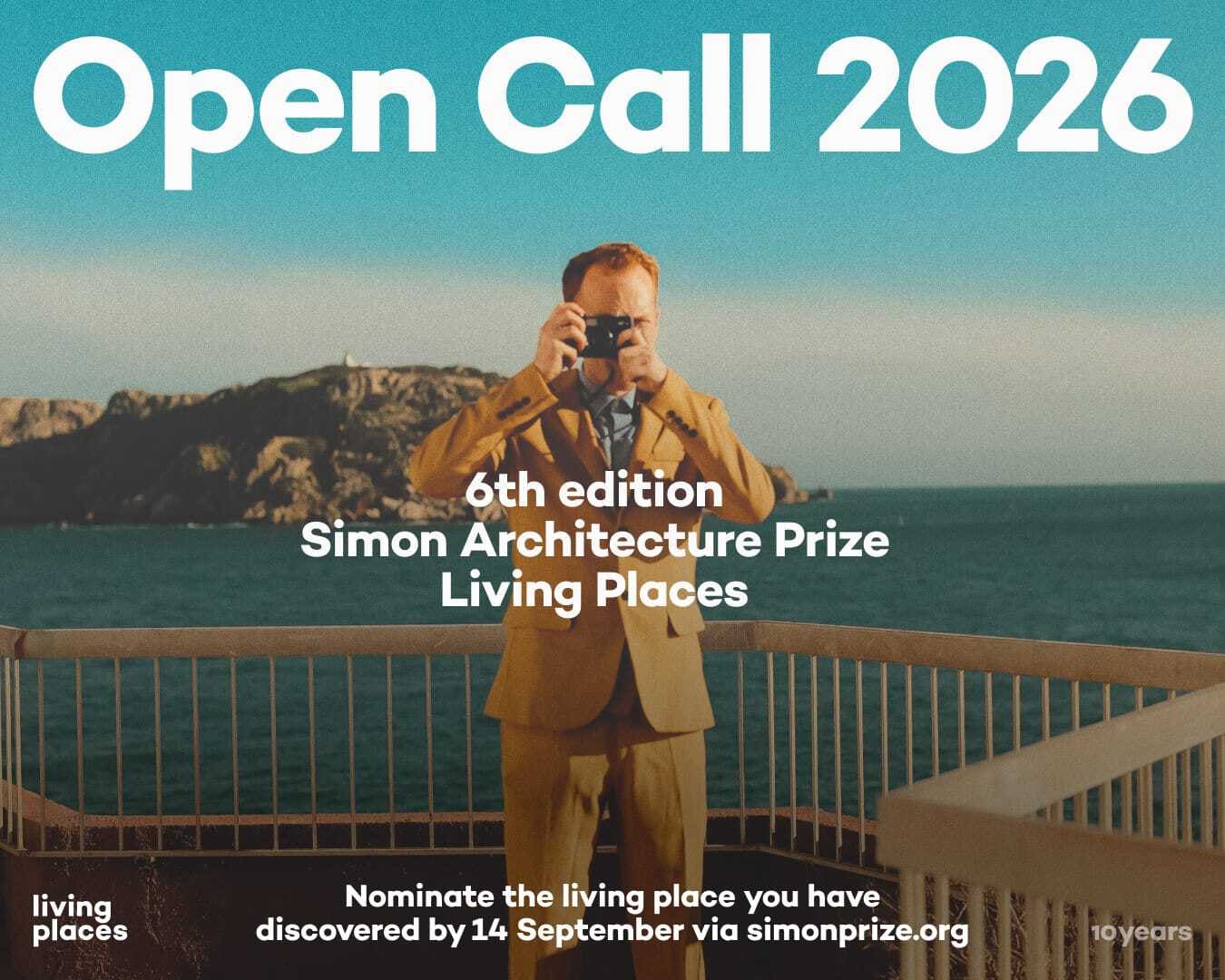
A Competition Built on Lived Experience
What makes a building worth inhabiting? The question has driven architectural discourse for generations, yet many design competitions still reward formal innovation over the harder-to-quantify qualities that make a space genuinely livable. The sixth edition of the Living Places Simon Architecture Prize, set to open for submissions in 2026, takes a different approach. Developed by Fundació Mies van der Rohe with support from Simon, the prize distinguishes work that prioritizes adaptation, comfort, and the rhythms of daily occupation over purely aesthetic achievement.
At World Archi Design, we've been tracking a broader shift in how design excellence is evaluated, particularly in Europe, where post-occupancy performance and user well-being have begun to eclipse the photogenic monumentality that once dominated award programs. This competition sits squarely within that movement, asking architects to demonstrate not just how a building looks but how it performs across the varied demands of everyday use.
Adaptability as Core Criterion
The competition framework centers on what it terms "spaces' capacity for adaptation," a phrase that carries weight in an era of climate instability, shifting work patterns, and evolving family structures. Adaptability here is not about movable partitions or modular furniture, the surface-level gestures often mistaken for flexibility. It refers instead to a more fundamental quality: the ability of a building to accommodate change without structural compromise, to support multiple uses without requiring extensive reconfiguration, and to maintain comfort across seasons and occupancy patterns.
This criterion aligns with a lineage of thought stretching from Herman Hertzberger's concept of polyvalent form to Stewart Brand's analysis of building layers in "How Buildings Learn." The prize implicitly asks entrants to design for time, acknowledging that the most successful projects are those that remain useful as their contexts shift. That might mean residential spaces that transition easily between private and semi-public uses, educational environments that support both formal instruction and self-directed learning, or workplaces that accommodate solitary focus and collaborative exchange without privileging one mode over the other.
Video as Primary Evidence
Perhaps the most distinctive aspect of the competition is its reliance on video as the principal submission format. According to Simon, film serves as both a tool for engaging the general public and a medium for conveying the atmosphere of a place, qualities that static photography often fails to capture. This is not a trivial shift. Architecture has long struggled with the gap between representation and experience, with plan drawings and renderings offering only partial insight into how a space actually feels to move through, how light changes across the day, how sound carries, how materiality registers at human scale.
Video documentation forces a different kind of honesty. It reveals the incidental moments that define inhabitation: the way occupants navigate circulation paths, the informal gatherings that emerge in threshold zones, the acoustic character of a room under use. It also democratizes evaluation, making spatial qualities legible to juries and audiences who may not read architectural drawings fluently. For a prize concerned with lived experience, the medium is well matched to the message.
Categories and Context
The competition recognizes work across three broad categories, each corresponding to a distinct mode of daily occupation: spaces for working, spaces for learning, and spaces for playing. The tripartite structure avoids the rigid programmatic divisions that often fragment architectural practice, acknowledging instead that the best contemporary projects blur these boundaries. A library becomes a site of informal collaboration. A workplace incorporates areas for rest and social exchange. A recreational facility supports focused study.
This framing also reflects a growing awareness, accelerated by the disruptions of the early 2020s, that the clear separation of work, education, and leisure no longer describes how most people actually organize their lives. The prize invites entries that respond to this more fluid reality, rewarding designs that support multiple activities without sacrificing the specific qualities each requires.
The Fundació Mies van der Rohe Connection
That the prize is developed by Fundació Mies van der Rohe carries its own significance. The foundation, best known for administering the European Union Prize for Contemporary Architecture, has long championed rigorous, socially engaged design. Its involvement signals an institutional commitment to expanding the criteria by which architectural quality is judged, moving beyond the formal preoccupations that have sometimes narrowed the field's scope.
The foundation's stewardship also situates the Living Places Prize within a broader European discourse on architecture's civic responsibilities. Unlike competitions that treat buildings as isolated objects, this program embeds evaluation within a framework of use, asking entrants to demonstrate not just design skill but social attentiveness. It is a model that has gained traction across Northern Europe in particular, where funding structures increasingly tie architectural commissions to measurable outcomes in occupant well-being and environmental performance.
What the Prize Signals
Competitions shape practice, not just by rewarding certain projects but by establishing the terms through which quality is recognized. The Living Places Simon Architecture Prize, in its emphasis on adaptability, comfort, and experiential documentation, offers a counterweight to the image-driven culture that has come to dominate much of contemporary architecture. It asks practitioners to design for inhabitation rather than publication, to privilege performance over appearance, and to recognize that the measure of a building's success lies in the daily lives it supports.
Whether the prize will succeed in shifting broader industry priorities remains to be seen. But its criteria, and the values they encode, reflect a necessary recalibration, one that acknowledges architecture's primary obligation is not to the camera but to the people who occupy its spaces.
Save this story. A free account keeps your reading list and the 07:00 email in one place.
CREATE FREE ACCOUNT →SIGN IN