From Predictions to Performance
The gap between what architects promise at the drawing board and what buildings actually deliver once occupied has long troubled the discipline. Energy models, however sophisticated, remain hypothetical until tenants turn on lights, adjust thermostats, and inhabit space. Bureau Veritas has introduced the UK Net Zero Carbon Buildings Standard, a voluntary verification programme that shifts the benchmark from design intent to measured operational reality.
Unlike certification schemes that award plaques based on simulated energy use, this standard demands twelve months of actual in-use data before granting its Net Zero Carbon Aligned verification. The programme is now open for submissions across new construction, existing buildings, and retrofit projects.
The Criteria: Renewable Generation and Embodied Carbon Limits
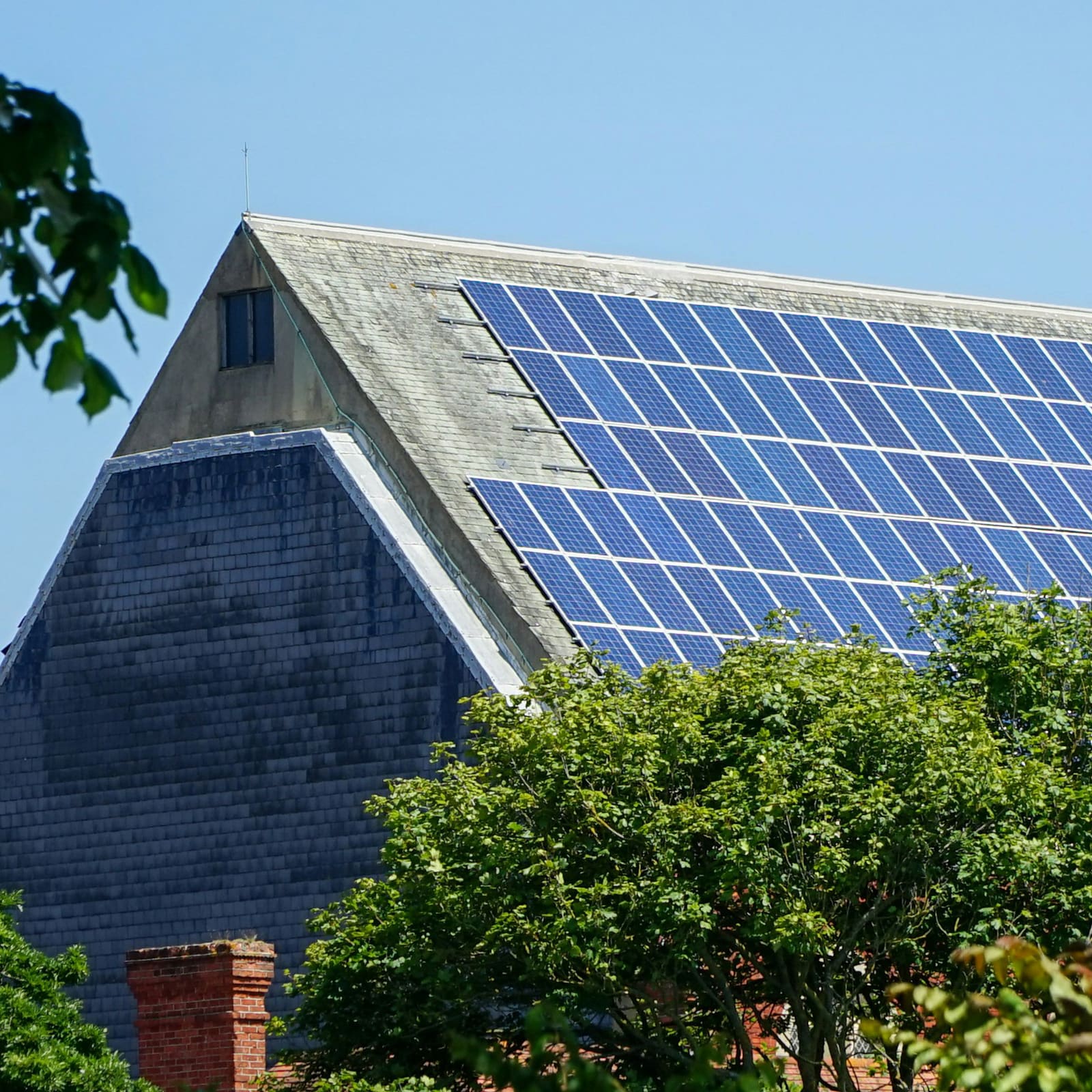
To achieve verification, a building must eliminate on-site fossil fuels entirely, generate renewable energy within its footprint, and minimise both upfront embodied carbon and measured operational energy consumption, according to Bureau Veritas. The standard explicitly prohibits the use of carbon offsets to meet baseline requirements, though residual emissions may be addressed through offsets once mandatory thresholds are satisfied.
Assessment draws on two data streams: twelve months of monitored energy performance and as-built embodied carbon figures derived from material quantities and construction documentation. This dual focus acknowledges that decarbonisation operates on two timelines, one embedded in the structure at completion, the other unfolding across decades of use.
The approach mirrors strategies we have seen in adaptive-reuse projects, where practitioners such as Snøhetta and David Chipperfield Architects have foregrounded operational efficiency alongside material retention. By requiring evidence rather than projection, the standard aligns with the growing scepticism around performance gaps, a concern that has animated research from the Carbon Trust and academic studies at institutions including the Bartlett School of Architecture.
Verification as a Market Signal
Antoine Giros, vice president at Bureau Veritas, describes the programme as a pivot toward measured, independently verified in-use performance. The company, which has operated in testing and certification for nearly two centuries, positions itself as an impartial assessor capable of validating carbon claims for investors, occupiers, and regulatory bodies.
Buildings that have not yet accumulated a full year of operational data can pursue a preliminary check at practical completion, a stage that evaluates design decisions and installed systems against the likelihood of meeting standards once the building is occupied. For projects that fall short of full verification, Bureau Veritas offers a carbon performance evaluation, a diagnostic tool intended to map decarbonisation pathways.
Katie Jackson-Clements, CEO of the UK Net Zero Carbon Buildings Standard, anticipates that early adopters will establish precedent within the UK construction sector, demonstrating that rigorous performance verification is both feasible and commercially viable.
Why Measurement Matters
The emphasis on post-occupancy data addresses a structural weakness in the building industry's approach to sustainability. Many green building certifications, including BREEAM and LEED, have historically rewarded design features, ventilation strategies, material selections, without requiring proof that those features translate into lower carbon emissions once the building is in use. Studies have documented performance gaps of thirty percent or more between modelled and actual energy consumption, a discrepancy that undermines climate commitments and erodes trust in environmental claims.
Performance-based standards are not new. The Passive House Institute has long required blower-door tests and energy monitoring, while the Living Building Challenge mandates twelve months of net-positive energy performance before final certification. What distinguishes the UK standard is its focus on carbon rather than energy alone, integrating embodied and operational emissions into a single framework.
This integration reflects a broader shift in architectural discourse. Where the 2010s emphasised operational efficiency, recent projects from practices such as Waugh Thistleton Architects and Studio Gang have foregrounded material choice and structural systems as carbon levers. The UK standard formalises that duality, treating upfront and ongoing emissions as inseparable components of a building's climate impact.
The Greenwashing Question
By requiring evidence and prohibiting offsets as a route to baseline compliance, the standard aims to curtail greenwashing, the practice of overstating environmental credentials without substantive performance. The term has gained currency as investors and tenants scrutinise sustainability claims more closely, particularly in commercial real estate where ESG reporting increasingly influences asset valuations.
Whether the standard will gain traction depends on market adoption. Voluntary schemes succeed when they offer competitive advantage, whether through lower operating costs, enhanced marketability, or alignment with regulatory trends. The UK government has signalled interest in tightening building performance standards, and the Future Homes Standard, set to take effect in 2025, already prohibits fossil-fuel heating in new residential construction. A verification programme that documents compliance with net-zero thresholds may become a valuable asset as policy evolves.
What Comes Next
The first wave of verified buildings will reveal how stringent the standard proves in practice. Will it favour low-rise, naturally ventilated typologies where passive strategies can dominate, or can high-rise, mixed-use developments meet the criteria through advanced systems and district energy integration? Will retrofit projects, often constrained by existing envelopes and structural limitations, find pathways to verification, or will the standard effectively privilege new construction?
At World Archi Design, we have tracked the maturation of performance-based frameworks across regions, from Australia's NABERS system to the EU's Energy Performance of Buildings Directive revisions. The UK programme contributes to this lineage, adding rigour to a sector where aspiration has often outpaced accountability. The question is whether the market will reward that rigour, or whether the path of least resistance, design-stage certification without operational follow-through, will continue to define the mainstream.
Save this story. A free account keeps your reading list and the 07:00 email in one place.
CREATE FREE ACCOUNT →SIGN IN