The Building That Became a Symbol
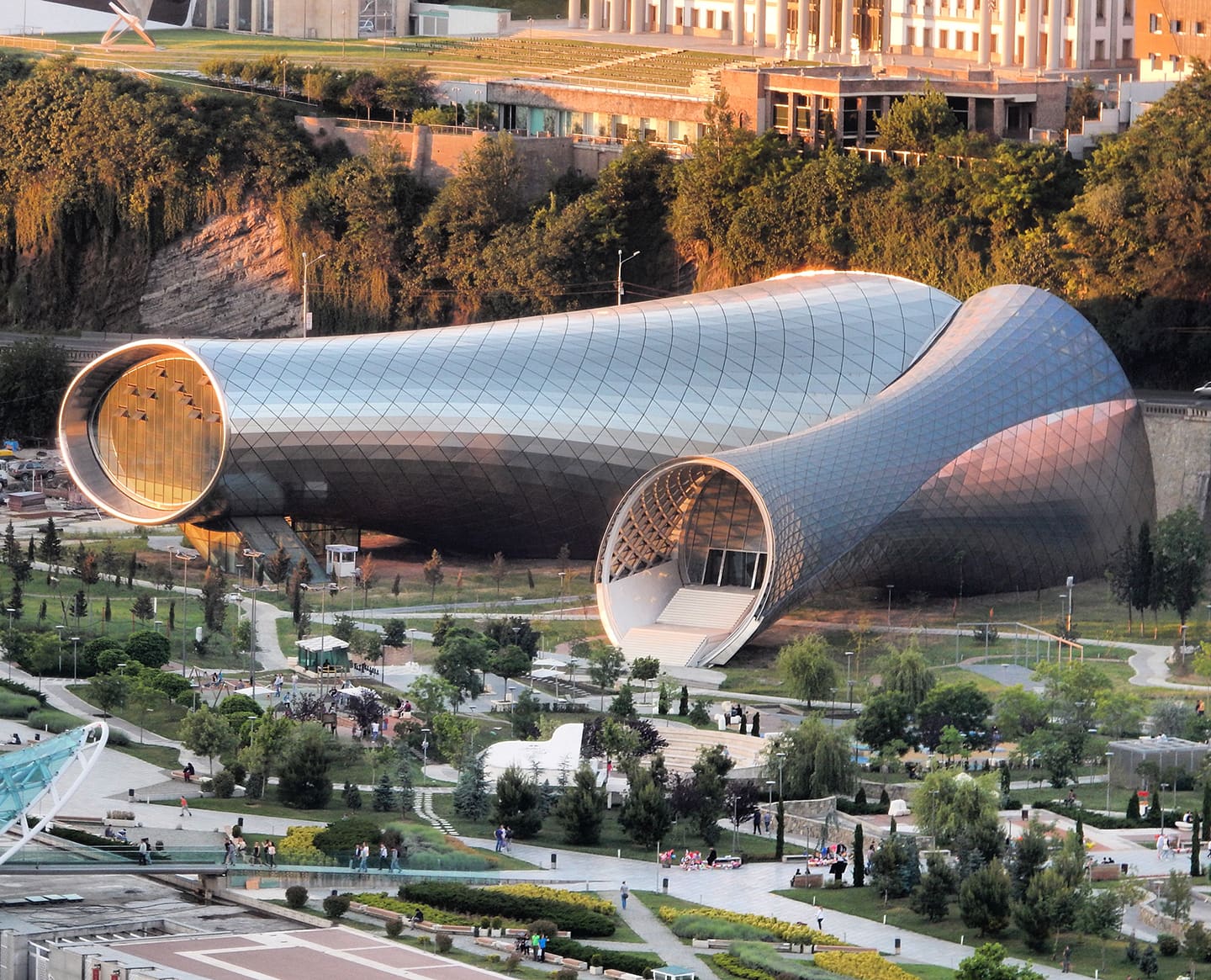
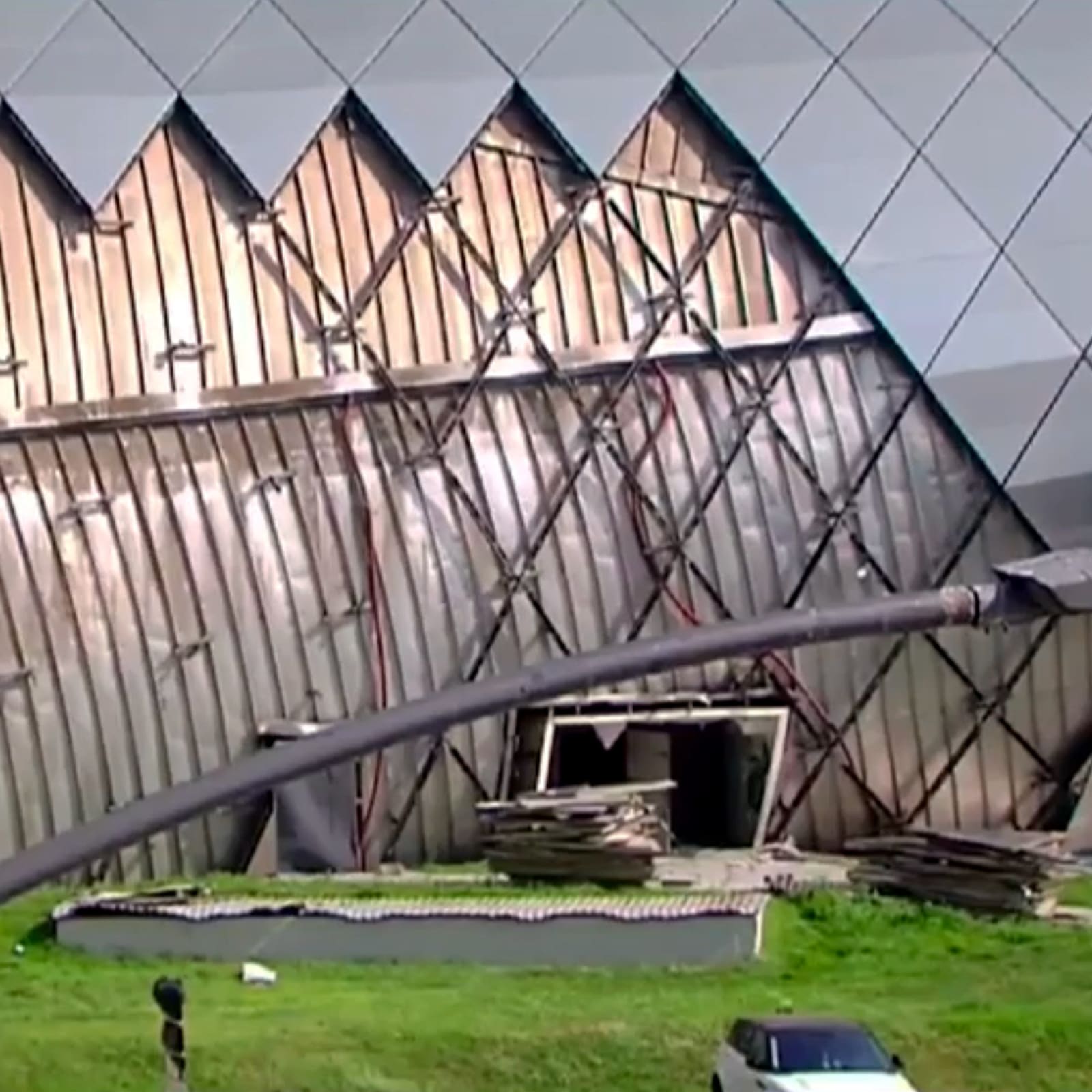
Some structures are built to host performances; others become performances themselves. In Tbilisi's Rike Park, workers are now peeling away the stainless-steel scales from a pair of tubular volumes that were meant to anchor the city's cultural renaissance. Instead, the venue has spent more than a decade as an elaborate monument to interrupted ambition, its interiors never fitted out, its doors never opened.
The twin-tube hall was commissioned during a period of rapid urban transformation under Georgia's previous administration, part of a broader push to reposition Tbilisi as a regional cultural hub. Studio Fuksas conceived the building as a sculptural presence along the riverside, its form echoing organic geometries while the metallic cladding caught and refracted light across the park. Construction reached substantial completion in 2012, but a change in government that same year left the project in limbo. The new administration distanced itself from initiatives tied to the prior regime, and the concert hall became collateral damage in a broader political realignment.
Abandonment as Policy
At World Archi Design, we've tracked numerous cases where architectural projects stall due to economic downturns or contractor disputes. Political abandonment is rarer, and more instructive. The Rike Concert Hall was not mothballed because of budget shortfalls or engineering defects. Its shell stood intact, its envelope largely weatherproof. What it lacked was not technical completion but political will. The building's association with a discredited administration rendered it untouchable, a physical reminder that architecture, however formally inventive, cannot insulate itself from the contexts that commission it.
For a decade, the structure sat closed to the public, its distinctive silhouette a fixture in the park but functionally inert. In 2022, the property changed hands to a developer; three years later, Makro Constructions acquired the site. The new owner secured a demolition permit from Tbilisi's architecture department, and crews began removing the cladding panels shortly thereafter.
Formal Language and Material Choices
Studio Fuksas's design deployed two elongated, tube-like forms that opened toward the park, creating a gestural relationship with the surrounding landscape. The stainless-steel panels, arranged in a scale-like pattern, gave the facade a reptilian or ichthyic quality, suggesting movement and adaptability. This choice of material and articulation aligned with the studio's broader interest in biomorphic geometries and surfaces that animate through light and reflection.
The parti recalls precedents in which architects use repetitive modular cladding to unify complex volumes. Gehry's Guggenheim Bilbao, Foster's Sage Gateshead, and even Calatrava's earlier work in Valencia share a reliance on metallic skins to mediate between sculptural ambition and structural legibility. Fuksas's approach was more restrained in curvature but no less committed to a legible formal identity. The question, in hindsight, is whether that identity became too legible, too easily read as an emblem of a particular political moment.
The Economics of Demolition
Demolition permits are not issued lightly in urban centers with historic fabric and regulatory oversight. The fact that Tbilisi's architecture department granted permission suggests either a pragmatic assessment of the building's viability or a political calculus that favors redevelopment over preservation. Makro Constructions, as the current owner, presumably sees greater economic return in clearing the site than in retrofitting or repurposing the structure.
Adaptive reuse of incomplete buildings is technically feasible but economically fraught. Without interior systems, acoustic treatment, or public infrastructure, the shell represents a fraction of a functioning concert hall. The cost of completion, combined with the reputational baggage of the project's origins, likely outweighed any cultural or financial incentive to salvage it. In this calculus, the building's formal distinctiveness became a liability rather than an asset.
Studio Fuksas's Response and the Limits of Advocacy
In response to the demolition plans, Studio Fuksas characterized the decision as a cultural setback and indicated that the firm had reached out to Georgian authorities with proposals for alternative uses. Those overtures went unanswered. This silence is revealing. It suggests that the building's fate was decided not on architectural grounds but on political and economic ones, domains in which the original designer holds little leverage once a project changes ownership.
Architects often speak of buildings outliving their creators, but they less frequently confront the reverse: projects that are erased before they achieve their intended use. The studio's statement framed the demolition as premature and irreversible, language that underscores the finality of the decision and the foreclosure of possibilities. Yet it also highlights a structural problem in the profession. Once a building is sold and its political context shifts, the architect's voice becomes advisory at best, ceremonial at worst.
Precedents in Political Erasure
Tbilisi's concert hall is not the first instance of architecture undone by regime change. The Palace of the Republic in Berlin, the Ryugyong Hotel in Pyongyang, and numerous Soviet-era cultural centers across Eastern Europe have faced similar fates, oscillating between abandonment, repurposing, and demolition. What distinguishes the Rike Concert Hall is the speed of its reversal. Fifteen years from substantial completion to demolition is an unusually compressed timeline, especially for a building that was neither structurally unsound nor functionally obsolete.
This compression reflects a broader impatience with inherited symbols. In post-transition societies, architecture tied to previous regimes often becomes a referendum on memory and identity. Preservation implies continuity; demolition signals rupture. The choice to dismantle rather than adapt suggests that the building's symbolic weight outweighed any potential cultural or economic utility.
What Remains
As crews strip away the stainless-steel scales, exposing the structural skeleton beneath, the building reverts to a state of raw materiality. The tubes, once clad in reflective armor, now read as industrial artifacts, their formal ambition visible but diminished. This process of undressing is itself a kind of performance, a public unmaking that inverts the logic of construction.
For Tbilisi, the site will soon be vacant, available for redevelopment according to current priorities. For the broader discourse on architecture and politics, the case study is complete. The Rike Concert Hall demonstrates that buildings are never just buildings. They are investments, symbols, and liabilities, subject to forces far beyond the control of those who design them. The concert hall that never played a note will leave no acoustic legacy, only a cautionary tale about the fragility of architectural ambition in contested political terrain.
Save this story. A free account keeps your reading list and the 07:00 email in one place.
CREATE FREE ACCOUNT →SIGN IN