As financial institutions evolve in response to digital transformation, their physical spaces are undergoing equally profound change. Vikki Digital Bank offers a compelling example of how global design movements can be translated into a localized, human-centered environment. In this interview, Vikki Digital Bank’s representative shares insights into the thinking behind their interior concept and its broader implications for the future of banking design.
VIKKI’s interiors feel distinctly different from traditional banks. What was the starting point for this design approach?
The starting point was our vision of digital transformation, but equally important was how that vision resonates locally. We wanted to move beyond the rigid, formal model of traditional banks and create a space that reflects a more contemporary Vietnamese lifestyle - dynamic, open, and increasingly digital. It’s about translating global ideas into something people here can immediately relate to and feel comfortable in.
How do global design trends influence the spatial concept at Vikki?
We are inspired by the broader global movement toward digitalization and experience-driven design. However, we don’t adopt them directly, we reinterpret them through a local lens. The space is open and flexible, but also intuitive to how customers in Vietnam prefer to interact: more social, more fluid, and less formal. This balance between global standards and local behaviors is key to the design.

Can you elaborate on the idea of “local expression” within the project?
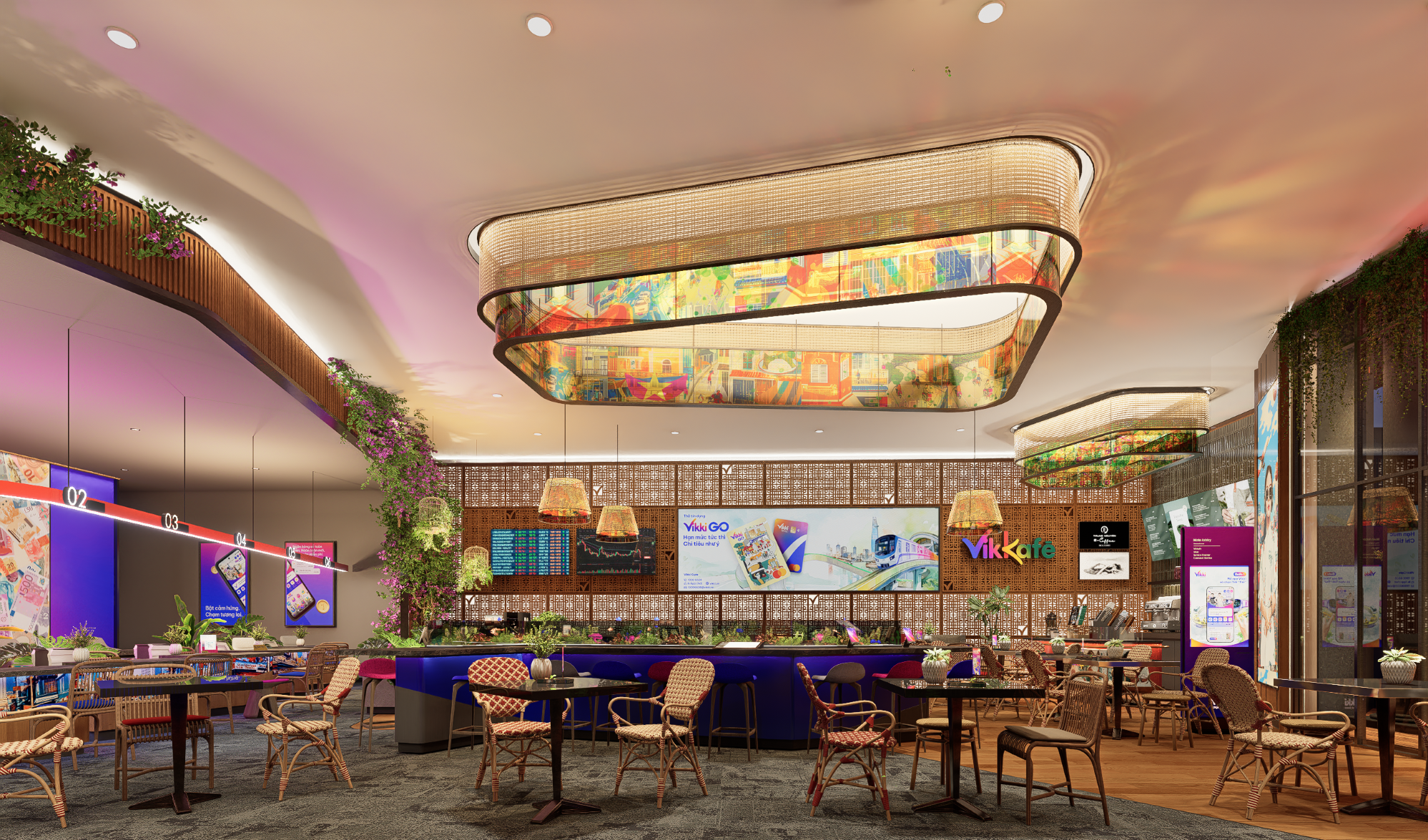
Local expression is embedded in both the atmosphere and the way people use the space. For example, the inclusion of the Vikkafe reflects Vietnam’s strong coffee culture - a familiar and welcoming setting that encourages people to stay, meet, and engage. The spatial openness also aligns with a more communal way of interaction, while the use of brand colors and visual elements ensures consistency with Vikki Digital Bank’s identity. It’s not about decorative references, but about creating a space that feels naturally integrated into everyday local life.
In what ways does the design redefine customer experience within a banking environment?
Traditionally, banks are purely transactional spaces. We wanted to make them experiential. By creating relaxing waiting areas, flexible seating, and coffee-drinking zones - Vikkafe, we encourage people to engage with the space in a more relaxed way. At the same time, we maintain trust and professionalism through structured layouts and familiar banking elements. This duality - open yet secure - is especially important in building confidence among local users.

There appears to be a strong influence from the high-quality experiential service model and lifestyle. How is this reflected in the design?
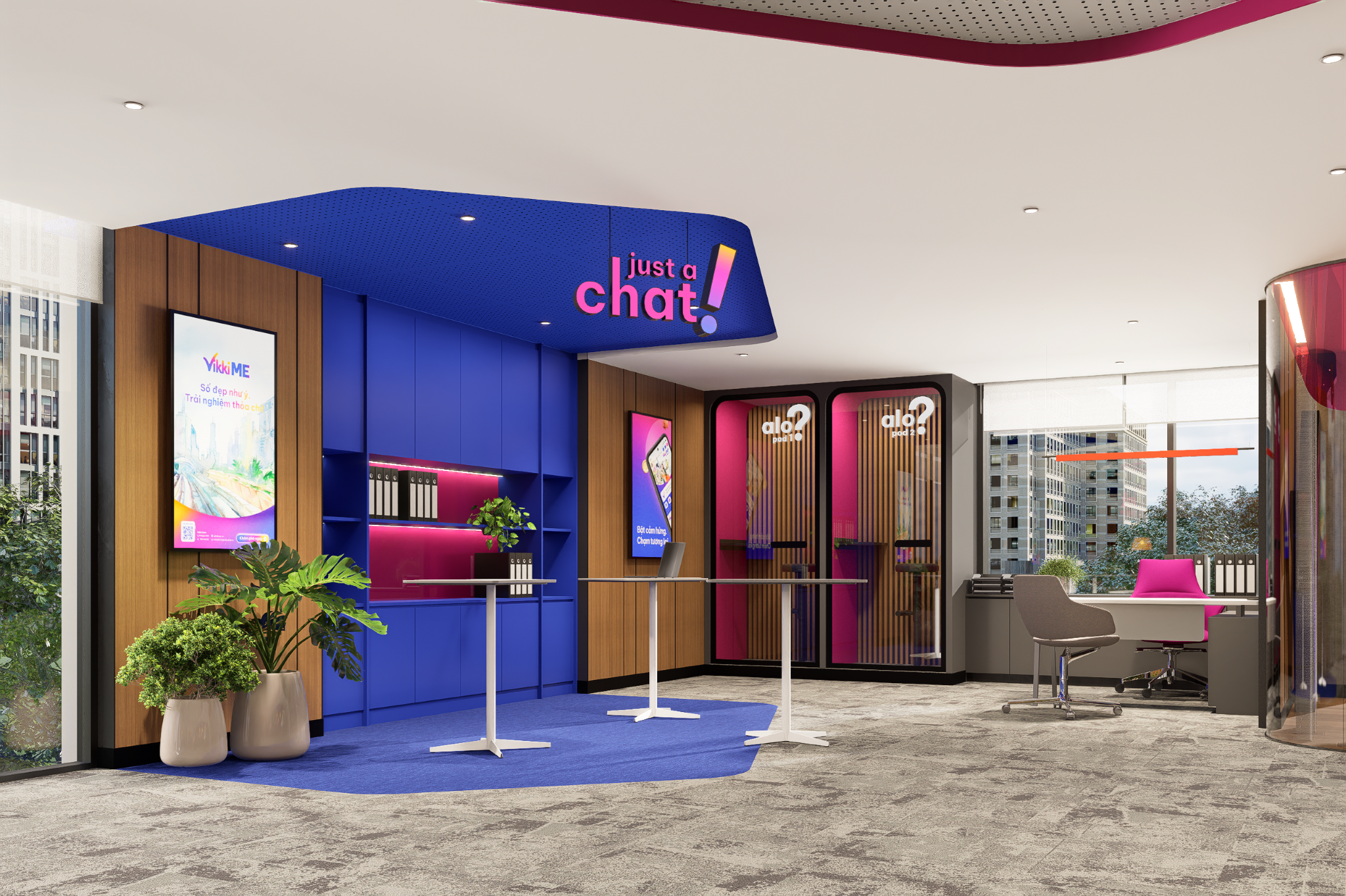
Absolutely. We see banking as part of a broader lifestyle ecosystem. That’s why we integrate elements like coffee counters, real estate consultation zones, and multifunctional areas. Users can transition seamlessly between financial services and other experiences. This approach transforms banks into a new, more experiential destination rather than a traditional service space.
What role do art and digital media play in shaping the identity of the space?
Digital media and artistic elements help us connect global aesthetics with local energy. LED displays, neon lighting, and digital installations create a vibrant, contemporary environment, while also reflecting the fast-paced, youthful spirit of urban Vietnam. These elements are not just visual, they contribute to how people feel and interact within the space.

How does the design balance innovation with functionality?
Functionality is essential. We’ve introduced self-service banking stations to reduce reliance on traditional counters, making the experience faster and more convenient. The layout is optimized for circulation and interaction, while flexible spaces allow the environment to adapt for events, seminars, or community activities. It’s about creating a space that works efficiently while remaining comfortable and inviting.
Looking ahead, how do you see this approach influencing the future of bank interiors?
We believe the future lies in this balance between global innovation and local relevance. Financial spaces need to be technologically advanced, but also culturally attuned and human-centered. By integrating these elements, we’re not just redesigning a bank, we’re redefining how people experience financial services as part of their everyday lives.
PHOTO CREDIT: Vikki Digital Bank
Save this story. A free account keeps your reading list and the 07:00 email in one place.
CREATE FREE ACCOUNT →SIGN IN