Project Info
Project Name: Dior Bamboo Pavilion
Location: Daikanyama, Tokyo, Japan
Architect: Dior
Landscape Designers: Azuma Makoto, Seijun Nishihata
In Tokyo’s quietly creative district of Daikanyama, a luminous structure rises like a mirage - at once architectural object, landscape, and cultural narrative. The Dior Bamboo Pavilion is not simply a retail destination; it is an experiential environment where fashion, nature, and craftsmanship converge into a single, orchestrated journey.
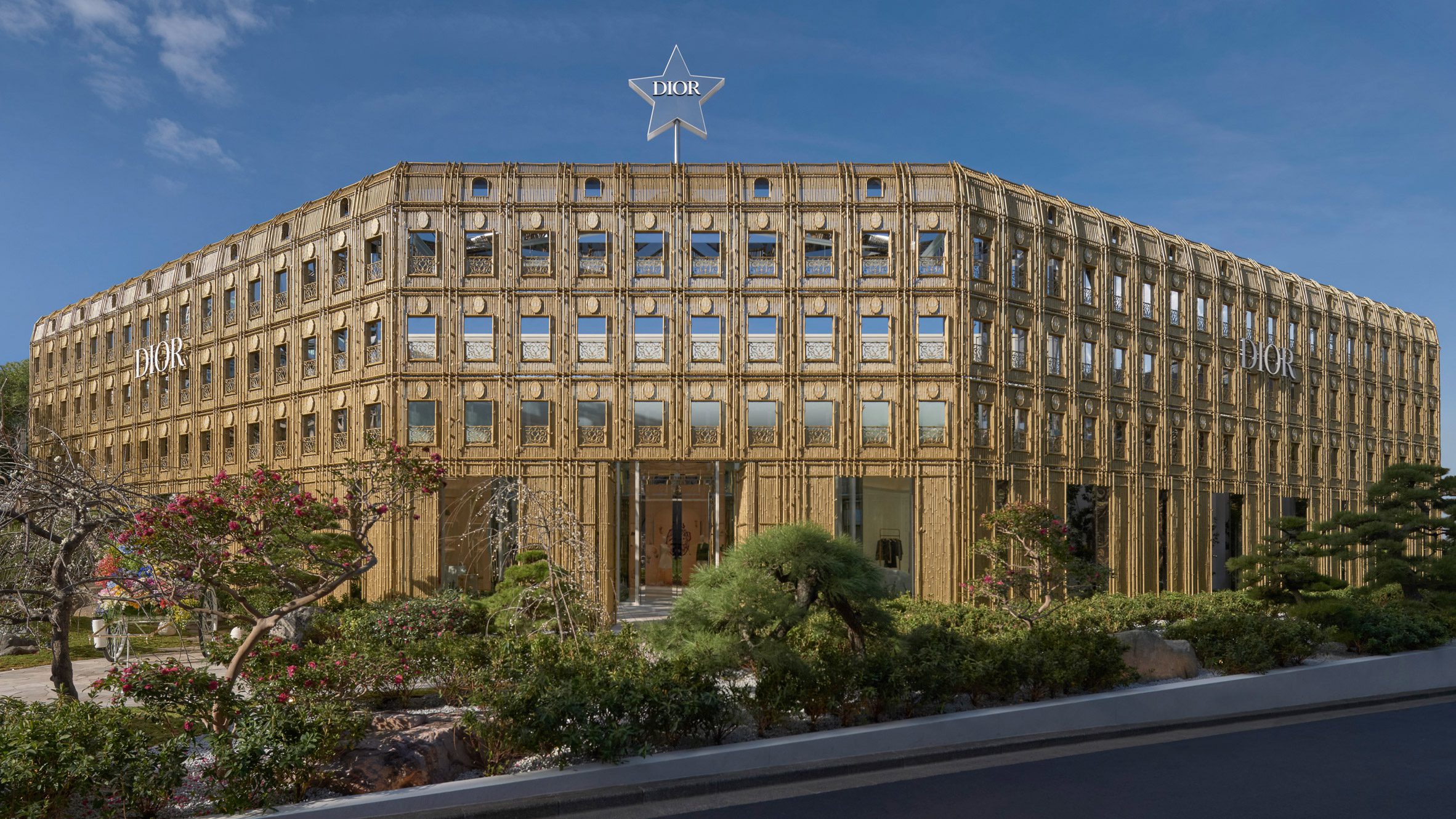
Conceived as a temporary yet monumental intervention, the pavilion reinterprets Dior’s historic façade at 30 Avenue Montaigne through a distinctly Japanese lens. Here, the language of Parisian elegance is translated into a gilded forest of bamboo-like elements, forming a glowing envelope that shifts with light - soft and reflective by day, radiant and theatrical by night.

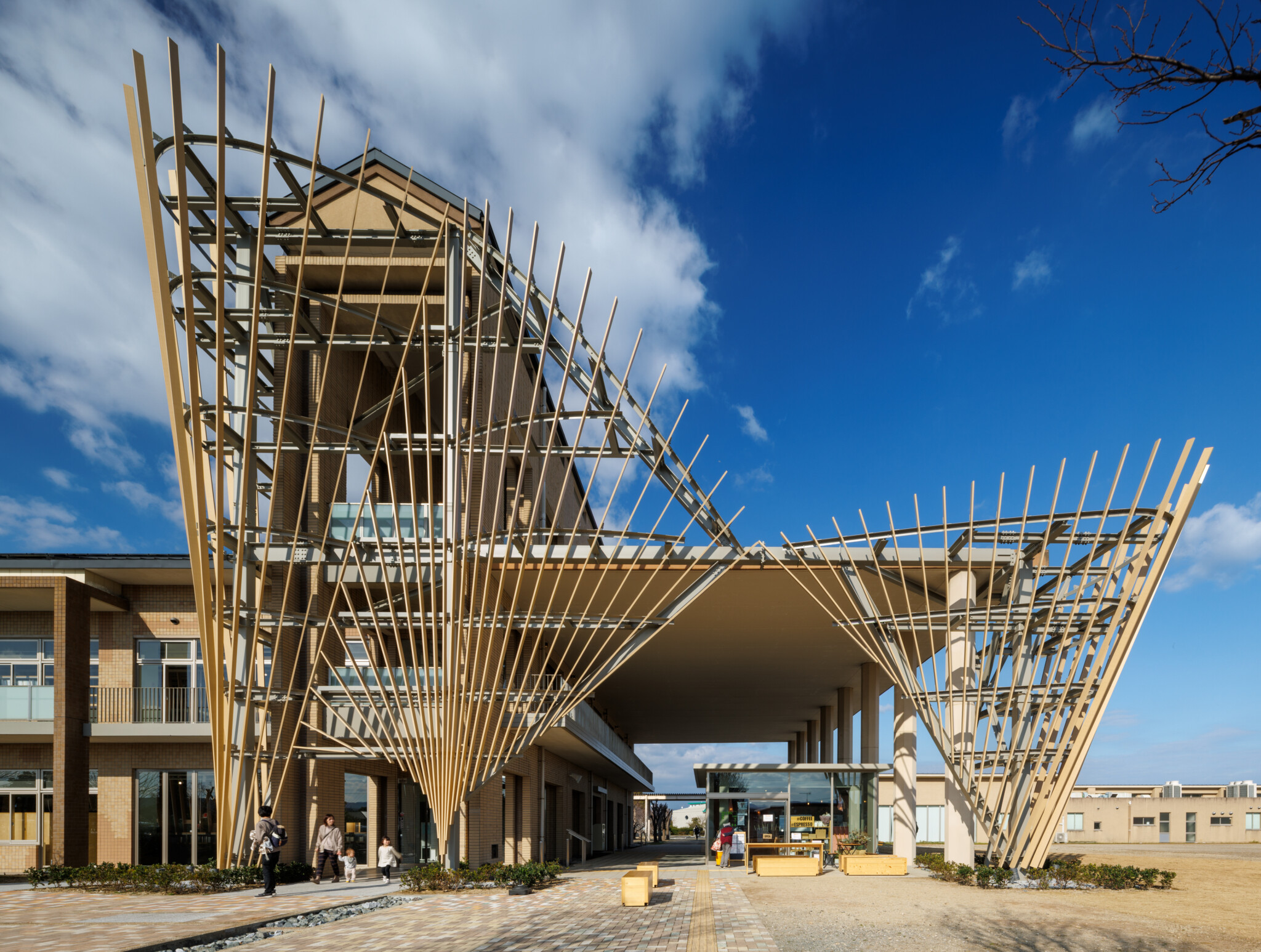
A luminous façade of golden bamboo-like columns forms a porous veil, reinterpreting Dior’s Parisian identity through a distinctly Japanese architectural rhythm
Spanning over 1,800 square metres, the project unfolds as a sequence of immersive environments rather than a conventional boutique. At its core lies an expansive indoor garden, an almost cinematic landscape conceived by floral artist Azuma Makoto, where dense vegetation becomes both spatial anchor and emotional register. The garden is not decorative; it defines circulation, choreographing how visitors move, pause, and encounter the brand.
This biophilic narrative extends outward into a Zen garden by landscape designer Seijun Nishihata, where moss, stone, and water introduce a contemplative rhythm. Together, these layers dissolve the boundary between architecture and nature, reinforcing Christian Dior’s lifelong fascination with gardens as a source of creative inspiration.

Floor-to-ceiling glass dissolves the boundary between interior and garden, allowing light, air, and greenery to flow seamlessly through a softly choreographed threshold

A quiet, timber-lined retreat sits lightly within the landscape, where filtered light, natural textures, and measured proportions reinterpret the intimacy and ritual of a contemporary teahouse
Inside, the pavilion becomes a dialogue between French codes and Japanese craft. Walls clad in delicate washi paper diffuse light into a soft glow, while Versailles parquet flooring grounds the interiors in Dior’s heritage. Lanterns subtly echo the form of the Lady Dior bag, and bespoke furnishings by Japanese designers add a tactile, artisanal dimension. The result is a spatial language that feels both restrained and richly layered where ornament is replaced by nuance.

Softly illuminated interiors balance washi-clad surfaces with refined detailing, creating an environment that feels both intimate and ceremonial

Bespoke furnishings by Japanese designers introduce tactile richness, reinforcing the pavilion’s dialogue between global luxury and local craftsmanship
Rather than organizing products by category alone, the pavilion presents Dior’s universes as curated moments. Ready-to-wear, accessories, and jewellery unfold alongside spaces for customization, transforming retail into a process of personal expression. This approach reflects a broader shift in luxury architecture: from transactional environments to experiential ecosystems.

Objects are presented as curated moments, each display framed as a vignette within the larger spatial narrative
Art is embedded throughout the project. Installations, tapestries, and sculptural interventions by Japanese creatives punctuate the interiors, reinforcing the pavilion’s role as a cultural platform rather than a singular brand statement. Each collaboration contributes to a layered narrative that situates Dior within a continuum of global and local craftsmanship.

Custom lanterns subtly echo the geometry of the Lady Dior bag, embedding brand identity within architectural elements
The journey culminates at Café Dior, where gastronomy becomes an extension of the spatial experience. Designed in collaboration with Michelin-starred chef Anne-Sophie Pic, the café translates Dior’s aesthetic codes into culinary form, merging French savoir-faire with Japanese sensibility. Here, taste, scent, and atmosphere converge, completing the pavilion’s multi-sensory narrative.

A quiet interplay of light, craft, and landscape defines the pavilion as an immersive architectural garden
Ultimately, the Dior Bamboo Pavilion transcends its function as a store. It operates as a “garden of experiences” - where architecture frames emotion, and where the boundaries between fashion, art, and landscape dissolve. In doing so, Dior not only reaffirms its enduring relationship with Japan, but also redefines the future of luxury retail as something far more poetic: an environment to be felt as much as it is seen.
PHOTO CREDIT: Daici Ano
Save this story. A free account keeps your reading list and the 07:00 email in one place.
CREATE FREE ACCOUNT →SIGN IN