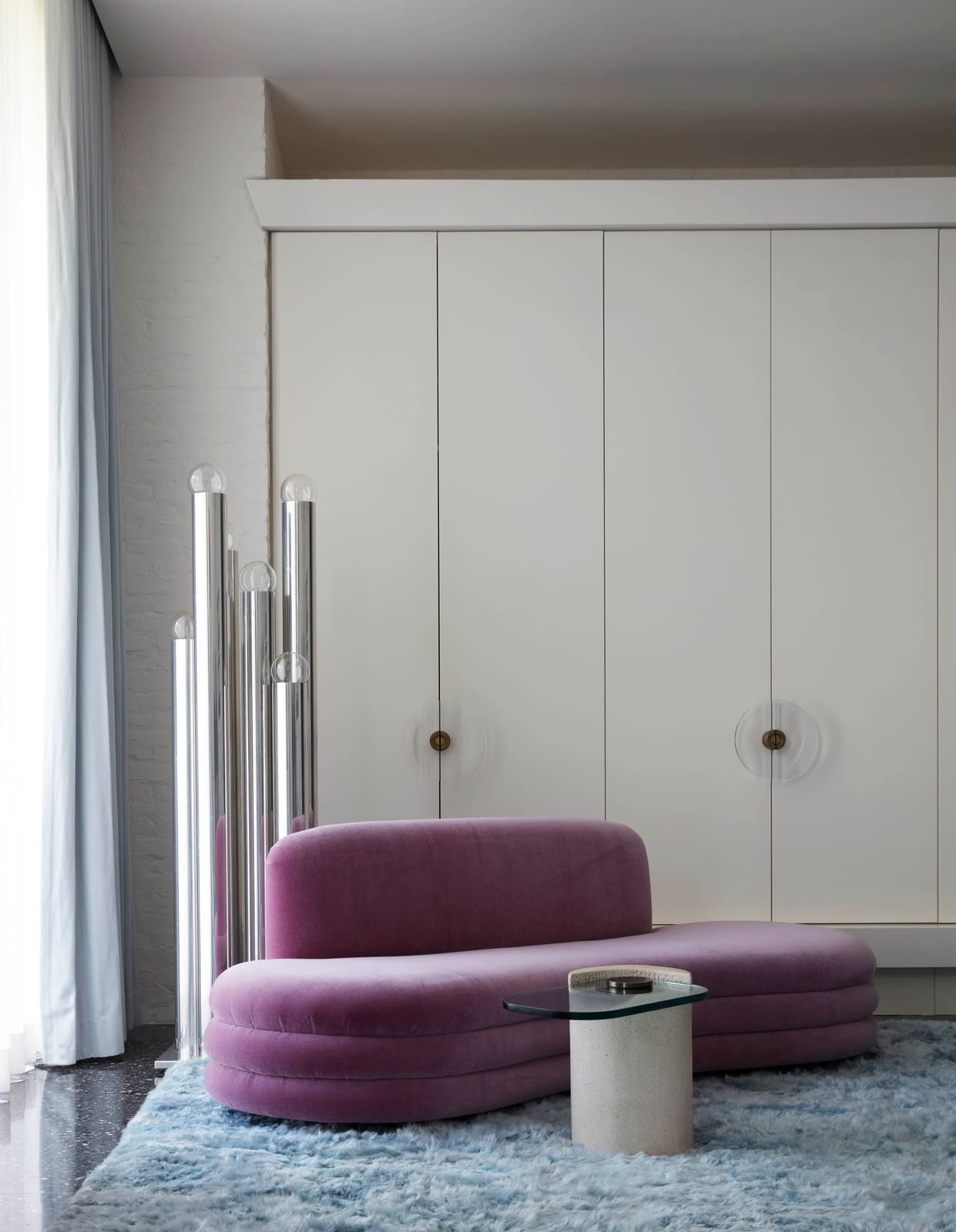
A Texture That Refuses to Disappear
The shag rug has survived decades of design ridicule, outlasted the conversation pit, and quietly returned to interiors that prize tactility over minimalism. What changed? The contemporary versions bear little resemblance to their neon-hued predecessors. Instead, designers are gravitating toward pieces that balance pile height with material integrity, favoring natural fibers and muted palettes that nod to Nordic sensibility rather than disco-era excess.
Emma Chamberlain installed a clay-toned high-pile piece in her sitting room. Aurora James chose hand-tufted texture for her office. A renovated San Fernando home honored its bohemian lineage with plush underfoot warmth. These aren't nostalgic gestures. They reflect a broader shift toward interiors that feel lived-in, approachable, and sensorially rich.
The Material Calculus
At World Archi Design, we've been tracking how material choice shapes the performance and lifespan of high-pile rugs. Wool remains the gold standard. Quince offers a 5x8 piece in 100% wool for $460, a price point that undercuts most artisanal alternatives by a significant margin. The construction includes kilim-woven end bands and fringe details that elevate the piece beyond budget-category anonymity. Available in ivory and deep beige, the rug reads as heirloom rather than trend-chasing.
For those prioritizing durability over provenance, polypropylene presents a pragmatic alternative. IKEA's VOLLERSLEV rug uses synthetic fibers to achieve stain resistance and moisture control, practical advantages in high-traffic zones or homes with pets. The pile height mimics vintage proportions, and the total cost hovers just above $300 with a matching pad. The tradeoff is clear: synthetic construction sacrifices some of wool's warmth and aging character but gains resilience.
Ferm Living's Meadow rug demonstrates what happens when material quality becomes the primary design driver. An 8 cm pile of New Zealand wool gives the surface a disheveled, almost bedhead texture. The macadamia off-white colorway avoids the stark clinical quality of pure white, landing instead in a warmer, more forgiving tonal range. Copenhagen-based Ferm Living has long understood that restraint requires precision, and this piece exemplifies that ethos.
Pattern as Depth
Not all contemporary shag rugs lean minimalist. Nordic Knots introduced the Ryya 01, a geometric piece that uses colored yarns to create salt-and-pepper visual layering. The pile height is lower than traditional shag, but the pattern work adds textural complexity. Even the most subdued colorway, a pairing of pinkish beige and olive green, introduces dimensional interest that flat-weave rugs struggle to match. The bolder combinations, blue-and-red or purple-and-green, push into statement territory without sacrificing sophistication.
Revival's Mohair Shag takes a different approach, drawing inspiration from agricultural landscapes rather than graphic design. The mohair fiber creates natural light variation, mimicking the way wind moves through a wheat field. The golden olive colorway benefits from this inherent tonal shift, reading as nuanced rather than saturated. With over 50 customization options and a hand-knotted construction, the piece occupies the space between mass production and bespoke commission.
Maintenance and Practicality
High-pile rugs present real maintenance challenges. Vacuuming becomes difficult as pile height increases, and spills penetrate deeper into the fiber structure. Rugs USA addressed this with a washable polyester shag rug, a pragmatic solution for households where practicality outweighs material purism. The 0.65-inch pile height strikes a middle ground, offering textural interest without the cleaning complications of taller versions. The tradeoff, as always, is material: polyester lacks the warmth and aging character of natural fibers, but it survives the washing machine.
For those willing to invest in both craft and material rarity, Beni's Siroua shag rug represents the upper end of the market. Woven from the fleece of Siroua sheep, a long-hair breed that enables the 4-inch pile height, the rug was designed in collaboration with Tom Delavan. Moroccan artisans produce limited quantities, and prices start at $1,050. The piece functions less as floor covering and more as textile sculpture, a statement of material provenance and artisanal labor.
Why Texture Matters Now
We're witnessing a broader recalibration in residential interiors. After years of hard-edged minimalism and polished surfaces, designers and homeowners are reintroducing softness, warmth, and tactile variation. The shag rug, once dismissed as kitschy, now serves as a tool for creating hygge-inflected spaces that prioritize comfort without sacrificing visual coherence.
The Scandinavian influence is unmistakable. High-pile rugs evoke the warmth of natural pelts without relying on animal hides, a material choice that aligns with shifting attitudes toward sustainability and ethics. The texture mimics the cocooning quality of wool blankets and sheepskin throws, grounding a room in sensory experience rather than purely visual composition.
This isn't a wholesale return to 1970s maximalism. The contemporary shag rug operates within a tighter chromatic range, favoring earth tones, off-whites, and muted greens over chartreuse and burnt orange. The restraint allows the texture itself to become the focal point, adding depth without competing for attention.
Precedent and Evolution
The shag rug's lineage traces back to Scandinavian rya rugs, traditional textile forms that used long pile for both insulation and decoration. Finnish and Swedish weavers developed the technique centuries ago, creating pieces that functioned as bedcovers and wall hangings before migrating to floors. The 1960s and 70s popularized the form in North America, often stripping away the craft rigor in favor of mass production and bold color.
Today's revival hews closer to the original Scandinavian model. Brands like Nordic Knots and Ferm Living anchor their designs in Nordic craft traditions, emphasizing material quality and restrained palettes. Even American and Moroccan producers are adopting this approach, recognizing that the shag rug's longevity depends on moving beyond novelty toward enduring material and construction standards.
Selecting for Context
Choosing a high-pile rug requires balancing aesthetic ambition with practical constraints. In low-traffic spaces like bedrooms or sitting rooms, natural fibers and taller piles perform well, adding warmth without facing excessive wear. In entryways or family rooms, shorter piles and synthetic fibers offer better resilience.
Scale also matters. Oversized shag rugs can overwhelm smaller rooms, making spaces feel cluttered rather than cozy. In open-plan layouts, a well-placed high-pile piece can define zones without introducing visual barriers, anchoring seating areas or delineating dining spaces.
Color selection should account for the rug's textural complexity. High-pile surfaces create shadow and depth, so even neutral tones read as visually active. Bright or highly saturated colors risk overpowering a room, especially in smaller footprints. The most successful installations use shag rugs as textural counterpoints to harder surfaces, stone, wood, concrete, allowing the material contrast to drive the spatial experience.
The Craft Argument
At World Archi Design, we've long argued that interiors should reflect the labor and skill embedded in their materials. The shag rug, when executed well, foregrounds this craft. Hand-knotting, natural fiber selection, and artisanal dyeing processes distinguish high-quality pieces from mass-market alternatives. These details aren't purely aesthetic. They determine how a rug ages, how it responds to light, and how it performs over years of use.
The Beni Siroua rug exemplifies this principle. The collaboration between designer and artisan, the use of a specific sheep breed, and the limited production run all signal a commitment to craft that transcends trend cycles. The same logic applies, at different price points, to Quince's wool pieces and Ferm Living's New Zealand wool constructions. Material provenance and production method become legible in the finished object.
This emphasis on craft doesn't preclude synthetic options. Polypropylene and polyester rugs serve different needs, and their durability makes them viable for contexts where natural fibers would fail. The key is clarity about what each material offers and what it sacrifices.
Looking Forward
The shag rug's resurgence suggests a broader appetite for texture and tactility in residential design. As interiors continue to prioritize comfort and sensory richness, we expect to see more experimentation with pile height, fiber blends, and pattern integration. The challenge will be maintaining material integrity while expanding stylistic range, avoiding the pitfalls of the 1970s mass market while keeping prices accessible.
Designers are already pushing in new directions. Geometric patterns add visual complexity without sacrificing the rug's softness. Mohair blends introduce light variation and tonal depth. Washable constructions make high-pile texture practical for a wider range of households. These innovations signal that the shag rug isn't simply returning; it's evolving, shedding its retro baggage while retaining the qualities that made it appealing in the first place: warmth, texture, and the quiet luxury of something soft underfoot.
Save this story. A free account keeps your reading list and the 07:00 email in one place.
CREATE FREE ACCOUNT →SIGN IN