The Economics of Interior Textiles
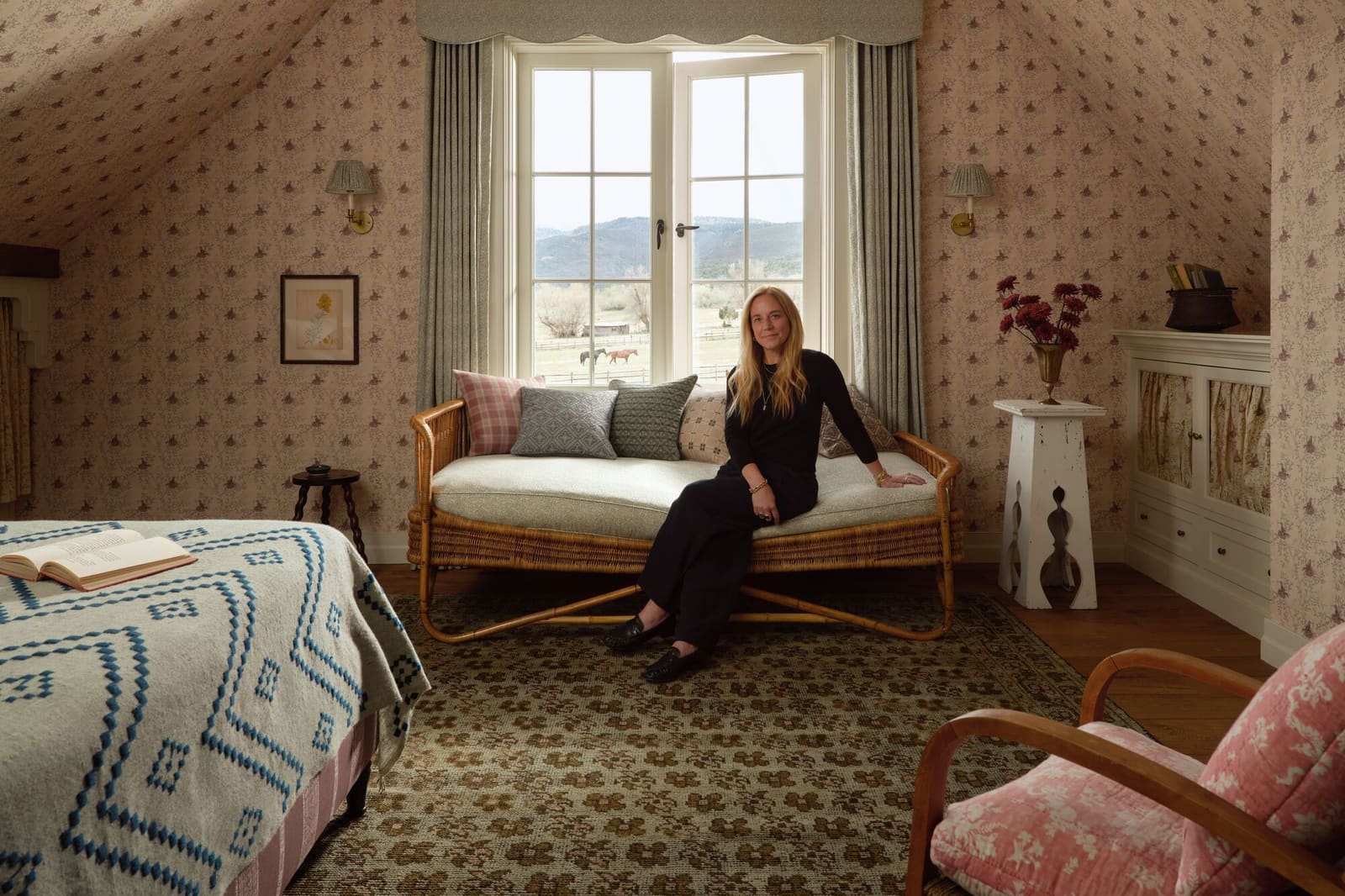
At World Archi Design, we've been tracking an interesting paradox in residential interiors: the designers who command the highest fees are often the most judicious about where they allocate budget. Heidi Caillier, whose portfolio includes high-profile mountain retreats and coastal residences across the American West, recently articulated what many practitioners quietly acknowledge. Even on her own projects, floor coverings occupy a curious position in the hierarchy of investment.
This philosophy has shaped her second collaboration with Joon Loloi, a collection of 37 rugs and accompanying pillows that deliberately targets the accessible end of the market. Entry-level rugs begin at $59, with throw pillows priced between $39 and $59. The positioning is intentional, reflecting Caillier's conviction that foundational textiles should not constitute a barrier to cohesive interior design.
Pattern Language and Vintage Reference
The collection's aesthetic vocabulary draws heavily from vintage textiles, a direction Caillier established in her first collaboration with the manufacturer. This iteration, however, pushes further into specific motifs: florals rendered in repeating patterns, geometric stripes, plaids, and checkered compositions. The approach reflects a particular strand of American interior design that privileges the appearance of accumulated objects over coordinated sets.
One standout piece, the Rothwell rug, originated from a vintage textile that Caillier encountered roughly a decade ago. The persistence of that visual memory speaks to how designers archive references, allowing specific forms and color relationships to resurface when context permits. The translation from vintage artifact to contemporary production involves technical negotiation, as weaving construction fundamentally alters how pattern reads across a surface.
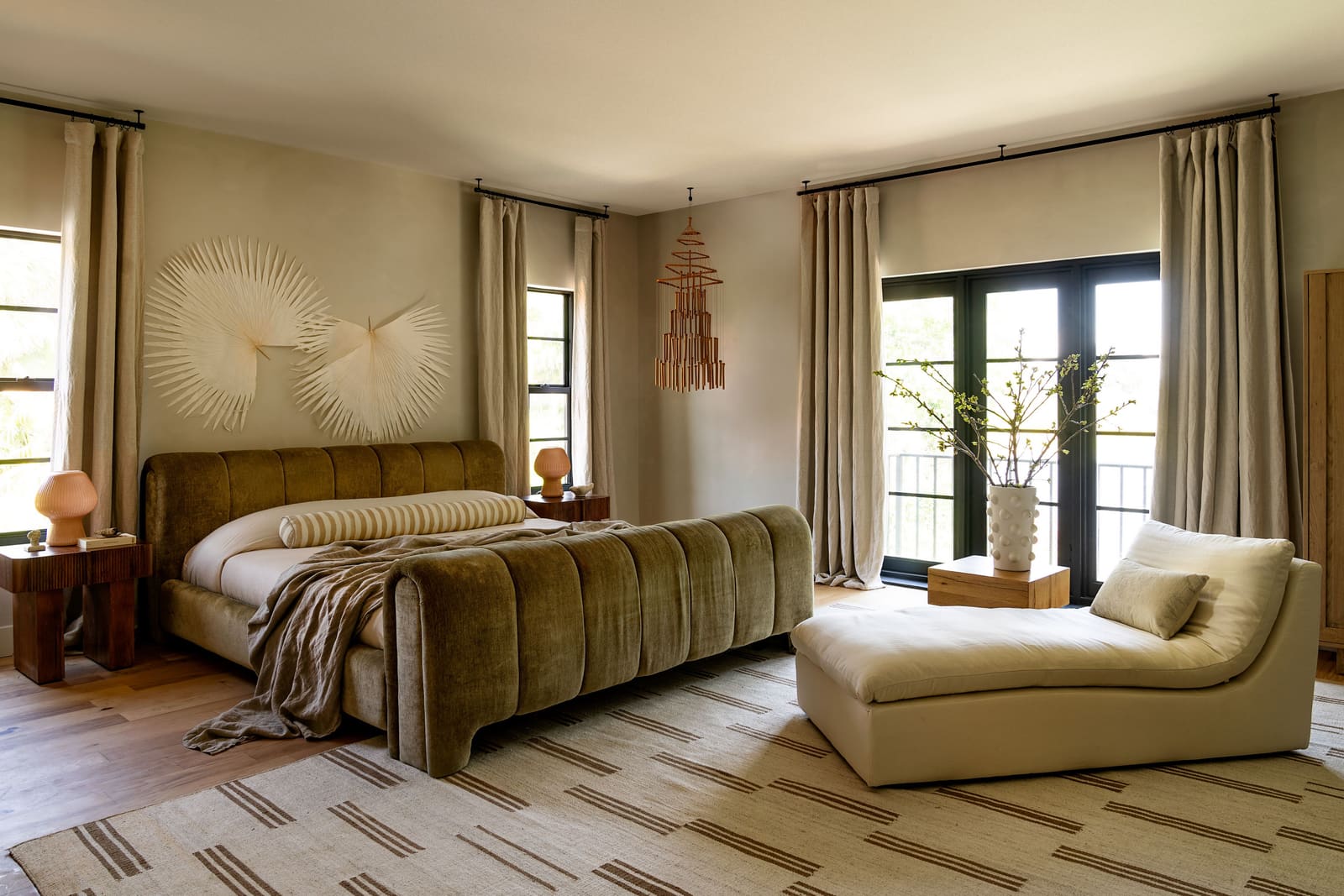
The Scarlett rug exemplifies another facet of the collection's approach. Used to anchor a Colorado living room, it demonstrates the designer's preference for what she terms "muted, muddier tones" functioning as neutrals. This chromatic strategy allows for unexpected adjacencies, where subdued grounds can support either similarly tonal companions or brighter accents in primary colors.
The Interchangeability Principle
Caillier describes the collection as operating on a principle of total interchangeability. Every pattern is designed to harmonize with every other, a claim that might seem ambitious given the range of motifs involved. The coherence derives not from matching color palettes but from shared tonal density. By maintaining consistent value relationships across disparate patterns, the collection permits mixing that would fail under more saturated or contrasting color schemes.
This approach has precedent in the work of designers who embraced pattern-on-pattern layering during the late twentieth century. English country house style, for instance, routinely combined florals, checks, and stripes within a single room, relying on tonal consistency rather than pattern coordination. Caillier's collection translates that sensibility into forms legible to contemporary American taste, which tends toward slightly cleaner articulation than its English antecedents.
The technical construction of these rugs varies across the collection, a factor Caillier identifies as crucial to final appearance. Identical patterns executed in different weaving techniques, tufting densities, or pile heights produce markedly different visual results. This manufacturing variable allows the collection to offer both printed rugs at lower price points and more elaborate constructions for pieces intended as focal elements.
Spatial Proportion and Styling Guidance
Caillier's observations about rug sizing address a persistent miscalculation in residential interiors. Living rooms, she notes, frequently suffer from undersized floor coverings that fail to unify furniture groupings. The conventional wisdom among interior designers holds that in a seating area, the rug should extend beneath all major furniture pieces, or at minimum, beneath the front legs of sofas and chairs.
This principle relates to how humans perceive spatial coherence. A rug that stops short of the furniture perimeter creates visual fragmentation, making the room read as a collection of discrete objects rather than a composed environment. The effect is subtle but measurable in terms of perceived room quality.
On the question of throw pillows, Caillier advocates restraint: five per sofa maximum. This recommendation counters retail styling, which often stacks sofas with eight or more pillows to create visual abundance in showrooms. In residential use, however, excessive pillows become obstacles, requiring removal before seating and storage during use. The five-pillow limit provides visual softness while maintaining function.
Durability as Design Strategy
The collection's positioning emphasizes longevity alongside affordability, a combination that requires careful material selection and construction quality. Caillier suggests these rugs will endure for two decades, placing them in the same lifespan category as upholstered furniture. This claim positions floor coverings not as disposable decor but as infrastructural elements of an interior.
The durability argument has particular relevance in contemporary sustainability discussions. Fast turnover of home furnishings contributes substantially to landfill waste, while longer-lasting pieces reduce replacement frequency and associated environmental impact. By targeting accessible price points without sacrificing construction quality, the collection attempts to disrupt the typical correlation between cost and longevity.
Caillier's recommendation to pair a quality rug with either elaborate window treatments or a statement sofa reflects a strategic approach to budget allocation. Rather than distributing investment evenly across all elements, this method concentrates resources on a few anchoring pieces while allowing other components to occupy supporting roles. The strategy mirrors architectural practice, where a limited material palette, carefully deployed, often produces more coherent results than varied materials applied uniformly.
Manufacturing and Market Context
The collaboration between an independent designer and an established manufacturer like Joon Loloi represents a specific business model within the home furnishings industry. These partnerships allow designers to reach markets beyond their client base while providing manufacturers with differentiated products in a crowded category. For consumers, the arrangement theoretically delivers designer-quality aesthetics at manufacturer-scale pricing.
The model has proliferated across home categories in recent years, from lighting to furniture to textiles. Its success depends on authentic design contribution rather than mere name licensing. In Caillier's case, the vintage textile research and specific pattern development suggest substantive involvement beyond surface branding.
The collection launched in August 2026 through Joon Loloi's direct channels, bypassing traditional wholesale distribution in favor of manufacturer-direct sales. This approach, increasingly common in home furnishings, compresses margins and theoretically allows lower retail prices while maintaining manufacturing quality. The trade-off involves limited physical retail presence, requiring consumers to purchase based on digital representation rather than tactile evaluation.
The Broader Implications
This collection sits within a larger conversation about accessibility in design. For decades, well-designed home furnishings occupied a luxury position, available primarily through trade-only showrooms or at price points that excluded broad consumer participation. The past fifteen years have seen deliberate efforts to democratize design access, from mass-market collaborations by prominent designers to direct-to-consumer brands that eliminate wholesale markup.
Caillier's approach differs slightly from the mass-market collaboration model popularized by Target and other retailers. Rather than designing specifically for manufacturing constraints and rock-bottom pricing, this collection maintains mid-range positioning, allowing for better materials and construction while still achieving accessibility relative to custom or high-end trade sources.
The emphasis on pattern mixing and tonal neutrals also addresses a common consumer hesitation around decorating: the fear of making incorrect choices. By designing a collection where elements intentionally harmonize, Caillier reduces decision anxiety while still offering visual variety. This strategy has pedagogical value, demonstrating principles of pattern combination that consumers can apply beyond the specific collection.
Looking forward, the success of such collaborations may influence how emerging designers build practices. The traditional path, focused exclusively on high-end residential clients and trade sales, increasingly shares space with hybrid models that combine client work, product design, and direct consumer engagement. These diversified practices offer financial stability while expanding designers' cultural reach beyond the narrow band of consumers who can afford full-service interior design.
Save this story. A free account keeps your reading list and the 07:00 email in one place.
CREATE FREE ACCOUNT →SIGN IN