For decades, the modern home has been ruled by the straight line - precise, rational, and quietly authoritative. Walls met at sharp angles, spaces were optimized for efficiency, and geometry followed logic more than instinct. Today, that certainty is beginning to soften. In contemporary residential architecture, curves are re-emerging not as decoration, but as a more intuitive way of shaping how we move, feel, and live within our homes.
Beyond the Box
Curved architecture is not simply an aesthetic rebellion against orthogonal modernism. It responds to how people actually move and dwell. Rounded walls guide circulation intuitively, dissolving the sense of corridors and corners. In homes shaped by arcs rather than angles, spaces unfold gradually, creating moments of anticipation instead of abrupt transitions. The experience is less about efficiency, more about flow.

In Éventail Apartment by Cometa Architects (Spain), interior spaces unfold radially like a hand fan from a central core, with subtly curved transitions and radiating planes guiding circulation, light, and views throughout the home
Photo Credit: José Hevia
The Human Scale of Soft Geometry
Soft geometry resonates with the human body. Circular rooms, elliptical staircases, and arched thresholds mirror organic forms we instinctively recognize - shells, hills, waves. Architects increasingly deploy curves to soften domestic scale, particularly in dense urban homes where sharp boundaries can feel oppressive. A curved wall in a compact apartment can visually expand space, while a rounded ceiling edge subtly lowers acoustic harshness, fostering calm.

In the House for Two Musicians (Portugal), soft interior curves carve intimate zones within the minimalist shell, turning the adaptive reuse into a calm, sound-sensitive domestic landscape
Photo Credit: Federico Cairoli

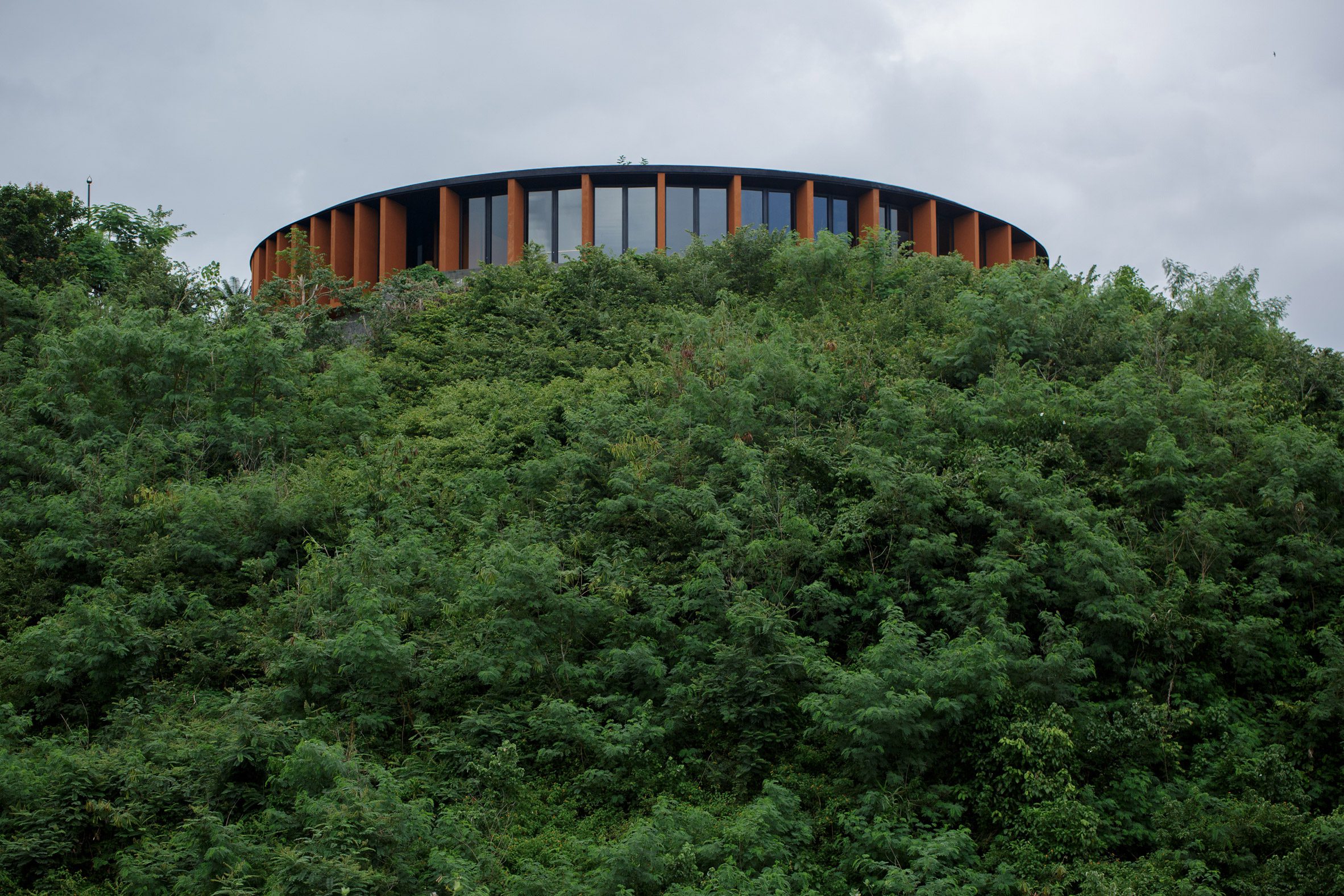
A continuous circular envelope defines the Feldman Architecture’s Round House (USA), where the home’s gently arcing exterior dissolves front and back, allowing architecture, landscape, and light to flow seamlessly around a central core.
Photo Credit: Adam Rouse
Material as a Medium for Curves
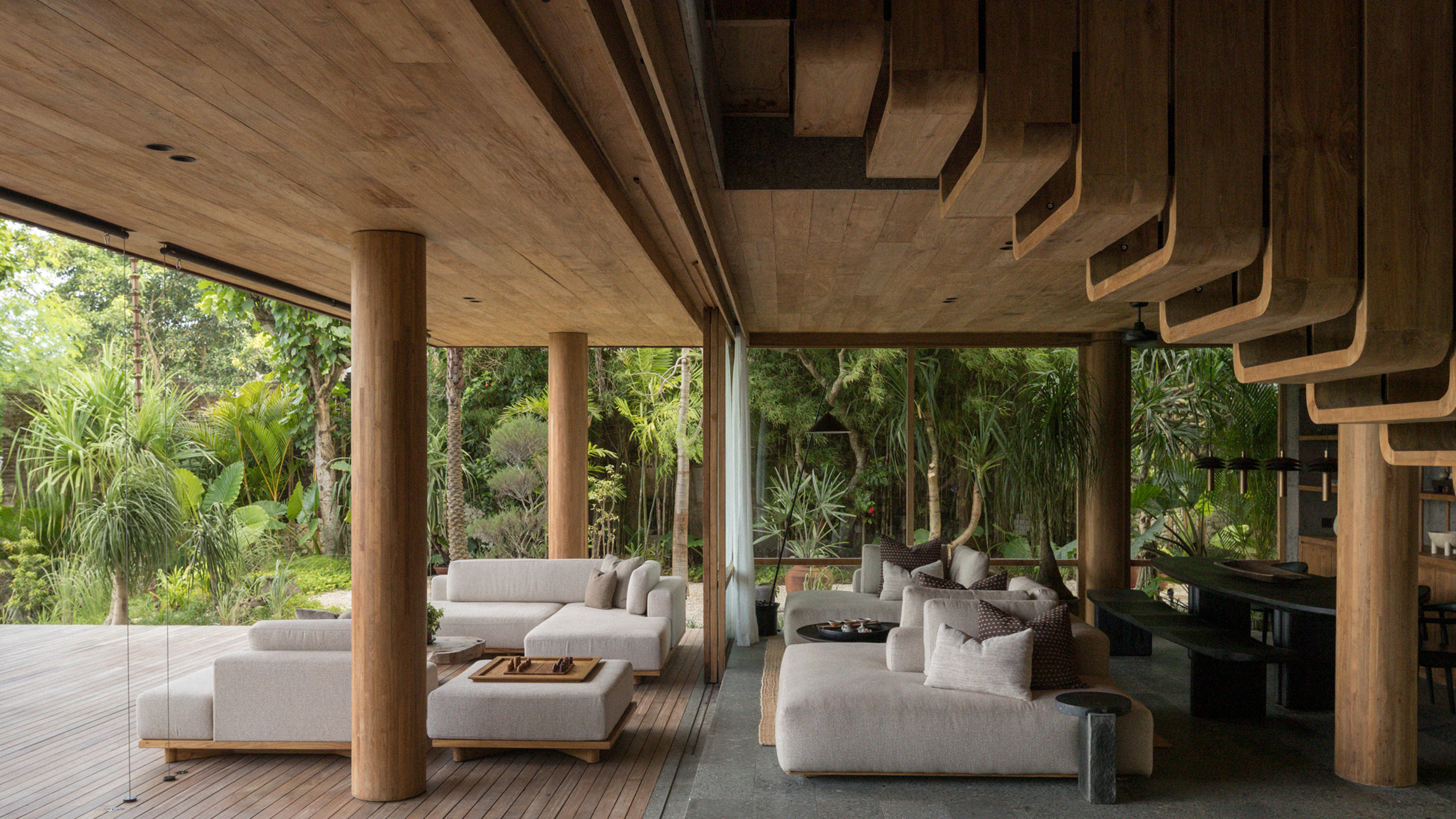
Advances in construction technology have liberated the curve from structural compromise. Reinforced concrete, sprayed plaster, laminated timber, and CNC-milled formwork allow architects to sculpt fluid surfaces with precision. In many contemporary homes, plastered curves are left intentionally imperfect, celebrating the hand of craftsmanship. Elsewhere, smooth timber ribs or terrazzo surfaces amplify the tactile richness of curved forms, turning walls and floors into continuous, inhabitable surfaces.

Curved plaster walls inside the Bright Radius House (USA) combine with crisp angles to articulate fluid interior volumes and transition spaces
Photo Credit: Eric Staudenmaier
Interior Architecture Without Corners
Inside the home, soft geometry reshapes daily rituals. Kitchens adopt curved islands that encourage gathering rather than hierarchy. Bathrooms become cocoon-like retreats, where rounded walls blur the line between enclosure and comfort. Built-in furniture - banquettes, shelving, window seats - often follows the same logic, merging architecture and interior design into a seamless whole.

Inside the Round House, gently curved walls, a circular skylit kitchen, and custom radial joinery shape an uninterrupted interior flow, allowing light, movement, and daily rituals to flow seamlessly around a central core
Photo Credit: Adam Rouse

A fluidly curved vanity and arched mirrors define the ritual zone in a contemporary bathroom, emphasizing continuous lines over rectilinear fixtures
Photo Credit: Kenuro Architects
Curves in Dialogue with Landscape
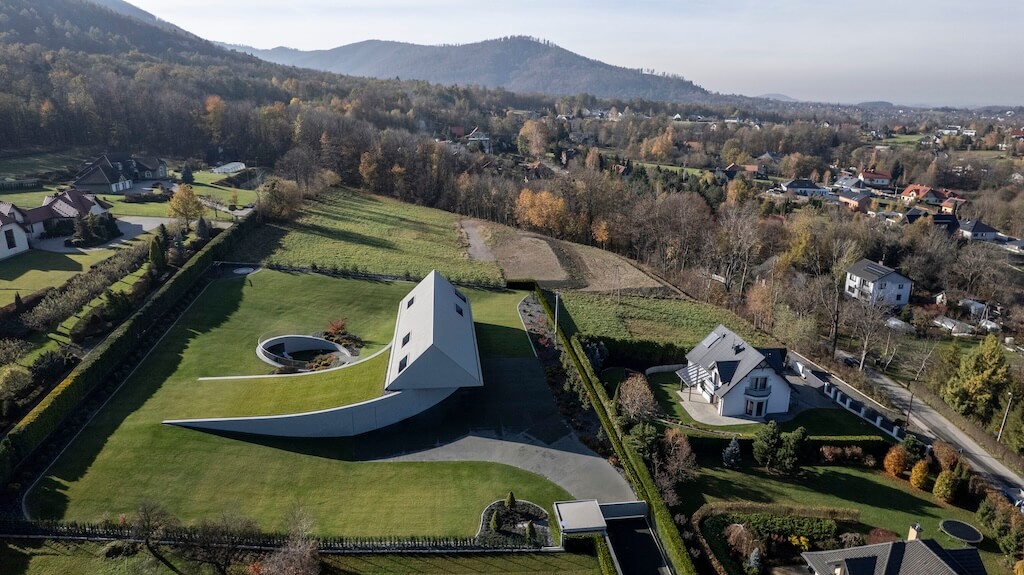
In residential projects set within natural contexts, curves often emerge as a way of negotiating terrain. Homes bend around trees, contour hillsides, or open toward views in sweeping arcs. Rather than asserting dominance over the site, curved architecture appears to adapt, hugging the landscape instead of slicing through it. This sensitivity is particularly visible in coastal and rural residences, where soft geometry echoes the horizon line or the undulation of land.

Long, longitudinal curved volumes of Fran Silvestre Arquitectos’s Villa Lago (Spain) step outward into landscaped garden spaces, creating multiple outdoor “rooms” and soft transitions between built form and greenery
Photo Credit: Fernando Guerra

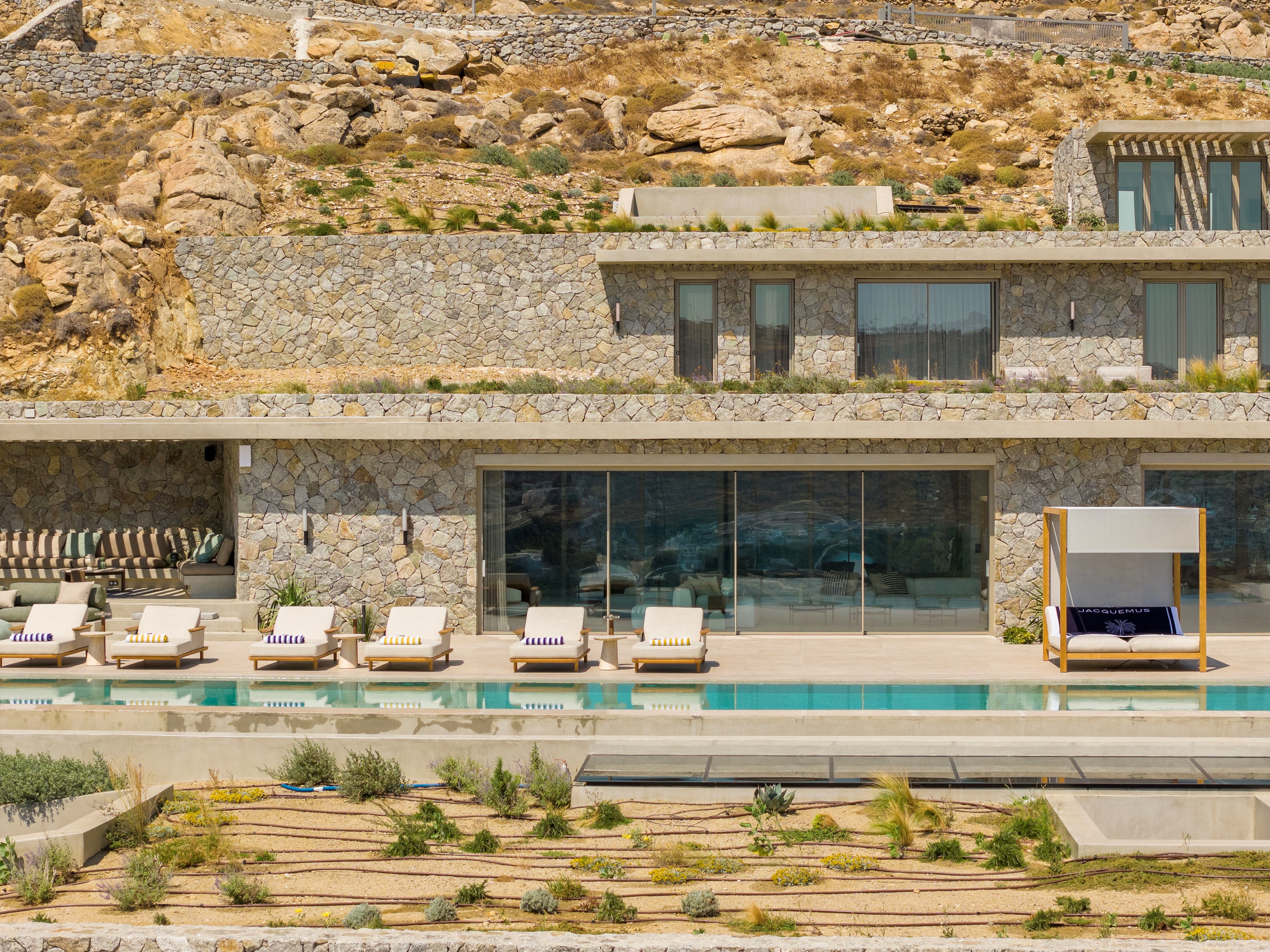
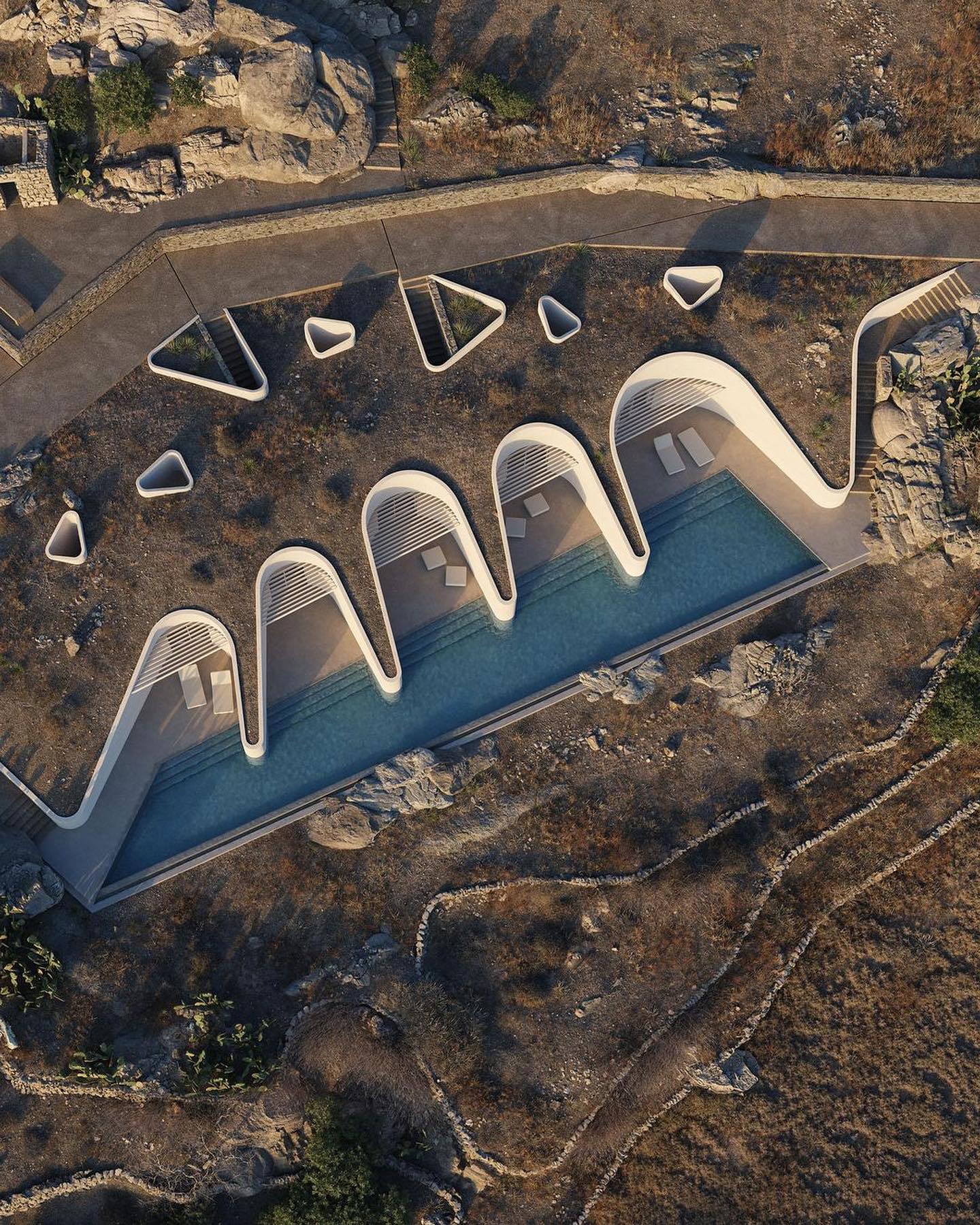
The Curved Line Residence by gnb architects (Greece) - whose meandering curvilinear wall emerges from the earth, integrating the dwelling seamlessly into its rocky, traditional coastal context
Photo Credit: gnb architects
Emotional Architecture
There is an emotional dimension to living with curves. Psychologically, rounded spaces are perceived as safer and more welcoming than angular ones. This has prompted architects to introduce curves not as spectacle, but as atmosphere. A softly arched doorway can feel ceremonial; a circular courtyard can become a private sanctuary. These gestures elevate everyday domestic life, turning movement through the home into a sensory experience.
Design Takeaway: What Soft Geometry Offers the Contemporary Home
Soft geometry is most effective when it serves experience rather than spectacle. Curves work best as spatial tools, guiding movement, softening scale, and creating continuity between rooms, rather than as isolated formal gestures.
Limiting curved elements to key moments, such as circulation paths, thresholds, or communal spaces, allows them to feel intentional and calm. Material choice is critical: plaster, timber, and terrazzo amplify the tactile warmth of curves, while consistent finishes help maintain visual clarity.
Ultimately, designing with curves is less about abandoning structure and more about reintroducing empathy, shaping homes around the rhythms of the body, not just the grid.
A Quiet Shift, Not a Trend
Soft geometry in residential architecture is less a fleeting trend than a quiet recalibration of values. It reflects a broader cultural desire for homes that feel humane, restorative, and deeply personal. In an era shaped by digital precision and visual overload, the curve reintroduces nuance, softness, and imperfection.
Living with curves is ultimately about rethinking how architecture supports daily life - not through rigidity, but through generosity of form. As contemporary homes continue to evolve, soft geometry offers an architecture that listens, adapts, and gently wraps itself around the rhythms of living.
Save this story. A free account keeps your reading list and the 07:00 email in one place.
CREATE FREE ACCOUNT →SIGN IN