When Architecture Meets Performance
There is something quietly fitting about celebrating spatial design in a building conceived for performance. The Royal Opera House, a cornerstone of London's cultural landscape since the mid-18th century, will open its doors this November to an audience not of opera-goers but of architects, designers, and makers. The occasion marks an annual industry gathering that has grown steadily in prominence since its inception, bringing together practitioners who spend their days shaping the built environment.
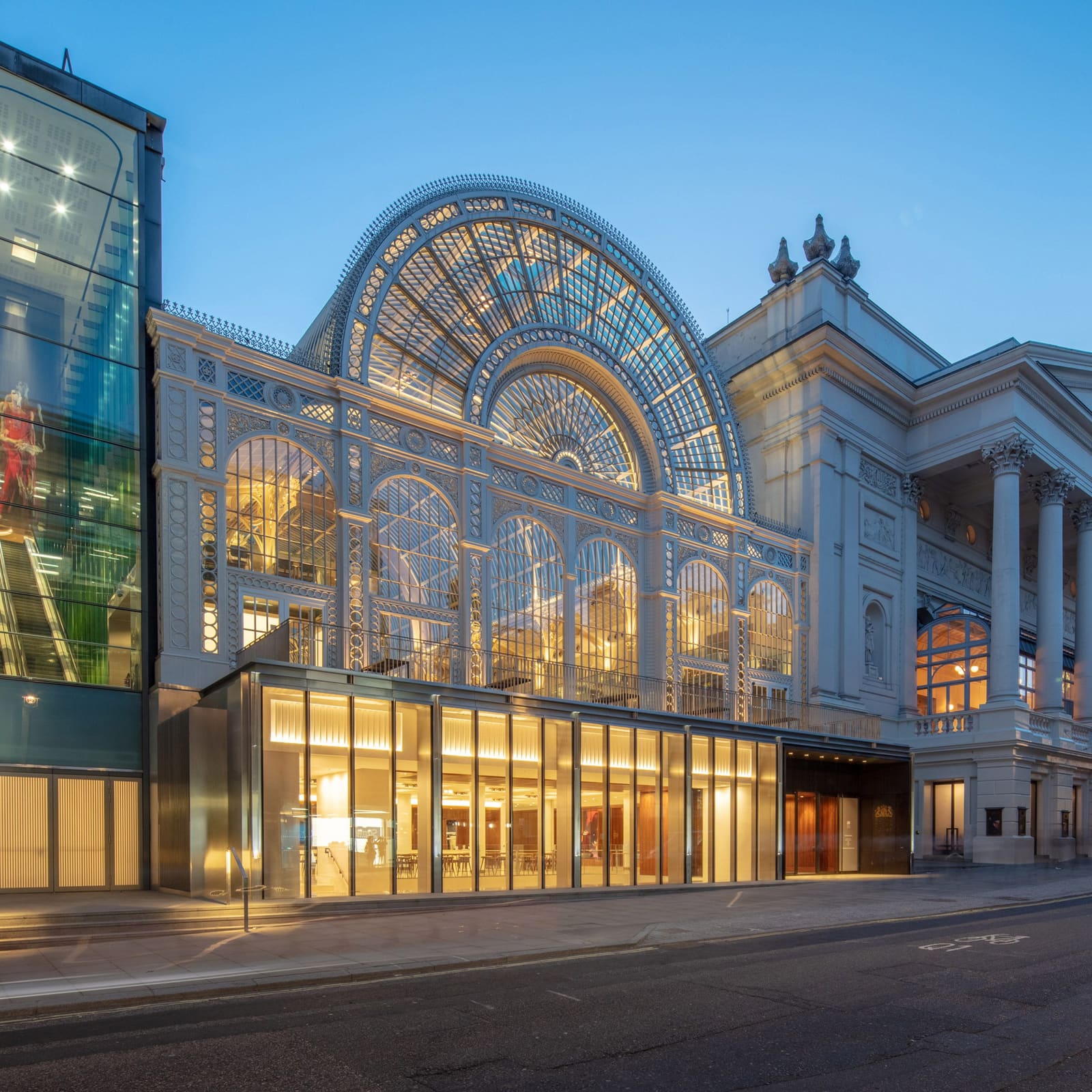
The event, scheduled for mid-November, will take place within the Paul Hamlyn Hall, a Grade II-listed space distinguished by its dramatic glazed roof and iron structure. Originally built as the Floral Hall in 1858 and later integrated into the opera house complex during a major renovation at the turn of the millennium, the hall represents a careful dialogue between Victorian engineering and contemporary adaptive reuse. Its soaring glass canopy, supported by delicate cast-iron columns, creates a volume that is both monumental and permeable, flooded with natural light during the day and glowing from within after dark.
Spatial Transformation as Event Design
For this particular evening, Hingston Studio has been tasked with transforming the hall's existing character. The studio, known for its work across branding, exhibition design, and spatial experiences, faces the challenge of overlaying a contemporary event identity onto a space that already carries significant architectural weight. How does one intervene in a listed interior without diminishing its qualities? The approach, yet to be fully revealed, will likely involve lighting, temporary structures, and graphic elements that respond to rather than compete with the existing architecture.
This kind of ephemeral design work occupies an interesting position within the broader discipline. Unlike permanent installations, event environments must be conceived, constructed, and dismantled within compressed timelines, often with minimal physical attachment to the host building. The best examples treat the existing space as a collaborator, using light, colour, and scale to reveal rather than obscure the bones of a place.
The Ritual of Recognition
The evening will serve as both celebration and ceremony. Winners across nearly fifty project categories will be announced throughout the night, with trophies and certificates distributed in a format that blends formality with conviviality. There is something distinctly architectural about the ritual of awards, the public acknowledgment of work that is often experienced privately or passively by its end users. For many practitioners, particularly those working on small-scale or experimental projects, external recognition can provide validation that extends beyond client satisfaction or critical review.
The categories themselves reflect the breadth of contemporary practice, spanning residential and commercial work, temporary installations, furniture, lighting, and emerging typologies that resist easy classification. Six practitioners will also be named as designers of the year, a distinction that acknowledges sustained contributions rather than single projects. This dual structure, honouring both individual works and career trajectories, mirrors the way the discipline itself operates, balancing the seductive appeal of the signature project with the quieter accumulation of a body of work.
Access and Economics
Ticketing for the event follows a tiered model. A small allocation of early-access tickets will be available at a reduced rate, with standard pricing set at £349 per person. Shortlisted entrants will be offered a discount, a gesture that acknowledges the investment of time and resources required to prepare competition submissions. The pricing places the event firmly within the professional development and networking budget line, accessible to established practices but potentially prohibitive for recent graduates or sole practitioners operating on tight margins.
This economic dimension is worth noting. Industry gatherings of this scale require significant infrastructure, venue hire, catering, production design, and staffing. The cost is passed to attendees, creating a self-selecting audience of those who can afford both the ticket price and the time away from billable work. It raises familiar questions about inclusivity within the profession, about who gets to occupy these spaces of recognition and connection, and whose voices are amplified through participation.
Regional Framing and Judging Process
In a new development for this year's programme, a series of regional showcases will precede the main shortlist announcements. These curated lists, organised by geography, aim to surface work from areas that may be underrepresented in global design discourse. The approach reflects a growing awareness within the industry of the need to decenter Western European and North American narratives, to acknowledge that compelling spatial work is happening across vastly different contexts, economies, and cultural frameworks.
The judging process itself involves sixty practitioners, a panel large enough to bring diverse perspectives but small enough to allow for meaningful debate. Judges are tasked with selecting up to eight entries per category, a constraint that forces difficult decisions and, inevitably, leaves strong work unrecognised. This is the nature of competitions, the reduction of complex, context-specific projects into comparable units that can be evaluated against one another. The best juries approach this task with humility, recognising the limitations of the format even as they participate in it.
The Value of Gathering
Beyond the awards themselves, events like this provide something less tangible but perhaps more valuable: the opportunity for practitioners to gather in one place, to see peers they may only know through publications or social media, to have conversations that would not happen otherwise. In an increasingly digital profession, where collaboration often occurs across time zones via shared servers and video calls, physical proximity still matters. Ideas circulate differently in person. Connections form more readily. The informal exchanges that happen at the bar or in the queue for the restroom can be as generative as the formal programme.
The Royal Opera House, with its layered history and carefully preserved interiors, becomes for one night a gathering space for a different kind of performance, one where the protagonists are not singers or dancers but the designers who shape the stages, the homes, the workplaces, and the public realms where daily life unfolds. Whether the event succeeds in creating a sense of genuine community or simply becomes another opportunity for professional self-promotion will depend largely on the atmosphere cultivated by the organisers and the generosity of spirit brought by those in attendance.
Looking Ahead
As the shortlist announcements approach in late September, followed by the November celebration, the architecture and design community will once again turn its attention to questions of excellence, innovation, and recognition. What makes a project worthy of celebration? How do we balance aesthetic achievement with social impact, technical mastery with environmental responsibility? These are not questions that can be answered definitively by a single awards programme, but they are worth asking repeatedly, in different contexts, through different lenses.
The Royal Opera House will provide the setting. The projects shortlisted will provide the evidence. And the practitioners who gather there will, for a few hours at least, constitute a temporary community bound by shared discipline, shared challenges, and a collective belief in the power of thoughtful design to shape better environments for living.
Credit: Luke Hayes / Royal Opera House
Save this story. A free account keeps your reading list and the 07:00 email in one place.
CREATE FREE ACCOUNT →SIGN IN