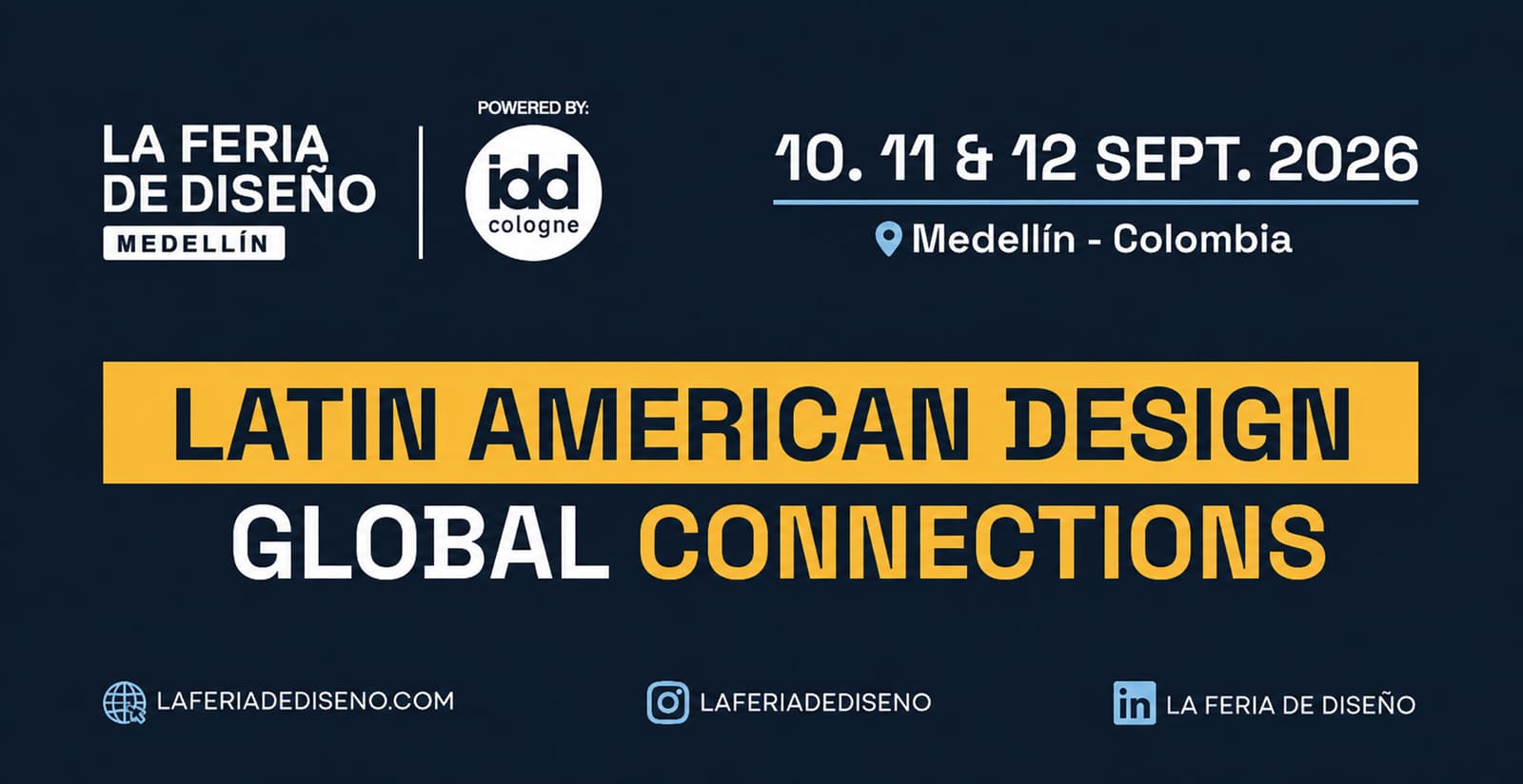
A Regional Design Ecosystem Seeks Global Reach
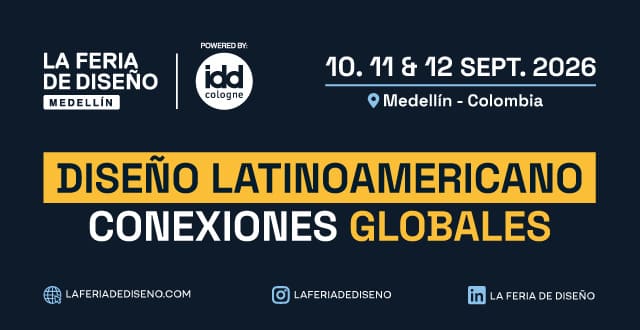
Latin America's design economy has long operated in the shadow of European and Asian trade networks. Manufacturing hubs exist across Colombia, Mexico, and Brazil - upholstery workshops in Antioquia, textile studios in Oaxaca, metal fabricators in São Paulo - but these producers rarely secure direct pathways to international specification markets. The upcoming fair in Medellín, running September 10-12, 2026, represents an attempt to formalize those connections through a dedicated B2B platform at Plaza Mayor Medellín.
The event is structured around professional transactions rather than consumer retail. Attendees will include purchasing managers for hospitality groups, developers scouting contract furniture suppliers, and architectural practices seeking lighting or textile partners. The model borrows from established European trade formats while adapting to regional supply-chain realities: shorter production runs, artisanal finishing techniques, and material palettes rooted in tropical hardwoods and local stone.
Why Medellín, and Why Now
Medellín's selection as host city reflects both infrastructure capacity and symbolic positioning. The city has spent two decades rebuilding its international reputation through design-led urban interventions - library parks by Giancarlo Mazzanti, metrocable stations that function as civic architecture, public escalators in informal settlements. That narrative of design-as-transformation now extends to commercial ambitions. Plaza Mayor Medellín offers 43,000 square meters of exhibition space, proximity to José María Córdova International Airport, and a municipality eager to brand itself as a knowledge-economy node.
Timing also matters. Global supply chains fragmented during the pandemic, and many North American and European buyers have since diversified sourcing beyond China and Vietnam. Latin American manufacturers, particularly those producing mid-volume runs with customization flexibility, occupy a viable niche. Shorter shipping distances to the U.S. East Coast - compared to Asia - reduce lead times for hospitality projects and residential developments operating on compressed schedules.
The partnership with idd cologne, a German trade-fair organizer, signals an intent to adopt established protocols: vetted exhibitor selection, pre-scheduled buyer meetings, and post-event matchmaking services. These operational details distinguish a professional trade platform from a curated design week or a consumer expo.
The Stakeholder Mix
The fair's value depends on the quality and diversity of its participant base. Exhibitors will likely span furniture makers, lighting studios, textile producers, and material suppliers - entities that typically lack the scale to attend Milan or Cologne independently but possess design and production capabilities suited to specification work. For these brands, a regional platform lowers entry costs while concentrating relevant buyers in one location.
On the demand side, the event targets architects and interior designers managing projects across hospitality, residential, and commercial sectors. These professionals often source locally or regionally to meet budget constraints, support sustainability narratives, or satisfy clients seeking differentiated aesthetics. A centralized buying event reduces the friction of studio visits and one-off supplier negotiations.
Developers and distributors represent a third constituency. Developers scouting turnkey solutions for mixed-use projects need reliable suppliers who can deliver at scale without sacrificing customization. Distributors, meanwhile, seek product lines with export potential - designs that travel well beyond their origin markets. The convergence of these groups in a single venue creates conditions for partnerships that might not emerge through isolated outreach.
Precedents and Comparisons
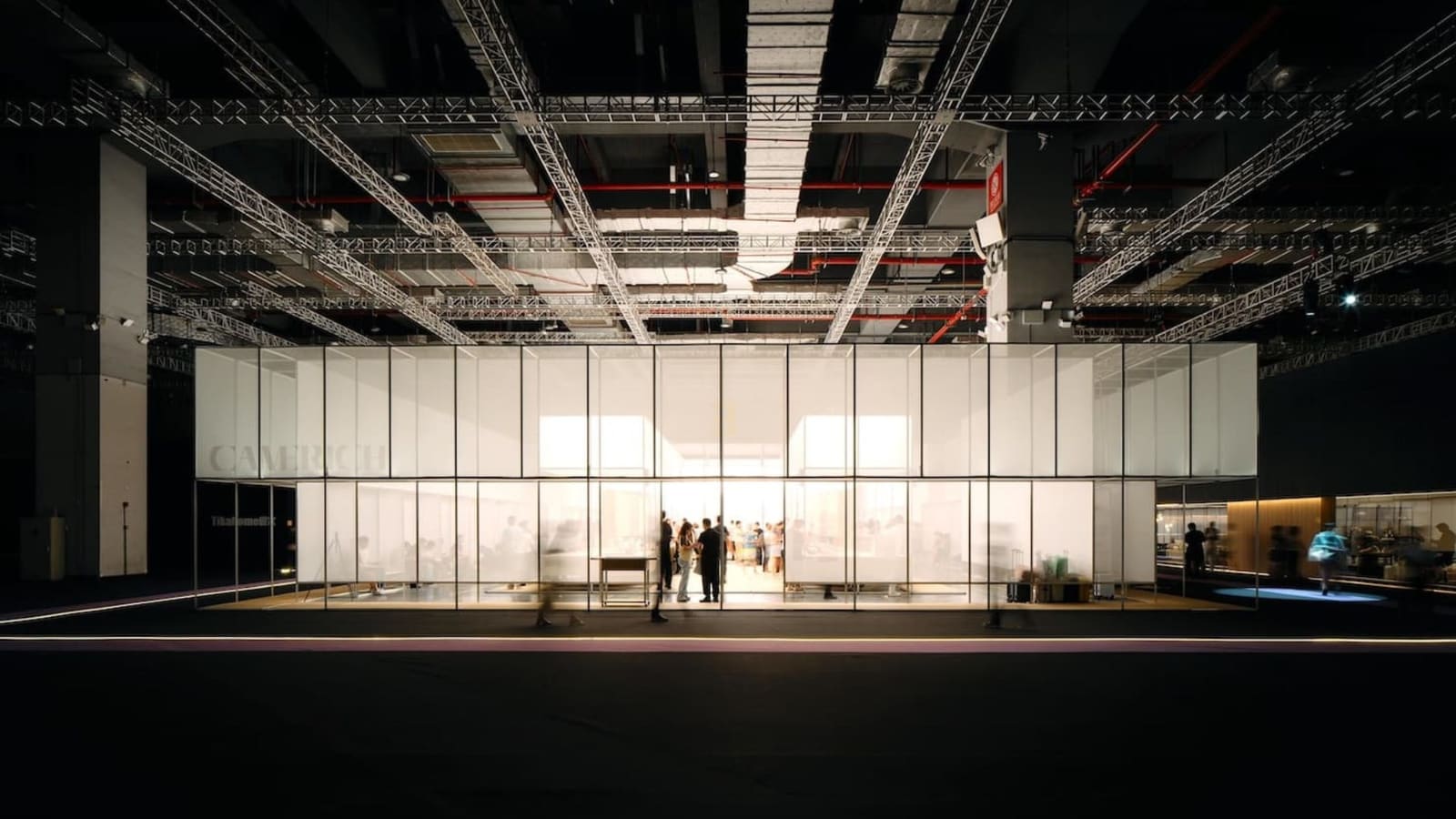
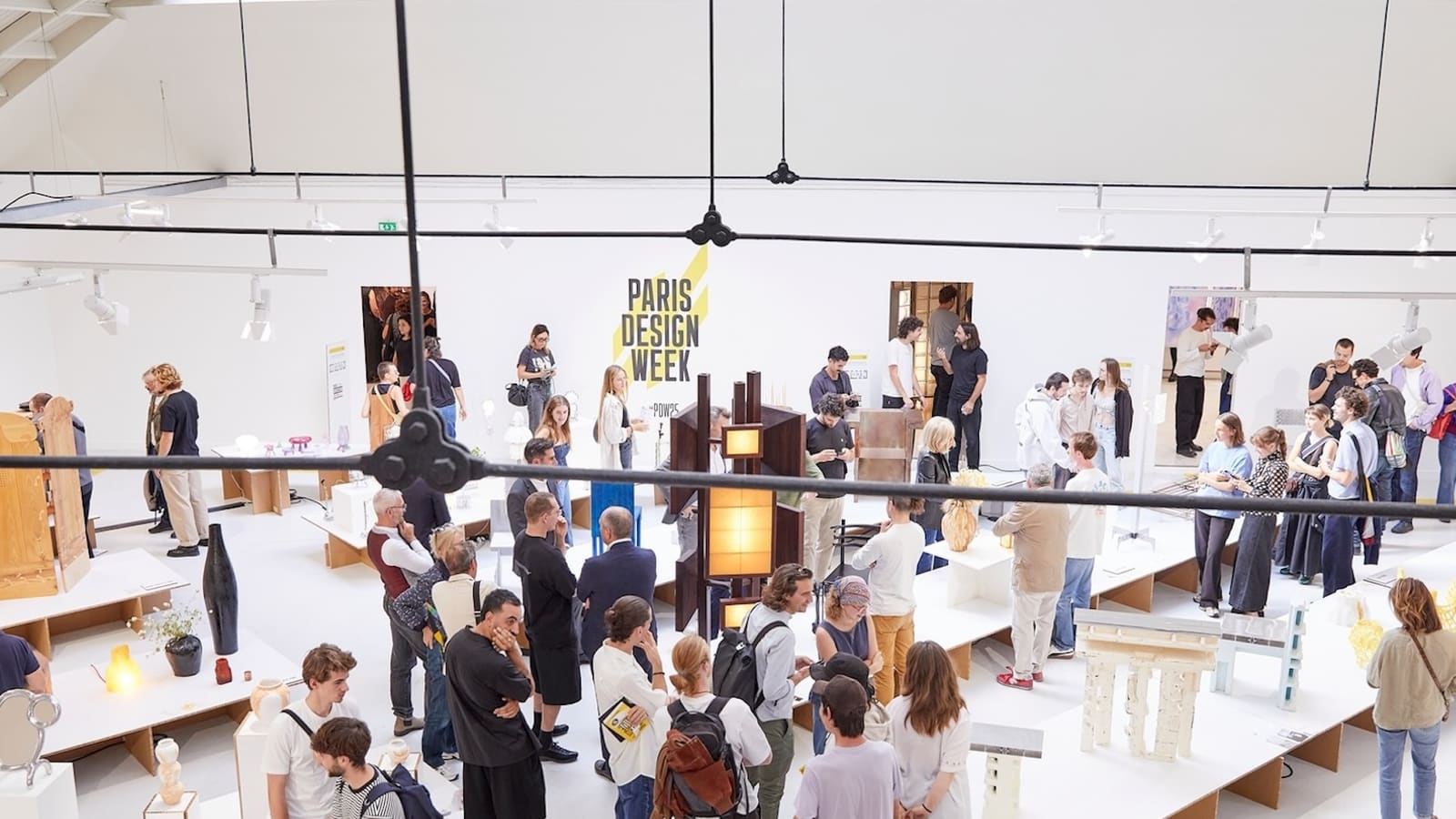
Trade fairs dedicated to design and interiors are well-established in Europe and North America: Salone del Mobile in Milan, Maison&Objet in Paris, ICFF in New York, High Point Market in North Carolina. Latin America has produced consumer-facing design weeks - São Paulo's Design Weekend, Mexico City's Design Week - but few dedicated B2B trade platforms with international ambitions.
The Medellín initiative occupies middle ground. It lacks the heritage and exhibitor depth of Milan but avoids the sprawling, unfocused character of some regional design festivals. The idd cologne affiliation suggests a focus on operational rigor: exhibitor vetting, buyer accreditation, and structured networking. Whether that discipline translates into sustained deal flow will determine the fair's longevity.
Comparisons to Habitat Valencia or Index Dubai are instructive. Both events positioned themselves as regional trade hubs for design - Valencia for Mediterranean and Latin markets, Dubai for the Middle East and South Asia. Success in these cases correlated with repeat exhibitor participation, growth in international buyer attendance, and the emergence of ancillary programming (talks, awards, design tours) that reinforced the host city's broader design credentials.
Material and Cultural Positioning
Latin American design carries distinct material and formal vocabularies: woven palm fibers, volcanic stone, reclaimed hardwoods, hand-dyed textiles. These elements appeal to architects and designers pursuing biophilic strategies or seeking alternatives to mass-produced European minimalism. Yet material authenticity alone does not guarantee commercial traction. Suppliers must also meet expectations around lead times, quality consistency, and scalability.
The fair's success will hinge on how exhibitors navigate this tension. A studio producing one-off ceramic lighting fixtures may attract editorial attention but struggle to fulfill a 200-unit hotel order. Conversely, a manufacturer optimized for contract volumes may lack the design differentiation that secures specifier loyalty. The most compelling exhibitors will likely be those who have solved this puzzle - firms capable of artisanal aesthetics at semi-industrial scale.
Cultural positioning also matters. Medellín's design narrative emphasizes social innovation and urban transformation, themes that resonate with architects working on community-focused projects or seeking design partners aligned with impact frameworks. Whether the fair amplifies this narrative - or defaults to generic trade-show rhetoric - will influence its differentiation in a crowded events landscape.
Forward Considerations
A three-day trade event cannot, by itself, restructure Latin America's design economy. But it can serve as a catalyst if supported by adjacent infrastructure: export financing programs, customs facilitation for sample shipments, and post-fair matchmaking services. The real test arrives in the months following the event, when initial conversations must convert into purchase orders, container shipments, and repeat business.
For Medellín, the fair represents another iteration of design-led city branding. The challenge is ensuring that this platform generates tangible economic outcomes - not just symbolic visibility - for regional manufacturers and local industry. If the September gathering produces sustained trade relationships and prompts other Latin American cities to develop similar platforms, it will have achieved more than a successful inaugural edition. It will have demonstrated that regional design economies can build their own connective tissue, rather than waiting for recognition from established centers.
Save this story. A free account keeps your reading list and the 07:00 email in one place.
CREATE FREE ACCOUNT →SIGN IN