When Exhibition Becomes Infrastructure
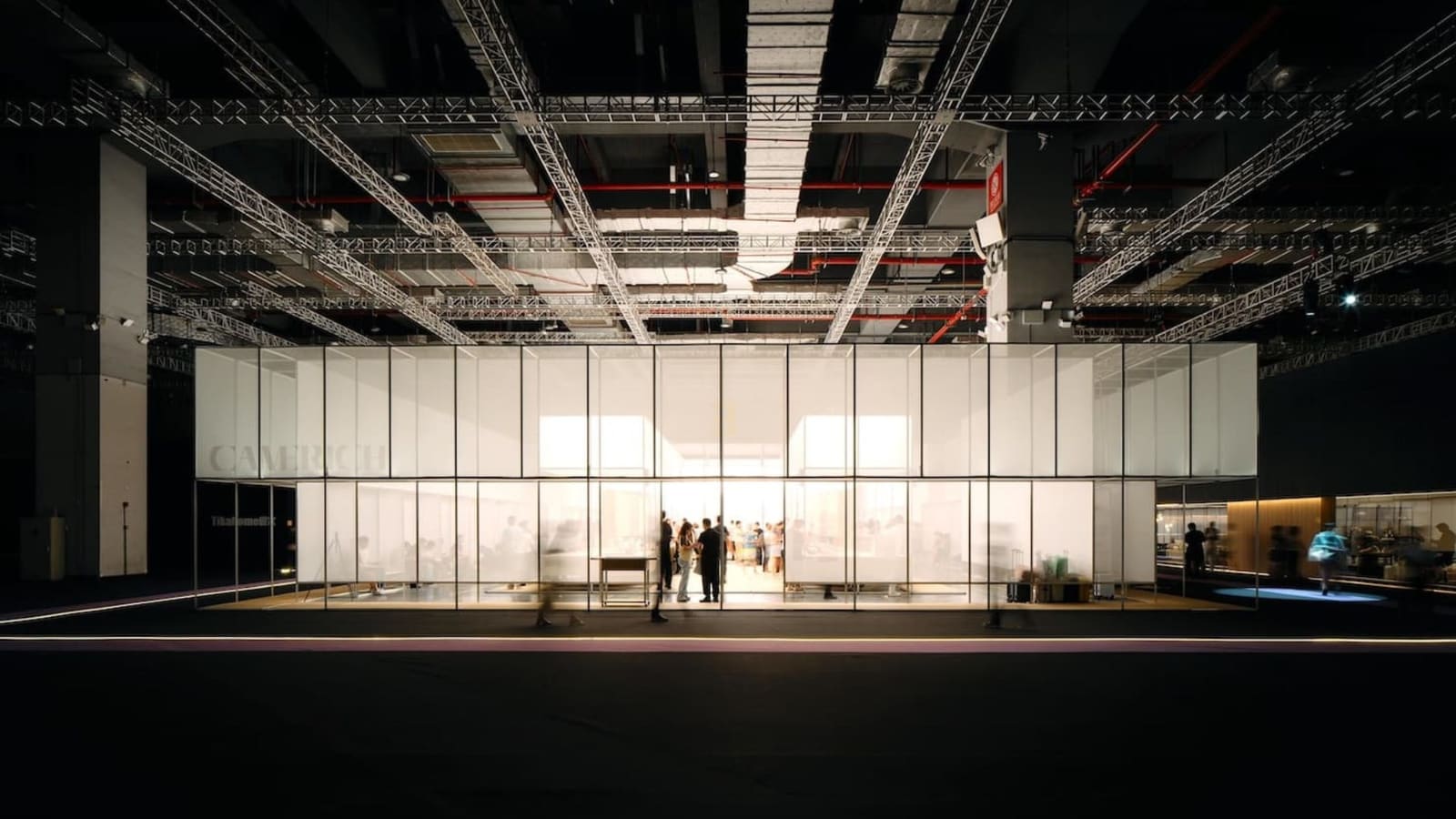
Trade fairs have long operated on a simple logic: gather manufacturers, buyers, and designers in one place for a few days, then disperse until next year. But that model is fraying. The 58th China International Furniture Fair, scheduled for September 5 to 8 at Shanghai's National Exhibition & Convention Center in Hongqiao, is attempting something more ambitious. Rather than simply adding exhibitor square footage or international pavilions, CIFF Shanghai is restructuring itself around three operational axes that reflect where furniture production, distribution, and consumption are actually heading.
At World Archi Design, we've been watching how trade events in manufacturing-heavy regions adapt to a post-pandemic, digitally mediated market. The most interesting shifts aren't happening in Milan or High Point anymore - they're happening in places where production capacity, design ambition, and retail experimentation converge under pressure. Shanghai is one of those places.
What CIFF Shanghai is proposing this year isn't a bigger fair. It's a different kind of infrastructure: one that treats design as a standalone discipline, retail as a data problem, and sustainability as a supply-chain imperative rather than a branding exercise.
Carving Out Space for Design Autonomy
The most visible change is Design Eden, a 50,000-square-meter zone dedicated exclusively to independent studios, original-design brands, and emerging practitioners. This isn't a pavilion tucked into a corner of the main hall; it's a discrete neighborhood within the fair, complete with its own programming, launch events, and forum schedule.
The move matters because it acknowledges a tension that has defined Chinese furniture manufacturing for decades: the gap between production capacity and design credibility. China has been the world's largest furniture exporter since the early 2000s, but much of that output has been OEM work - anonymous, high-volume, low-margin. Design Eden is an explicit attempt to shift that narrative, creating a platform where Chinese studios can present work on their own terms, not as contract manufacturers for Western brands.
Running parallel to the exhibition is the CIFF Shanghai Design Conference, which will convene international and Chinese designers in a format that emphasizes dialogue rather than keynote monologues. The fair is also introducing the Golden Creation Award, a new prize aimed at recognizing product innovation and setting benchmarks for what constitutes meaningful design work in a market that has historically prioritized cost efficiency over creative risk.
The question is whether a trade fair can genuinely foster design culture, or whether it will remain a transactional environment dressed up with better lighting and gallery-style booths. The answer will depend on how much autonomy exhibitors actually have - whether they can present unfinished ideas, experimental materials, or work that doesn't yet have a clear path to market. If Design Eden becomes just another showroom for finished products, the initiative will have missed its own point.
Retail as a Data Layer, Not a Sales Floor
The second axis is digital intelligence, and this is where CIFF Shanghai is making its most aggressive bet. The renewed New Retail Hall spans 8,000 square meters and features 15 brands demonstrating integrated retail scenarios that collapse the distinction between online and offline channels. The goal is to show what furniture retail looks like when it's treated as a data problem - when inventory, customer behavior, spatial design, and logistics are managed through a single, responsive system.
VR and AR technologies will be deployed to create immersive product experiences, allowing buyers to visualize furniture in spatial contexts without needing physical samples. This isn't new technology, but its application at scale within a trade-fair context is still relatively rare. More interesting is the upgraded multilingual online platform and social media ecosystem that CIFF Shanghai is building to support exhibitors before, during, and after the event. The implication is that the fair is no longer a four-day event - it's a continuous interface.
CIFF Shanghai has also partnered with Red Star Macalline, one of China's largest furniture retail chains, on a nationwide matchmaking program designed to connect brands with distributors and retail channels more efficiently. This is where the fair's ambitions extend beyond exhibition into industrial coordination. The program generated more than 470 business meetings and over USD 8.14 million in onsite orders in 2025, according to CIFF Shanghai, and the 2026 edition is structured to expand that model.
The risk here is that digital intelligence becomes a euphemism for surveillance capitalism - using customer data to optimize sales funnels without creating better products or experiences. The opportunity is that it could make the supply chain more responsive, reduce overproduction, and allow smaller brands to compete without needing massive capital investment. Which outcome prevails will depend on how the technology is actually implemented, and who controls the data.
Material Accountability as Competitive Strategy
Sustainability is the third pillar, and CIFF Shanghai is treating it as a matter of long-term competitiveness rather than a compliance obligation. The WMF International Woodworking Machinery Fair, held concurrently with the main event, will showcase technologies aimed at more efficient resource use and lower-emission manufacturing processes. This is the unglamorous side of sustainability - the machinery, the logistics, the material science - but it's where the real change happens.
The Golden Creation Award will include a dedicated Green Sustainability Award, recognizing recyclable structures, low-emission construction methods, and eco-friendly materials. A new International Materials Selection Center will present next-generation sustainable materials, aimed squarely at helping manufacturers transition away from high-impact inputs.
What's notable here is the framing. CIFF Shanghai isn't positioning sustainability as a moral imperative or a marketing advantage - it's positioning it as a competitive necessity. As carbon tariffs, extended producer responsibility laws, and supply-chain transparency requirements tighten globally, manufacturers who can demonstrate material accountability will have market access that others won't. The fair is betting that sustainability will increasingly function as a filter, not a differentiator.
The challenge is whether these initiatives will move beyond demonstration projects and prototypes. Trade fairs are good at showcasing best practices; they're less effective at changing industry-wide norms. For sustainability to become structural rather than aspirational, it needs to be embedded in procurement contracts, financing terms, and regulatory frameworks - none of which a trade fair can control on its own.
Five Sectors, One Industrial Thesis
Beyond the three pillars, CIFF Shanghai is organized around three major content areas. Design Eden handles original design and product launches. New Retail showcases immersive, data-driven retail models. Integrated Home Building, developed in partnership with the China International Building & Decoration Fair, addresses the growing demand for fully integrated interior solutions - a reflection of how residential construction is shifting from unit-based to turnkey models.
The fair continues to invest heavily in five strategic sectors: woodworking machinery, upholstered furniture, outdoor living, office environments, and living and dining spaces. Each sector reflects a different set of pressures and opportunities. Outdoor furniture is booming as urbanization increases demand for private outdoor space. Office furniture is being reshaped by hybrid work models. Upholstered furniture is grappling with material costs and supply-chain volatility.
The push to internationalize is deliberate. CIFF Shanghai's roadshows and matchmaking programs have expanded into Southeast Asia, Europe, and the Middle East, targeting buyers who are looking for alternatives to established supply chains or who want to enter the Chinese domestic market. The fair is positioning itself as a two-way gateway: a place where Chinese manufacturers can reach global buyers, and where international brands can access Chinese distribution networks.
Culture as Strategic Infrastructure
CIFF Shanghai is also investing in cultural programming, with five curated exhibitions exploring the intersection of design, lifestyle, and sustainability. These include The Hidden Realm Thematic Exhibition, HOTLINE - a joint exhibition of design creators, the Grand Tea Gala, The Design & Imagination Contemporary Design Exhibition, and Design Gravity. Each project uses immersive, interdisciplinary formats to situate furniture within broader cultural and ecological contexts.
This is where the fair's ambitions become most speculative. Can a trade event generate genuine cultural discourse, or will these exhibitions remain peripheral to the main business of buying and selling? The answer depends on who shows up, and what they're willing to engage with. If the exhibitions are treated as networking backdrops, they'll fail. If they become sites of genuine exchange - between designers, manufacturers, critics, and educators - they could shift how the industry understands its own role.
What This Means for the Industry
CIFF Shanghai's restructuring reflects a broader shift in how trade fairs are being conceived. The old model - a seasonal gathering of buyers and sellers - is being replaced by something closer to a continuous industrial platform, one that provides not just exhibition space but data infrastructure, cultural programming, and supply-chain coordination.
Whether this model succeeds will depend on execution, not vision. Trade fairs are good at convening; they're less good at sustaining momentum. The test for CIFF Shanghai will be whether it can maintain relevance between September events, whether the partnerships it brokers last beyond the exhibition floor, and whether the design, retail, and sustainability initiatives it champions become industry standards or remain isolated experiments.
For designers, manufacturers, and buyers outside China, the shift is worth watching. As the global furniture industry reconfigures around new manufacturing geographies, new retail formats, and new material constraints, the platforms that can coordinate those changes will shape what gets built, how it's distributed, and who has access to it. CIFF Shanghai is making a credible bid to be one of those platforms. Whether it succeeds will tell us something important about where the industry is heading - and who gets to define its future.
Credit: CIFF Shanghai
Save this story. A free account keeps your reading list and the 07:00 email in one place.
CREATE FREE ACCOUNT →SIGN IN