Project Info
Project Name: Prairie Ark
Location: Inner Mongolia, China
Architect: BUZZ | Büro Ziyu Zhuang
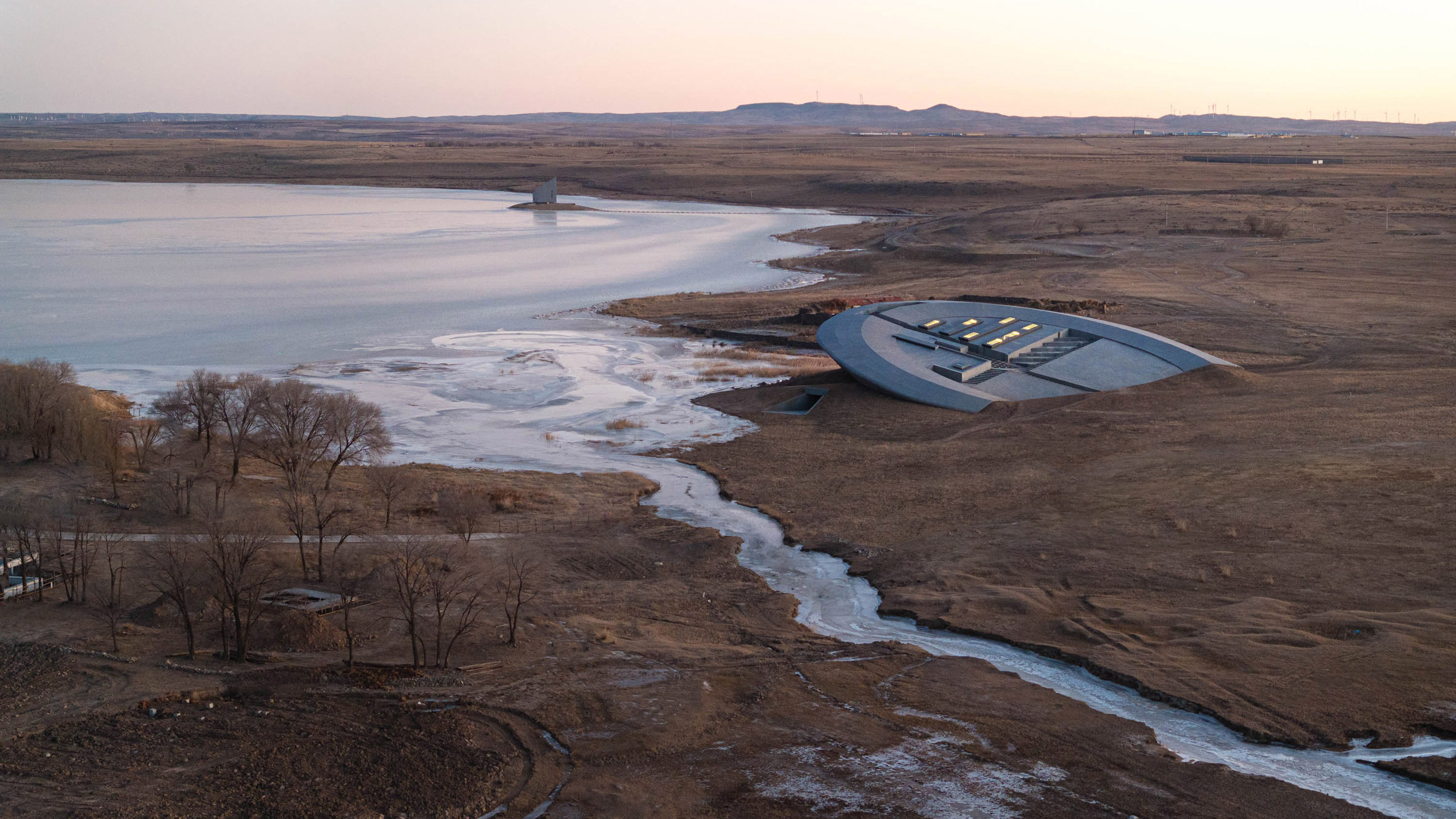
On the vast plains of Inner Mongolia, where the horizon stretches uninterrupted and the wind seems to erase the boundaries between earth and sky, a strange object appears to have landed beside Lake Laoli. Half buried into the terrain and half rising toward the heavens, Prairie Ark by BUZZ | Büro Ziyu Zhuang does not behave like a conventional building. It feels more like an event in the landscape - an architectural apparition hovering between science fiction and ancient territory.
Designed by Chinese studio BUZZ | Büro Ziyu Zhuang, the public gallery and cultural center sits in Ulanqab, approximately 160 kilometers west of Beijing. The project was conceived not as a nostalgic interpretation of the grasslands, but as a deliberate departure from familiar regional clichés. Rather than referencing yurts, nomadic imagery, or historical symbolism, the architects sought to create a structure that responds to the emotional vastness and isolation of the prairie itself.

Architecture as Terrain
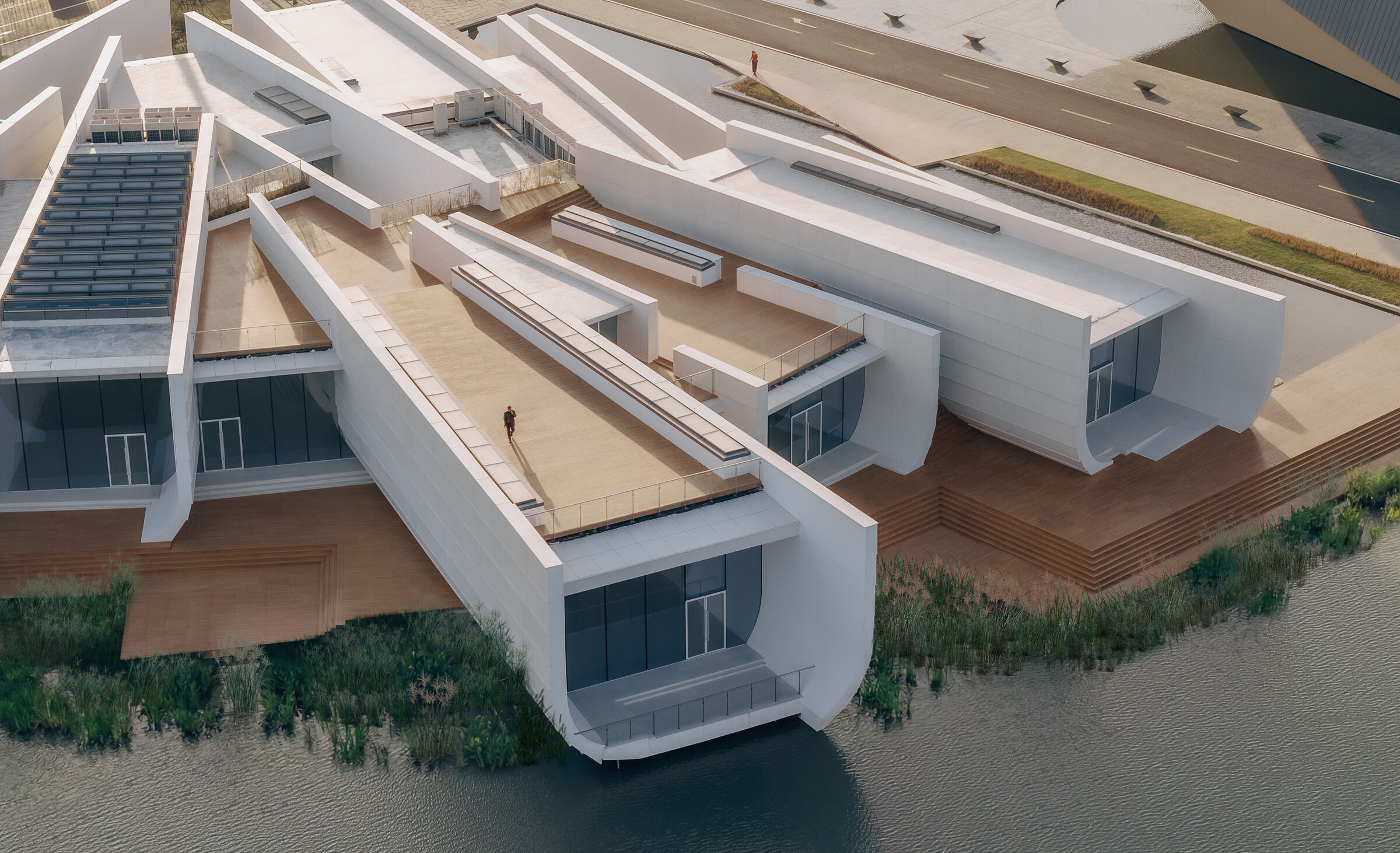
The building’s defining gesture is its sweeping inclined roof, which merges directly with the surrounding topography. One edge disappears into the ground while the opposite side lifts dramatically upward, creating the impression of a vessel emerging from - or sinking into - the earth. Visitors are encouraged to walk directly onto the roof from the grasslands, blurring the distinction between architecture and landscape.
Rather than framing the entrance as a formal threshold, the architects embedded openings into the terrain itself. Descending into the structure feels less like entering a gallery and more like discovering a hidden geological formation. Founder Ziyu Zhuang described the experience as a dialogue with the land rather than a deliberate visit to a building. The cinematic influence is unmistakable - the architects referenced the embedded spacecraft imagery from Prometheus as part of the project’s spatial atmosphere.
Inside, Prairie Ark functions as a flexible cultural venue capable of hosting exhibitions, lectures, brand events, and community gatherings. A layered gridded ceiling punctuated with skylights washes the interiors in natural light, while the absence of heavy partitions preserves visual openness and adaptability.


A Futuristic Language Rooted in Context
Although Prairie Ark appears radically futuristic, its relationship with the environment is deeply contextual. This tension between alien form and environmental sensitivity has become characteristic of BUZZ | Büro Ziyu Zhuang, whose projects often balance speculative aesthetics with immersive landscape integration.
The firm’s earlier works reveal a consistent fascination with architecture as spatial fiction. The studio’s Chamber Church in Qingdao abstracted the archetype of a traditional church into a series of sliced white forms illuminated by narrow shafts of light. Meanwhile, projects such as Manor Mirage transformed abandoned rural infrastructure into lightweight experiential landscapes that dissolve into their surroundings.
Prairie Ark continues this exploration, but at a much larger territorial scale. The prairie becomes not just a backdrop but an active participant in the architecture. The building’s roof transforms into a viewing platform, while the open circulation paths allow visitors to drift naturally between interior and exterior spaces. The project resists monumentality despite its dramatic form; instead, it encourages wandering, observation, and immersion in the surrounding emptiness.
The Beacon Across the Water
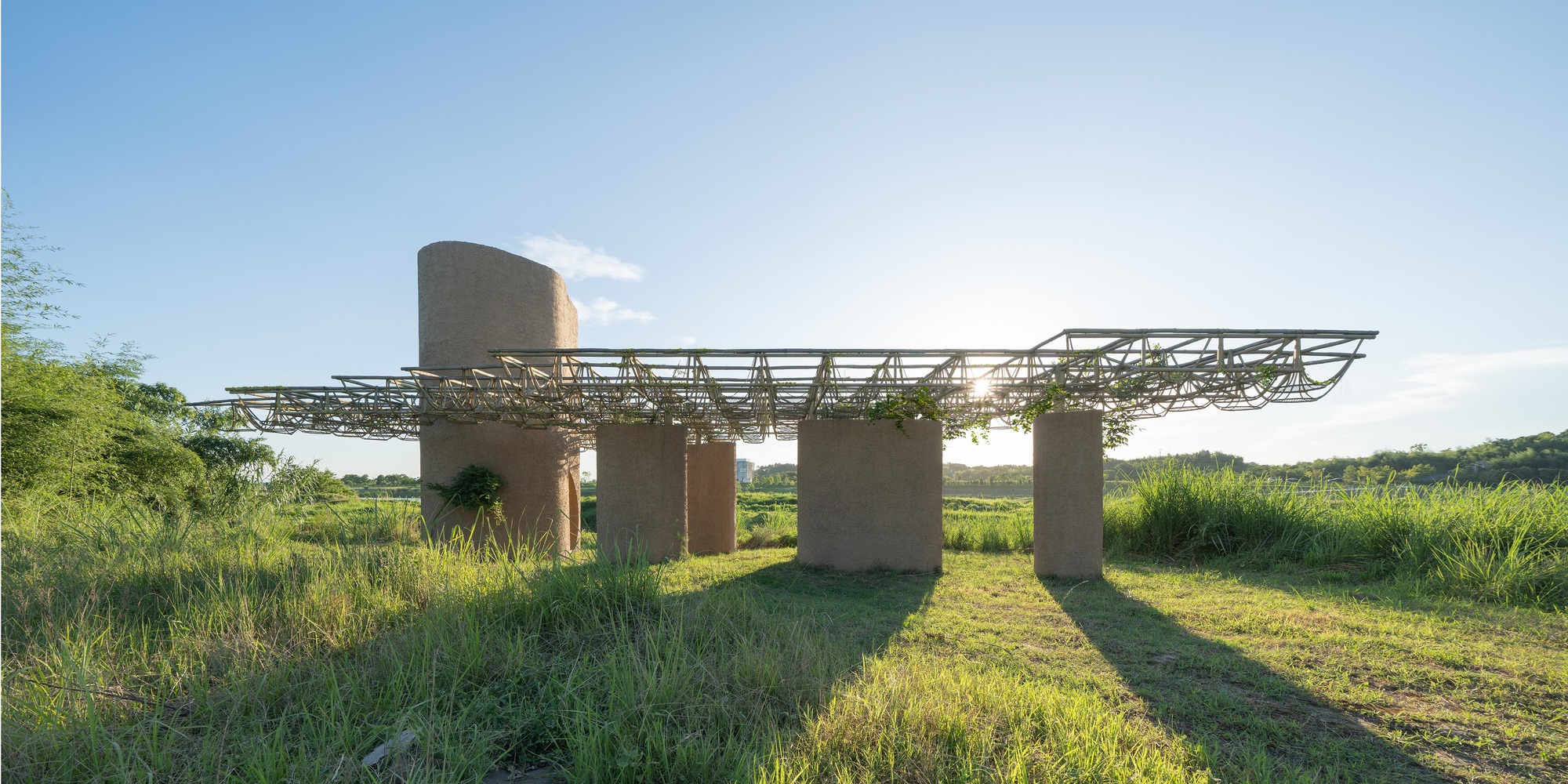
Accompanying Prairie Ark is Nomadic Beacon Tower, a secondary structure positioned across the lake. Conceived as a vertical counterpoint to the horizontal gallery, the tower references ancient beacon towers while simultaneously functioning as a contemporary observation platform. A pathway leads visitors to a small amphitheater before spiraling upward around a central chimney-like core toward panoramic rooftop views.
During summer months, rising water levels partially submerge the access path, transforming the tower into a solitary object isolated within the landscape. The effect reinforces the project’s recurring themes of remoteness, transience, and disconnection from urban life.


Escaping the Familiar
What makes Prairie Ark compelling is not merely its striking silhouette, but the way it reframes contemporary architecture’s relationship with nature. In an era when many landscape projects lean heavily on nostalgic vernacular references, Prairie Ark proposes something more ambiguous and speculative. It suggests that immersion in nature does not have to rely on historical imitation. Instead, architecture can create entirely new mythologies for the landscape.
The result feels simultaneously ancient and futuristic - a structure that could be interpreted as a buried ruin, an extraterrestrial object, or a topographical intervention shaped by wind and time. Prairie Ark does not attempt to disappear into the prairie completely, nor does it dominate it. Instead, it exists somewhere in between: a cinematic fragment suspended in the grasslands, inviting visitors to reconsider what it means for architecture to belong to a place.
PHOTO CREDIT: Shengliang Su
Save this story. A free account keeps your reading list and the 07:00 email in one place.
CREATE FREE ACCOUNT →SIGN IN