From Screen to Studio
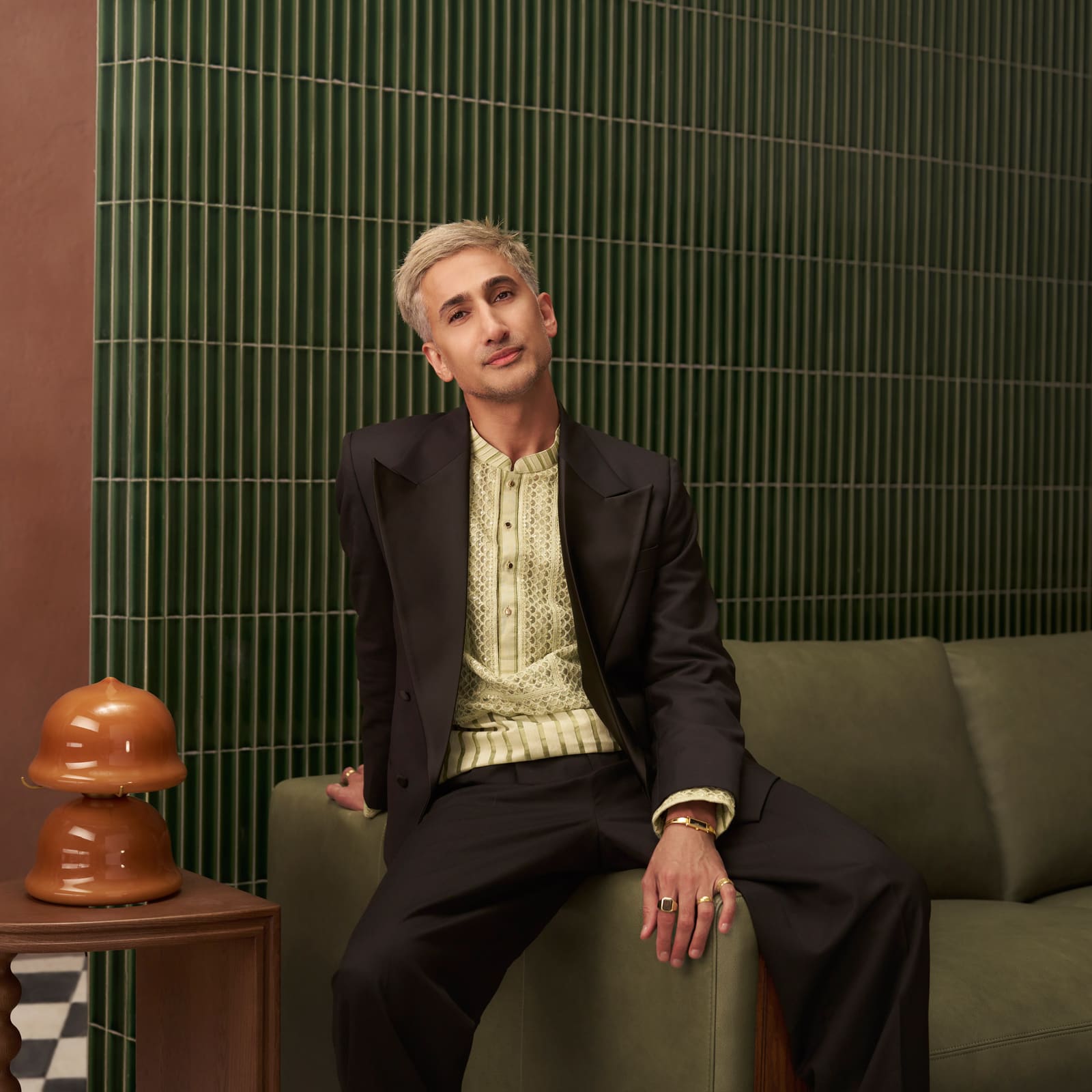
Tan France has spent years teaching millions how to refine their personal style through clothing. Now, the media personality has shifted his attention to interiors, partnering with Singapore-based Castlery to produce his first furniture collection. The collaboration yielded 18 pieces that range from seating to lighting to textiles, all tied together by a recurring formal element: the scalloped arch.
At World Archi Design, we've observed a steady stream of celebrity-led homeware ventures over the past few years, many of which lean heavily on name recognition rather than design clarity. France's approach is more disciplined. He began with custom furniture for his own residence, pieces that solved specific needs in his daily life. The Castlery collaboration extends that personal practice into a broader palette, but the logic remains grounded in use rather than spectacle.
The Scalloped Arch as Organizing Principle
France has described the scalloped arch as his "North Star" for the collection, a motif that bridges his British upbringing and South Asian heritage. The arch appears across South Asia in varied architectural contexts, from Mughal monuments to vernacular courtyard homes, and in a more restrained form throughout historic English architecture. By choosing this element as his formal anchor, France established a coherent visual language that could flex across typologies without becoming repetitive.
The arch manifests in multiple ways throughout the collection. The low tea table features etched arches along its legs, a detail that reads as ornament but also reinforces the structural rhythm of the piece. Decorative vases carry the motif in relief, while the overall proportions of certain seating pieces echo the curve without literal repetition. This kind of restraint, where a single gesture informs rather than dominates, is what separates pattern from parti.
Material and Colour Vocabulary
The material palette centres on warm oak, a wood that has become ubiquitous in mid-century-inflected contemporary design but here serves a different purpose. Oak's grain and tone provide continuity across disparate object types, allowing a modular sofa and a side table to coexist without needing identical forms. The wood also carries associations of durability and domesticity, qualities that align with France's stated interest in designing for lived experience rather than showroom fantasy.
Colour is handled with similar economy. Earthy oranges and greens appear throughout, hues that evoke both the clay and foliage of South Asian landscapes and the muted tones of British interiors. The Anika table lamp, one of the collection's more expressive pieces, uses these colours boldly, while other items keep them subdued, layered into upholstery or used as accent stitching. The result is a collection that feels neither monochromatic nor chaotic, a balance that requires careful calibration.
Typological Range and Domestic Function
The collection includes a modular sofa system labelled Kagan, an egg-shaped accent chair, side tables informed by traditional wood-turning techniques, wool rugs, and various decorative objects. This breadth of typology suggests an ambition to furnish entire rooms rather than offer standalone statement pieces. France has mentioned that the items in the collection represent gaps in his own home, furniture he wanted but had not yet commissioned. This approach, designing from absence rather than abundance, often yields more pragmatic results.
The modular sofa allows for reconfiguration, a feature that responds to the reality of changing spatial needs over time. The accent chair, with its sculptural silhouette, provides a counterpoint to the sofa's adaptability, a fixed form that can anchor a corner or reading nook. The side tables, with their turned legs, reference craft traditions that predate industrial production, a nod to making processes that prioritize skill over speed.
The Fashion-to-Furniture Continuum
France has worked in fashion design for most of his career, and he draws parallels between garment construction and furniture making. Both disciplines require an understanding of materials, proportion, and function. Both involve solving problems within constraints. The scalloped arch in this collection functions much like a signature detail in a clothing line, a recognizable element that provides identity without overwhelming the whole.
Yet furniture operates at a different scale and lifespan than fashion. A sofa must support weight and withstand years of use; a lamp must accommodate electrical components and cast light effectively. France has noted that his familiarity with fabrications and colour helped him navigate these differences, but the transition also required collaboration with Castlery's production team, who brought expertise in manufacturing and structural engineering. This kind of partnership, where a designer's vision is refined through dialogue with makers, is standard in architecture but less common in celebrity-led product lines.
Precedent and Context
Celebrity furniture collaborations have proliferated in recent years, with varying degrees of design substance. Pamela Anderson worked with Olive Ateliers on a rattan collection informed by her childhood near the coast, while Julio Torres partnered with Sabai to create pieces reflecting his experience as an immigrant in New York. These projects succeed when the celebrity's lived experience translates into formal decisions rather than simply lending a name to an existing aesthetic.
France's collection aligns more closely with this substantive approach. The scalloped arch is not arbitrary; it carries cultural and personal meaning that he has articulated clearly. The material choices support rather than distract from this central idea. The typological range suggests an interest in creating environments, not just objects. Whether the collection will influence broader trends in homeware design remains to be seen, but its internal logic is sound.
Forward Trajectory
France has expressed interest in expanding into bedroom furniture, including bed frames and related pieces, as well as tableware. The latter would be a natural extension given his stated enthusiasm for hosting dinners, an activity that demands both functional and aesthetic consideration. A bed frame designed with the same formal vocabulary as this collection could anchor a sleeping space without requiring additional ornament, while tableware would test his ability to work at a smaller scale, where details become even more critical.
The question for any follow-up work will be whether the scalloped arch remains the organizing motif or whether France develops additional formal languages for different contexts. Repetition can reinforce brand identity, but it can also lead to stagnation. The most enduring designers know when to evolve their vocabulary and when to refine what already exists.
The Castlery collaboration demonstrates that celebrity involvement in furniture design can yield coherent, considered work when the designer brings a clear formal idea and a willingness to engage with the realities of production. France's collection does not reinvent domestic typologies, nor does it need to. It offers a personal interpretation of familiar forms, grounded in heritage and guided by a single, legible motif. That kind of clarity is increasingly rare in a market saturated with surface-level collaborations.
Save this story. A free account keeps your reading list and the 07:00 email in one place.
CREATE FREE ACCOUNT →SIGN IN