Architecture has always been shaped by the tools used to represent it. From charcoal sketches and watercolor perspectives to glossy magazine spreads, each medium has influenced not only how buildings are communicated, but also how they are conceived. Social media is simply the latest and arguably the most powerful of these tools. Its impact on architecture is profound, complicated, and impossible to ignore.
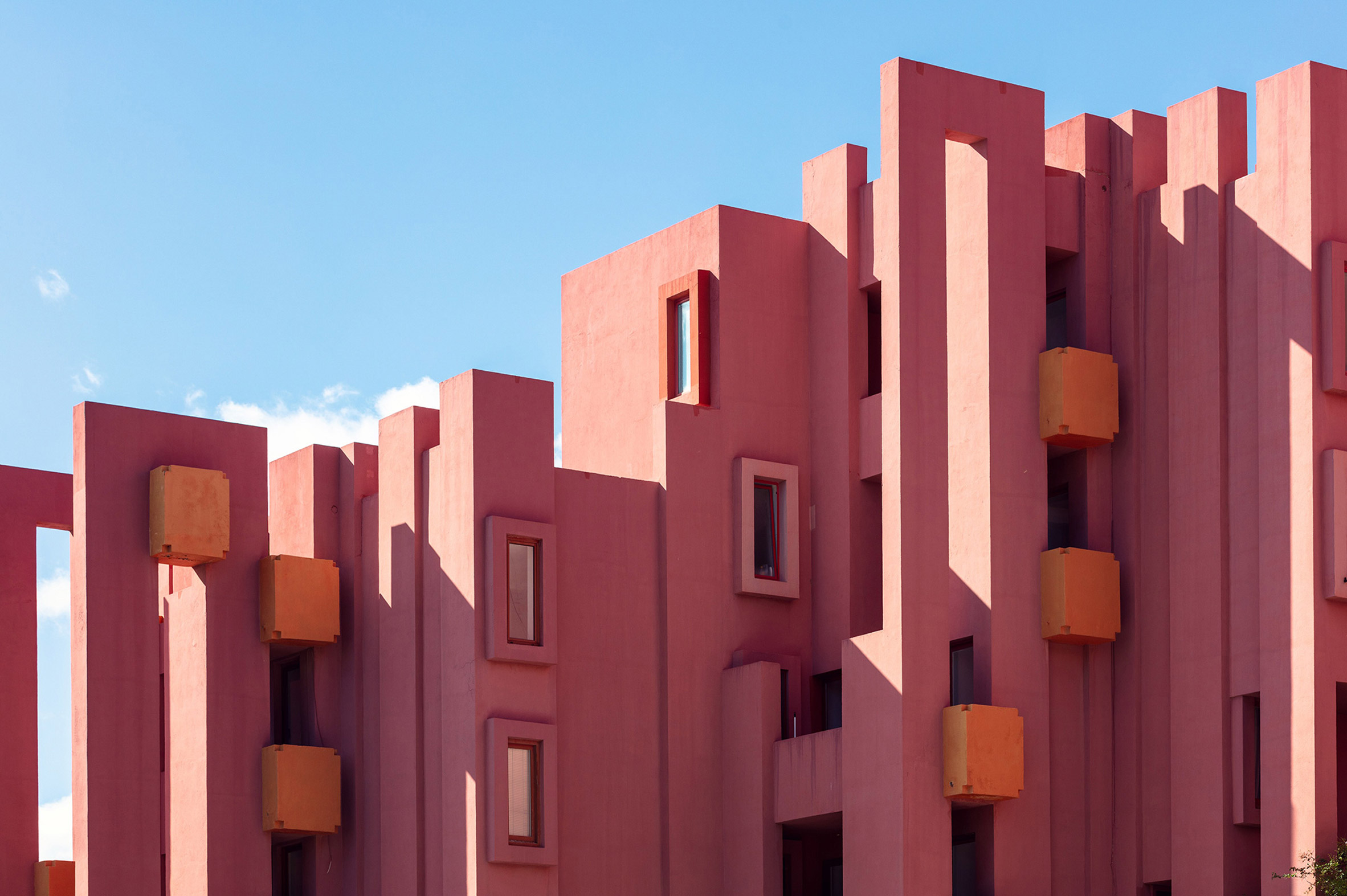
Today, architecture is often encountered first through a phone screen. Platforms like Instagram, TikTok, and Pinterest compress complex spatial experiences into a single image or a fleeting clip. A building such as Ricardo Bofill’s La Muralla Roja in Spain, designed in the 1970s as a radical social housing experiment, has gained a second life online, celebrated primarily for its candy-colored staircases and graphic geometry. While the project’s spatial intelligence and social ambitions remain intact, its digital afterlife has transformed it into a global visual icon, frequently detached from its original context.

La Muralla Roja has been recast by social media as a global visual icon, its bold geometry and saturated color often detached from its original social housing ambitions
Photo Credit: Ricardo Bofill Taller Arquitectura
This phenomenon has recalibrated what is shared, remembered, and commissioned. Architecture that photographs well travels farther. Projects like BIG’s 8 House in Copenhagen or Heatherwick Studio’s Vessel in New York owe much of their fame to striking, instantly legible forms that thrive in aerial shots and dramatic angles. In contrast, works grounded in subtlety - Peter Zumthor’s Therme Vals, for instance - resist easy consumption. Its power lies in sequence, temperature, sound, and slowness, qualities that struggle to translate into a single viral image.

Vessel exemplifies architecture shaped by spectacle, designed to be climbed, photographed, and shared - its image circulating more widely than its lived experience
Photo Credit: Francis Dzikowski
The rise of the “Instagrammable” building is often framed as a descent into superficiality, but the reality is more layered. Social media favors contrast, color, and novelty because these elements read immediately on small screens. This logic increasingly shapes hospitality and interior architecture, where visual impact has become inseparable from commercial success. Hospitality projects such as the Season, a patisserie in Taipei whose cobalt blue wall paneling and ornate, historically layered interior have circulated widely on Instagram. The space is meticulously composed to register instantly in photographs, turning the act of dining into a visual event and the interior itself into a form of shareable media. In such cases, architecture functions simultaneously as space, brand, and image.

Season uses cobalt blue wall paneling and layered historical references to create an interior optimized for instant recognition across social platforms
Photo Credit: Dean Hearne
At the same time, social media has radically democratized architectural visibility. Practices operating far from traditional media centers now reach global audiences without editorial gatekeeping. Vo Trong Nghia Architects’ bamboo structures in Vietnam, for example, circulate widely online, offering an alternative narrative to glass-and-steel modernism. Similarly, Francis Kéré’s early community projects in Burkina Faso gained international attention long before major awards, in part through the circulation of images that resonated with audiences hungry for socially grounded architecture.

Vo Trong Nghia Architects’ bamboo structures in Vietnam leverage vernacular materials and climatic intelligence, gaining global visibility online while resisting high-tech architectural tropes
Photo Credit: VTN Architects
This expanded visibility has also altered the architect’s relationship with the public. Buildings are no longer discussed only in journals or academic settings, but in comment sections and reposts. Feedback is immediate and often unfiltered. When Apple Park opened, its immaculate curves were praised across social media, while its scale and exclusivity were simultaneously criticized by a global audience. Architecture has become a public conversation rather than a closed professional discourse.
Authorship, however, has grown increasingly fragile. Images are reposted without credit, cropped beyond recognition, or stripped of explanatory context. A carefully considered project can circulate widely with no mention of the architect, location, or intent. In this environment, architecture risks becoming content, consumed rapidly and forgotten just as quickly. The danger lies not in popularity itself, but in reduction: buildings flattened into aesthetic moments rather than understood as cultural, environmental, and political constructs.
Yet many architects have begun to engage social media critically rather than passively. Practices like Office KGDVS or Assemble often share drawings, process images, and construction phases, resisting the tyranny of the finished hero shot. Others use platforms to foreground materials, labor, or reuse, challenging the assumption that architecture must always appear pristine to be valuable. These approaches expand what architectural representation can be in the digital age.

Projects by Office KGDVS are often presented through drawings, models, and process, deliberately challenging social media’s preference for polished, photogenic outcomes
Photo Credit: Office KGDVS
Social media has also intensified cross-disciplinary influence. Architecture now circulates alongside fashion, art, and interior design, blurring boundaries. John Pawson’s minimal interiors resonate online in the same visual language as luxury branding, while hospitality projects such as Aman resorts leverage architectural atmosphere as part of a holistic lifestyle narrative. This convergence can be shallow, but it can also prompt architects to think more deeply about experience, storytelling, and emotional resonance.

Aman resorts’ architecture circulates online as an image of serenity and escape, where carefully framed views turn atmosphere into a powerful, shareable brand language
Photo Credit: Aman
The question, then, is not whether social media influences architecture - it undeniably does, but how consciously that influence is negotiated. Architecture has always balanced visibility and substance, spectacle and service. The screen simply amplifies the tension. The challenge is ensuring that design decisions are not driven solely by how a building appears online, but by how it performs, ages, and contributes to its social and environmental context.
Ultimately, social media functions as a mirror. It reflects existing values within the discipline: ambition, insecurity, generosity, and the desire to be seen. Used uncritically, it flattens architecture into style. Used thoughtfully, it broadens the conversation and invites new voices into it. The responsibility lies not with the platform itself, but with those who design, share, and interpret the images.
Architecture does not need to reject social media to preserve its depth. What it needs is a stronger sense of discernment - an understanding that the most meaningful spaces often reveal themselves slowly, long after the scroll has moved on.
Save this story. A free account keeps your reading list and the 07:00 email in one place.
CREATE FREE ACCOUNT →SIGN IN