Project Info
Project Name: Tiffany & Co. Beijing Flagship
Location: Beijing, China
Architects: MVRDV

Recycled glass modules form a shimmering urban veil
In the heart of China’s capital, the traditional luxury storefront has been reimagined as a glowing landmark of circular innovation. MVRDV proves that the future of elegance is not found in rare minerals alone but in the poetic recycling of glass and the precision of the machine.

Curved glass geometry creates a radiant gemstone silhouette
Luxury retail in the high-end districts of Beijing has long been a theater for architectural competition. To stand out among the glittering towers of the city, a brand must offer more than just a product. It must offer a landmark. The new Tiffany & Co. Beijing Flagship by the renowned Dutch firm MVRDV accomplishes exactly this by turning the building itself into a piece of fine jewelry. This project represents a significant evolution in the firm’s ongoing exploration of glass technology and retail identity. It is a building that sparkles with the intensity of a gemstone while whispering a sophisticated story of environmental responsibility.

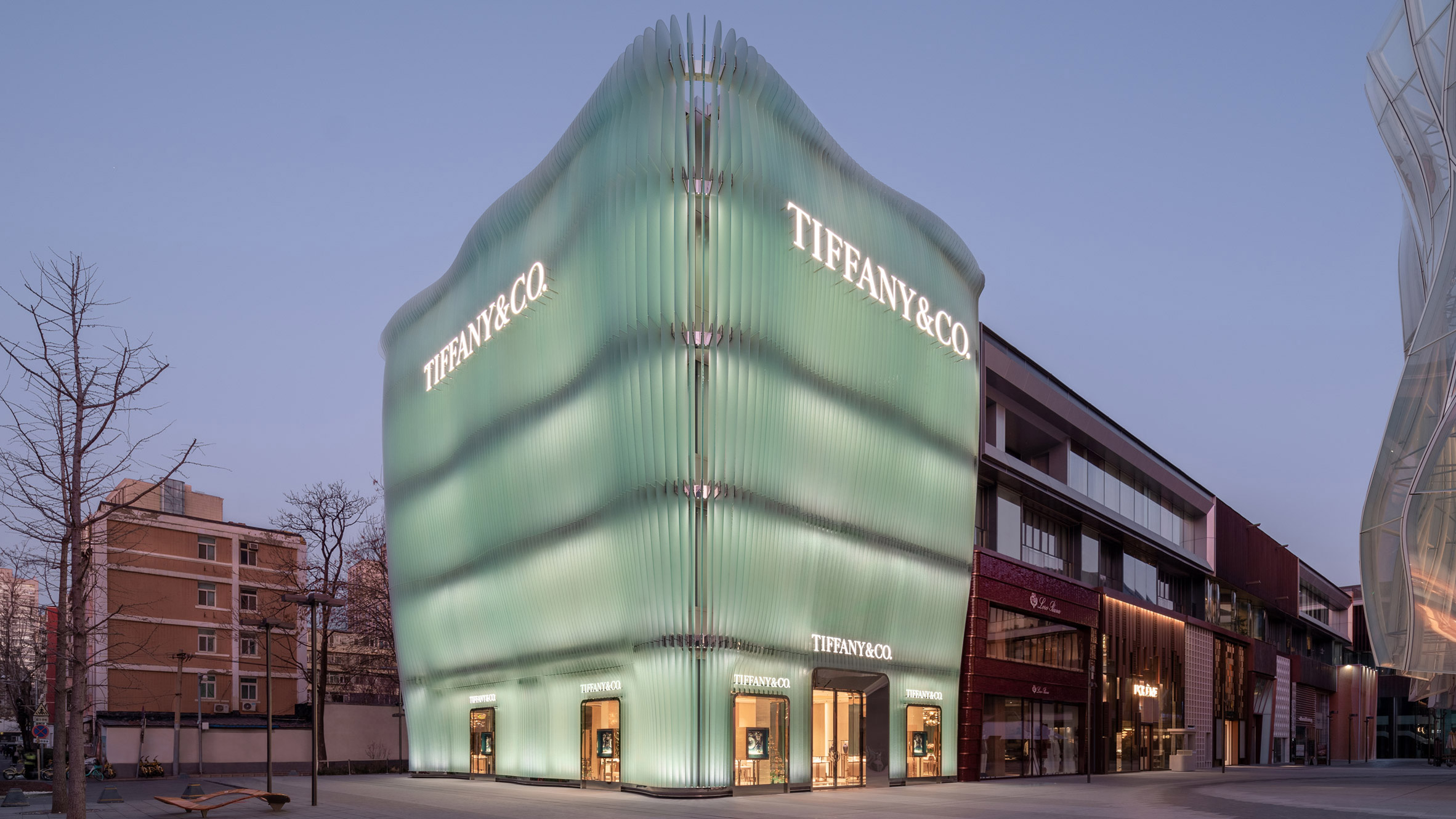
Integrated LEDs transform the building into a lantern
The most striking element of the flagship is its intricate and translucent skin. MVRDV has moved away from the standard flat glass panels of modern commercial architecture. They have opted instead for a facade composed of thousands of 3D printed components. These elements are crafted entirely from recycled glass. This choice marks a bold step toward the circular economy in the luxury sector. It demonstrates that discarded materials can be reborn with a level of clarity and beauty that rivals the most precious crystals.

3D printed glass cells capture light with precision
Each printed module is designed to capture and refract light in a specific way. The geometry is inspired by the structural anatomy of a diamond. Thousands of unique glass "cells" create a sense of depth and movement across the surface. As a result the building does not simply reflect its surroundings. It processes the light of Beijing and scatters it back into the street as a soft and ethereal glow. The result is a tactile and shimmering texture that invites passersby to stop and touch the future of architecture.

Translucent walls filter ethereal light into the interior
The design is not merely a global statement of luxury. It is a carefully calibrated response to the cultural context of Beijing. MVRDV drew inspiration from the intricate lattice work found in traditional Chinese architecture and the historic layout of the city. The geometric patterns on the facade serve as a subtle nod to these local textures. This synthesis creates a dialogue between the New York heritage of Tiffany & Co. and the ancient craftsmanship of China.

Luminous textures mirror the brilliance of the facade
The facade acts as a protective yet inviting veil. It balances the need for a secure and intimate interior with the desire for urban transparency. Large clear openings are integrated into the lattice. They allow for glimpses into the luxurious world within while maintaining the unity of the glowing outer shell. This approach ensures that the building feels both globally recognizable and locally rooted. It is a testament to MVRDV’s ability to weave brand identity into the specific fabric of a site.

Private lounges offer sanctuary within a glass shell
As the sun sets over Beijing the flagship undergoes a dramatic transformation. Integrated LED lighting within the glass structure turns the building into a monumental urban lantern. This illumination is not a superficial addition. It is an essential part of the structural experience. The light emphasizes the complexity of the 3D printed lattice and reveals the hidden layers of the glass modules.

Shimmering interiors celebrate the future of sustainable luxury
The illumination is designed to transition smoothly. It mimics the natural shimmer of water or the sparkle of a diamond necklace under candlelight. This landmark quality provides a sense of wonder to the district. It reinforces the idea that the flagship is a gift to the city. Inside the experience is equally luminous. The interiors reflect the brilliance of the facade through a palette of soft textures and precious materials.
PHOTO CREDIT: Tiffany & Co
Save this story. A free account keeps your reading list and the 07:00 email in one place.
CREATE FREE ACCOUNT →SIGN IN