In an era where homes are increasingly expected to feel restorative, grounded, and emotionally resonant, earth-tone palettes have emerged as a defining language of modern interiors. Far from being dull or purely neutral, today’s earth tones are nuanced, layered, and deeply expressive - drawing from landscapes, raw materials, and cultural memory. From sun-baked clays to mossy greens and mineral greys, these palettes reshape how we experience space, light, and texture.
Here are seven earth-tone palettes that are redefining contemporary living today.
1. Warm Clay & Soft Sand - Woodstock House
BC Architects & Studies & Materials (Ardennes, Belgium)
Woodstock House is a powerful example of how warm clay and sandy tones can emerge directly from the building process itself. Constructed using rammed earth sourced from nearby soil, the house’s walls carry natural variations of terracotta, ochre, and soft beige. These tones shift subtly with daylight, giving the interiors a tactile, almost geological presence. Rather than applied decoration, color here is intrinsic to the architecture. Combined with thick walls, deep openings, and minimal detailing, the palette reinforces a sense of shelter, slowness, and deep connection to the surrounding forest landscape.


Rammed earth walls in warm clay tones root the home deeply in its forested Belgian landscape, blurring architecture and terrain
Photo Credit: Tijs Vervecken
2. Olive Green & Natural Oak - Dauphine Apartment
AFTER BACH (Paris, France)
In the heart of Paris on Place Dauphine, AFTER BACH’s Dauphine Apartment reimagines a historic 17th-century residence with a refined palette that draws directly from its urban setting. Here, sage and olive-toned lacquered joinery and ceilings evoke the muted greens of the Seine and Parisian façades, forming a calming chromatic thread through the apartment’s enfilade of rooms. These soft green hues are balanced by natural oak parquet and bespoke cabinetry, whose warmth counterpoints the cooler palette while enhancing material tactility and luminosity. Ivory lime plaster walls, beige stone, and curated design pieces complete a space that feels simultaneously grounded in context and quietly elegant.


Olive-toned joinery and natural oak parquet bring calm continuity to a historic Parisian interior overlooking Place Dauphine
Photo Credit: Vincent Leroux
3. Taupe, Greige & Stone Grey - SoLo House
Perkins and Will (Soo Valley, British Columbia, Canada)
SoLo House exemplifies how balanced earth tones like taupe, greige, and stone grey can reinforce a serene alpine residence. Set above a forested valley, the home uses a muted, natural palette that reflects the colors of rock, timber, and misty sky. The design by Perkins and Will prioritizes sustainability and off-grid living, with prefabricated timber structures that minimize environmental impact. The soft, neutral earth-tone finishes across interiors promote visual calm and allow the rugged landscape to remain the star. Here, the earth-tone scheme elevates spatial clarity, creating a peaceful retreat that feels rooted in its wild mountain context.


A restrained palette of greige, timber, and glass frames panoramic alpine views, allowing landscape to shape domestic life
Photo Credit: Andrew Latreille
4. Chocolate Brown & Linen White — Earthenware House
NAQI & Partners (Binh Duong, Vietnam)
Earthenware House reimagines everyday materials into a poetic residential environment. Designed by NAQI & Partners, this compact home uses rich terracotta bricks, reclaimed wood, raw steel, and clay-mixed cement to shape its earth-infused architectural language. Deep chocolate hues in timber joinery and earthy brick contrast with linen-like plaster surfaces and soft natural light, resulting in spaces that feel both rich and calm. The palette plays against material texture, producing a tactile warmth throughout. Integrating local ceramics and handcrafted details further reinforces an expressive, lived-in aesthetic that’s deeply rooted in regional craft traditions and everyday ritual.


Chocolate brown brick and timber finishes define a warm, tactile interior rooted in material honesty
Photo Credit: Nguyễn Nhật Anh Chương
5. Charcoal, Ash & Raw Concrete - House of Four Ecologies
James Leng & Partners (Sea Ranch, California, USA)
The House of Four Ecologies is a coastal retreat that marries dramatic natural setting with an earth-rooted palette of charcoal, ash greys, and raw materials. Designed collaboratively by James Leng and his team of friends, the residence sits among firs and rugged terrain near the Pacific, using muted, smoky greys in weathered wood and concrete to echo rocky cliffs and coastal fog. Large panoramic openings frame sweeping views while the toned-down palette lets light animate interior surfaces throughout the day. The result is a rugged yet refined home where deeper earth tones serve architectural presence and strengthen spatial calm against a dynamic landscape.


Charcoal hues and weathered materials echo coastal fog and rugged terrain, anchoring the home within its dramatic setting
Photo Credit: James Leng
6. Terracotta & Muted Blush - Olive Grove House
Balzar arquitectos (Quesa, Spain)
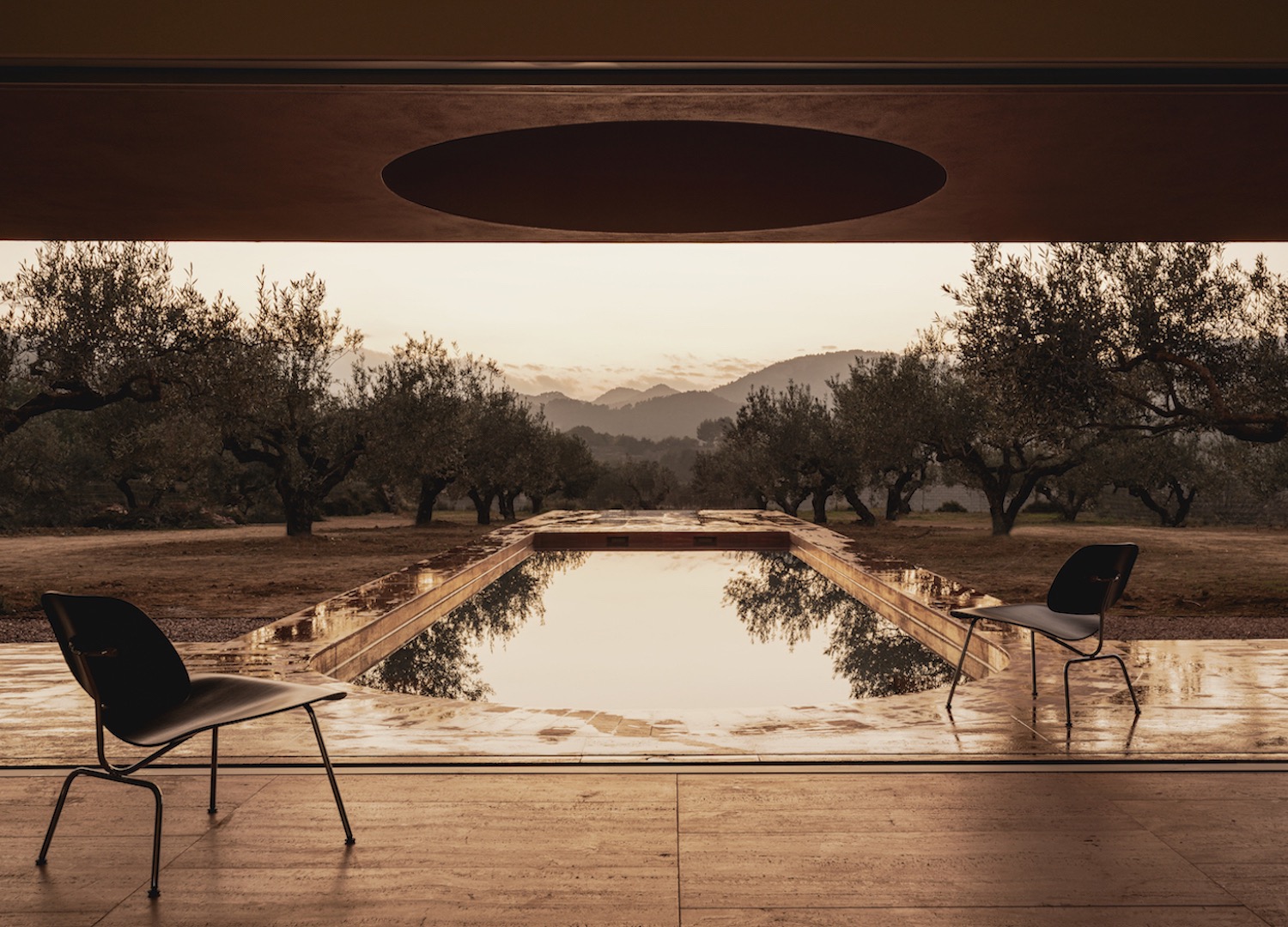
La Casa en los Olivos (Olive Grove House) uses a warm palette of terracotta and muted blush to link its architecture to the Mediterranean countryside. Balzar arquitectos designed the home to sit gently within an olive grove, letting terracotta floors and façade hues resonate with soil and vegetation. Generous verandas and courtyards filter light while muted blush accents in joinery and detailing provide subtle warmth. Large windows frame views of olive trees, inviting shifting light and shadow into living spaces. This earth-infused palette evokes an atmosphere of warmth, comfort, and memory, rooted in both climate and cultural context.


Terracotta floors and sun-washed earth tones dissolve the boundary between Mediterranean architecture and olive landscape
Photo Credit: David Zarzoso
7. Moss Green, Umber & Black Accents - Villa 1374
The Purple Ink Studio (Bengaluru, India)
The Villa 1374 beautifully balances mossy greens with deep umber wood and selective black accents. Here, greenery is not simply surface color but a structural part of the interior landscape - framing courtyards, shading living spaces, and infusing daily life with a sense of calm. Deep umber timber elements add depth, while black metal fixtures give crisp definition to windows and frames. This layered palette creates a sophisticated yet grounded ambiance that feels both organic and composed, demonstrating how deeper natural hues can enrich spatial drama without overpowering the design.


Green-toned surfaces and umber woods create depth, while black accents bring a sharp, contemporary edge
Photo Credit: The Fishy Project
These house projects show that earth tones are not a design afterthought, they’re a strategy for creating spaces that feel at once modern, warm, and intimately connected to place. Whether achieved through natural materials like rammed earth and wood, or through carefully curated paint and finishes, these palettes help define a new architectural aesthetic that honors texture, context, and comfort.
In an age where sustainable design and material expression are paramount, earth tones offer both aesthetic richness and psychological well-being, making them essential to the future of modern living.
Save this story. A free account keeps your reading list and the 07:00 email in one place.
CREATE FREE ACCOUNT →SIGN IN