A Posthumous Debut
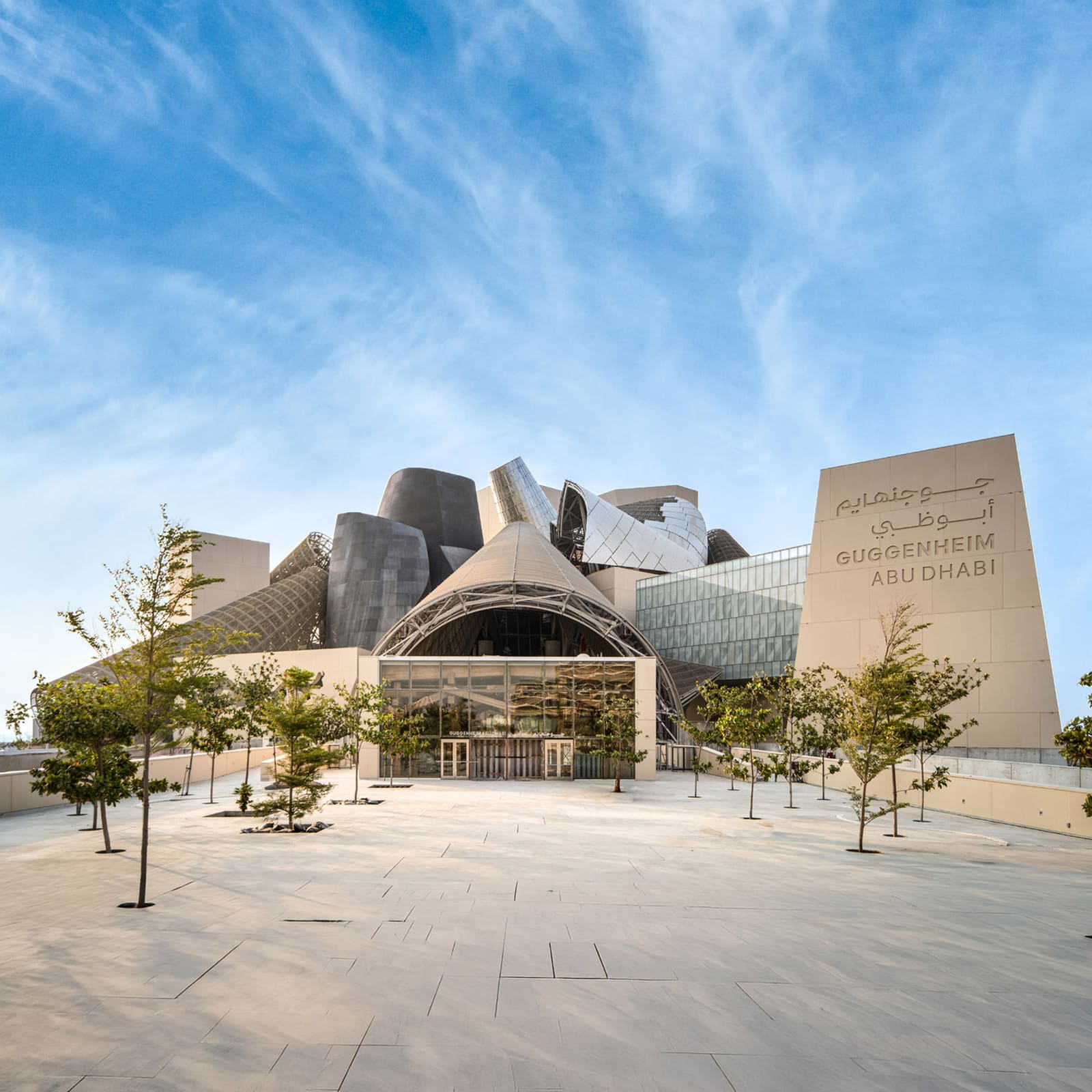
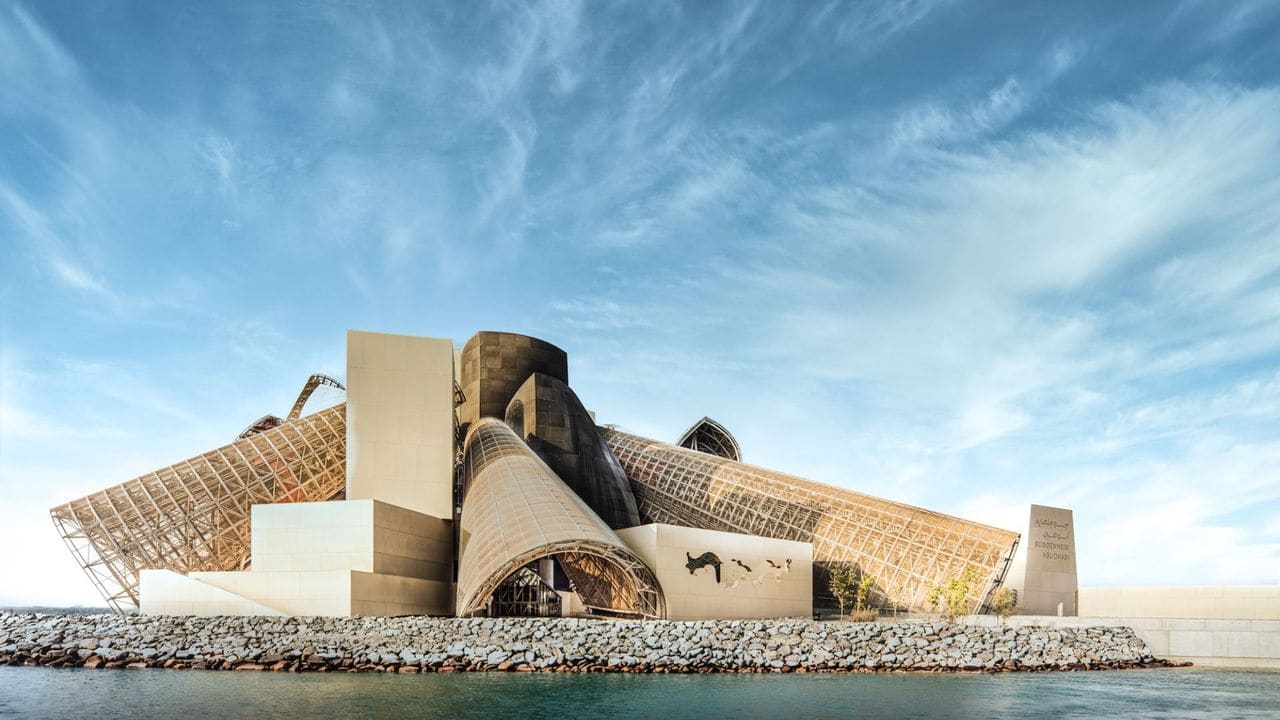
Some buildings outlive their makers. When the Guggenheim Abu Dhabi opens its doors on 11 December 2026, Frank Gehry will have been gone nearly a year. The architect, who passed away in December 2025, spent the better part of two decades refining a design that transforms the museum typology into ten conical volumes rising from the desert shore. What emerges is less a single structure than an architectural constellation, each cone clad in stainless steel mesh, glass, and onyx, creating what the Guggenheim Foundation describes as a "skyline" in miniature.
The project represents both an ending and a beginning. For Gehry, it closes a career arc that began with Bilbao's titanium curves in 1997 and established the museum-as-destination model. For Abu Dhabi, it marks another step in the emirate's three-decade effort to position Saadiyat Island as a global cultural node, a 10-square-mile territory now dense with commissions from architecture's upper echelon.
The Parti: Cones and Connectivity
Gehry's scheme for the 125,000-square-foot building pivots on aggregation rather than monumentality. Ten conical forms, each distinct in scale and proportion, cluster around a central atrium that soars through the interior. The geometry recalls his earlier experiments with fragmented massing, from the Disney Concert Hall's stainless steel petals to the Fondation Louis Vuitton's glass sails, but here the language is more restrained. The cones are not arbitrary; they organize 30 galleries into discrete spatial zones while maintaining visual and circulatory flow between them.
Material choice reinforces this duality. Stainless steel mesh wraps the exterior, filtering harsh Gulf sunlight into a diffused glow that shifts throughout the day. Onyx panels punctuate the façade, their translucency adding warmth to what might otherwise read as industrial. Inside, the atrium functions as both orientation device and social condenser, a vertical void that draws visitors upward while offering sightlines across gallery levels. The Guggenheim Foundation characterizes the design as one "intended to impress at every level," a phrase that, stripped of its promotional veneer, speaks to Gehry's longstanding interest in scalar variety and surprise.
Collection as Regional Anchor
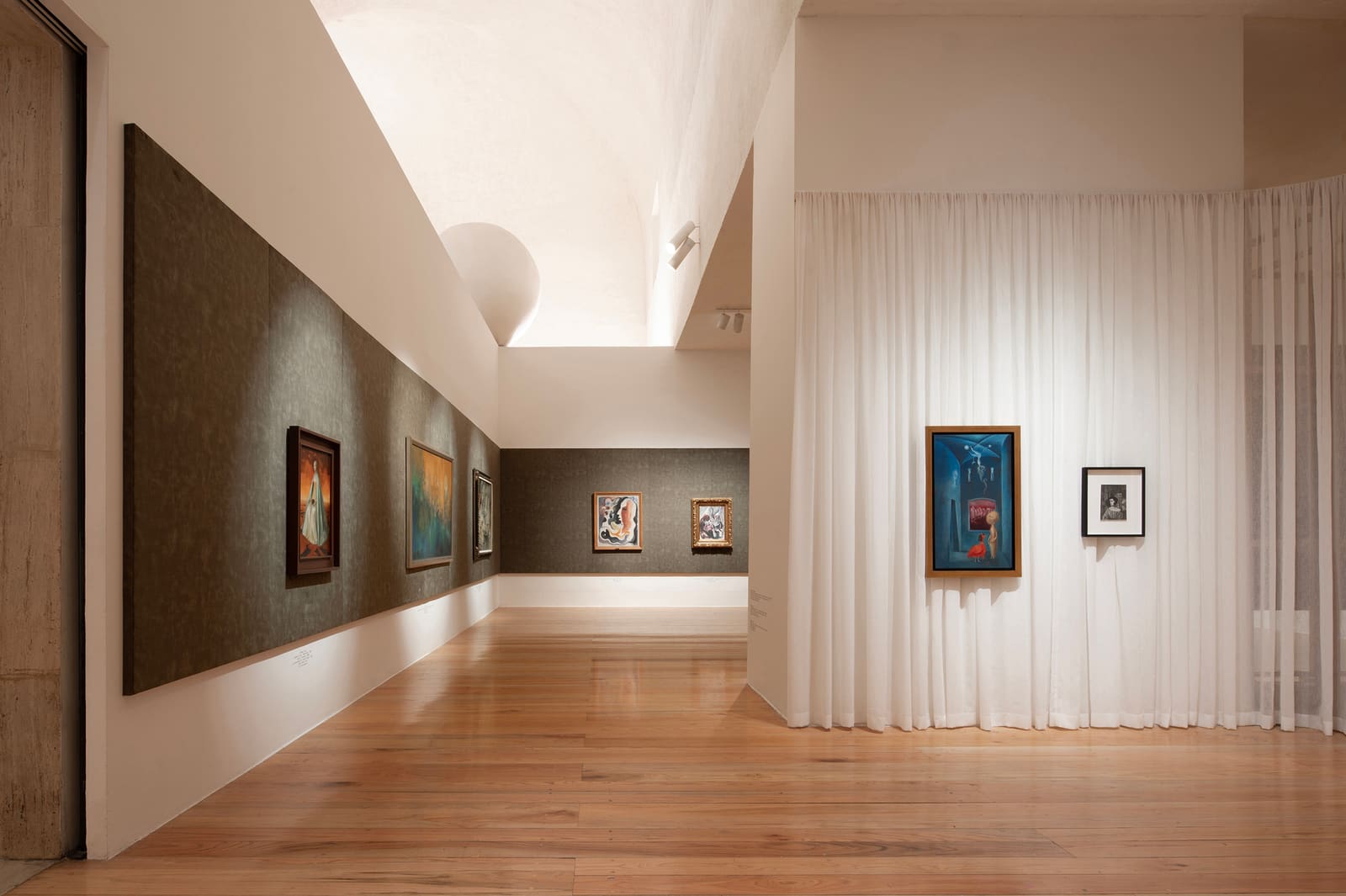
The Guggenheim Abu Dhabi has been acquiring works since 2009, building a collection that the foundation positions as "uniquely local and global, centered in the region but with works from all continents," according to director and CEO Dr. Mariët Westermann. A 2015 preview exhibition, "Seeing Through Light," offered a glimpse of this curatorial strategy, featuring artists including Yayoi Kusama, Rachid Koraïchi, Robert Irwin, Monir Shahroudy Farmanfarmaian, and Douglas Wheeler. The selection suggests a deliberate effort to balance Western canonical figures with practitioners rooted in Middle Eastern and North African traditions, particularly those working with light, pattern, and phenomenological experience.
Programming details remain under wraps, but the museum has confirmed that it will present works across painting, sculpture, film, installation, and digital art. This cross-medium approach aligns with the Guggenheim's broader institutional pivot toward contemporary practice, a shift evident in its New York and Bilbao venues over the past decade. Whether Abu Dhabi will develop its own curatorial identity, or function primarily as a satellite mirroring the foundation's existing collection strategies, remains to be seen.
The Long Road from Announcement to Opening
The Guggenheim Foundation first announced the Abu Dhabi project in 2006, envisioning a 2013 opening. That timeline proved wildly optimistic. Contract revisions, economic pressures following the 2008 financial crisis, and logistical complexities inherent in building on a man-made island all contributed to delays that stretched across 13 years. The project became a case study in the friction between architectural ambition and ground-level realities, particularly in contexts where labor practices and regulatory frameworks differ sharply from Western norms.
Human rights concerns emerged as a persistent shadow over Saadiyat Island's development. Reports of migrant worker exploitation on construction sites drew criticism from activists and artists alike, prompting protests and calls for boycotts. Gehry himself engaged a human rights lawyer to monitor conditions, an unusual step that underscored the ethical scrutiny facing cultural mega-projects in the Gulf. Whether these interventions led to substantive improvements, or merely provided reputational cover, depends on whom you ask. What's indisputable is that the Guggenheim Abu Dhabi carries a more complicated provenance than its Venetian or Bilbao predecessors.
Saadiyat Island's Starchitect Cluster
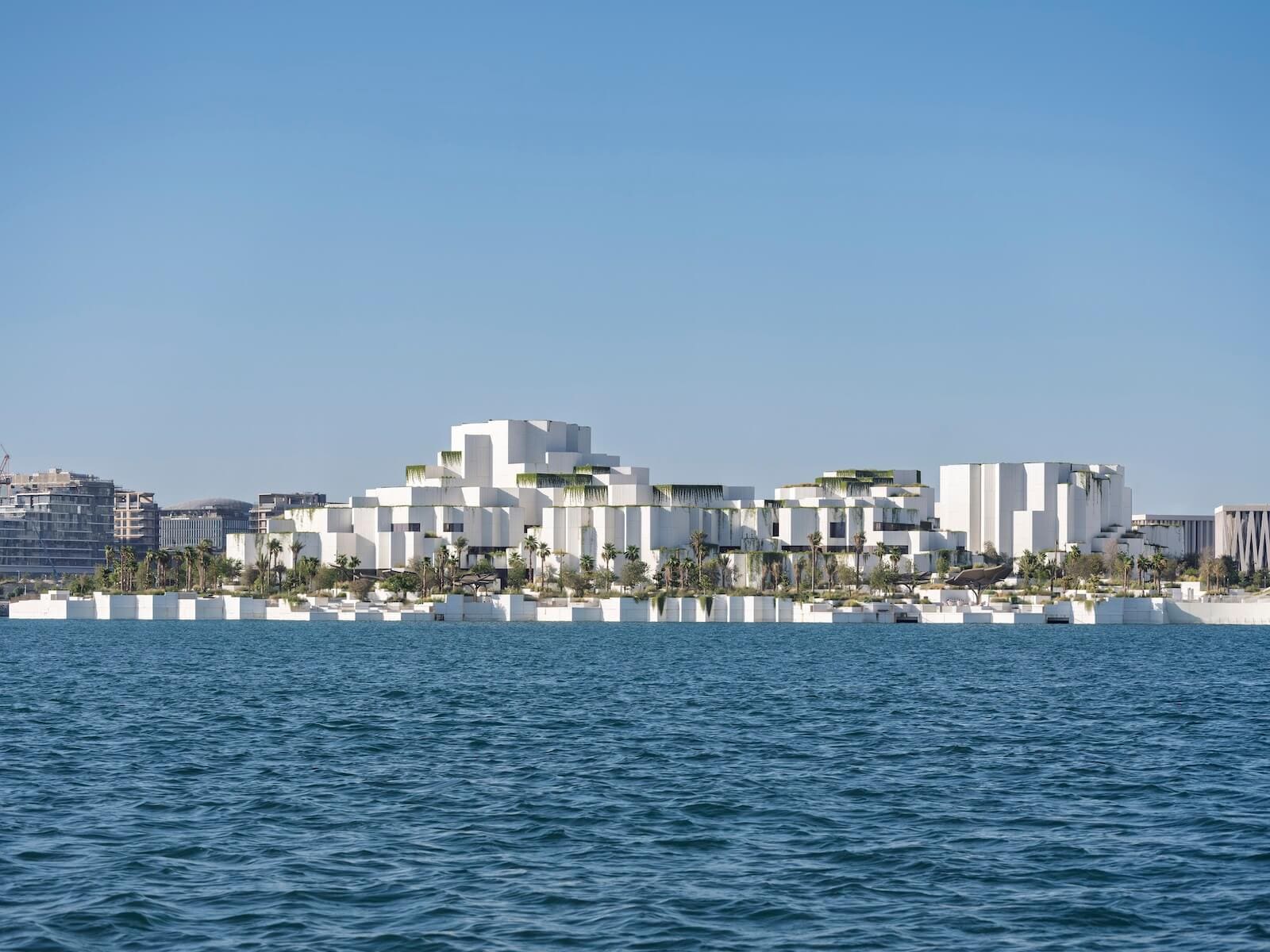
The Guggenheim will join an increasingly crowded field on Saadiyat Island. Jean Nouvel's Louvre Abu Dhabi opened in 2017, its perforated dome casting geometric shadows over a low-slung complex that blends museology with promenade. Foster and Partners' Zayed National Museum remains under construction, its wing-like forms intended to evoke falconry and Emirati heritage. David Adjaye's Abrahamic Family House, completed in 2022, houses a mosque, synagogue, and church under a shared campus, a spatial argument for interfaith dialogue. And Gehry's own Dar al Funoon Abu Dhabi, a performing arts center, continues to rise nearby, suggesting the architect maintained a sustained engagement with the island even as the Guggenheim project stalled.
This concentration of high-profile commissions reflects Abu Dhabi's strategic use of architecture as soft power, a model pioneered by Bilbao and replicated, with varying success, in cities from Astana to Shenzhen. The risk is that spectacle eclipses substance, that these buildings function more as branding exercises than as genuine cultural infrastructure. Early indications from the Louvre Abu Dhabi suggest the institutions can transcend their promotional origins, but the test will come with sustained programming, local engagement, and the willingness to host challenging, rather than merely crowd-pleasing, exhibitions.
Legacy and Uncertainty
Westermann describes the Guggenheim Abu Dhabi as "a source of wonder, a hub of connection, and a place of curiosity and joy for people from the United Arab Emirates and the world." It's the kind of statement museum directors are obligated to make, aspirational and vague in equal measure. What the building will actually become depends less on Gehry's formal ingenuity than on how the institution navigates its dual mandate: serving as a destination for international tourists while cultivating meaningful relationships with regional audiences.
At World Archi Design, we've observed that the most successful museums of the past two decades are those that resist the temptation to remain static monuments. The Tate Modern's Switch House addition, Herzog and de Meuron's intervention in 2016, demonstrated how institutions can evolve spatially in response to shifting curatorial priorities. Whether the Guggenheim Abu Dhabi possesses that kind of adaptability, or whether its ten cones will feel fixed and finished, is a question only time will answer. For now, Gehry's final museum stands as a testament to persistence, compromise, and the enduring belief that architecture can, if not transform cities, at least give them something to talk about.
Credit: Guggenheim Abu Dhabi
Save this story. A free account keeps your reading list and the 07:00 email in one place.
CREATE FREE ACCOUNT →SIGN IN