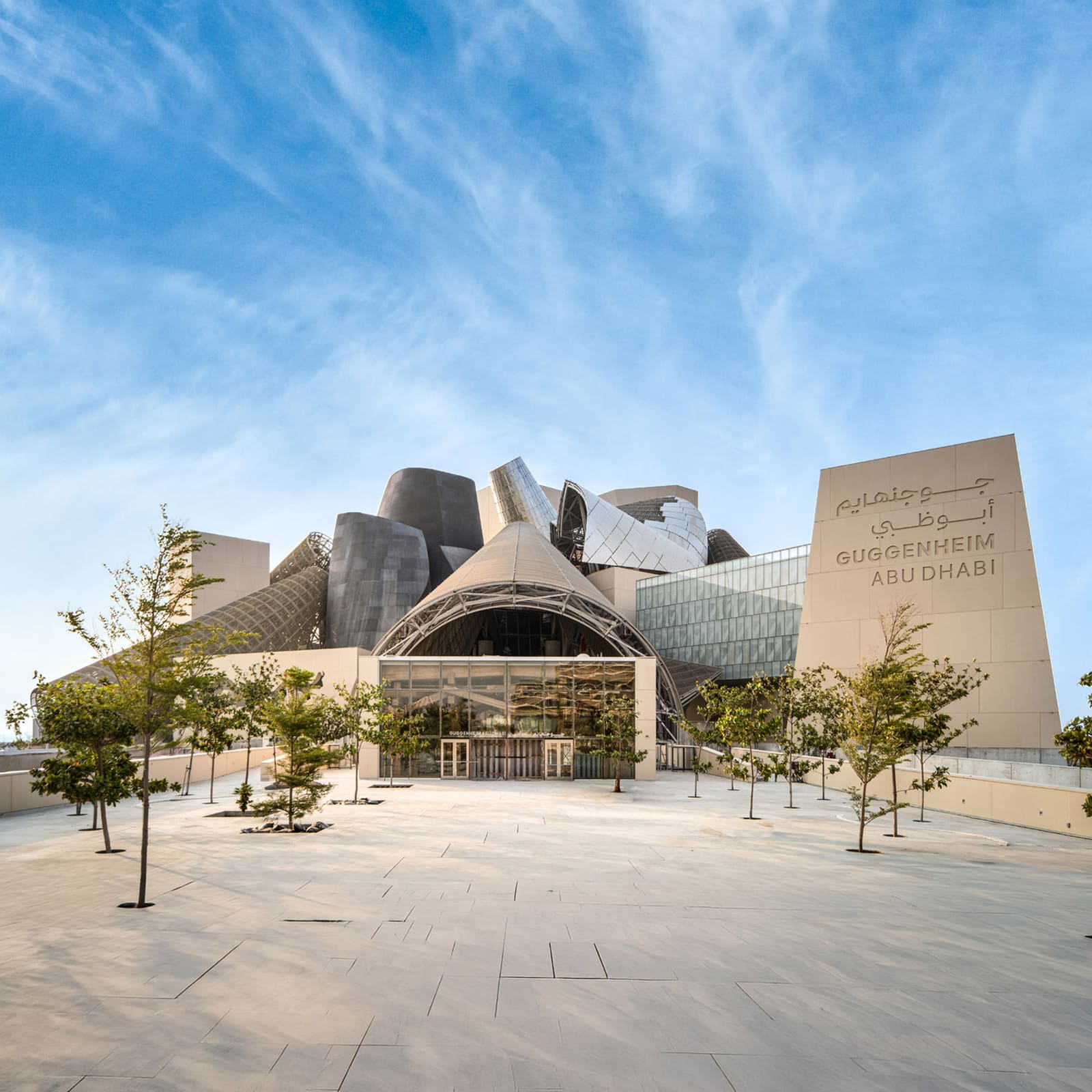
A Monument to Persistence
Twenty years is an epoch in architecture. Projects announced, built, inhabited, and sometimes demolished within that span. Yet Saadiyat Island has operated on a different timeline, one that speaks less to construction schedules than to the ambitions of cultural nation-building. The Guggenheim Abu Dhabi, slated to open this December, represents not just the completion of a single museum but the closing chapter of a multi-decade gambit to position the United Arab Emirates as a nexus for global contemporary art.
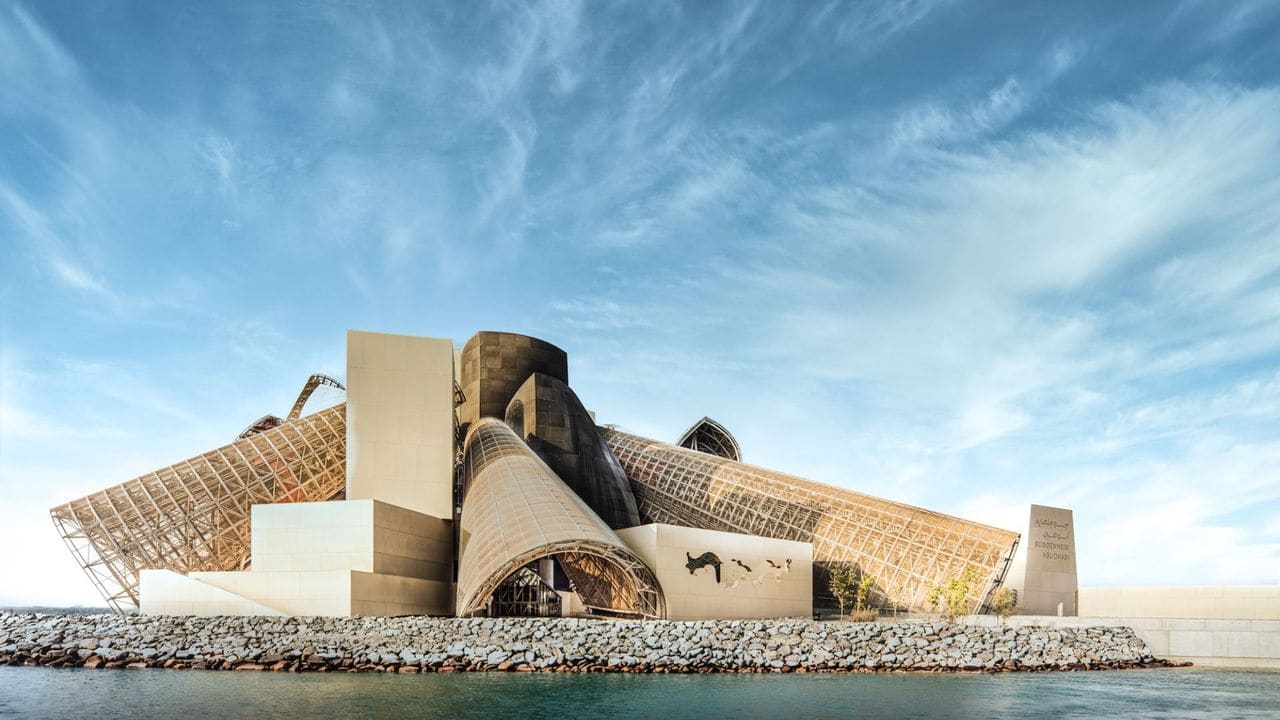
The project was first unveiled in 2006, when oil revenues still seemed infinite and architectural ambition knew few boundaries. Construction began in 2011, then paused for years amid economic recalibration and shifting priorities. Work resumed in 2019, and now, according to Abu Dhabi's department of culture and tourism, the building will welcome visitors on 11 December 2026. At 42,000 square metres, it will claim the title of largest Guggenheim outpost, surpassing even the Bilbao flagship that made Gehry's name synonymous with cultural tourism.
The Formal Language of Collision
Gehry's architectural vocabulary has always leaned toward the kinetic. His buildings appear caught mid-motion, as if geological forces had twisted steel and stone into improbable configurations. The newly released images of Guggenheim Abu Dhabi confirm this tendency, revealing a composition of clashing geometric volumes that refuse to settle into conventional hierarchies. These forms house galleries of varying heights and characters, each calibrated to different scales of art and encounter.
The building's massing strategy diverges from the rotunda typology that defines Frank Lloyd Wright's original Guggenheim in New York. Where Wright created a continuous spiral, Gehry has opted for discrete pavilions that collide and overlap. This approach echoes his work in Bilbao, but the desert context demands different material and climatic responses. The forms read as both monumental and fragmented, a tension that has defined much of Gehry's late career.
What distinguishes this project from earlier Gehry museums is its programmatic breadth. Beyond exhibition spaces, the building incorporates a centre for art and technology, children's facilities, archives, a library, and a conservation laboratory. This expanded brief suggests a museum conceived not merely as a display apparatus but as an institution engaged in research, education, and preservation. The question remains whether these functions will integrate fluidly within Gehry's signature formal exuberance or whether they will strain against the architectural spectacle.
Precedent and Context
Gehry's Guggenheim Bilbao opened in 1997, inaugurating what critics alternately celebrated as the "Bilbao Effect" and decried as architectural tourism. That building transformed a post-industrial Spanish city into a pilgrimage site, proving that a single structure could reorient regional economies. Abu Dhabi's ambitions are both similar and distinct. The emirate is not seeking revitalization but rather the construction of cultural legitimacy from near-scratch.
Saadiyat Island already hosts Jean Nouvel's Louvre Abu Dhabi, which opened in 2017 with its iconic perforated dome casting geometric light patterns across galleries and water. Foster and Partners completed the Zayed National Museum in December 2025, bringing another star architect into the constellation. The island functions as a kind of architectural theme park, each building a set piece by a globally recognized name. This model has precedents in the museum clusters of Berlin's Museumsinsel or Washington's National Mall, but those districts evolved over decades or centuries. Saadiyat's cultural district was master-planned and executed within a single generation.
The risk inherent in such concentrated cultural investment is homogeneity of vision. When every building is a landmark, does any single structure retain the capacity to surprise? Gehry's museum will need to assert itself not just against the desert landscape but against the architectural competition already in place. Its scale gives it one advantage. At 42,000 square metres, it will be the largest structure in the district, a physical dominance that may or may not translate into cultural authority.
Technology, Conservation, and the Future Institution
The inclusion of a dedicated centre for art and technology signals an awareness that contemporary museums must engage with digital practices, new media, and the evolving definitions of what constitutes art. This is a departure from the white-cube neutrality that characterized mid-twentieth-century museum design. The Guggenheim Abu Dhabi, by embedding technological infrastructure into its architectural programme, acknowledges that the museum of the future must be laboratory, studio, and archive simultaneously.
Conservation facilities within the building also reflect the realities of operating a major art institution in a desert climate. Temperature, humidity, and light control become existential concerns when stewarding works on loan from collections worldwide. The decision to house conservation labs within the museum proper rather than in off-site facilities suggests a transparency about the labour of preservation, making visible what is typically hidden from public view.
Children's facilities, meanwhile, indicate a commitment to education and long-term audience development. Museums increasingly recognize that their survival depends not on tourism alone but on cultivating local and regional publics who return repeatedly. Whether these educational spaces will be tokenistic additions or integral to the museum's identity will become clear only after opening.
The Shadow of a Late Career
Gehry passed away in December 2025, before seeing this project completed. In a 2021 statement, he described the Guggenheim Abu Dhabi as "truly thrilling," expressing hope that it would endure as a landmark for the country. The museum thus becomes a posthumous monument, a final statement from an architect whose career spanned more than six decades.
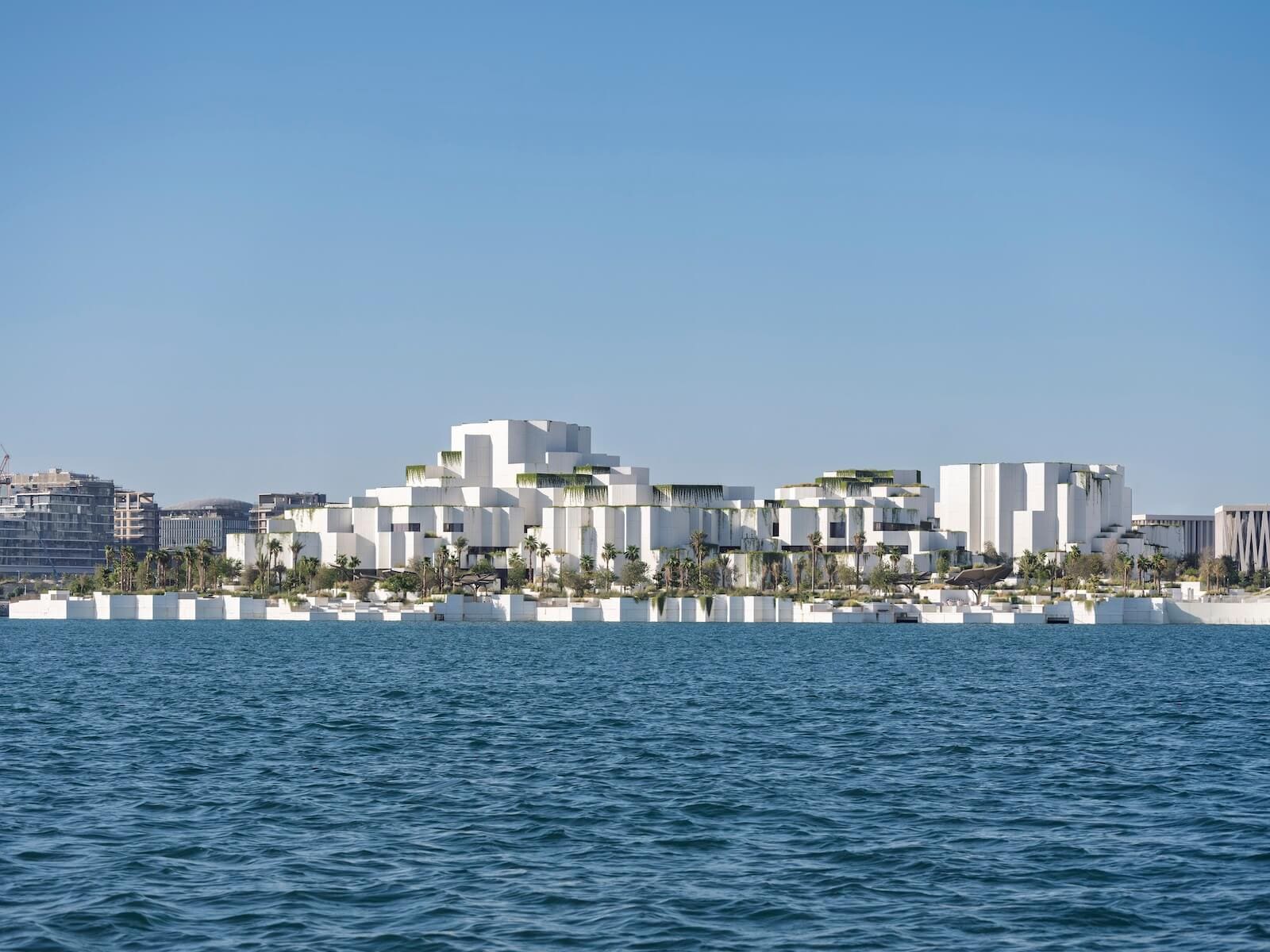
Late work carries particular weight. It can represent culmination or repetition, synthesis or exhaustion. Gehry's recent projects, including the Dar al Funoon Abu Dhabi performing arts venue also on Saadiyat Island, suggest an architect still willing to push formal boundaries even as his signature moves became increasingly codified. The Guggenheim Abu Dhabi will be read through this lens, as both an individual achievement and a summation of a life's work.
The building's opening also invites reflection on the broader trajectory of museum architecture in the twenty-first century. The era of the standalone iconic museum may be waning, replaced by more integrated, community-embedded institutions. Yet Saadiyat Island represents a final, ambitious iteration of the spectacle model, a gamble that architecture can still summon global attention and cultural capital.
What Opens in December
When the doors open on 11 December, the Guggenheim Abu Dhabi will be operated jointly by the Solomon R. Guggenheim Foundation and Abu Dhabi's department of culture and tourism. This partnership structure mirrors the arrangement at Louvre Abu Dhabi, where French institutions provide curatorial expertise and lend their brand in exchange for financial support and global reach. Such collaborations raise questions about cultural ownership and the flow of artistic authority from Western institutions to Gulf states.
The museum's inaugural exhibitions and acquisitions strategy will be telling. Will the collection emphasize Western modern and contemporary art, or will it prioritize artists from the Middle East, North Africa, and South Asia? Will it challenge the Eurocentric canon that still dominates most major museums, or will it reproduce it in a new geographic context? These curatorial decisions will determine whether the Guggenheim Abu Dhabi becomes a genuinely global institution or merely a branch office of a New York brand.
The building itself, with its clashing volumes and monumental scale, offers a stage. What performance will unfold there remains to be seen. Gehry has provided the architecture of encounter, spaces designed to surprise and disorient. Whether those spaces foster the "more connected and diverse global community through art" that the department of culture and tourism envisions depends on forces beyond architecture, on the choices made by curators, educators, and the publics who will inhabit the museum in the years to come.
Credit: Guggenheim Abu Dhabi
Save this story. A free account keeps your reading list and the 07:00 email in one place.
CREATE FREE ACCOUNT →SIGN IN