Abstract
As urban populations surge and cities grapple with shrinking green spaces, vertical public parks and rooftop gardens are emerging as vital innovations in urban design. This journal explores iconic vertical parks worldwide, highlighting how they not only reclaim underutilized rooftop areas but also contribute to environmental sustainability, social cohesion, and urban biodiversity. By examining landmark projects across Asia, Europe, and North America, the study reveals key design principles that ensure these green spaces thrive as inclusive, multifunctional urban oases. Finally, the article discusses broader implications for green architecture and sustainability, positioning vertical parks as essential components in the future of resilient, livable cities.
Introduction
Urbanization is transforming the physical and social fabric of cities globally. With over half the world’s population now living in urban areas - a figure projected to reach nearly 70% by 2050 - green open spaces are increasingly scarce. Traditional horizontal parks and gardens are often compromised by skyrocketing land prices and competing demands for housing, commercial, and infrastructure development. In response, architects, planners, and landscape designers have innovated upwards, turning rooftops, terraces, and elevated platforms into vibrant, accessible parks.
These vertical public spaces offer numerous benefits. Ecologically, they mitigate the urban heat island effect, improve air quality, and create habitats for birds and pollinators. Socially, they provide much-needed venues for recreation, community interaction, and cultural activities. Economically, green rooftops can enhance property values and reduce energy costs through natural insulation. In dense cities, vertical parks represent a new typology of urban public space - places that not only connect people to nature but also reconnect fragmented urban environments.
This journal delves into exemplary projects that have successfully realized the vision of “parks in the sky.” By analyzing their design strategies, programming, and community impact, we gain insights into how vertical green spaces can be integrated into urban environments globally. The discussion culminates in practical design lessons and a forward-looking conclusion on the role of vertical public spaces in advancing sustainable urbanism.
Iconic Vertical Parks and Rooftop Gardens
Namba Parks, Osaka, Japan
Namba Parks, designed by the acclaimed architect Jon Jerde and completed in 2003, is a pioneering project that blends retail, office, and entertainment functions with an extensive rooftop park. Spanning eight terraced levels and covering approximately 24,000 square meters, the rooftop garden cascades like a natural cliff face from the top floors of the complex down to street level. It features waterfalls, streams, indigenous and exotic plant species, and winding pedestrian pathways that create an immersive garden experience within the city’s commercial core.
More than a mere aesthetic feature, Namba Parks redefines how mixed-use developments can engage with nature vertically. Its design respects the rhythm and scale of Osaka’s urban context while offering a refuge from the dense cityscape. The park’s carefully curated plantings support local biodiversity, and the integration of water elements helps cool the microclimate, contributing to occupant comfort and environmental performance.

Terraced rooftop gardens cascade over Namba Parks, blending nature seamlessly into Osaka’s urban core
Pier 57 Rooftop Park, New York City, USA
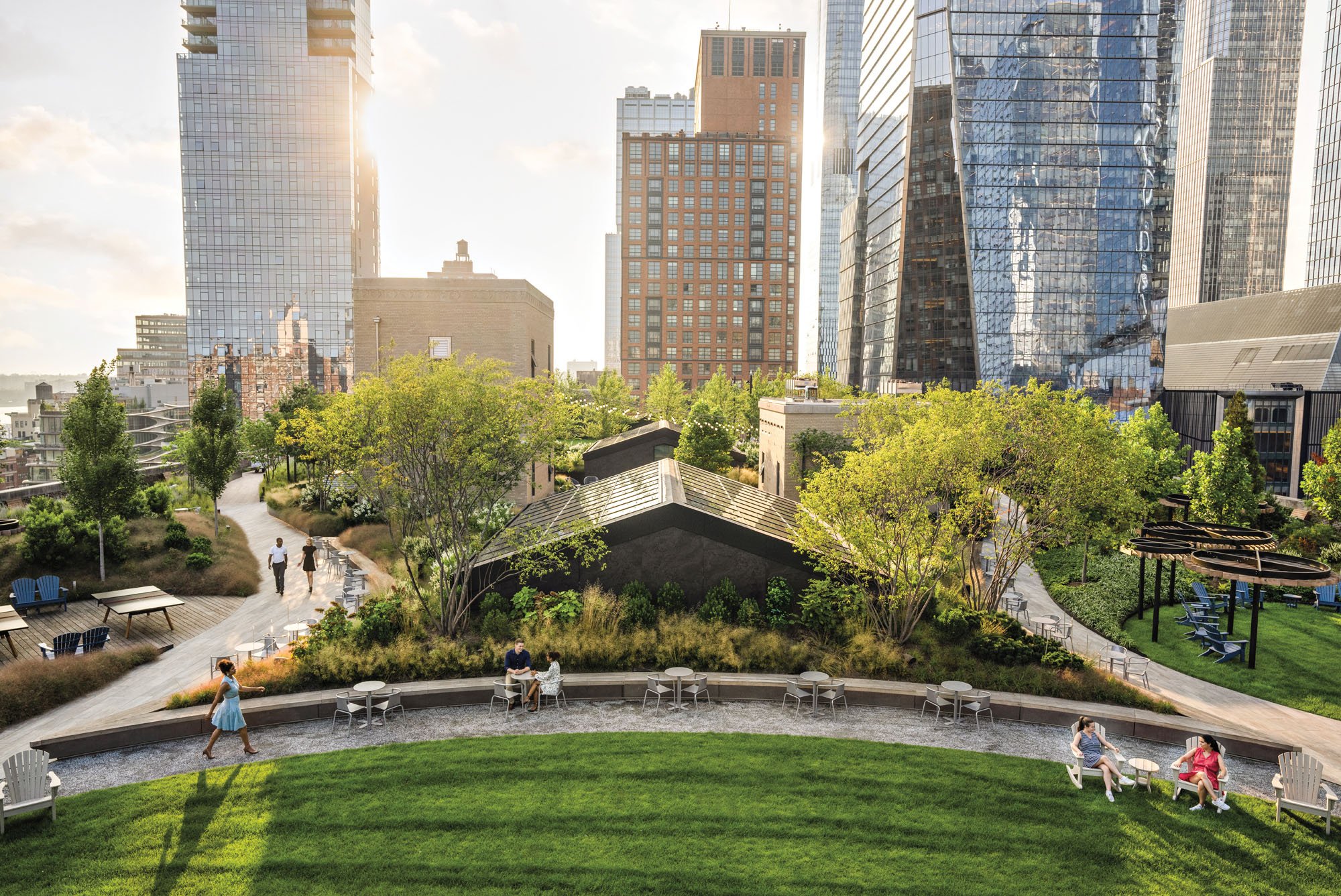
Pier 57 on Manhattan’s Hudson River waterfront exemplifies how industrial infrastructure can be repurposed to create generous green public spaces atop former shipping piers. The rooftop park spans roughly 10,000 square meters and offers open lawns, walking trails, and flexible event spaces with unobstructed views of the Hudson River, Statue of Liberty, and skyline.
Designed with a focus on accessibility and community programming, Pier 57 serves as a vibrant social hub in a city often starved for open green space. The park incorporates native planting to support local ecosystems and uses sustainable materials to minimize environmental impact. Its design encourages active use - jogging, picnicking, cultural festivals - making it a multifunctional urban oasis that fosters social connection and well-being.

Pier 57’s expansive rooftop park offers panoramic waterfront views and vibrant green space in the heart of Manhattan
Thammasat University Rooftop Farm, Bangkok, Thailand
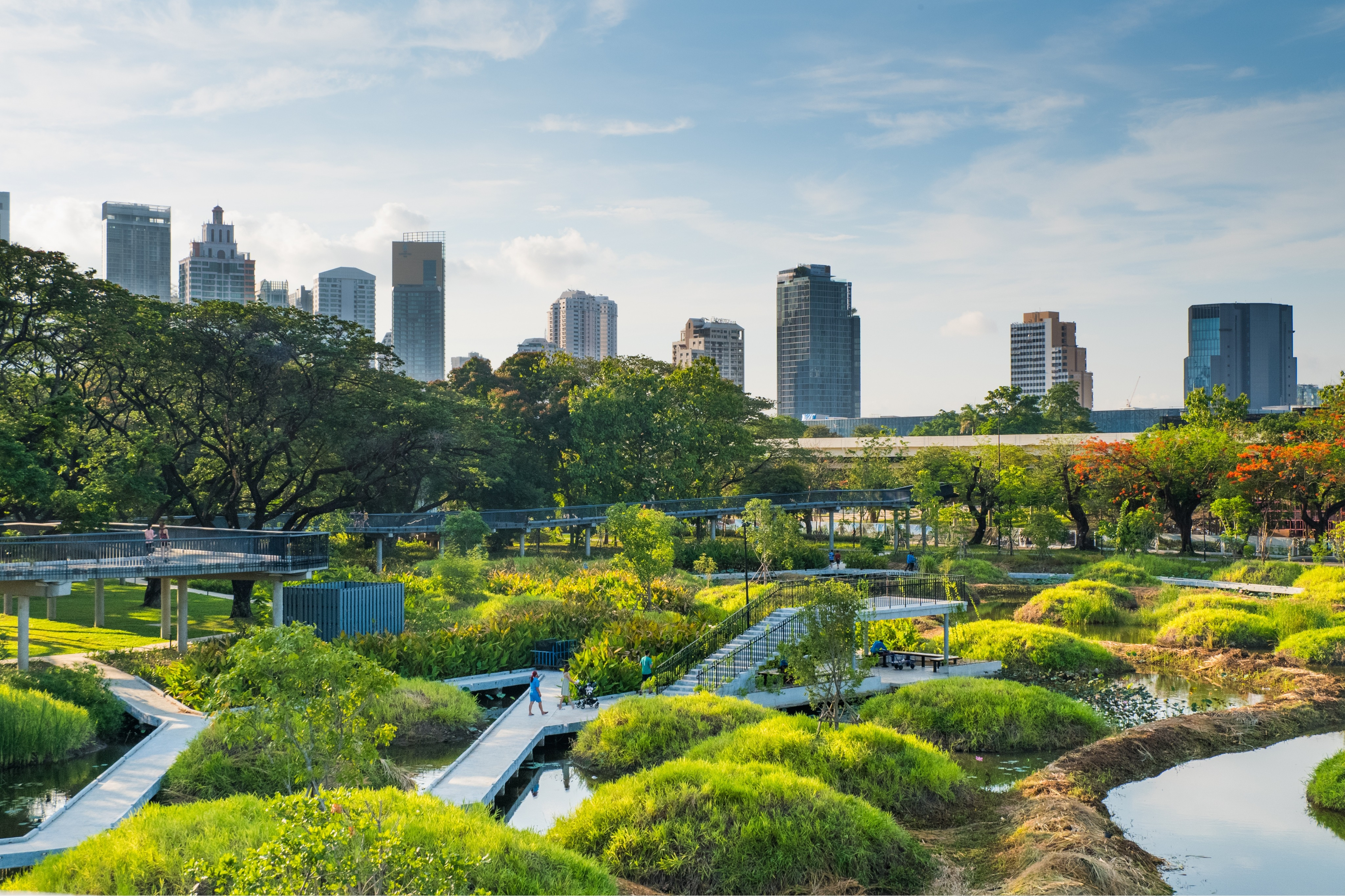
Thammasat University’s rooftop farm, sprawling over 1.7 acres, is among Asia’s largest urban rooftop agriculture projects. Developed by Landprocess, the farm integrates urban food production with recreational green space and educational outreach. It includes vegetable plots, fruit trees, aquaponics systems, rainwater harvesting features, and informal seating areas for students and visitors.
This project underscores the potential of vertical spaces not only to green cities but to address food security and promote environmental awareness. By situating agriculture on the rooftop, it reduces transportation emissions, educates users on sustainable food systems, and fosters community involvement in the urban ecosystem. The farm is a model for multifunctional green roofs that combine ecological, social, and pedagogical objectives.

This sprawling rooftop farm transforms urban agriculture into a lush, educational green oasis above Bangkok
CapitaSpring, Singapore
CapitaSpring, a 51-story skyscraper designed by Bjarke Ingels Group (BIG), integrates nature vertically in the heart of Singapore’s dense financial district. The building boasts a 5,000 square meter Green Oasis spanning multiple levels, including a rooftop garden home to over 150 species of tropical plants. Vertical planting walls and sky gardens punctuate the tower’s façade, creating a biophilic environment for occupants.
The building’s design responds to Singapore’s vision of a “City in a Garden,” aligning with the nation’s sustainability goals. The lush greenery improves air quality, reduces urban heat, and provides calming spaces amid the high-density urban context. CapitaSpring exemplifies how vertical greening can be an integral part of high-rise design, enhancing wellness and ecological performance simultaneously.

CapitaSpring’s vertical gardens and sky parks embody Singapore’s vision of a “City in a Garden”
Warsaw University Library Rooftop Garden, Warsaw, Poland
The Warsaw University Library’s rooftop garden, completed in 2002, is one of Europe’s largest and most celebrated green roofs. The garden spans 12,000 square meters and is divided into four color-coded sections reflecting seasonal changes and different planting themes. It features a Japanese tea pavilion, walking paths, benches, and panoramic views of the Vistula River and city skyline.
Designed by Irena Bajerska, the garden transforms the library’s flat roof into an inviting public park that is accessible to students and the wider community. The project successfully merges educational and cultural functions with ecological benefits, supporting native flora and fauna while fostering a serene atmosphere in an otherwise urban setting.

Color-coded garden terraces atop Warsaw University Library create a peaceful green refuge with sweeping city views
Design Lessons from Vertical Parks
Seamless Integration with Urban Context
Successful vertical parks demonstrate a deep understanding of their urban surroundings. Projects like Namba Parks show how rooftop gardens can extend the natural landscape vertically, creating a continuous experience that links ground-level and aerial green spaces. Designers should consider sightlines, wind patterns, and microclimates to ensure the park complements rather than disrupts the city’s character.
Universal Accessibility and Inclusivity
Vertical parks must be welcoming and usable by all members of society. This includes thoughtful provision of elevators, ramps, tactile paving, and clear wayfinding to accommodate people of all ages and abilities. Pier 57’s emphasis on inclusive design exemplifies how accessibility can enhance social equity in urban green space.
Multipurpose Programming for Social Engagement
The most vibrant rooftop parks serve multiple functions - recreation, education, cultural events, and urban agriculture. Incorporating flexible spaces allows communities to tailor the park to diverse needs and encourages sustained use. Thammasat University’s rooftop farm demonstrates how integrating food production with leisure and learning activates the space year-round.
Ecological Sustainability and Resilience
Green roofs must incorporate sustainable technologies such as rainwater harvesting, native planting, energy-efficient lighting, and soil substrates designed for water retention and plant health. CapitaSpring illustrates how biophilic design principles can be embedded within high-performance building systems to improve occupant well-being and reduce environmental impact.
Community Participation and Stewardship
Long-term success depends on involving local communities in the design, maintenance, and programming of vertical parks. The Warsaw University Library garden’s integration of cultural elements and educational outreach fosters a strong sense of ownership, which in turn supports the park’s vitality and sustainability.

Rooftop parks thrive as social hubs when they mix play, learning, culture, and even farming
Conclusion
Vertical public spaces - parks in the sky - are redefining how cities integrate nature amidst dense urban development. Beyond their aesthetic appeal, these elevated green spaces provide critical environmental benefits, from mitigating urban heat islands to supporting biodiversity. Socially, they offer inclusive venues for recreation, community-building, and cultural expression. As climate change and urban density pressures intensify, vertical parks emerge as essential components of resilient, sustainable cities.
Save this story. A free account keeps your reading list and the 07:00 email in one place.
CREATE FREE ACCOUNT →SIGN IN