The Factory That Forgot Its Function
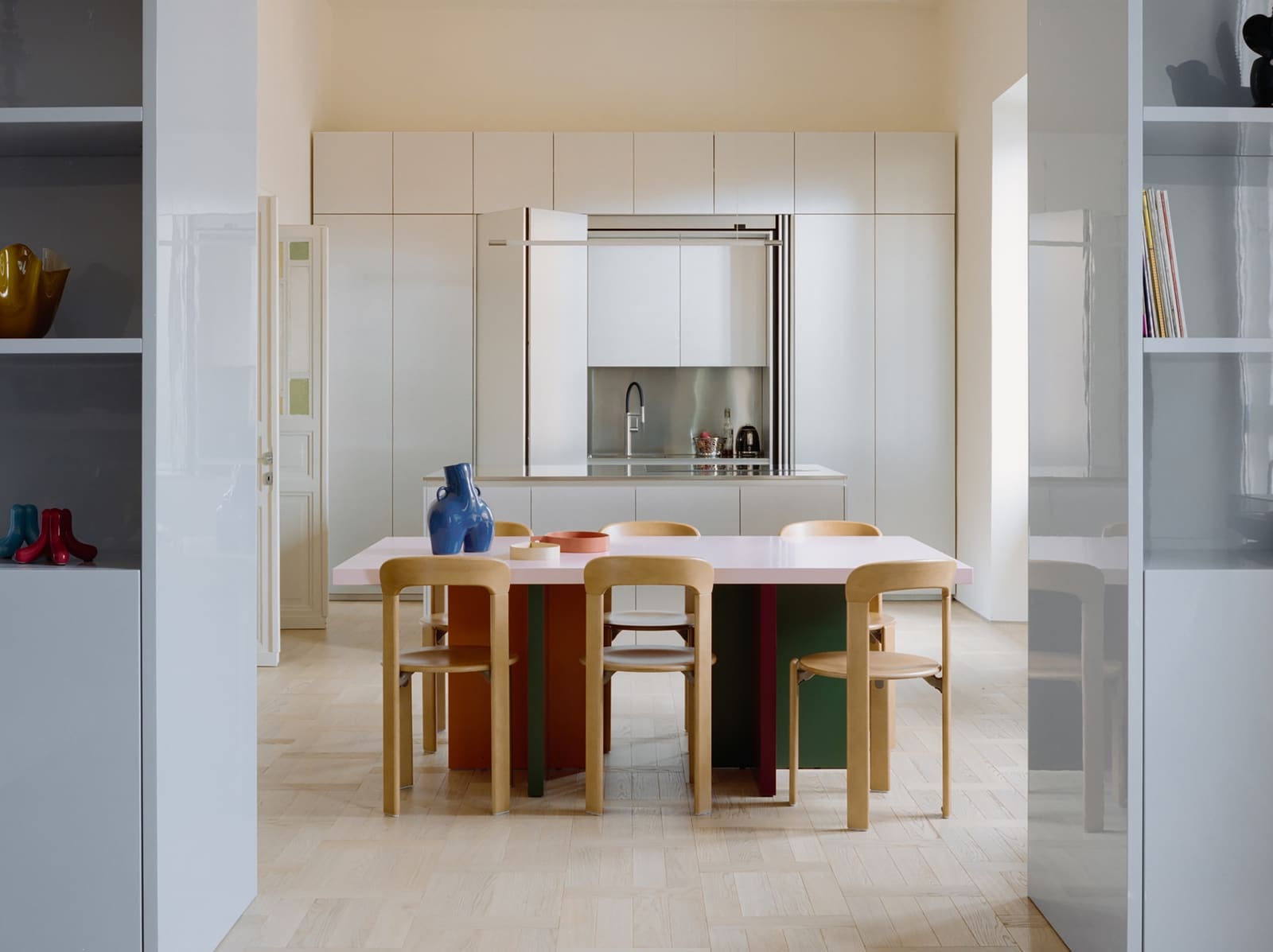
There's a particular kind of courage required to take over a thousand-square-metre industrial building and refuse to let it settle into a single category. Studio Loho, the Bruges-based practice founded by Karel Loontiens and Jo Hoeven in 2017, has done exactly that with Jonojé, occupying a former brush factory on the outskirts of the city. The result is a six-suite B&B that moonlights as showroom, gallery, photo studio, and residence, a structure that resists the easy taxonomy of "boutique hotel" or "design guesthouse." It's something closer to a three-dimensional manifesto, where every wall, basin, and bathtub argues for a different relationship between material and inhabitant.
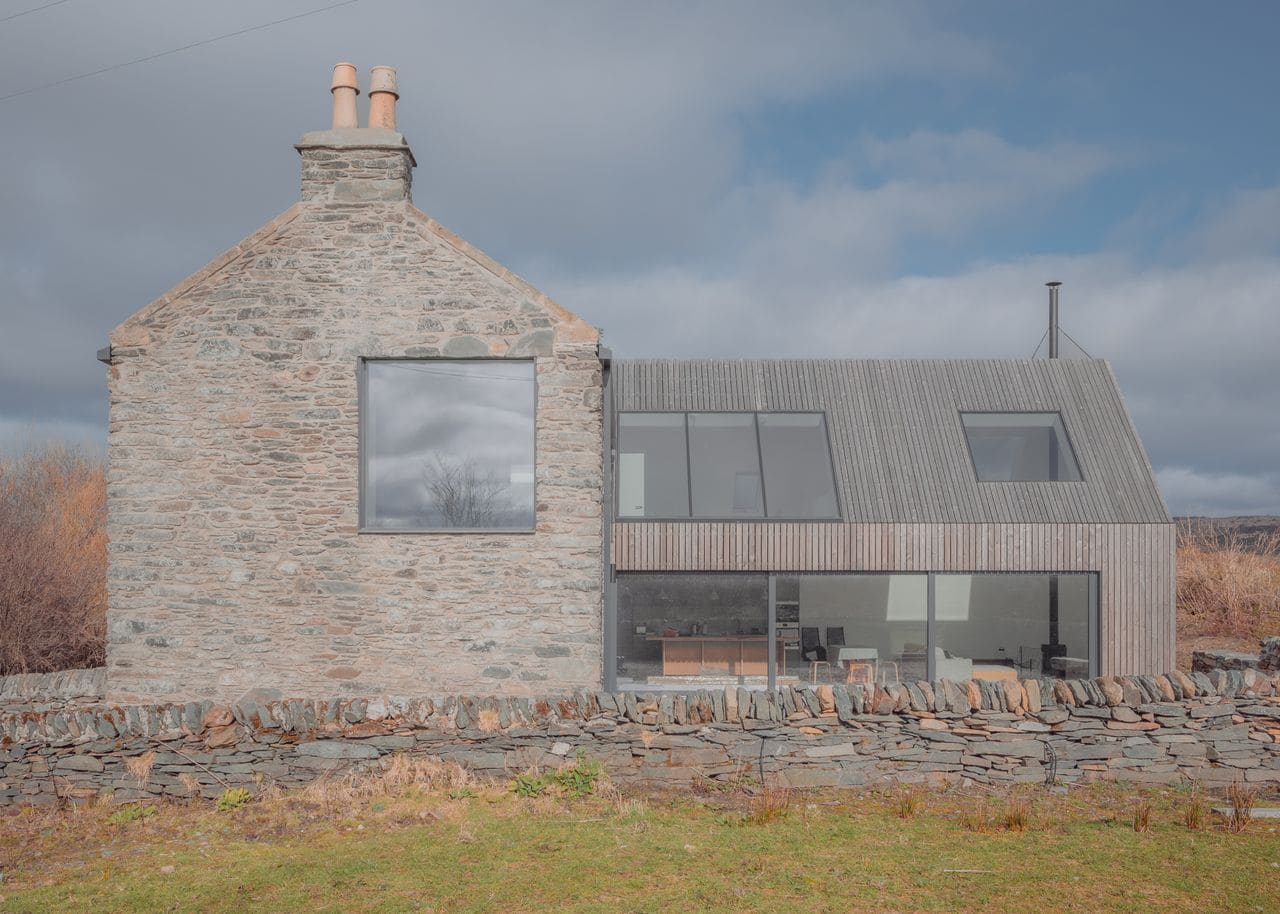
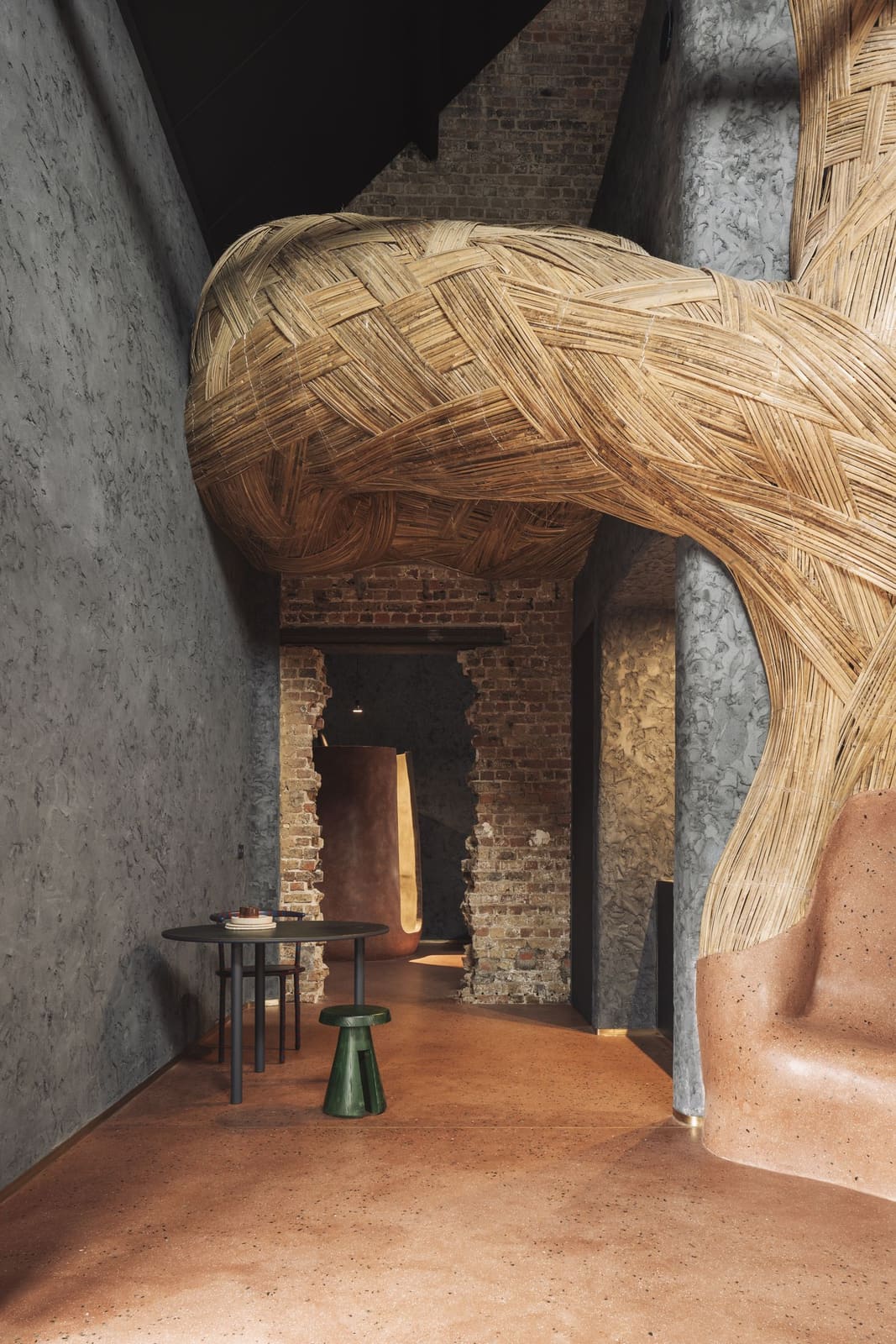
The building itself is listed, which means the envelope was non-negotiable. But within that protected shell, Studio Loho has constructed an interior universe built almost entirely from their own material vocabulary: organically plastered walls, freestanding ceramic shower enclosures, clay washbasins, and switches crafted by Maison Kallis. The 1,250-square-metre garden extends the project outward, while a director's residence anchors the complex, blurring the line between workspace and living quarters. This is design as immersion, where stepping through the door means entering the studio's ongoing research into what surfaces can be, how they age, and what they communicate when they're allowed to be something other than backdrop.
Six Suites, Six Conversations
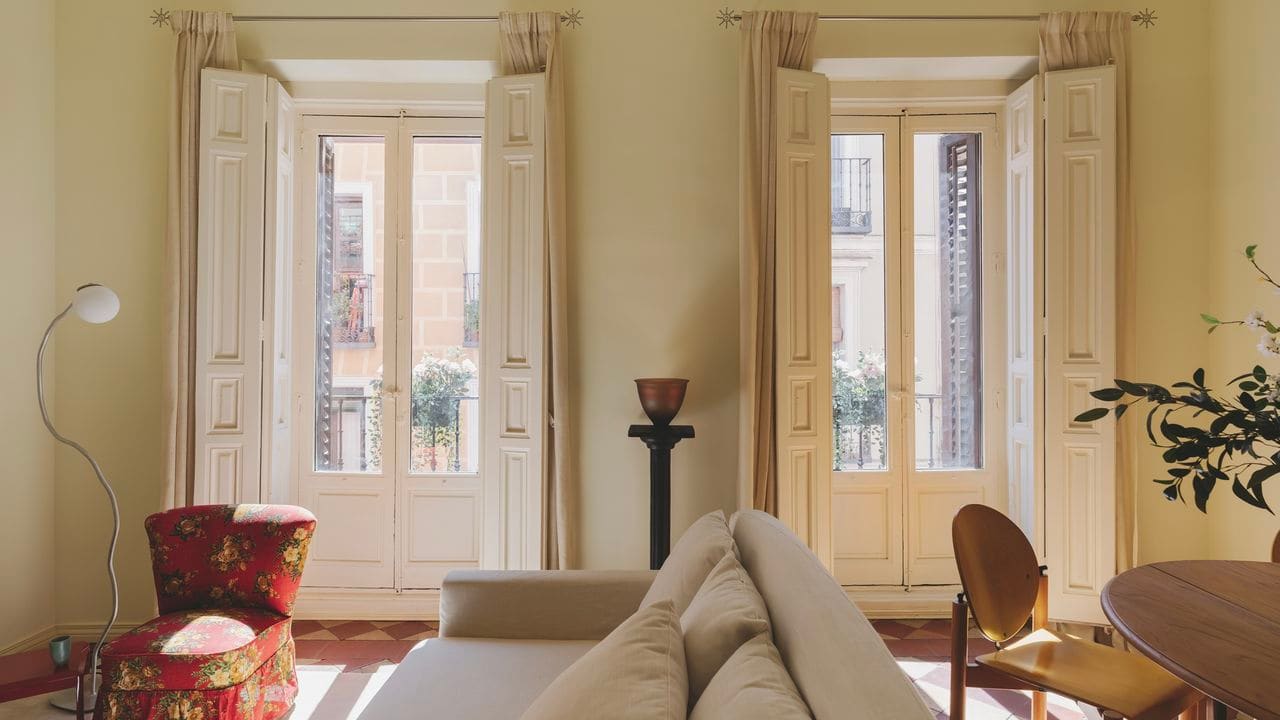
Each of the six suites spans roughly seventy-five square metres, generous by hospitality standards but modest enough to force a kind of intimacy with the materials. The Roku suite, for instance, deploys bamboo-slat structures that recall the scaffolding vernacular of East Asia, recontextualized here as both screen and skeleton. Elsewhere, cast floors are inlaid with graphic motifs made from clay residues, production waste transformed into ornament. It's a move that echoes the adaptive reuse ethos of practices like Assemble or Studio Mumbai, where the byproduct becomes the detail, and nothing is too humble to carry aesthetic weight.
The ceramic bathtub, moulded and fired as a single monolithic piece, has become something of a signature object for Studio Loho. It's the kind of element that photographs well but reveals its ambition only in person, when you can trace the slight irregularities in the glaze, the way the form holds light differently depending on the time of day. Bathtubs as sculptural anchors are not new, Le Corbusier's obsession with the bathroom as ritual space comes to mind, but the decision to fire one from a single mass of clay introduces a tectonic honesty that most contemporary fixtures avoid. There's no hiding joints, no veneering over a substrate. The material is the structure is the finish.
Material as Method, Not Style
What distinguishes Jonojé from the wave of craft-forward hospitality projects that have proliferated over the past decade is the insistence on in-house fabrication. Studio Loho isn't specifying artisan products from a catalogue; they're developing the catalogue. The organic plasters, the ceramic switches, the clay washbasins, all of these emerge from their Bruges workshops, often in collaboration with artists like Sharon Van Overmeiren. It's a model closer to the atelier system of the early modernists, where design and making occupy the same space, than to the architect-as-curator approach that dominates much contemporary practice.
This verticality of production allows for a kind of material coherence that's difficult to achieve when sourcing from multiple suppliers. The plasters can respond to the specific humidity of a bathroom. The ceramic elements can be calibrated to the exact hue of a cast floor. There's a feedback loop between intention and execution that tightens with each iteration, and Jonojé functions as both showroom and laboratory, a place where guests effectively beta-test the studio's ongoing research.
The Tension Between Comfort and Challenge
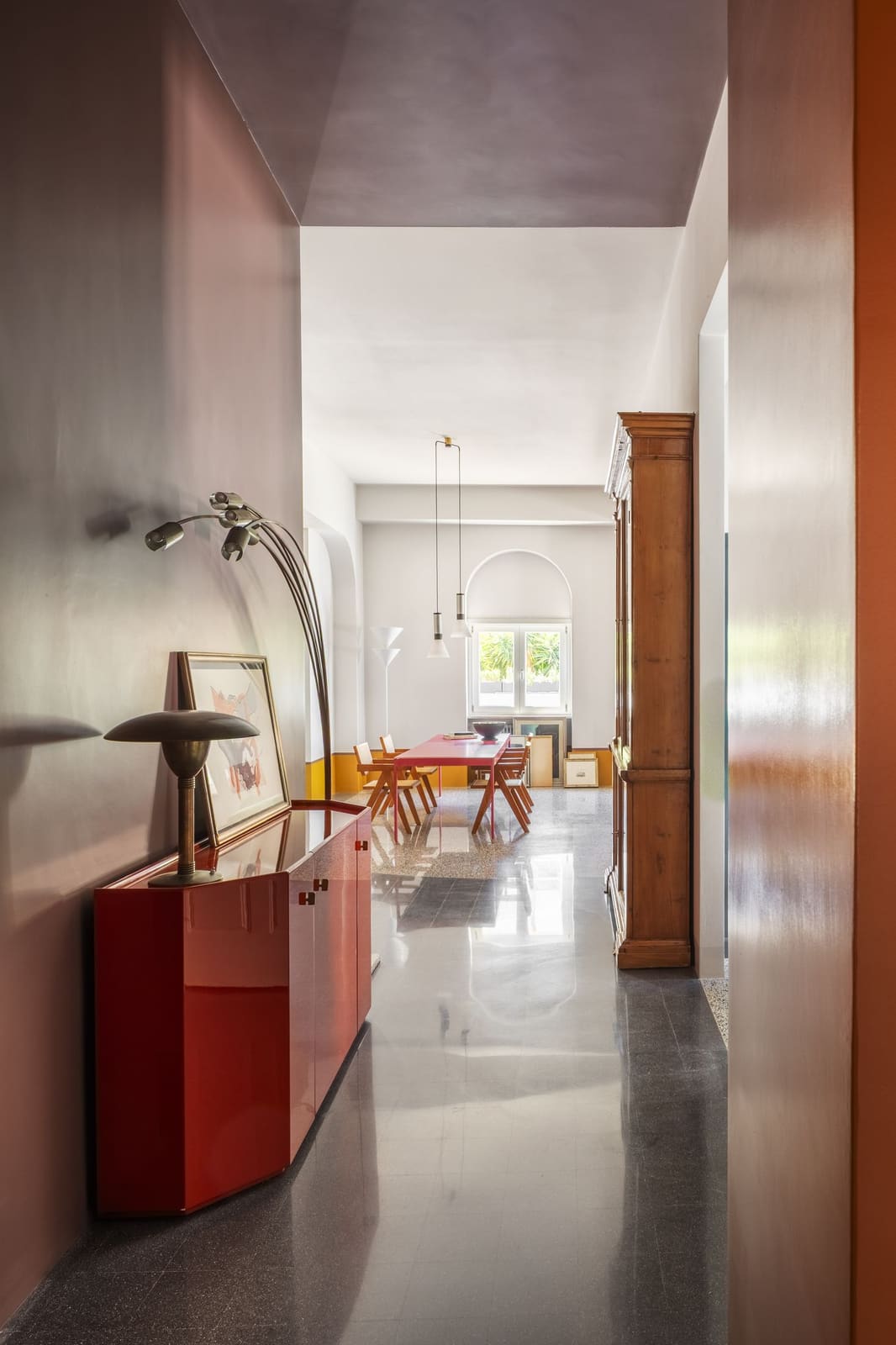
Loontiens and Hoeven describe their work as part of a renewed vision for interior design, one where rooms transcend pure function to become what they call "canvases for expression." It's a phrase that could easily slide into marketing speak, but the built reality of Jonojé suggests they mean it structurally. The suites oscillate between moments of softness, plush textiles, diffused light, and harder gestures: raw edges, unfinished surfaces, the occasional refusal to smooth over the evidence of the hand. It's a push-pull that recalls the domestic interiors of Carlo Scarpa, where beauty and discomfort coexist without apology.
This is not design that flatters the occupant. It asks you to adjust, to notice, to sit with the strangeness of a bathtub that doesn't quite behave like a bathtub. There's a risk in that approach, particularly in hospitality, where the default expectation is frictionless comfort. But the risk is also the point. In an industry increasingly dominated by algorithmic personalization and predictive service, Jonojé offers something rarer: the possibility of being genuinely surprised by a space.
Longevity as a Design Brief
Studio Loho positions itself explicitly against disposability, arguing for objects and surfaces designed to be cherished across generations. It's a claim that carries weight when you're working in clay and plaster, materials with millennia of precedent, but it also raises questions about how beauty ages. Will the organic plasters patina gracefully, or will they require constant maintenance? Can a cast floor inlaid with clay residue survive the foot traffic of a working B&B, or will it need periodic restoration? These aren't criticisms so much as open questions, the kind that only time and use can answer.
What's already clear is that Jonojé operates according to a different temporal logic than most hospitality projects. It's not designed for the Instagram moment, though it will undoubtedly generate plenty of those. It's designed for the slow accumulation of wear, for the kind of patina that comes from bodies moving through space over years. That ambition, whether it succeeds or not, is worth paying attention to. In a field increasingly preoccupied with rendering and visualization, Studio Loho is making a case for the irreducibility of the physical, for materials that change and respond and refuse to stay fixed.
Beyond the Binary
The question posed at the outset, is it beautiful or ugly, misses the more interesting territory Jonojé occupies. It's both, and neither, and something adjacent to both. It's design that acknowledges discomfort as part of the experience, that doesn't sand down every edge or resolve every tension. That might make it difficult to categorize, but it also makes it one of the more compelling experiments in material-led hospitality to emerge in recent years. Whether it's a model that scales or remains a one-off provocation is beside the point. For now, it's a reminder that buildings can still ask questions instead of just answering them.
Photo: Tijs Vervecken / Studio Loho
Save this story. A free account keeps your reading list and the 07:00 email in one place.
CREATE FREE ACCOUNT →SIGN IN