A Question of Belonging
There is a moment in every architect's process when the question shifts from "what should this building be?" to "how should this building belong?" The latter is far harder to answer. It requires listening to place, reading terrain, acknowledging what already exists. At World Archi Design, we've been tracking a quiet shift in residential architecture away from object-making and toward something more embedded, more conversational. Vila Talha, a residence completed in 2025 by Contacto Atlântico at the Costa Terra Golf & Ocean Club in Melides, Portugal, offers a compelling case study in this approach.
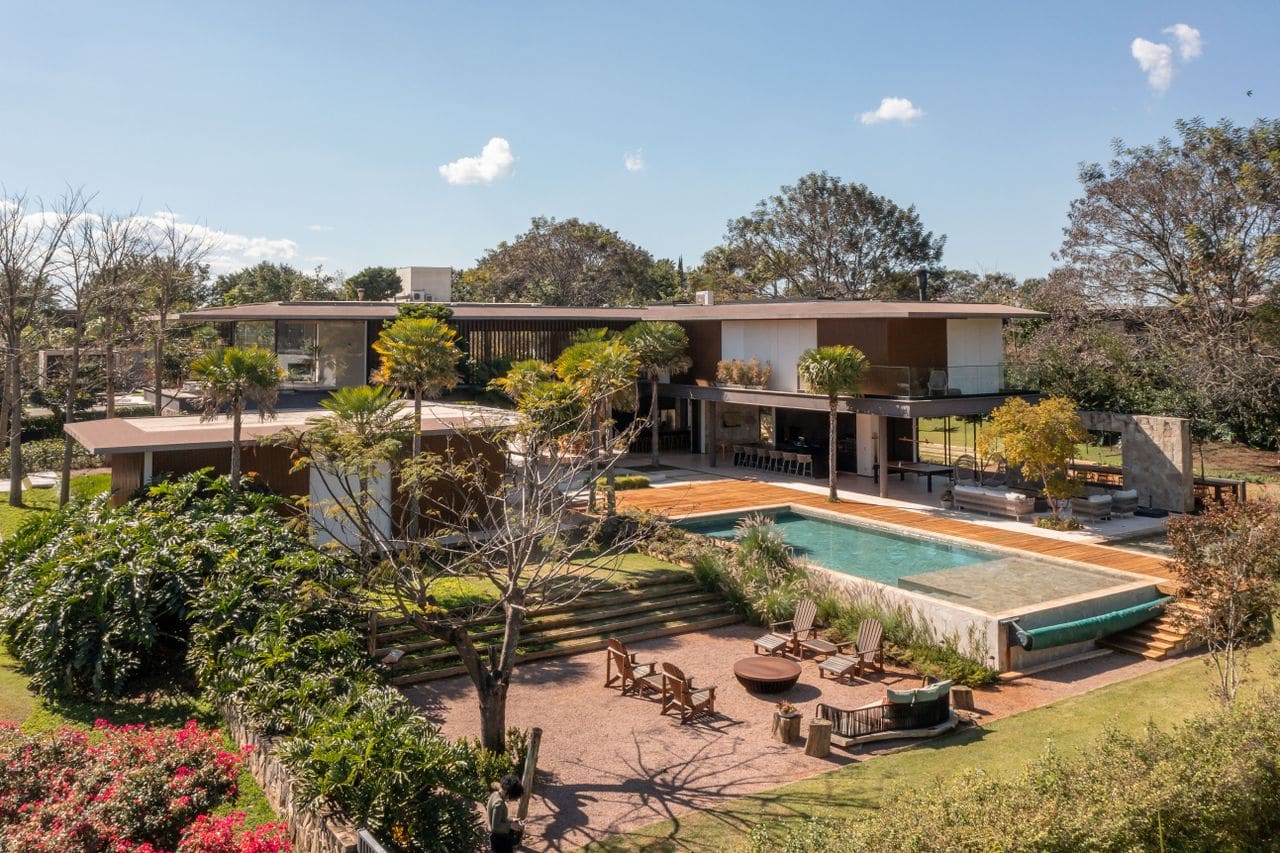
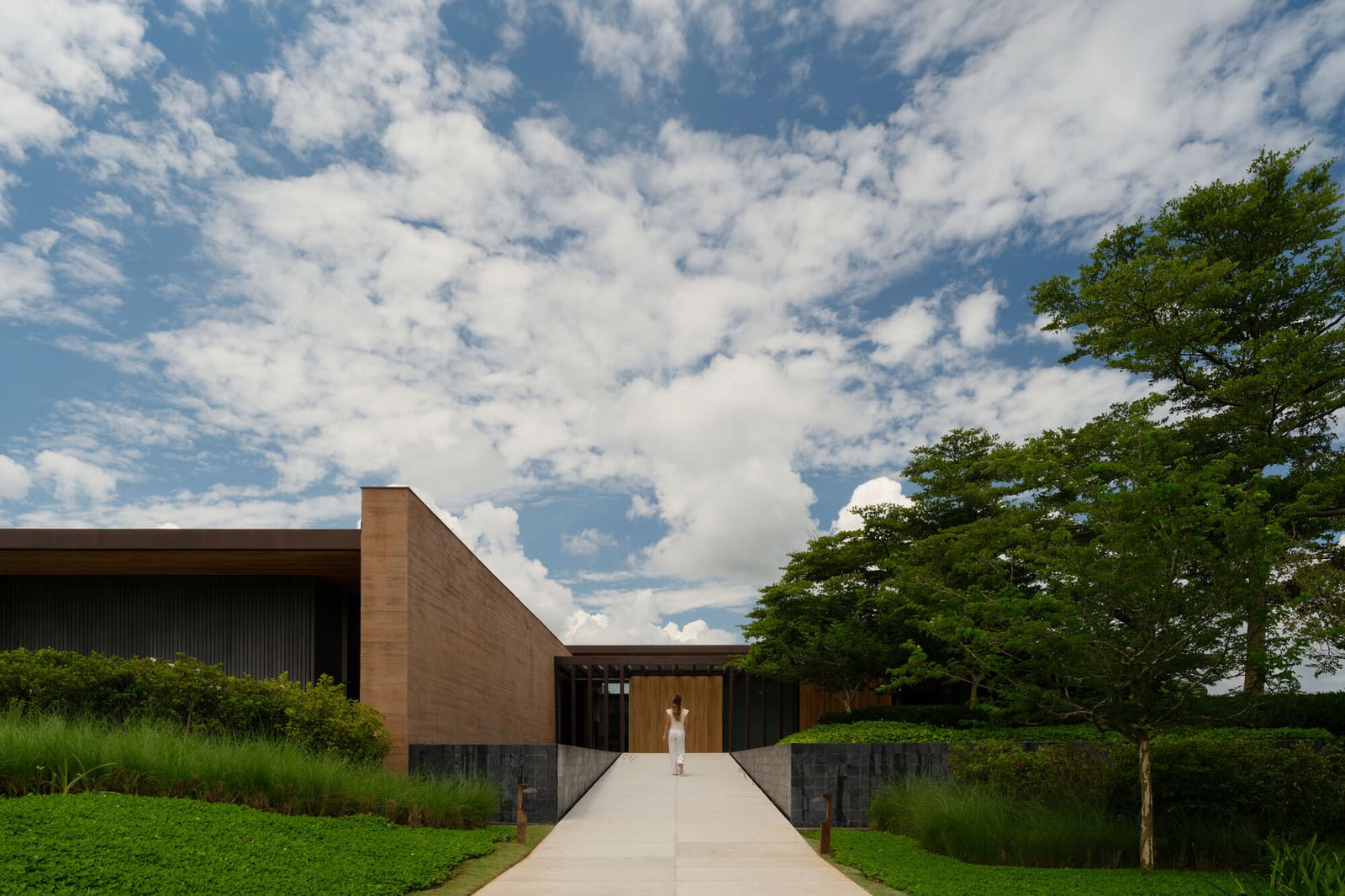
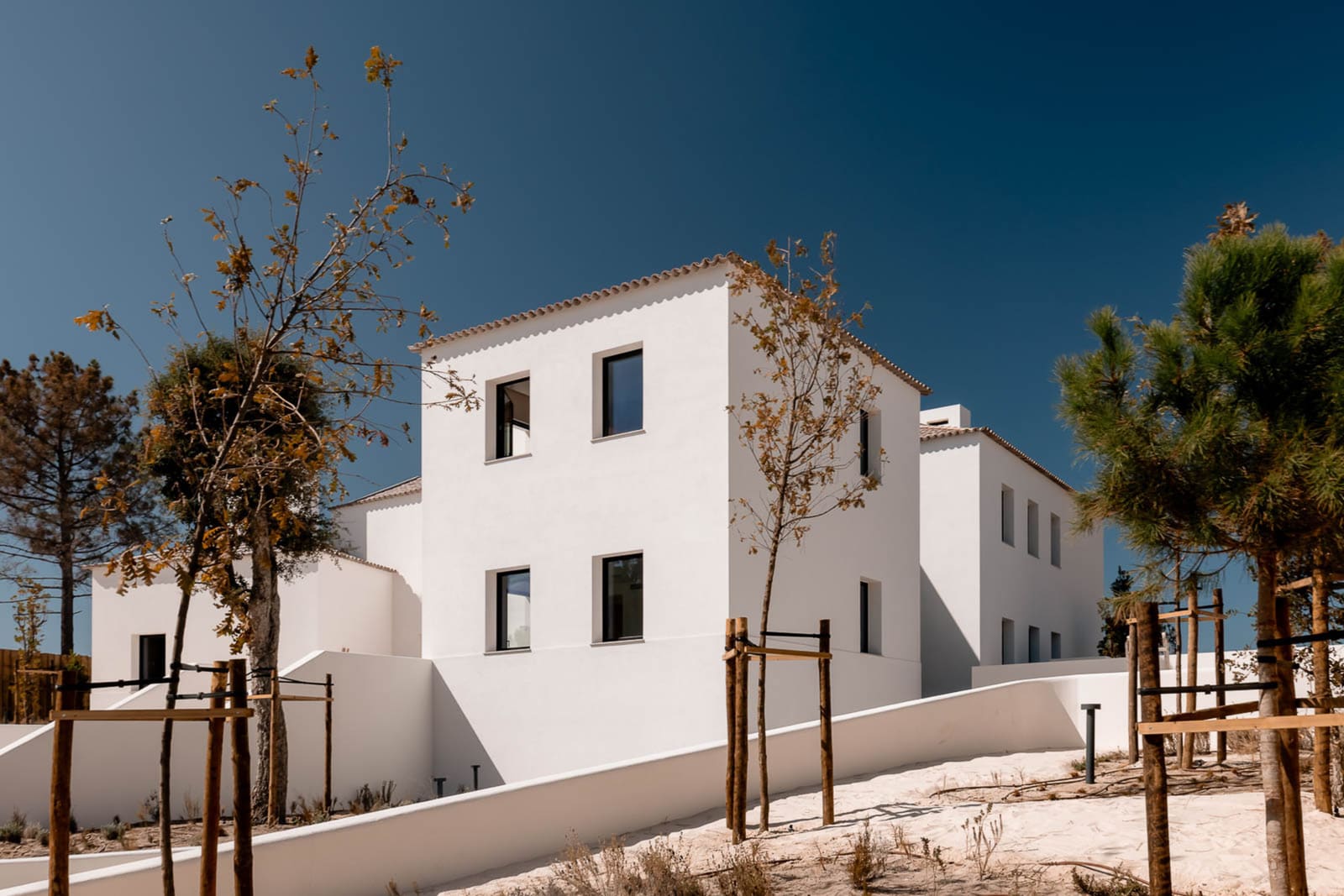
Stretching across 495 square meters, the villa does not announce itself. Instead, it settles into the landscape with a kind of deliberate modesty, shaped by topography, framed by native vegetation, and informed by the vernacular traditions of Portugal's Alentejo coast. Lead architect André Caiado and his studio have crafted a project that resists the urge to dominate its setting, opting instead for a formal language rooted in restraint and regional identity.
Terrain as Collaborator
The site itself dictated much of the design. Rather than flattening or imposing a rigid geometry, Contacto Atlântico allowed the natural contours of the land to inform massing and orientation. The villa steps gently across the slope, its horizontal planes extending outward to capture views while minimizing visual impact from neighboring plots. This is not architecture that fights the earth; it is architecture that negotiates with it.
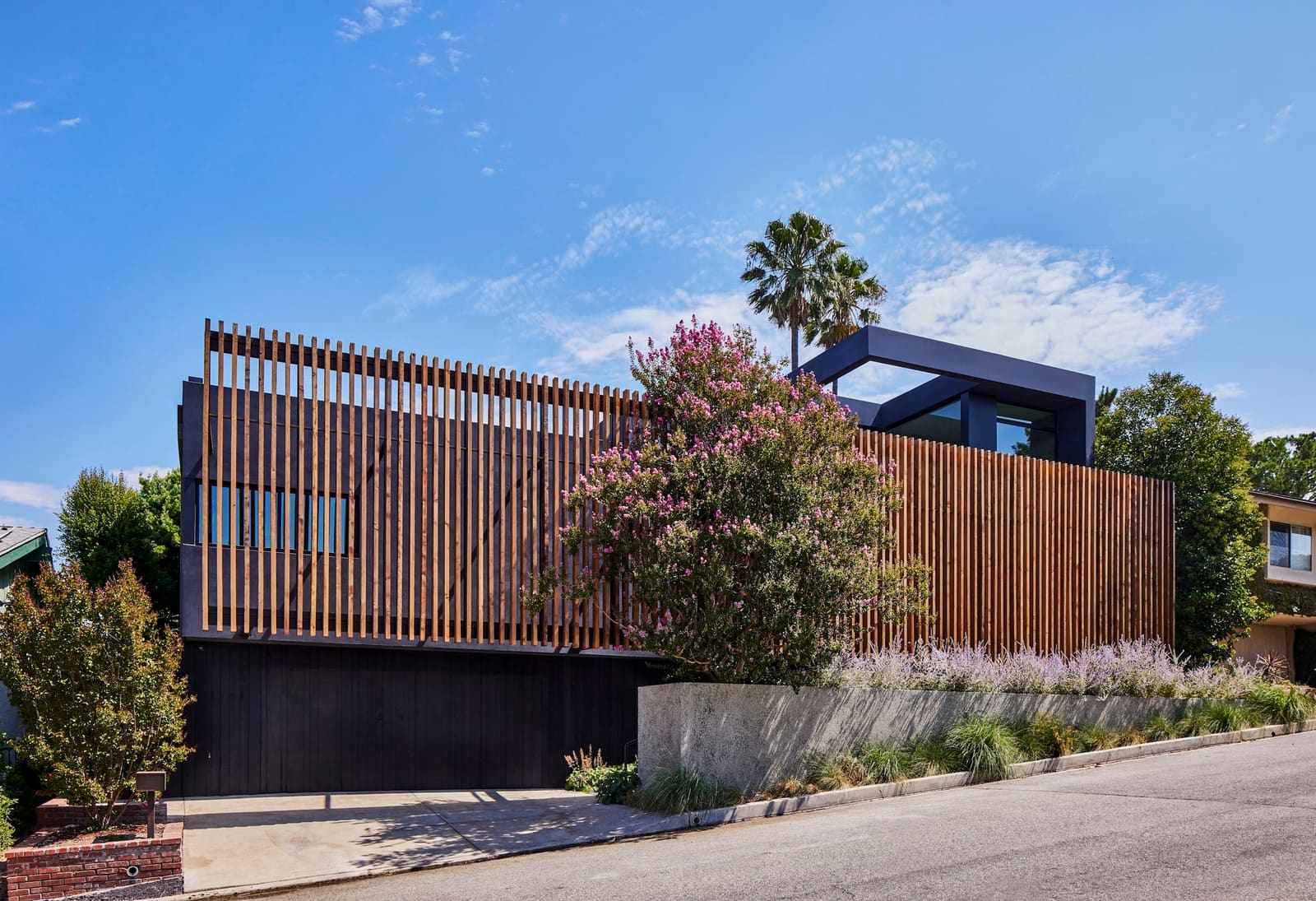
Material choices reinforce this dialogue. Local stone, rendered surfaces in muted tones, and timber detailing echo the palette of the surrounding region. These are not decorative gestures but structural decisions that tie the building to its context. The fenestration, too, is carefully calibrated. Large openings frame specific vistas without sacrificing thermal performance or privacy, a balance that speaks to both biophilic intent and practical rigor.
Precedents in Portuguese Modernism
Vila Talha sits within a lineage of Portuguese residential work that values clarity over complexity. There are echoes here of Álvaro Siza's Boa Nova Tea House, where the building becomes inseparable from the rocky Atlantic coastline, and of Eduardo Souto de Moura's Casa das Histórias Paula Rego, which uses repetition and rhythm to anchor itself in place. Contacto Atlântico employs a similar strategy: repeating geometric modules, low-slung profiles, and a careful interplay between solid and void.
But where Siza often embraces sculptural expression and Souto de Moura leans toward monumental restraint, Caiado's approach here feels more horizontal, more distributed. The villa reads as a series of interconnected pavilions rather than a single monolithic form. This parti allows the building to breathe, to open itself to cross-ventilation and natural light while maintaining a sense of enclosure and intimacy.
Landscape Integration and Native Planting
One of the most thoughtful aspects of Vila Talha is its relationship to vegetation. Rather than clearing the site and replanting with ornamental species, the design preserves existing cork oaks, olive trees, and aromatic shrubs. New planting extends this native palette, creating a seamless transition between built and natural environments. The result is a garden that feels less like an amenity and more like an extension of the regional ecosystem.
This strategy has precedents in contemporary practice. Kengo Kuma's work in rural Japan often employs similar tactics, embedding buildings within existing forests and using local timber to blur boundaries. Closer to home, Portuguese landscape architect João Gomes da Silva has long advocated for designs that prioritize indigenous flora and minimize water use. Vila Talha aligns with these principles, demonstrating that luxury does not require manicured lawns or exotic imports.
Spatial Sequence and Domestic Rhythm
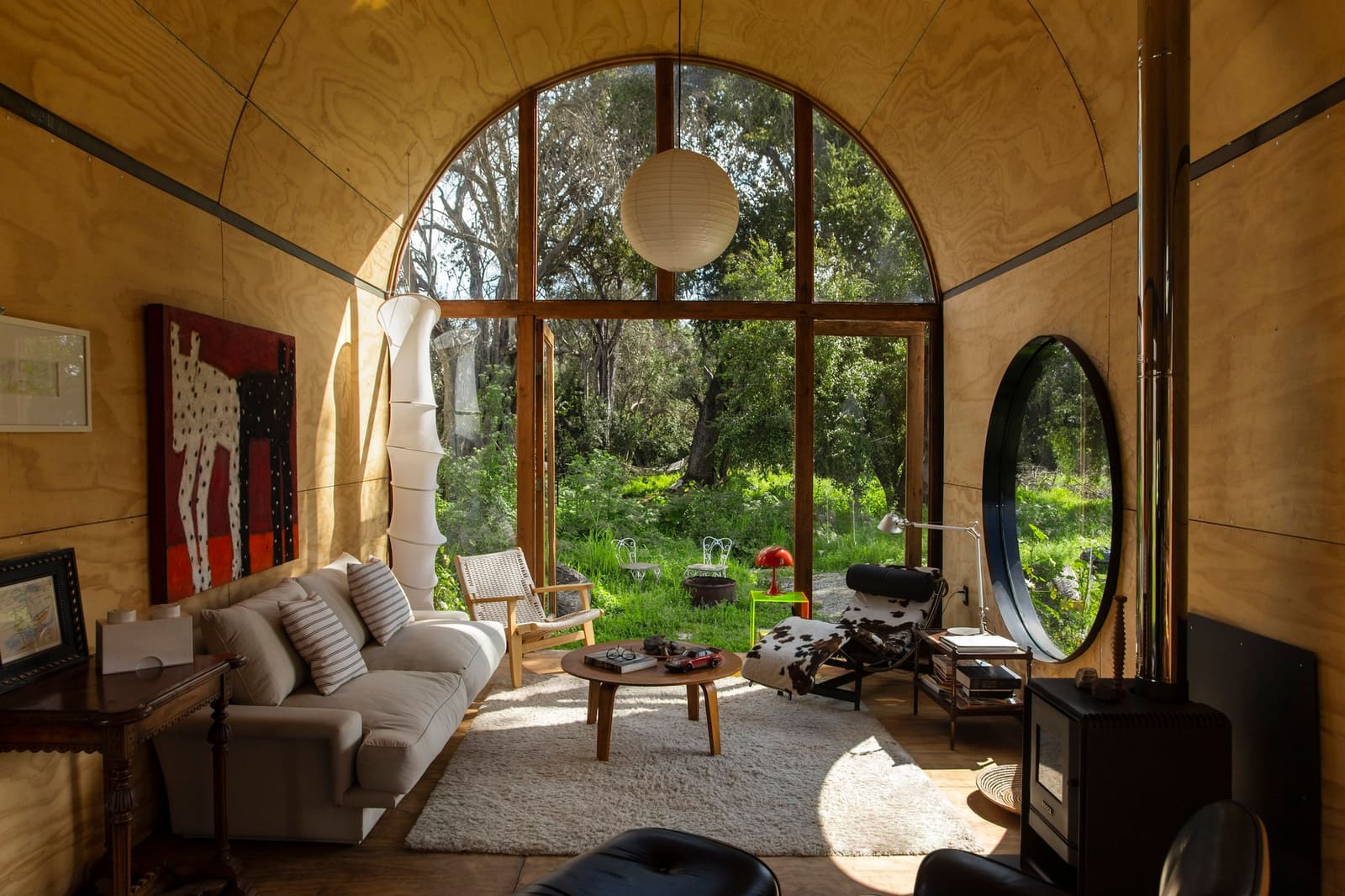
Inside, the villa unfolds with a measured spatial rhythm. Public zones flow into one another without abrupt thresholds, while private quarters retreat to quieter edges of the plan. Ceiling heights vary subtly, creating moments of compression and release that guide movement and shape experience. This is not the open-plan uniformity of mid-century Modernism but a more nuanced arrangement that acknowledges how people actually inhabit space.
The tectonic expression is equally considered. Exposed concrete ceilings in the living areas contrast with warmer timber cladding in bedrooms, a material shift that reinforces the distinction between communal and personal realms. Joinery is precise but not ostentatious, built-in furniture reduces clutter, and window frames are recessed to emphasize the depth of the walls. These are details that speak to craft, to an understanding that architecture is as much about what you touch as what you see.
A Broader Context
Melides has become a focal point for high-quality residential development in recent years, attracting architects and clients who value discretion and environmental sensitivity. The Costa Terra Golf & Ocean Club, where Vila Talha is situated, has positioned itself as a community committed to sustainable design and landscape preservation. Within this context, Contacto Atlântico's work stands out not for novelty but for coherence, for a willingness to prioritize long-term integration over immediate visual impact.
This approach has implications beyond a single project. As climate pressures mount and conversations around sustainability mature, the idea of architecture that "disappears" into landscape becomes less about aesthetics and more about ethics. Buildings that work with topography reduce excavation and energy use. Native planting lowers water demand and supports biodiversity. Regional materials shorten supply chains and strengthen local economies. Vila Talha embodies these principles without making them didactic, proof that environmental responsibility and spatial quality are not mutually exclusive.
Reflections on Restraint
We often celebrate architecture that shouts. But there is value, too, in work that listens. Vila Talha does not aim to be iconic or Instagram-famous. It aims to be appropriate, to fit quietly into a place and serve the people who live there. That may sound modest, but it is increasingly rare. In a discipline still enamored with signature gestures and formal pyrotechnics, projects like this one remind us that the most enduring contributions often come from architects willing to step back, to let landscape and culture shape the work as much as personal vision does.
Contacto Atlântico has delivered a residence that feels both contemporary and timeless, rooted in its region yet open to the world. It is a reminder that good architecture does not need to announce itself. Sometimes, the strongest statement is the one that knows when to be silent.
Photo: Gonçalo Henriques
Save this story. A free account keeps your reading list and the 07:00 email in one place.
CREATE FREE ACCOUNT →SIGN IN