The Case for Taking Games Seriously
There exists a category of furniture that lives in the margins of design discourse: game tables. Pool tables, ping-pong setups, and foosball rigs rarely earn space in design exhibitions or editorial features, relegated instead to basements, bars, and break rooms. The assumption is that these objects serve function over form, that their purpose is entertainment rather than aesthetic contemplation. Irish furniture house Orior has decided to challenge that hierarchy with a foosball table that refuses to apologize for being both.
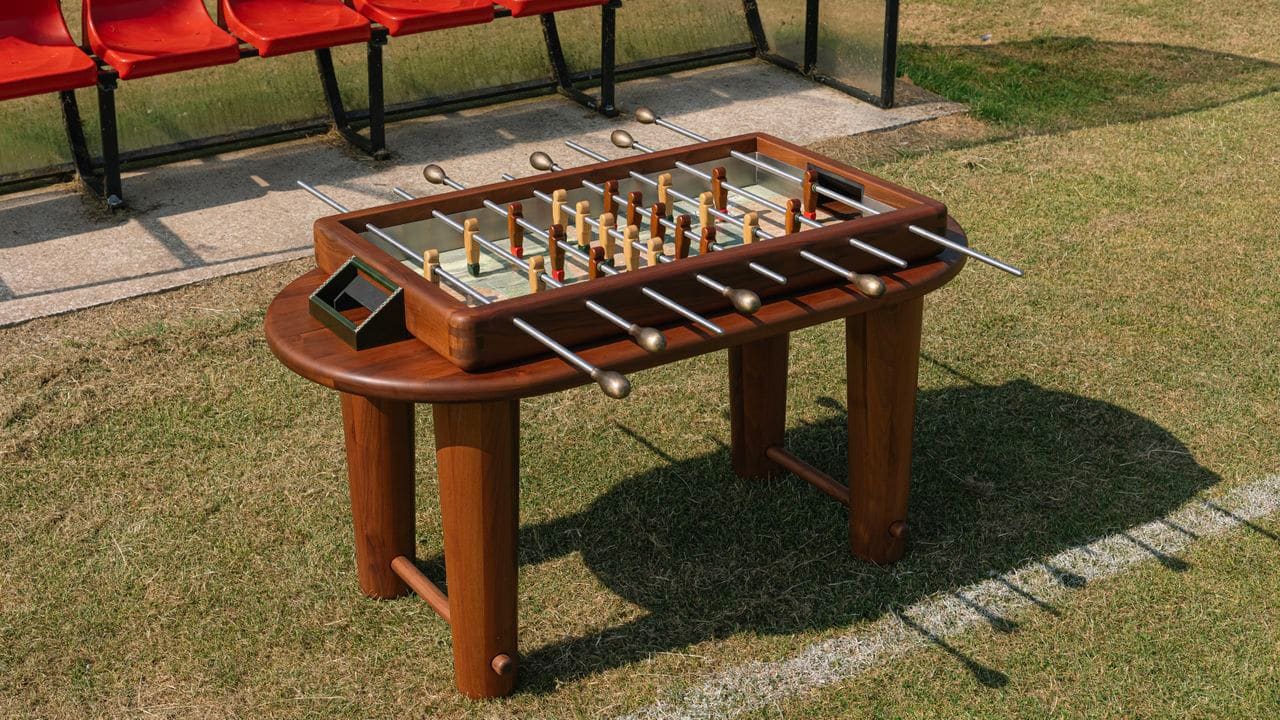
What the studio has produced is not a rebranding exercise but a material and formal rethinking. The table abandons the visual language of recreational equipment - no injection-molded plastic, no synthetic felt in electric hues - in favor of the vocabulary of high-end furniture: solid walnut, contrasting marble, satin steel, cast bronze, oak, leather. The question it poses is whether a game table can occupy the same conceptual space as a credible piece of collectible design.
A Study in Material Contrast
The frame is constructed from solid walnut, a choice that immediately shifts the object's tonal register. The wood's grain and warmth provide a visual anchor, its blocky, architectural silhouette lending the table a presence that feels deliberate rather than incidental. This is not a piece designed to tuck into a corner.
The playing surface departs entirely from convention. Instead of the synthetic green felt that has become shorthand for table football, Orior has specified two types of marble: Irish Green and what the studio calls Orior Crema. The decision to use stone as a playing field is both practical and symbolic. Marble offers durability and a smooth, predictable surface for gameplay, but it also elevates the table into the realm of permanent objects - furniture meant to endure rather than be replaced.
The interior walls are lined with satin steel, introducing an industrial note that tempers the richness of the walnut and marble. The steel rods that carry the players are also finished in satin, capped with handles cast in solid bronze. These material choices are not arbitrary; they represent a deliberate choreography of texture and finish, each element offsetting the others to avoid visual monotony.
Detailing as Design Philosophy
The players themselves are carved from oak, a secondary wood species that adds another layer of tactile variation. Each figure is finished with leather detailing and lacquer, treatments typically reserved for high-end cabinetry or sculptural objects. The goals are wrapped in leather, a flourish that acknowledges the haptic experience of gameplay - the act of retrieving the ball, the contact points where hands meet surface.
This level of finish is where the table reveals its design ambitions. At World Archi Design, we've observed a growing trend among studios working at the intersection of furniture and object design: the application of craft-intensive techniques to categories historically dominated by mass production. Orior's foosball table belongs to this lineage, sitting comfortably alongside projects like Max Lamb's marble chess sets or the hand-turned gaming pieces produced by certain Scandinavian workshops.
The question of whether such detailing enhances or distracts from function is worth considering. A foosball table must perform - rods must spin smoothly, the ball must move predictably, the structure must remain stable during vigorous play. Orior's use of bronze handles, steel rods, and marble suggests confidence that the materials can meet these demands. Bronze, in particular, offers heft and a tactile quality that plastic cannot replicate, while marble's weight stabilizes the playing field.
Precedent and Context
Luxury game tables are not without precedent. Hermès has produced leather-wrapped ping-pong sets; Louis Vuitton has released bespoke chess boards; and smaller design studios have experimented with elevated versions of billiards and backgammon. What distinguishes Orior's foosball table is its commitment to architectural form rather than decorative overlay. The piece does not rely on branding or surface embellishment to signal its status; instead, it builds that status into its material DNA and proportions.
The studio's approach recalls the tectonic clarity of mid-century Scandinavian furniture, where joinery and material honesty were paramount, as well as the more recent work of Belgian and Dutch designers who treat everyday objects - coat racks, benches, storage units - as opportunities for formal exploration. The foosball table's blocky frame and clean lines suggest an awareness of these traditions, even as it addresses a typology those designers largely ignored.
The Narrative Thread
According to Orior, the table's launch was timed to align with a major international football event, and the studio has framed the project as a tribute to the company's origins. The founders reportedly met as teammates on a college football squad, and that shared athletic history has become part of the brand's narrative. Whether this backstory enriches the object or merely provides marketing copy is subjective, but it does situate the table within a lineage of design projects born from personal experience rather than market research.
What matters more than the origin story is the studio's willingness to invest serious design and fabrication resources into a category most brands would dismiss. The decision to handcraft a foosball table using the same materials and techniques one might apply to a dining table or credenza is a statement about what deserves attention in contemporary furniture design.
Where Function Meets Collection
The table will be available for purchase through Orior's direct channels, positioning it as a bespoke or limited-run offering rather than a mass-market product. This distribution model reinforces the piece's status as a collectible object, one that exists in the overlap between functional furniture and design art. It is a game table, yes, but it is also a sculptural object that happens to facilitate play.
For designers and collectors who have long argued that craft and rigor should extend to all categories of domestic objects - not just seating and storage, but also the items we use for leisure - Orior's foosball table offers a compelling proof of concept. It demonstrates that the material intelligence and formal discipline we expect from a credible piece of furniture can be applied to a typology traditionally excluded from that conversation.
Whether the table will find an audience remains to be seen. The market for high-end game furniture is niche, and the price point for a marble-and-bronze foosball table will inevitably limit its reach. But as a design proposition, the piece succeeds in asking a question worth asking: What happens when we treat play with the same seriousness we reserve for dining, working, or resting? Orior's answer is that the objects we use for recreation deserve the same material consideration and formal attention as any other piece of furniture we live with. And if that table happens to deliver a better game of foosball in the process, so much the better.
Photo: Elyse Kennedy
Save this story. A free account keeps your reading list and the 07:00 email in one place.
CREATE FREE ACCOUNT →SIGN IN