The Clay That Taught a Village to Build
Francis Kéré submerged a clay brick in water for five days. Not as a test of material science alone, but as proof his neighbors in Gando, Burkina Faso, could accept. Clay meant poverty to them, not possibility. So before constructing the school that would eventually define his career, Kéré had to demonstrate that their own soil, pressed and fired by their own hands, could hold a roof. More than two hundred villagers became builders through that single decision, learning a skill they carried forward long after the school was finished.
The act exposes something architecture often obscures: the knowledge that resides not in a drawing or a specification, but in the hands that execute it. Kéré did not import a crew. He trained the community because the building's meaning depended on who made it. The project encoded a pedagogy as much as a plan.
This month, we have been tracking projects and conversations that treat craftsmanship not as ornament but as methodology. Across geographies and budgets, architects are choosing to engage with material production directly, whether that means pressing earth, weaving textiles, or collaborating with artisans whose expertise cannot be replicated by machine. The question underneath all of it: does the trace of the maker's hand still register in how a building is understood, or has automation rendered that trace irrelevant?
Material as Authorship
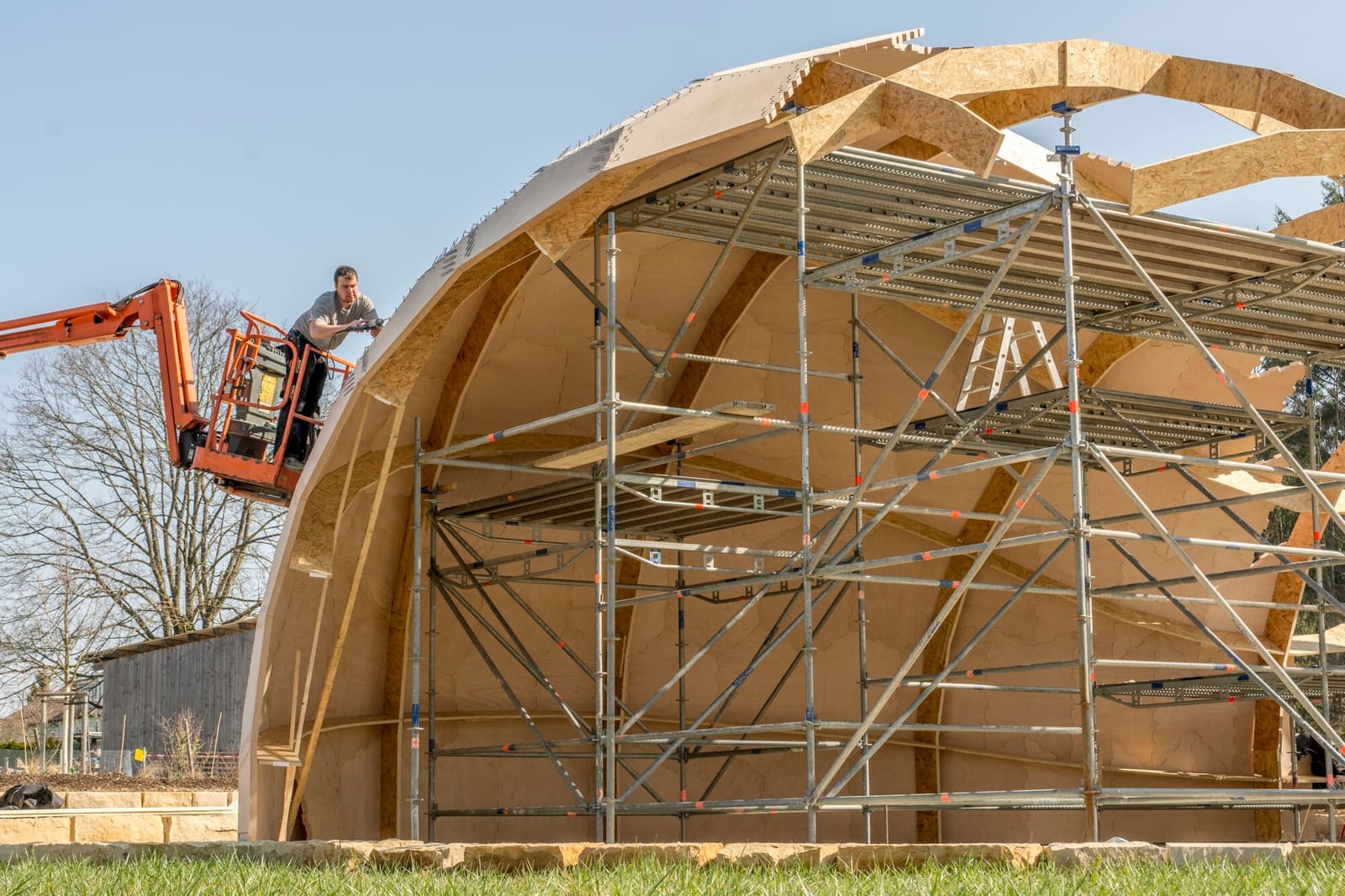
In certain contemporary practices, the architect no longer stops at specifying materials but moves upstream into their fabrication. Rammed earth walls, handmade brick, woven screens: these become extensions of the design process itself, not selections from a catalog. The material carries intention because its making was shaped by the same sensibility that conceived the building.
This is not nostalgia. It is a recalibration of where design intelligence lives. When an architect collaborates with a bricklayer to adjust the coursing pattern mid-construction, or when a textile artist is brought in to develop a facade system that responds to local humidity, the boundary between design and execution blurs. The building becomes a record of iterative thinking, visible in joints that shift slightly, in textures that refuse uniformity.
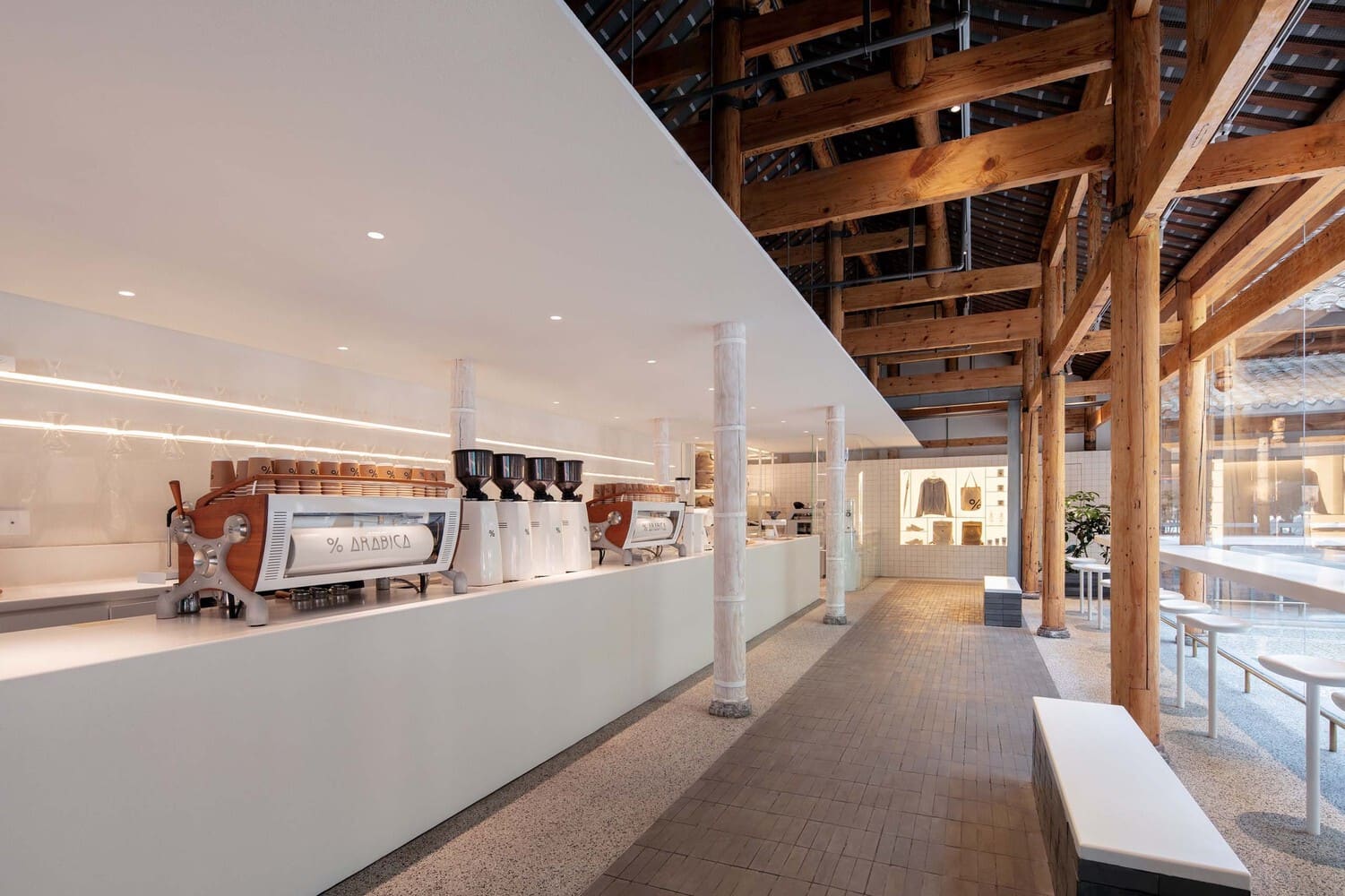
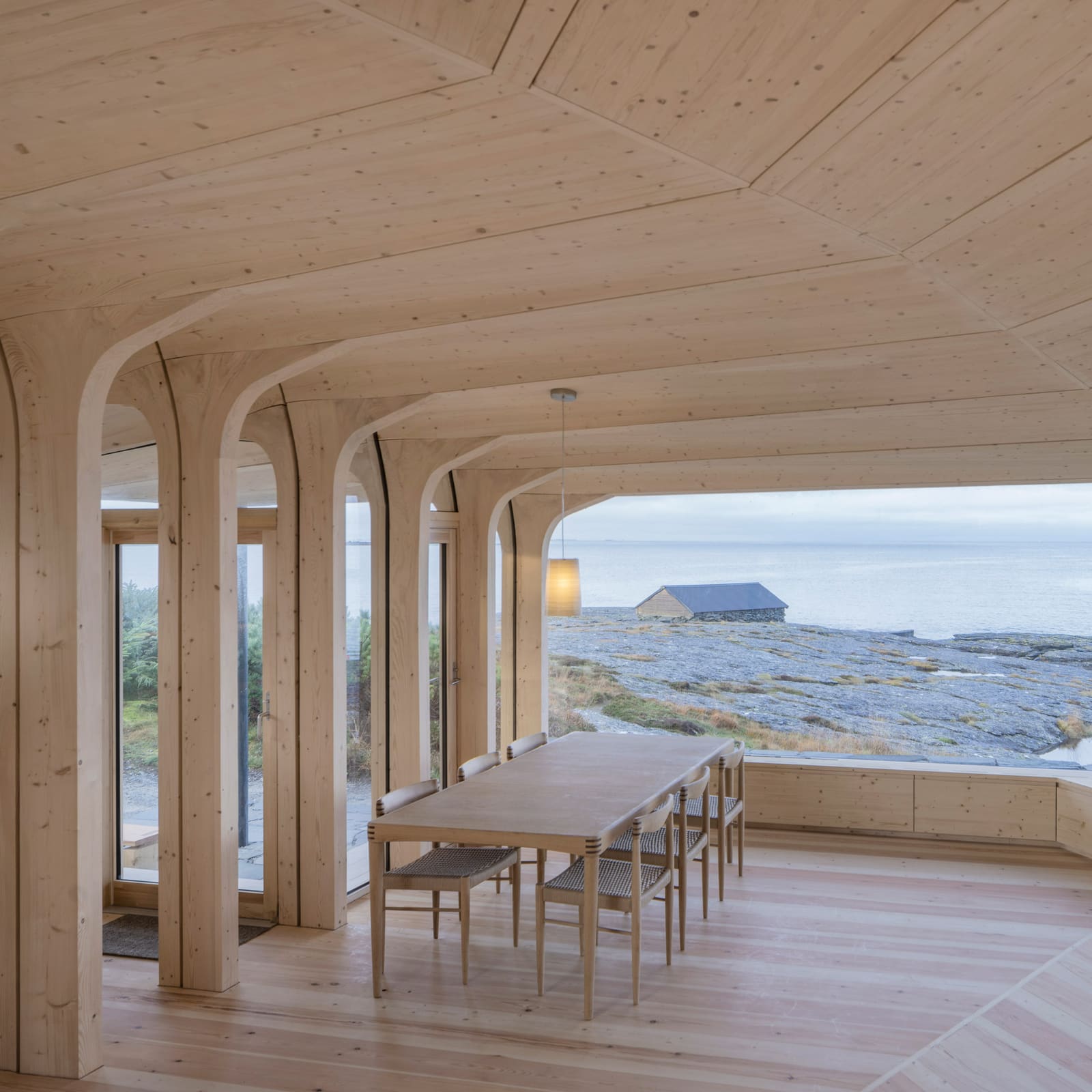
Imperfection here reads as precision. A hand-troweled plaster wall in a Copenhagen interior does not signal carelessness; it signals that someone made a decision about how light should break across a surface. The irregularity is the point. It distinguishes the handmade from the machine-cut, and in doing so, it communicates presence.
Craft Under Economic Pressure
But handmade work costs. Labor takes time, and time costs money. As global construction accelerates and budgets tighten, craftsmanship risks becoming what it has been in other industries: a luxury good, accessible only to clients who can afford to pay for slowness.
The risk is not merely aesthetic. When skilled trades disappear from the supply chain, so does the knowledge they carry. Restoration projects already face this problem. Stonemasons who understand historic joinery techniques are aging out of the workforce faster than apprentices are replacing them. Entire building traditions, from lime plastering to timber framing, hover on the edge of obsolescence not because the materials are unavailable, but because the people who know how to work them are.
Reconstruction after conflict sharpens the stakes. When a city rebuilds, does it import prefabricated systems for speed, or does it invest in training local labor to restore what was lost? The first is faster. The second preserves not just buildings but the cultural knowledge embedded in how they were made. The choice is political as much as architectural.
Digital Fabrication and the Return to the Particular
Automation, paradoxically, has not eliminated craft. In some cases, it has redirected it. CNC milling and robotic fabrication allow architects to specify complexity that would be prohibitively expensive to execute by hand, but they also enable a return to the bespoke. Each panel, each joint, can be unique without adding labor cost. The machine does not tire of variation the way a human hand might.
Yet the question remains: does digital fabrication preserve the logic of craft, or does it simply mimic its appearance? A robotically carved stone facade can reproduce the texture of hand-chiseling, but it cannot reproduce the decision-making that occurred in real time as a mason adjusted to the grain of the stone. The surface may look similar. The knowledge embedded in it does not.
Some architects treat digital tools as extensions of the hand rather than replacements for it. Parametric design becomes a way to encode craft logic into an algorithm, so that when the machine executes the design, it is following principles a maker would recognize. The tool changes, but the thinking does not.
Who Gets to Make
Beneath the aesthetic and technical questions lies a more fundamental one: who is allowed to practice craft, and under what conditions? In many parts of the world, skilled labor is undervalued, underpaid, and increasingly precarious. Apprenticeships that once transmitted knowledge across generations have collapsed. Young people are steered toward digital skills, not manual ones, even as demand for those manual skills persists.
The architecture profession itself is complicit. Drawings that specify "artisan-made" finishes without acknowledging the labor conditions under which those finishes are produced treat craft as a style, not a relationship. The surface gets celebrated; the maker remains invisible.
At the same time, there are practices attempting to restructure that relationship. Architects who work directly with fabricators, who visit workshops, who adjust designs in response to what a craftsperson can or cannot do, these collaborations acknowledge that craft is not a service to be procured but a form of expertise to be respected.
The Trace That Remains
Kéré's school in Gando did more than shelter students. It demonstrated that a building could be an argument. By choosing clay and training villagers to lay it, Kéré proved that architecture does not require imported materials or external expertise. The building carries the evidence of that proof in every wall.
As AI begins to reshape how buildings are conceived, generating form and optimizing structure with unprecedented speed, the question of craft becomes more urgent, not less. If design can be automated, what remains for the architect to do? One answer: to insist on the irreplaceable intelligence that resides in making. To recognize that a building is not only what it looks like, but how it came to be.
The hand that shapes a brick, the eye that adjusts a joint, the body that learns a technique through repetition, these are not incidental to architecture. They are architecture. And if the profession forgets that, it risks producing buildings that look like architecture but function as little more than images of it.
Save this story. A free account keeps your reading list and the 07:00 email in one place.
CREATE FREE ACCOUNT →SIGN IN