The False Binary of Hand Versus Machine
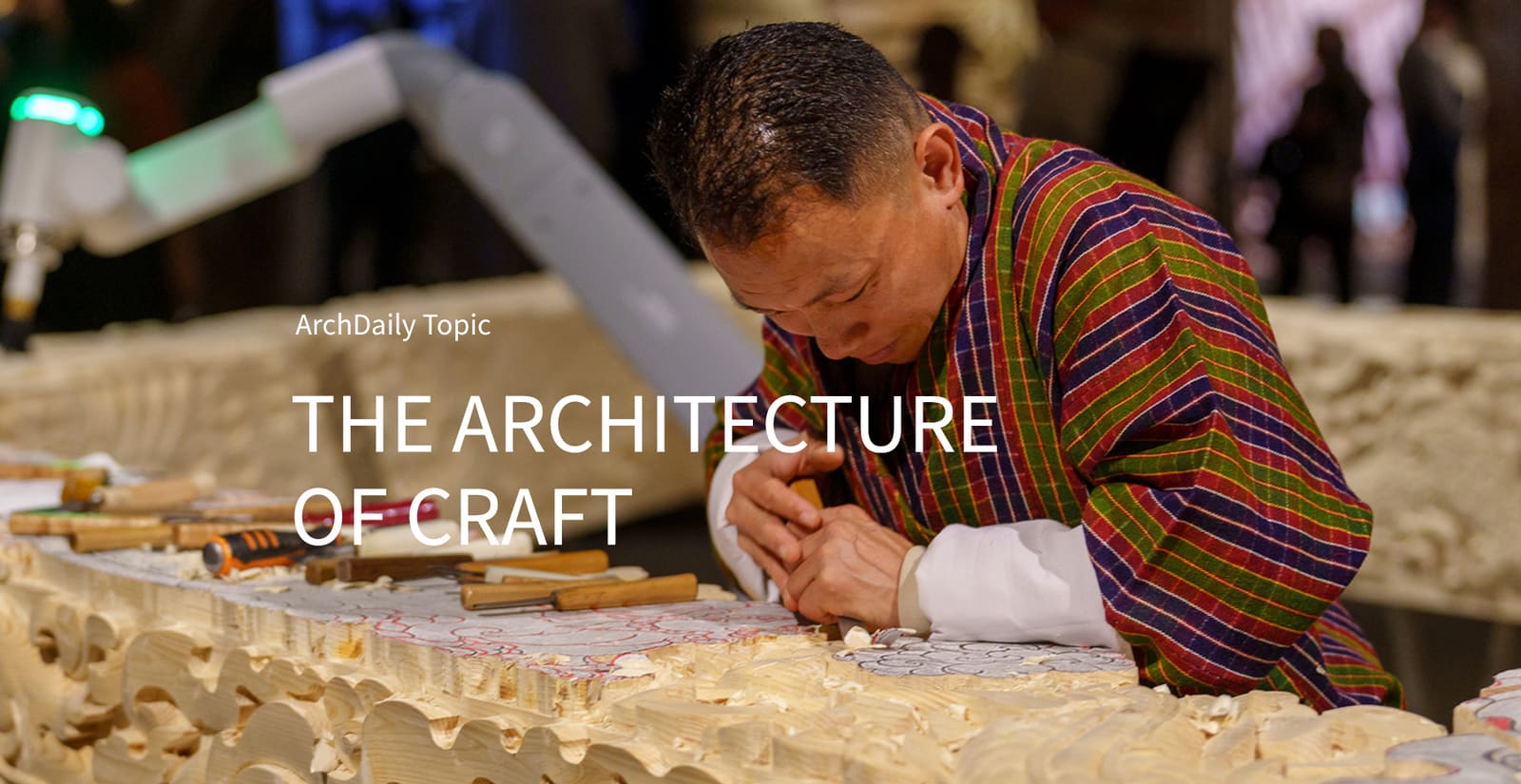
We tend to imagine craft and automation as opposites, one rooted in human touch, the other in algorithmic precision. But that framing collapses under scrutiny. A printing press, entirely mechanical in operation, still requires someone to assess ink viscosity and registration alignment. A woodturner operating a lathe can follow a template so faithfully that deviation becomes nearly impossible. The distinction worth preserving lies elsewhere: in whether the outcome remains open to adjustment while the work unfolds, or whether it was locked in before production ever began.
David Pye, a furniture designer and professor at the Royal College of Art, articulated this difference in his 1968 book The Nature and Art of Workmanship. He called one mode "workmanship of risk," where the result depends on judgment, dexterity, and attention exercised during fabrication. The other he termed "workmanship of certainty," where the outcome is fixed in advance through jigs, molds, or code, leaving execution as the only variable. Pye took care to note that neither mode holds inherent superiority, and that a numerically controlled machine calibrated to permit drift can embody more risk than a hand tool constrained by a rigid template.
Architecture has been testing these boundaries for centuries. The question now is whether the profession can articulate what it gains and loses as digital fabrication redraws the line between intention and material response.
Techniques That Remember Adjustment
Drystone walling, practiced across Mediterranean hillsides and British uplands, operates without fixed dimensions. Each stone is placed, tested for stability, repositioned, and tested again until the wall's cumulative geometry holds. The process is a sequence of small, unrepeatable judgments, each responding to the specific weight, shape, and friction of the stone in hand. No two sections are identical, and no drawing could specify the outcome in advance.
Traditional Japanese timber joinery follows a parallel logic. Carpenters deliberately cut joints with a hairline gap, anticipating that wood will swell with seasonal humidity and close the gap over time, tightening the connection without adhesive or fastener. The joint is designed to change, and the craftsperson's skill lies in predicting how much. The decision is made by whoever holds the chisel, not by the drawing.
These techniques share a tolerance for imperfection, not as a flaw but as a condition of responsiveness. The maker adjusts to the material, and the material adjusts to its environment. Authorship is distributed across time, between the initial act of making and the structure's gradual settling into place.
Certainty Pushed to Its Limit
CNC routers, robotic arms, and additive manufacturing now operate at tolerances measured in fractions of a millimeter. Components arrive on site with edges so precise they mate without correction, geometries once impossible to construct by hand now repeatable across hundreds of iterations. The digital file becomes the site of certainty, encoding every dimension before the first cut. In Pye's terms, this is certainty taken as far as current technology allows.
The shift brings undeniable advantages: complex curvature, structural optimization, waste reduction, and speed. But it also narrows the space where judgment can intervene. When the file dictates every outcome, the builder's role contracts to installation, and the architect's authorship consolidates at the screen. The feedback loop between material behavior and design intention lengthens, sometimes to the point of disappearing entirely.
Pye himself worried less about the extinction of risk-based workmanship than about its survival without a vocabulary to defend it. He feared it would be taken for granted, practiced out of habit until no one remembered why it mattered or how to ask for it. That concern feels more urgent now, as architectural education increasingly privileges parametric fluency over material intuition.
Ten Projects Across the Spectrum
The projects examined here occupy different positions along the continuum Pye described. Some rely on centuries-old technique; others push robotic fabrication into new territory. What they share is a deliberate negotiation of the boundary between drawing and material, a recognition that authorship can happen in the gap between intention and execution.
Casa Wabi Chapel, Tadao Ando
Ando's chapel in Oaxaca employs board-formed concrete, a technique that records every knot, grain line, and joint of the timber formwork. The concrete surface becomes a negative cast of the wood, preserving imperfections that industrial formwork would eliminate. The result is certainty in dimension but risk in texture, a hybrid condition where the material's behavior remains partially uncontrolled.
Bell-Lloc Winery, RCR Arquitectes
RCR's winery in Catalonia uses weathering steel plates that oxidize unevenly, the rust patterns determined by local humidity, rainfall, and wind exposure. The architects specified the material and its placement, but the final appearance emerges over years, shaped by forces beyond their control. The building's surface is authored jointly by design and climate.
Ningbo History Museum, Wang Shu
Wang Shu sourced millions of reclaimed bricks and tiles from demolished villages around Ningbo, each piece carrying its own history of firing temperature, clay composition, and weathering. Masons laid them in a technique called wa pan, adjusting mortar depth and orientation to accommodate irregular dimensions. The museum's walls are an archive of material memory, assembled through continuous on-site judgment.
Gando Primary School, Kéré Architecture
Francis Kéré's school in Burkina Faso mobilizes compressed earth bricks made by hand on site, each one shaped by local villagers using manual presses. The bricks vary slightly in density and color, a record of who made them and when. The building becomes a collective artifact, its construction inseparable from the social process that produced it.
Anandaloy Center, Studio Anna Heringer
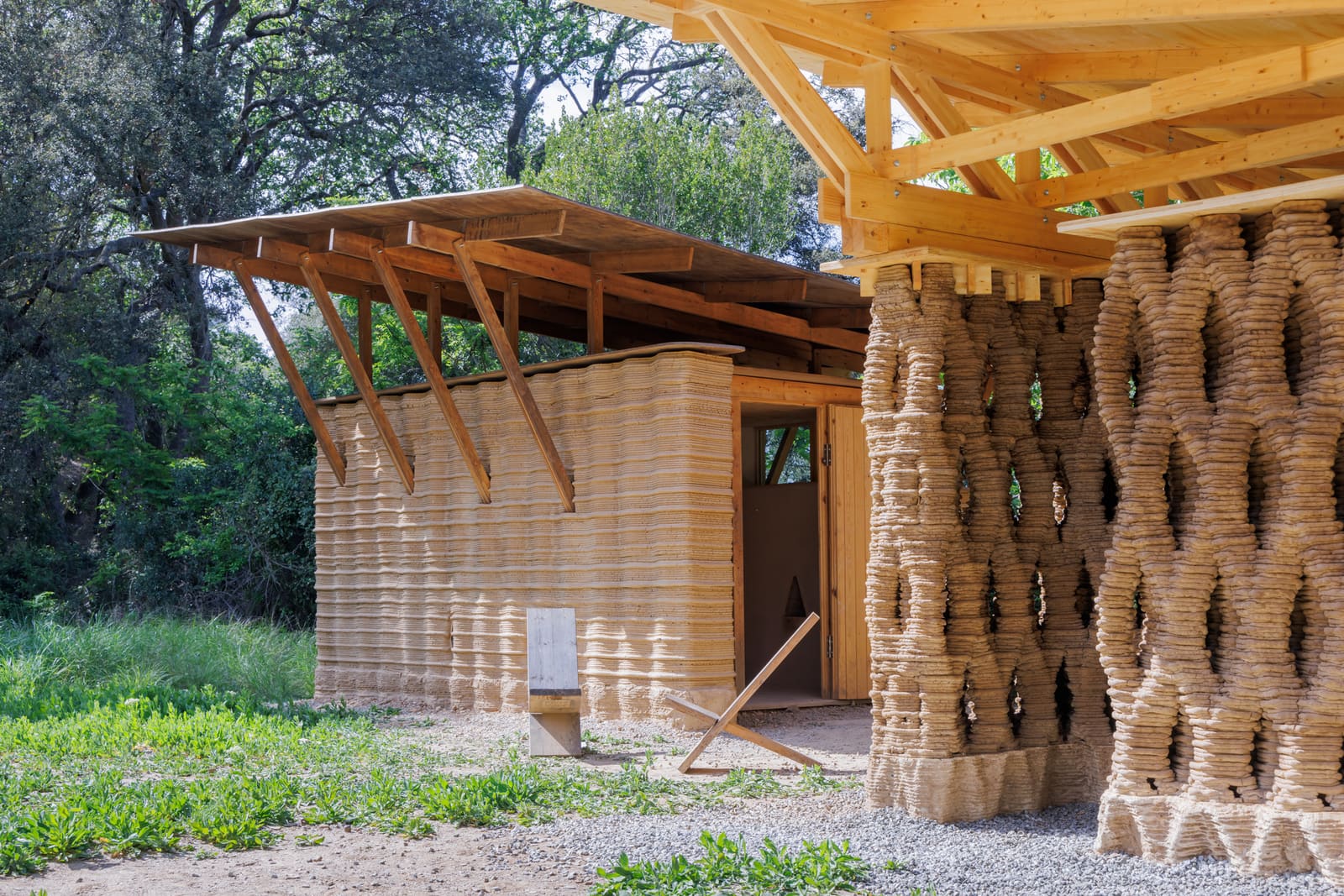
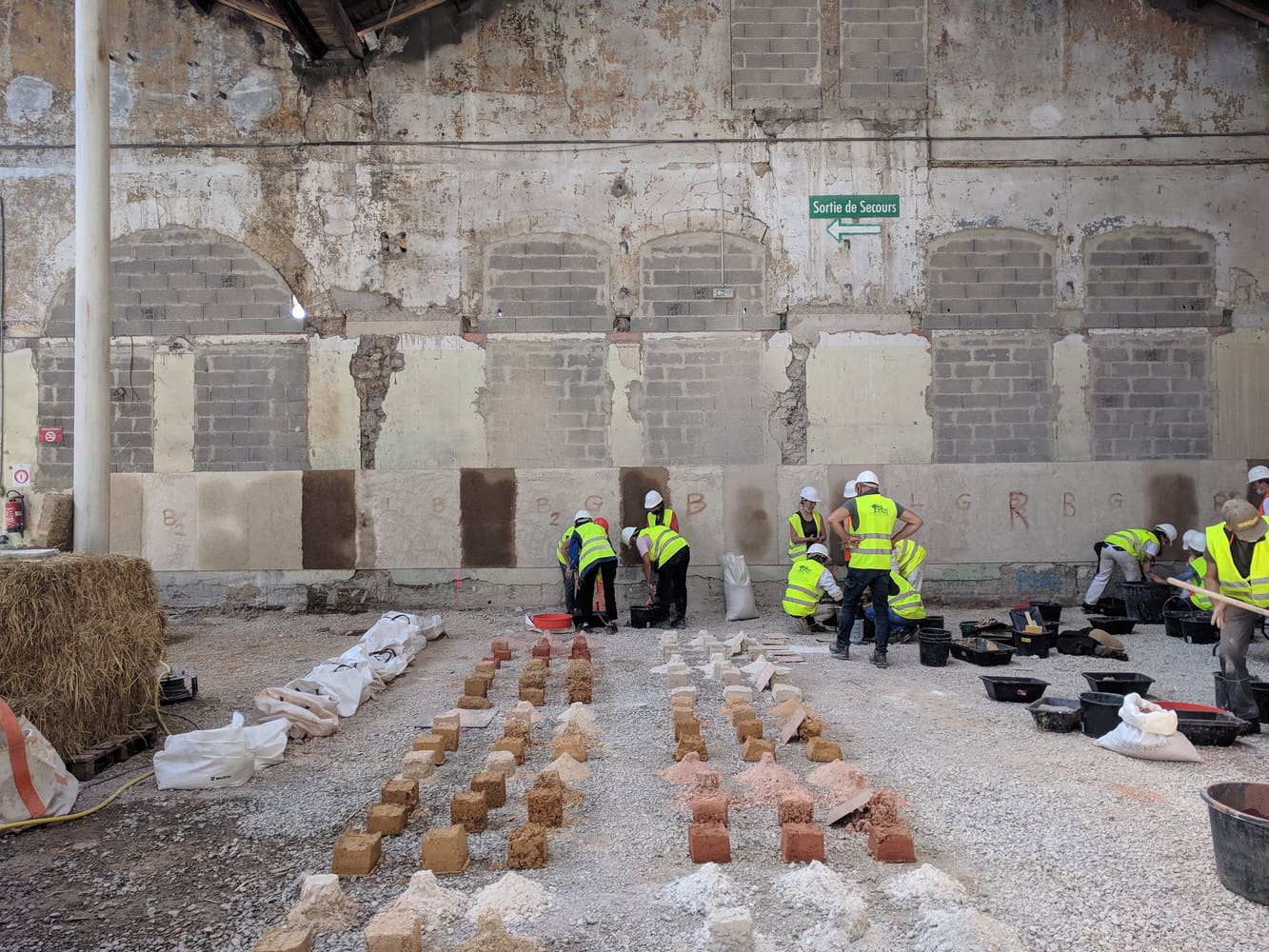
Heringer's center in Bangladesh combines rammed earth walls with a bamboo upper structure, both materials worked by hand with minimal tooling. The earth walls are built up in lifts, each layer compressed and left to cure before the next is added, a slow process that requires judgment about moisture content and compaction. The bamboo frame is lashed together with rope, joints adjusted to fit the specific diameter and curvature of each pole.
Therme Vals, Peter Zumthor
Zumthor's spa in Switzerland layers local gneiss stone in horizontal bands, each piece hand-selected for color and texture, then laid with minimal mortar joints. The stone's surface is left rough, preserving the marks of quarrying and cutting. The building's material presence depends on the cumulative effect of thousands of small selections, each made by the mason in response to the specific stone.
Palmyra House, Studio Mumbai
Studio Mumbai's house in coastal India uses palmyra wood for structure, bamboo for infill, and lime plaster for finish, all assembled by a team of carpenters, masons, and plasterers working on site without detailed drawings. Decisions about joinery, proportion, and detail are made collaboratively during construction, the building emerging through a process of continuous adjustment.
Handmade School, Studio Anna Heringer and Eike Roswag
Heringer's school in Bangladesh, built earlier than Anandaloy, pioneered her approach of pairing earth construction with bamboo framing. The earth walls are rammed by hand in wooden formwork, each section dried before the next is added. The bamboo columns and roof structure are shaped and joined on site, the builders adjusting dimensions to match available material.
Landesgartenschau Exhibition Hall, ICD/ITKE, University of Stuttgart
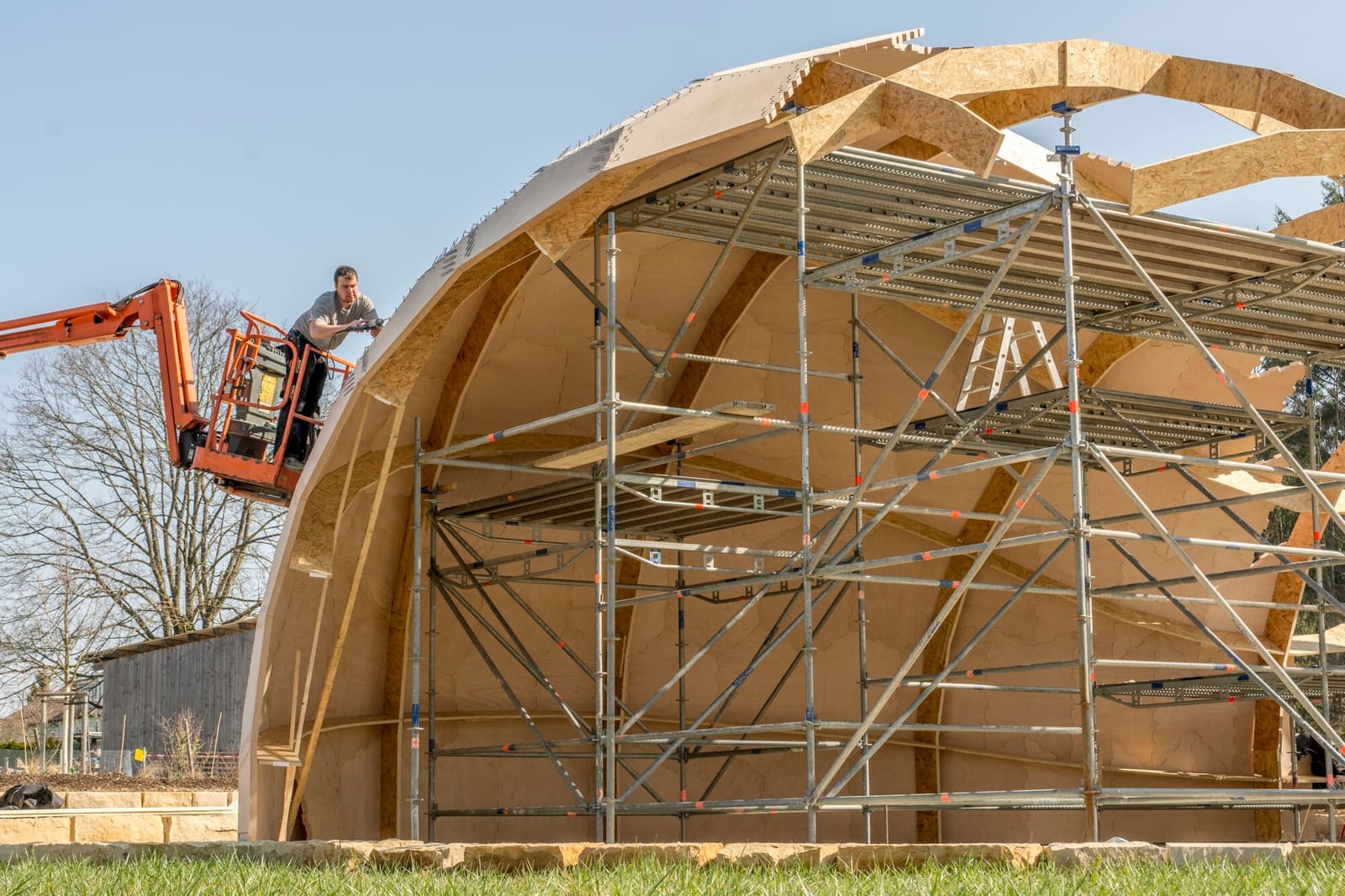
The Institute for Computational Design's pavilion in Heilbronn uses robotic fabrication to wind fiber-composite ribbons around a temporary scaffold, the winding path and tension calibrated to structural performance. The robot follows a programmed sequence, but the designers embedded variation into the code, allowing the structure's geometry to shift in response to material behavior observed during earlier prototypes. Risk is reintroduced through calibration, not through hand placement.
Silk Pavilion, MIT Media Lab
The Media Lab's pavilion combines robotic deposition of silk fiber with live silkworms that spin additional material directly onto the structure. The robot lays down a base scaffold with programmed precision, but the silkworms operate according to their own logic, thickening certain areas and leaving others sparse. The final form is a hybrid of algorithmic control and biological agency, certainty and unpredictability woven together.
Where Authorship Happens
At World Archi Design, we have been tracking how digital tools reshape the architect's relationship to material. The trajectory is not linear. Some practices use computational design to recover forms of material responsiveness that industrialization had eliminated, encoding variation and feedback into the file itself. Others return to pre-industrial techniques, valuing the social and material knowledge embedded in hand work.
What matters is not whether a building is made by hand or machine, but whether its making leaves space for judgment, adjustment, and response. Pye's distinction remains useful precisely because it refuses the easy binary. A robot can embody risk if its programming allows for drift. A hand tool can enforce certainty if it is constrained by a template. The question is whether the architect, the builder, and the material are in conversation, or whether the conversation ended when the file was finalized.
The risk Pye identified in 1968 has not diminished. As fabrication technology advances, the pressure to eliminate variation intensifies, driven by logistics, liability, and cost. But variation is not waste. It is the condition under which makers exercise judgment, where materials behave unpredictably, where buildings record the process of their own making. The challenge for architecture now is to articulate why that margin matters, and to design systems, digital or otherwise, that preserve it.
Save this story. A free account keeps your reading list and the 07:00 email in one place.
CREATE FREE ACCOUNT →SIGN IN