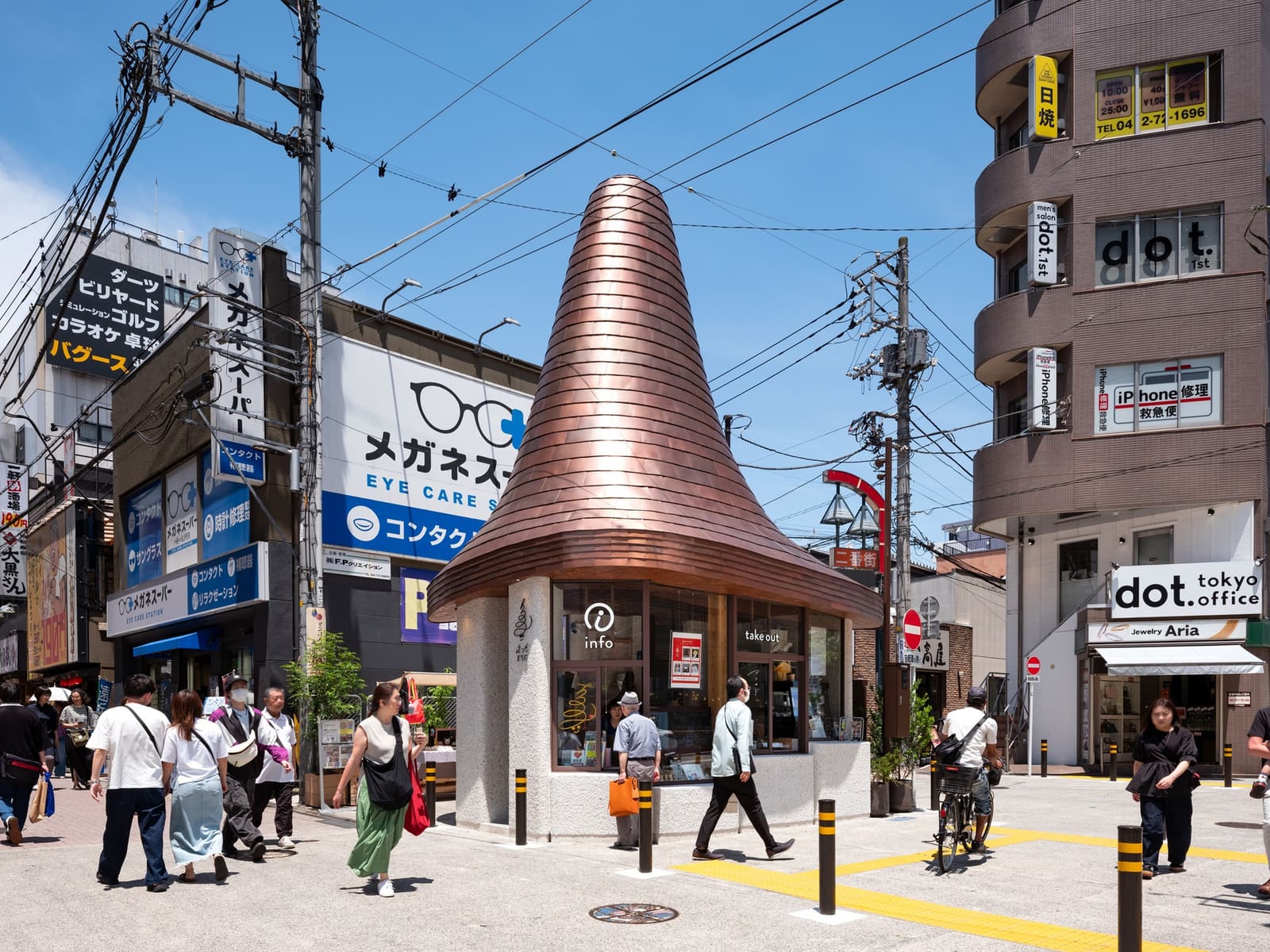
The Premise: Can a Coffee Shop Change a District?
Urban design has long operated under an implicit assumption: that meaningful change requires substantial mass. Plazas, towers, transit hubs - these are the instruments cities traditionally deploy when they want to reshape neighborhoods. Yet in the Machida Station area of Tokyo, Nikken Sekkei has inverted that logic. Hatmachida, completed in 2025, occupies just 22.7 square meters at the corner of a major thoroughfare. It is a coffee shop. It is also, in the studio's framing, a test of whether architecture can function as catalyst rather than monument.
The project arrives at a moment when walkability and fine-grained urbanism dominate planning discourse worldwide. But discourse is one thing; implementation is another. What Nikken Sekkei offers here is not a manifesto but a prototype - a deliberately minimal insertion designed to generate what the studio describes as "ripple effects" across surrounding blocks. The question it poses is architectural and temporal: if a building is small enough, active enough, and positioned shrewdly enough, can it shift the character of an entire area over time?
Compact Footprint, Strategic Positioning
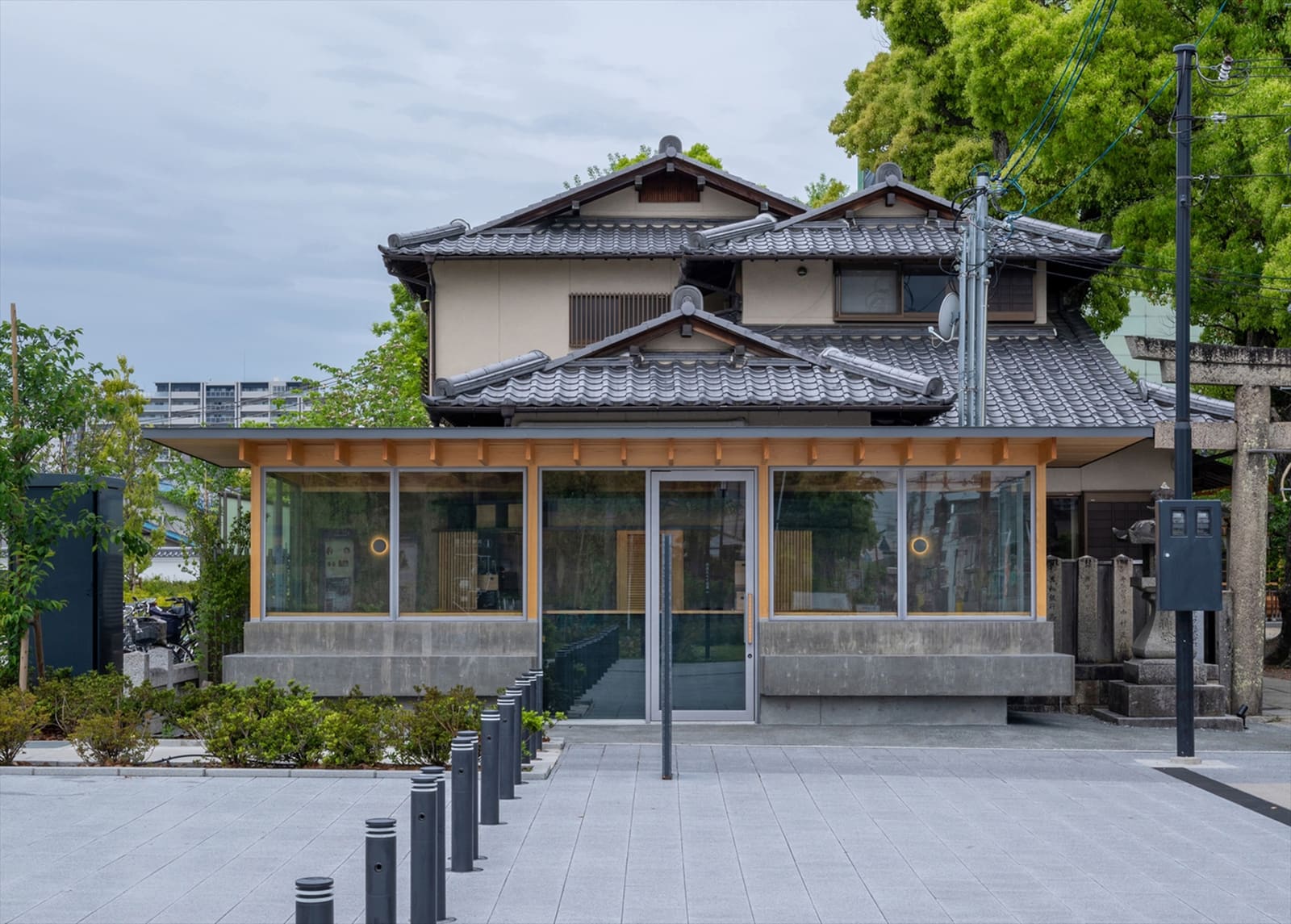
At roughly 22 square meters, Hatmachida is smaller than many living rooms. It sits at the intersection of pedestrian flows, a location chosen not for its prominence but for its potential to anchor movement. The studio collaborated with Suzuki Design & Build on both design development and construction, a partnership that allowed for rapid execution and iterative detailing at a scale where every centimeter matters.
The building's fenestration is generous relative to its footprint, prioritizing transparency and visual permeability. Passersby can see in; occupants can see out. This is not incidental. The project's thesis depends on legibility - on making the activity inside visible and inviting from the street. In that sense, the architecture operates less as enclosure and more as frame, a device for staging public life at the scale of a single storefront.
Material choices reinforce this restraint. The palette is minimal, the detailing understated. There is no sculptural flourish, no signature gesture. The building does not compete for attention; it offers itself as infrastructure, a node in the pedestrian network rather than a destination in its own right.
The Ripple Effect Hypothesis
Nikken Sekkei positions Hatmachida within a broader urban strategy they describe as one of catalytic intervention. The idea is that a small, consistently active presence can alter patterns of use and perception in adjacent blocks - not through direct programming but through ambient influence. A coffee shop becomes a reason to linger. Lingering becomes familiarity. Familiarity reshapes how people move through and think about a place.
This is not a new idea. Jane Jacobs articulated versions of it in the 1960s, and contemporary urbanists from Jan Gehl to Amanda Burden have built careers on similar principles. What distinguishes Hatmachida is its explicitness. The project does not simply embody these ideas; it announces them as hypothesis. It is architecture as research, with the city as laboratory.
Whether the hypothesis holds remains an open question. Ripple effects are difficult to measure and slow to materialize. They depend on sustained use, on the building remaining active and relevant over years, even decades. Nikken Sekkei acknowledges this temporal dimension explicitly, framing the project as "architecture that evolves through sustained use over time." The implication is that evaluation cannot happen in the first year, or even the first five. The building's success will be legible only in retrospect, if at all.
An Alternative Model for Urban Renewal
Hatmachida also functions as implicit critique. By foregrounding smallness and incrementalism, the project questions the mega-project paradigm that still dominates much urban redevelopment in Asia and beyond. Large-scale interventions promise comprehensive transformation, but they also require enormous capital, lengthy timelines, and often result in displacement. They are blunt instruments.
What Nikken Sekkei proposes here is something closer to acupuncture - precise, minimal, targeted. The project does not attempt to solve every problem at once. It does not promise a new skyline or a revitalized waterfront. It offers a coffee shop on a corner, and it argues that this might be enough to begin shifting how a district functions.
This model has precedents. We have seen versions of it in the incremental densification strategies pursued by some European cities, in the "lighter, quicker, cheaper" tactics championed by North American urbanists, and in the bottom-up urbanism that has long characterized informal settlements in the Global South. What is notable about Hatmachida is its deliberateness. This is not ad hoc urbanism; it is designed incrementalism, executed by one of Japan's largest architecture firms.
Context and Precedent
Tokyo itself provides fertile ground for this kind of experimentation. The city's zoning is famously permissive, allowing mixed uses and small-scale commercial activity to proliferate in ways that would be impossible in many Western cities. Coffee shops, bars, and retail occupy slivers of space throughout the metropolis, often in buildings no larger than Hatmachida. What Nikken Sekkei has done is formalize this vernacular condition, elevating it from background condition to deliberate strategy.
Internationally, the project invites comparison to other micro-interventions that have sought outsized urban impact. One thinks of Elemental's incremental housing in Chile, or the pavilion strategies deployed in cities like Copenhagen and Melbourne to activate underused public spaces. Closer to home, Atelier Bow-Wow's "pet architecture" catalogues documented Tokyo's smallest buildings as a distinct typology decades ago. Hatmachida can be read as a response to that lineage - not just documenting the small, but weaponizing it.
The Long Game
If Hatmachida succeeds, it will not be because the building itself is extraordinary. It will be because the city around it changes - because foot traffic increases, because adjacent properties see more activity, because the district becomes slightly more walkable, slightly more lively. These are subtle shifts, difficult to attribute to any single cause. That ambiguity is part of the point. The project proposes that architecture's influence need not be spectacular to be significant.
At World Archi Design, we have tracked a growing interest in what might be called post-heroic urbanism - strategies that prioritize incremental change, community engagement, and adaptive capacity over signature forms and grand gestures. Hatmachida fits squarely within that trajectory. It is architecture that does not insist on its own importance, even as it makes a case for the importance of the very small.
Whether other cities will adopt similar strategies remains to be seen. The model requires patience, a tolerance for uncertainty, and a willingness to invest in outcomes that may take years to materialize. It also requires a certain humility - a recognition that architecture is one variable among many, and that even the most carefully positioned intervention cannot control the forces that shape urban life. But in an era when many cities are grappling with the limits of large-scale development, that humility may be precisely what is needed.
Save this story. A free account keeps your reading list and the 07:00 email in one place.
CREATE FREE ACCOUNT →SIGN IN