Abstract
Colonial-era buildings across Southeast Asia, once symbols of foreign rule and contested histories, are now being reimagined as vital parts of the region’s architectural and cultural future. Through adaptive reuse, these structures are given new life as hotels, museums, cultural hubs, offices, and community spaces, bridging past and present. This paper explores how Southeast Asian cities balance heritage preservation with contemporary needs, analyzing notable examples from Vietnam, Singapore, Malaysia, and Indonesia. It reflects on the design strategies, social implications, and cultural significance of adaptive reuse, highlighting lessons for creating meaningful continuity in the built environment.
Introduction
Colonial architecture in Southeast Asia occupies a complex place in public memory. Constructed by European powers between the 16th and 20th centuries, these buildings often embodied authority, control, and cultural imposition. Yet with time, many have become woven into the urban fabric of modern nations, cherished for their craftsmanship, scale, and historical resonance.
Today, rather than erasing these reminders of colonial pasts, architects and planners are increasingly engaging with them through adaptive reuse. This approach allows buildings to remain relevant, offering fresh functionality while preserving layers of memory. From restored shophouses in Singapore to French villas in Hanoi and civic halls in Jakarta, adaptive reuse not only extends the life of heritage structures but also reshapes them into symbols of resilience, cultural pride, and sustainable urbanism.
Adaptive Reuse as Cultural Continuity
One of the strongest arguments for adaptive reuse lies in its power to preserve memory and identity. For many Southeast Asian cities, colonial architecture is inseparable from urban identity, forming a recognizable backdrop for daily life.
The Metropole Hanoi (Vietnam)
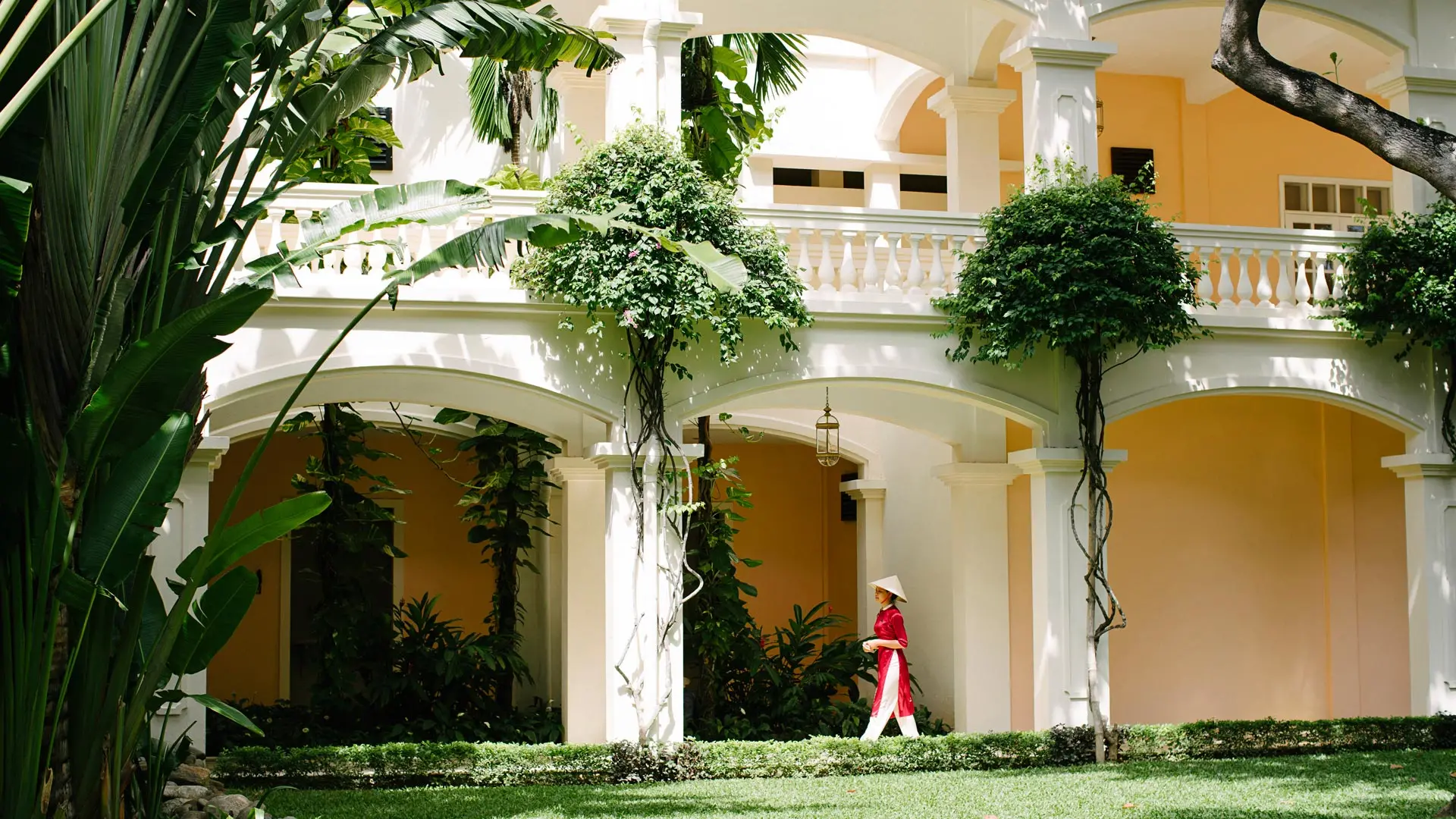
Originally built in 1901 by French investors, the Sofitel Legend Metropole Hanoi is an iconic colonial-era hotel. Through careful preservation of its neoclassical façade, timber shutters, and verandas, it continues to serve as a symbol of elegance and endurance. Its adaptive reuse as a luxury hotel keeps history alive for both locals and visitors, while demonstrating how colonial heritage can be recontextualized into contemporary hospitality.
The Sofitel Legend Metropole Hanoi: A French colonial gem reborn as a symbol of Vietnamese hospitality
The Raffles Hotel, Singapore
Founded in 1887, Raffles Hotel is one of the most recognizable colonial landmarks in Asia. Its adaptive reuse into a modern luxury hotel has allowed the structure to thrive while maintaining its architectural integrity. The careful renovation in 2019 emphasized heritage conservation alongside modern upgrades, reinforcing its role as both a national monument and a global icon of Singaporean hospitality.
Raffles Hotel: Where colonial elegance meets modern luxury in the heart of Singapore
Through projects like these, adaptive reuse turns colonial remnants into vessels of shared memory - structures that are no longer symbols of subjugation, but stages where new national identities unfold.
Adaptive Reuse as Sustainability Strategy
Beyond cultural significance, adaptive reuse also provides strong environmental benefits. Reusing existing buildings reduces the carbon footprint compared to demolition and new construction, while also preserving traditional materials and techniques.
The Majestic Hotel, Kuala Lumpur (Malaysia)
Originally opened in 1932 as one of the city’s grandest hotels, the Majestic fell into decline before being restored and reopened in 2012. Its adaptive reuse not only preserved an important heritage site but also demonstrated sustainable practices by reusing original materials and minimizing waste. The hotel today combines modern luxury with preserved colonial charm, showcasing sustainable heritage management in a rapidly developing city.
The Majestic Hotel: A 1930s icon reborn as Kuala Lumpur’s most celebrated heritage hotel
Fatahillah Square Buildings, Jakarta (Indonesia)
Colonial-era warehouses and civic buildings surrounding Jakarta’s historic square have been converted into museums, galleries, and cultural spaces. By reusing the existing structures instead of replacing them, the city reduces resource consumption while activating a vibrant cultural district that supports tourism and local community life.
Adaptive reuse in these contexts highlights sustainability as more than an environmental strategy - it is also cultural sustainability, keeping stories, skills, and traditions alive.
Jakarta’s old town transformed into a vibrant hub of history, art, and community
Adaptive Reuse as Community Engagement
Colonial buildings often occupy prominent urban locations, making them ideal for transformation into civic and cultural spaces that serve the public. Adaptive reuse thus becomes a tool for inclusivity, returning once-exclusive sites to the people.
National Gallery Singapore
Housed in the former Supreme Court and City Hall - two symbols of colonial governance - the National Gallery Singapore exemplifies how adaptive reuse can reframe power structures. The galleries preserve key architectural features, such as Corinthian columns and grand staircases, but reinterpret them as spaces for Southeast Asian art and cultural narratives. This reappropriation transforms symbols of colonial authority into platforms for national pride and creativity.
Former symbols of colonial rule reimagined as Southeast Asia’s largest art museum
Ho Chi Minh City People’s Committee Building (Vietnam)
Once the Hôtel de Ville built by the French in the early 20th century, this iconic landmark continues to serve as a civic building. While its adaptive reuse is not as radical as conversion to new functions, its maintained role in public governance ensures continuity while adapting interiors to modern requirements. It remains a focal point of urban life and a backdrop for community gatherings.
A civic landmark where colonial history and contemporary governance meet
By returning colonial-era structures to the public, adaptive reuse promotes a sense of belonging, allowing communities to engage with their layered histories on their own terms.
Design Lessons from Adaptive Reuse
From these examples across Southeast Asia, several key design lessons emerge:
+ Respect the Layers of History: Successful adaptive reuse honors both the original architecture and the new interventions. Sensitive additions can amplify rather than erase history.
+ Balance Authenticity and Modernity: Integrating contemporary systems - air conditioning, accessibility, safety standards - without compromising heritage character requires careful design.
+ Activate Public Value: Colonial buildings should not remain static relics; adaptive reuse should invite community participation and foster civic pride.
+ Sustainability Beyond Carbon: Adaptive reuse must be understood as both an environmental and cultural act - reducing waste while preserving memory and craftsmanship.
+ Reframing Symbolism: By transforming colonial-era structures into inclusive, locally meaningful spaces, adaptive reuse reclaims narratives and supports postcolonial identity-building.
Conclusion
The adaptive reuse of colonial architecture in Southeast Asia reflects a profound shift in how societies engage with complex histories. Instead of demolition or nostalgic preservation alone, adaptive reuse enables these buildings to evolve - sustaining their presence while allowing for new uses and meanings.
From luxury hotels in Hanoi and Singapore to cultural institutions in Kuala Lumpur and Jakarta, adaptive reuse shows how colonial legacies can be transformed into opportunities for cultural expression, sustainability, and civic pride. The process is not without challenges - balancing authenticity, symbolism, and modern function - but it remains one of the most compelling strategies for shaping resilient, meaningful cities in the region.
Colonial architecture in Southeast Asia is no longer just a reminder of the past - it is becoming a foundation for the future, one adaptive transformation at a time.
Save this story. A free account keeps your reading list and the 07:00 email in one place.
CREATE FREE ACCOUNT →SIGN IN