Abstract
As global skylines grow ever taller, a parallel movement is pulling architecture back toward the ground - toward origins, mythologies, and cultural memory. Today’s skyscrapers no longer exist solely as technological achievements; they are becoming vessels of heritage. This journal examines how ancient architectural language, symbolism, and craft are informing contemporary high-rise design. Through global case studies and critical analysis, it explores how architects reinterpret traditional structures to create towers that resonate culturally while addressing modern needs. The article concludes by considering the implications of this trend for identity, urban belonging, and future design practice.
Introduction: The Vertical Turn Toward the Past
The modern skyscraper was once a symbol of rupture - a break from tradition, propelled by steel-framed engineering and capitalist ambition. Its early evolution in cities like Chicago and New York prioritized function, height, and efficiency over cultural expression. Yet as global cities have matured, so too has their desire for architecture that anchors identity.
In an age defined by globalization, urban sameness, and climate pressures, architects are rediscovering the value of historical form-making. They are asking: How can tall buildings carry cultural significance instead of erasing it? How can verticality become a medium for storytelling?
Across Asia, the Middle East, Africa, and even Europe, we see towers shaped by ancient cosmologies, vernacular craftsmanship, and place-based symbolism. These structures bridge time, lifting centuries-old narratives into the stratosphere.
Ancient Inspirations Going Vertical: A Cross-cultural Analysis
1. Vertical Mandalas and Layered Cosmology: The Taipei 101 (Taipei, Taiwan)
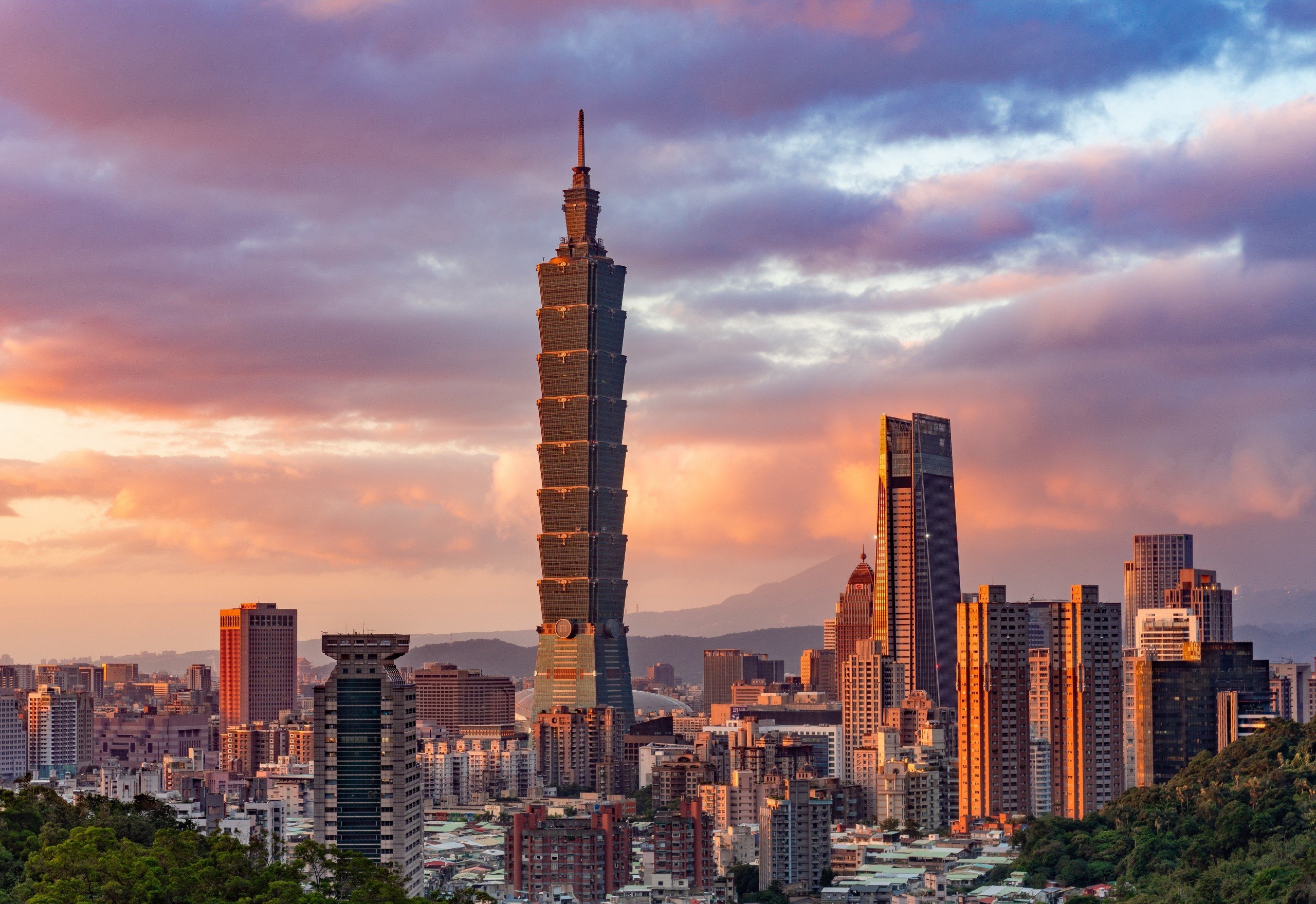
Perhaps the most referenced example of cultural symbolism in high-rise architecture, Taipei 101 draws heavily on the East Asian pagoda. Its stacked, tapering volumes represent upward progression and spiritual ascension. The eight segments echo the auspicious number in Chinese cosmology, while its structural bracing resembles bamboo - an emblem of resilience and humility.
By embedding cosmological meaning into its engineering logic, the tower demonstrates how skyscrapers can embody the philosophical foundations of a culture rather than merely standing as commercial artifacts.

A tower shaped by sacred numerology and pagoda logic, with stacked segments rising like a vertical mandala above the city
Photo Credit: Tung Feng
2. Neo-ziggurat Forms and Reclaimed Identity: The Al Hamra Tower (Kuwait City, Kuwait)
The Al Hamra Tower reinterprets the form of ancient Mesopotamian ziggurats, stepped temples that ascended toward the heavens. Its sinuous carved façade exposes a spiraling internal logic that recalls the layered ascents of ancient structures while optimizing solar shading in the desert climate.
Rather than replicating heritage literally, the tower abstracts its essence: the idea of elevation as a bridge between earth and sky, ritual and everyday life. It becomes both a climate-responsive skyscraper and a cultural marker in a rapidly globalizing Gulf region.

A sculpted limestone form recalling ancient ziggurats, its carved façade capturing both desert light and cultural lineage
Photo Credit: Nick Merrick ©, Hedrich Blessing
3. The Minaret Reimagined: Burj Mohammed Bin Rashid (WTC Abu Dhabi, UAE)
While not immediately apparent at first glance, this tower subtly echoes the lean, elongated proportions of the Islamic minaret. The building’s smooth verticality and slender articulation reflect a historical typology associated with spiritual orientation and community gathering.
The reinterpretation is quiet yet powerful, connecting an ultra-modern glass tower to one of the most enduring forms in Islamic architecture. It signals how cultural reference can be integrated without overt symbolism, allowing tradition to inform proportion, rhythm, and presence.

A slender, shimmering interpretation of the minaret silhouette, merging Islamic geometry with contemporary verticality
Photo Credit: WTC Abu Dhabi
4. Indigenous Geometry and Craft at Scale: The Butterfly (Vancouver, Canada)
Designed by Revery Architecture, The Butterfly draws from indigenous Coast Salish weaving patterns and the organic flows of the Pacific Northwest landscape. The tower’s curving exoskeleton echoes basketry techniques, transforming a high-rise into a sculptural tribute to the region’s First Nations heritage.
This example demonstrates a contemporary shift: cultural symbolism is no longer limited to monumental capitals; it is being incorporated into residential high-rises as an everyday expression of heritage and inclusivity.

A high-rise shaped by Coast Salish carving rhythms and the fluid geometries of Pacific Northwest Indigenous artistry
Photo Credit: Ema Peter
5. Ink-brush Geometry and Tapered Heritage: The Lotte World Tower (Seoul, South Korea)
Perhaps the most refined expression of Korean heritage in a contemporary megatall, Lotte World Tower draws inspiration from the nation’s artisanal and spiritual traditions. Its gently tapering form recalls the silhouette of celadon vessels, while the façade’s vertical striations echo the meditative flow of ink-brush painting. Subtle references to pagoda geometry guide the tower’s upward motion, invoking serenity, balance, and ascension.
By translating Korea’s artistic motifs into aerodynamic form and structural clarity, the tower illustrates how high-rises can channel cultural memory and identity rather than exist solely as commercial symbols.

A celadon-inspired profile expressed through brushstroke-like façade pleats, bridging centuries of Korean craft with modern engineering
Photo Credit: KPF
Interweaving Cultural Memory with Contemporary Engineering
Modern skyscrapers borrowing from ancient architecture signal a paradigm shift: height is no longer the only measure of ambition - cultural resonance is equally important. Three themes define this movement:
1. Symbolism as Structure, Not Surface
In earlier generations of high-rise design, cultural references often appeared as decorative appliqués - stylized motifs etched onto façades or symbolic crowns topping towers. Today’s approach is far more intrinsic.
Modern skyscrapers reinterpret ancient architectural logic directly within core engineering systems, transforming symbolism into spatial and structural order:
+ Tiered or pagoda-like massing improves wind resistance and helps disperse structural loads.
+ Stepped or tapered ziggurat-inspired forms reduce downdraft around the podium while visually referencing historical monumental architecture.
+ Carved voids and sky terraces echo courtyards and sacred spatial sequences while enhancing natural ventilation.
By embedding symbolism into the skeleton of the building, architects avoid superficial mimicry. Heritage becomes a performance-driven tool - an alignment of ancestral design intelligence with contemporary engineering constraints.
2. Vernacular Materials, Geometry, and Craft at High-Rise Scale
Another key development is the translation of traditional craft logics into systems suited for high-density urban construction. Patterns once hand-carved in wood or woven in reed now appear as:
+ Parametric façade shading systems derived from indigenous textile geometries
+ Laser-cut metal screens that reinterpret mashrabiya, Imigongo art, Islamic muqarnas, or Southeast Asian latticework
+ Diagrid structures whose patterning recalls bamboo scaffolding or ceremonial frameworks
These reinterpretations are not merely ornamental. They improve solar performance, daylight modulation, privacy, and energy efficiency, illustrating how cultural motifs can function as climate-responsive strategies.
Advanced materials such as high-strength glass, carbon-fiber reinforcement, and bio-based composites enable ancient geometries to achieve monumental scales once impossible. Thus, the rise of heritage-inspired skyscrapers is also a story of craft amplified through technology.
3. Cultural Narrative as Urban Identity in an Era of Homogenization
Global development often produces repetitive skylines - glass-and-steel towers interchangeable between continents. Against this backdrop, culturally informed skyscrapers stand out as anchors of place identity.
Cities are increasingly leveraging heritage-inspired towers as part of urban branding strategies:
+ To signal continuity amid rapid transformation
+ To express values rooted in local culture
+ To resist the homogenization of global real-estate aesthetics
This “identity-driven verticalism” transforms towers from economic engines into cultural ambassadors, expressing narratives that are region-specific rather than universally generic.

Heritage and cultural memory shape modern skyscrapers, merging symbolism, craft, and innovative design to create meaningful, context-driven urban landmarks
Photo Credit: Hufton + Crow
Design Reflection: What Does It Mean to Build Heritage into the Sky?
Reinterpreting ancient architecture within tall buildings raises fundamental questions about authenticity, symbolism, and design ethics.
+ Avoiding tokenism: Cultural reference must emerge from deep research and meaningful engagement, not surface-level motifs.
+ Translating spirit, not form: The most successful examples reinterpret principles - cosmology, proportion, ritual movement, craft logic - rather than copying literal shapes.
+ Balancing heritage and futurity: High-rise design must embrace contemporary technology while honoring cultural specificity. Tradition becomes a foundation, not a constraint.
+ Sustainability through local intelligence: Many ancient architectural strategies - stacking for stability, carved massing for shade, locally derived geometry - align naturally with climate-responsive design.
Skyscrapers influenced by heritage remind us that cultural memory is not static; it evolves. By extending traditional principles vertically, architects transform cities into living archives that speak across centuries.
Conclusion: The Future Skyline Is Ancient and New
As skyscrapers continue to reshape global cities, their most profound contribution may not be their height but their capacity to carry cultural meaning. The return to ancient architectural principles represents a reclaiming of identity in a rapidly urbanizing world.
When towers draw from cosmology, indigenous craft, ancestral geometries, and historical typologies, they become more than engineering marvels - they become symbols of continuity. They connect the vertical city to the layered histories beneath its foundations.
The future of high-rise architecture, it seems, is not a departure from heritage but a new evolution of it: a rising skyline informed by the ancient intelligence of place, culture, and memory.
Save this story. A free account keeps your reading list and the 07:00 email in one place.
CREATE FREE ACCOUNT →SIGN IN