Project Info
Project Name: Aewol Hangeo
Architects: IROJE Architects and Planners
Location: Jeju Island, South Korea
In Jeju Island, where myths grow like trees and the land holds both ancient scars and serene beauty, Aewol Hangeo arises not as mere architecture, but as a meditation. Designed by IROJE Architects and Planners, this lodging complex (hotel-housing) completed in 2025 is more than shelter—it is a sanctuary, rooted in place, memory, and the slow unfolding of the natural world.
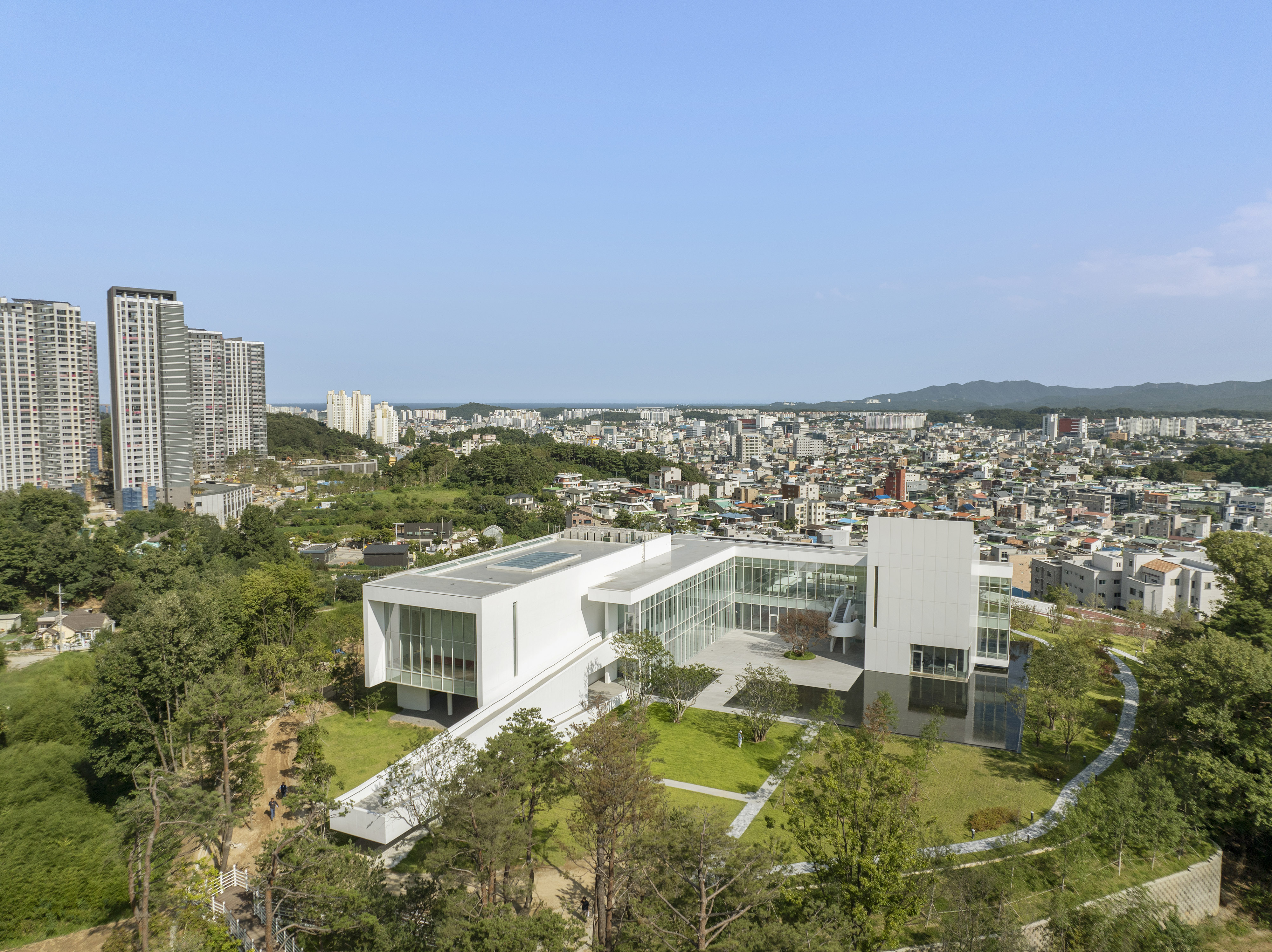
Overhead perspective reveals the site's fluid arrangement around trees and gardens, concluding the project's role as a living bridge between Jeju's myths, nature, and modern repose
Land, Trees, and the Poetics of Place
“Aewol,” meaning “moon by the water,” is aptly named. The site, near Aewol Port, provides a liminal space: between horizon and hill, sea and mountain. From a small rise on the land one sees the great bulk of Hallasan to the east; to the west, Jeju’s sea stretches away.
Central to the project is the ancient pine. These trees are honored—not as scenery, but as living entities around which architecture orients itself. Each pine is given domain: some stand alone within a walled enclosure; others cluster, and architecture threads around them. The building forms are shaped around these protagonists. You do not enter into architecture and forget the trees; you walk with them, under them, among them.
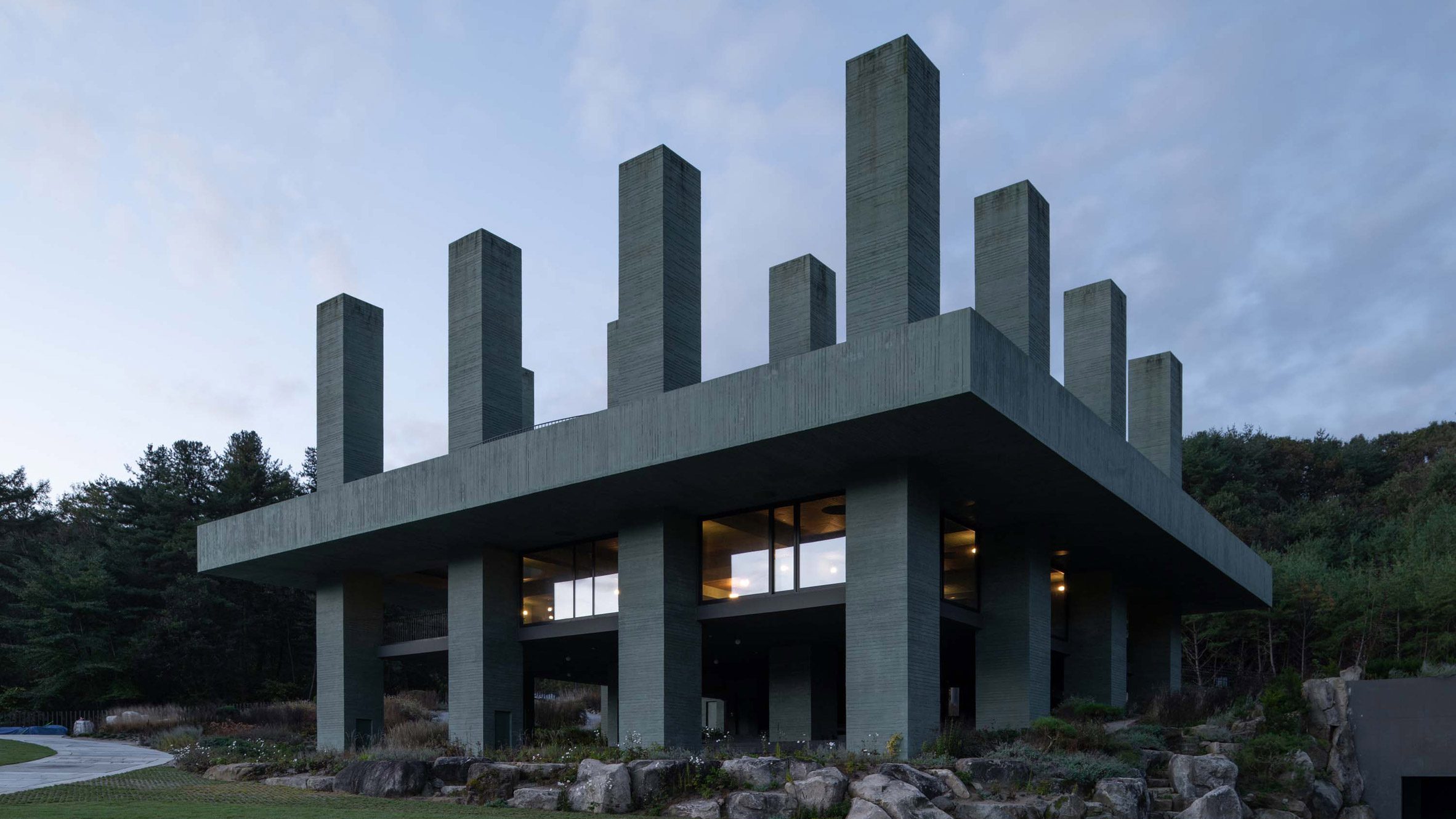
Exposed concrete walls, cast with pine formwork, do more than merely refer visually to the forest: they embed the texture of the trees into the very skin of the buildings, creating a lasting imprint of nature within built material.
Canopied walkways link named enclosures like Muhayuwon, underscoring the architecture's poetic naming and material humility to foster communal and personal rituals
Spaces as Stories: Named Places, Meaningful Stops
IROJE does more than create rooms. It crafts moments, naming each structure in ways that evoke ritual, memory, and quiet reflection. Some of the named areas:
- Muhayuwon – a quiet garden framed by a single tree enclosed by walls; purpose-less in its serenity, simply a place to be.
- Sewollu and Sehwalu – bathhouses that hold mirror-like moments of cleansing under moonlight and among flowers. The names themselves blend natural phenomena with architectural imagination.
- Mundang – a small exhibition hall, set like a sanctuary;
- Mangdan – on the northern boundary, an evocative space that gestures toward a burial place, a place of letting go.
Reflective water bridges concrete pavilions amid ancient pines, embodying IROJE's design as a meditative sanctuary that enfolds nature's texture into architecture for quiet reflection
These are not decorative gestures, but spatial poems. Together they allow guests to move through experience: contemplation, cleansing, remembrance. Reflection and rest are built in, room by room.
Architecture as Monastery: Silence, Material, Ritual
From concept to detail, the architecture is shaped as if designing a monastery. The materiality—pine timber-form concrete, natural stones, mossy grounds—reinforces that sense of humility and patience. Walls don’t shout; they whisper. Paths don’t command; they invite. Light is not spectacle but subtle presence, shifting as day becomes night, moonlight interplays with shadows of branches.
The siting of spaces—small clusters, separated by landscape, trees, hill—creates pauses in movement: moments to stop, see, hear. Whether in the bathhouse gazing across grazing horses, or in the quiet garden alone with moss and tree, the architecture fosters stillness.
Clustered pavilions weave through the pine-studded terrain, illustrating Aewol Hangeo's organic layout that invites pauses for memory and serenity under Hallasan's gaze
Place, Memory, and the Ethical Landscape
Jeju’s history is complex: a gift of beauty, yes, but also a land wounded by colonialism and exploitation. IROJE doesn’t ignore that. By treating the land as speaking, by seeing the pines as witnesses, by embedding names and spaces that evoke mourning and remembrance (Mangdan, for example), the project carries an ethical weight. It’s architecture in dialogue with history, not in denial of it.
To build here is to accept that land holds stories, sometimes painful, but always deserving of recognition. Aewol Hangeo does not erase those narratives; it enfolds them into its rhythm of stillness.
Stone walls and concrete forms frame preserved pines at dusk, highlighting the project's ethical integration of Jeju's landscape and history into ritualistic spaces
PHOTO CREDIT: IROJE Architects and Planners
Save this story. A free account keeps your reading list and the 07:00 email in one place.
CREATE FREE ACCOUNT →SIGN IN