Abstract
Architecture is not just a backdrop to life - it is an active force shaping how we think, feel, and interact. Increasingly, research in neuroscience and psychology confirms what architects and planners have long intuited: built environments can heighten stress and anxiety, or they can soothe, restore, and empower. From homes and workplaces to hospitals and public parks, design choices around light, materials, orientation, and access to nature profoundly influence mental well-being. This journal explores how architecture can reduce stress across diverse contexts, highlighting lessons from global examples and offering reflections for future practice.
Introduction: The Silent Role of Space in Mental Health
We often link mental health challenges to social pressures - workload, isolation, uncertainty. Yet space itself plays a powerful role. The cramped apartment with no windows, the noisy subway platform, the chaotic office floorplan - all can accelerate anxiety. Conversely, serene homes, walkable public squares, and workplaces designed for comfort can anchor resilience and calm.
Today, as urban populations swell and life becomes faster and more digitized, the importance of designing spaces for mental well-being has never been clearer. Architecture has the capacity to reduce stress not only in healthcare facilities but in every environment where people live, work, and gather.
Light: Regulating Mood Across Contexts
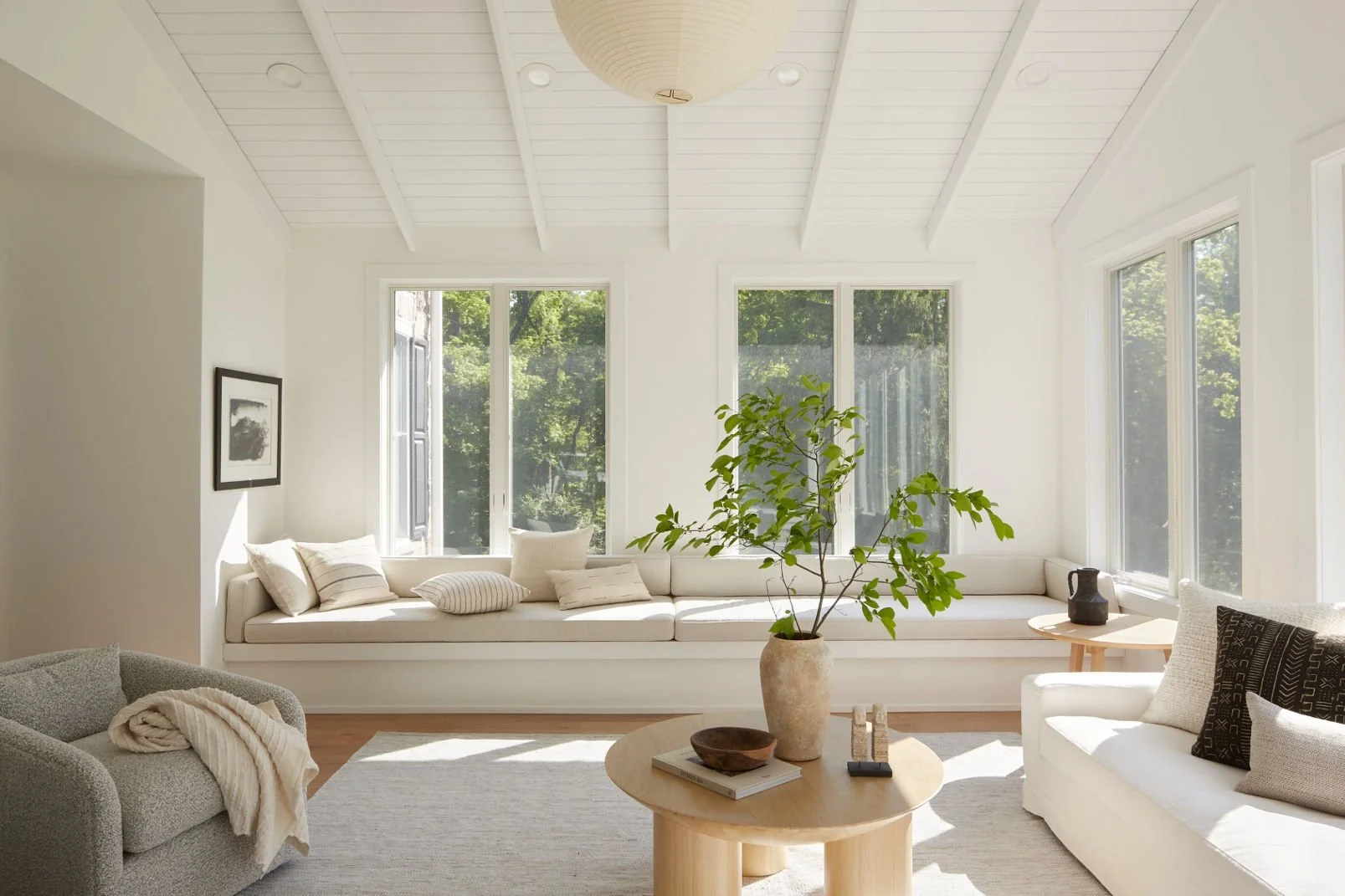
Natural light is one of the most powerful design tools for mental health. In homes, daylight stabilizes circadian rhythms and helps regulate sleep - vital for reducing anxiety. Scandinavian houses often feature expansive windows and pale interiors to counter long dark winters, a strategy now influencing global residential design.
In offices, lack of sunlight has been tied to depression and burnout. The Edge in Amsterdam, one of the world’s most sustainable office buildings, integrates daylight into every workspace with a highly transparent façade and central atrium. Workers report increased satisfaction and reduced fatigue, illustrating how light fosters not just productivity but psychological balance.
Public spaces benefit too: the open glass canopy of New York’s Fulton Center brings daylight into underground transit, easing the claustrophobia of daily commuting.
Lesson: Light is not a luxury. It is a universal human need that must be integrated into every typology.
Morning light floods a Scandinavian living room, stabilizing daily rhythms and nurturing calm
Natural light and transparency at The Edge, Amsterdam: boosting productivity while reducing fatigue
Orientation and Legibility: Stress-free Navigation
Confusion creates stress. Whether in a hospital, a housing block, or a city, clear orientation and intuitive layouts are key to reducing anxiety.
Homes with open yet defined layouts reduce daily friction, especially in multi-generational households. The Kyoto Machiya townhouses, with their long, narrow plans, demonstrate how clarity in circulation supports harmonious living by connecting family spaces through courtyards and corridors.
Workplaces that prioritize legibility - such as Apple Park’s ring design in Cupertino - allow workers to orient themselves intuitively while encouraging casual encounters. This balance of predictability and openness reduces cognitive load, letting employees focus rather than navigate.
Cities, too, thrive when legibility is prioritized. Barcelona’s grid with chamfered corners allows easy wayfinding and creates plazas at intersections - calm anchors in the urban flow.
Lesson: Orientation is psychological security. Spaces that “make sense” help users feel in control, lowering anxiety.
Barcelona’s chamfered intersections create open plazas, offering calm anchors within the urban grid
Materiality: The Emotional Weight of Surfaces
Materials affect mood more deeply than most realize. Concrete can feel heavy and oppressive; wood, warm and grounding. In houses, tactile surfaces - clay plaster walls, timber floors - contribute to calm daily rituals. Japanese domestic architecture, from tatami mats to shoji screens, illustrates how humble materials create serene atmospheres.
In offices, material authenticity fosters trust and comfort. The headquarters of Patagonia in California uses reclaimed wood, exposed steel, and natural finishes - conveying transparency, responsibility, and a sense of groundedness that aligns with the brand and reduces the sterility often linked to stress in corporate settings.
Public institutions are also moving away from cold sterility. Libraries like the Helsinki Oodi integrate warm timber and soft furnishings, transforming civic space into a welcoming mental refuge.
Lesson: Material honesty connects people emotionally to their environment, creating a sense of reassurance and belonging.
Open workspaces filled with natural light at Patagonia headquarters promote creativity and reduce workplace stress
Oodi’s vast, light-filled interiors create a calming public space that welcomes all citizens
Quietness: Designing for Acoustic Well-being
Noise pollution is a rising public health concern, linked to anxiety, hypertension, and poor concentration. Architecture can buffer or amplify this stressor.
Residential design increasingly values acoustic comfort. In dense cities like Singapore, new housing developments integrate sound-buffering façades and internal courtyards that shield residents from traffic noise, creating micro-oases of calm.
Workplaces, especially open-plan offices, are notorious for noise-induced stress. Co-working spaces like Second Home in London counter this with acoustic pods, landscaped terraces, and curved partitions that diffuse sound, proving collaboration doesn’t require chaos.
Public space can offer reprieve too. Seoul’s Cheonggyecheon Stream restoration created a linear park where water’s soundscape masks urban noise, giving millions a daily refuge from city stress.
Lesson: Silence is not emptiness but a condition for mental repair.
Acoustic pods at Second Home, London - quiet corners for focus in a collaborative setting
The restored Cheonggyecheon Stream, Seoul, where water softens the city’s noise and stress
Biophilia: Nature as Stress Antidote
Across contexts, access to nature consistently lowers stress levels. Homes with gardens or even balcony planters offer micro-doses of restoration. Urban apartments in Milan’s Bosco Verticale integrate vegetation into the very skin of the building, giving residents daily contact with greenery despite high density.
In offices, biophilic design has proven links to lower absenteeism and higher satisfaction. Amazon’s Seattle Spheres, filled with 40,000 plants, allow employees to work inside a living greenhouse - a radical rethinking of workplace well-being.
Publicly, nature-rich design is transformative. Singapore’s Gardens by the Bay is not only an ecological landmark but also a mental health resource for millions, offering spaces of awe, play, and respite.
Lesson: Nature is the most effective, affordable therapy architecture can provide.
Inside Amazon’s Spheres, where 40,000 plants transform the workplace into a living greenhouse
Singapore’s Gardens by the Bay: a daily dose of wonder and restoration for millions of residents
Dignity in Everyday Spaces
Stress is often heightened when spaces deny people dignity. Think of cramped housing without privacy, workplaces without personal space, or public housing estates where residents feel surveilled rather than at home.
Architecture can restore dignity. Alejandro Aravena’s “half-houses” in Chile allow low-income families to expand gradually, giving them agency over their environments. This simple gesture of design empowerment reduces the anxiety of precarity.
In workplaces, dignity may mean offering spaces for retreat or acknowledging diverse needs, from breastfeeding rooms to meditation zones. Google’s offices worldwide often include these spaces, signaling respect for the human behind the worker.
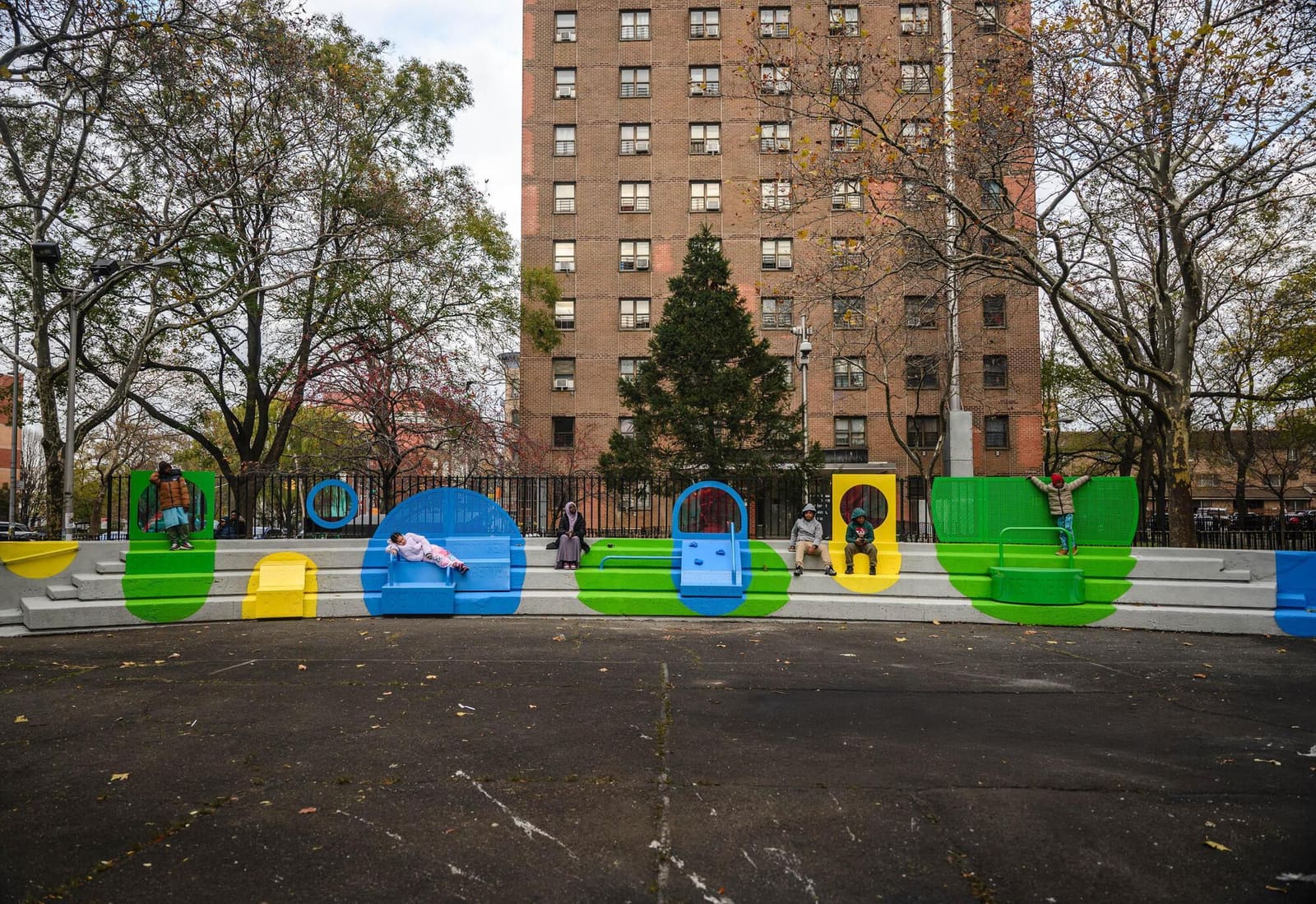
Public spaces, too, must be dignified. Inclusive playgrounds in Copenhagen ensure children with disabilities can play alongside others, reducing the anxiety of exclusion and fostering belonging.
Lesson: Dignity is mental health. Architecture must affirm it, especially in vulnerable contexts.
Aravena’s “half-houses” in Chile: design that restores dignity and reduces the anxiety of precarity
Inclusive playgrounds in Copenhagen - where every child, regardless of ability, belongs
Reflections: Toward a Human-centered Future
Architecture is often measured by efficiency, spectacle, or sustainability. Yet the deepest measure may be invisible: does it reduce stress? Does it make people feel safe, oriented, dignified, and calm?
The examples above - from homes that embrace light and wood, to workplaces filled with greenery, to public spaces that buffer noise - reveal a simple truth: mental well-being is not the domain of healthcare buildings alone. It is the responsibility of every architect, in every context.
If we accept this responsibility, then design becomes more than form or function. It becomes a form of care - a daily architecture of resilience and humanity.
Save this story. A free account keeps your reading list and the 07:00 email in one place.
CREATE FREE ACCOUNT →SIGN IN