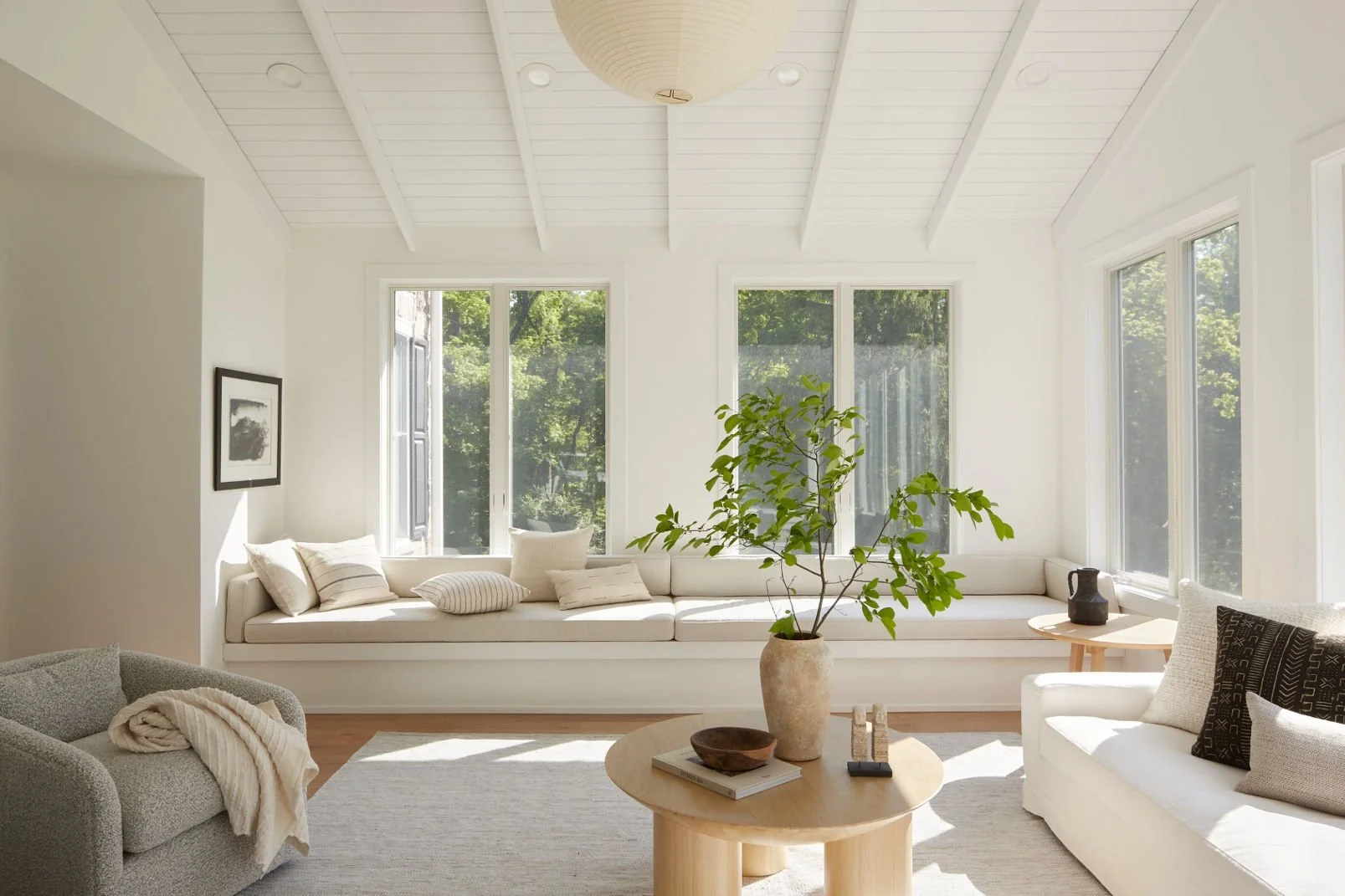
Abstract
In design discourse, comfort is often framed as a macro outcome - square footage, budgets, systems, or statement gestures. Yet lived experience tells a quieter story. This journal explores micro-comfort: the small, often invisible design decisions that disproportionately shape how spaces feel, function, and are remembered. Through spatial, material, sensory, and behavioral lenses, and grounded in real architectural and interior design examples, it argues that comfort is not a feature to be added, but a condition that emerges from accumulated care.
Introduction: Why Comfort Is Rarely Loud
Great spaces don’t always announce themselves. More often, they receive us - without friction, without instruction. We sit down without adjusting. We linger without realizing why. We leave feeling oddly restored.
This is not accidental. It is the result of dozens, sometimes hundreds, of micro-decisions: a handrail placed exactly where the hand expects it, a light that softens instead of flattens, a threshold that subtly slows the body.
These moments rarely appear in renderings or headlines, yet they form the emotional backbone of everyday architecture and interiors.
Micro-comfort lives at the intersection of ergonomics, psychology, and empathy. It asks not “What will this space look like?” but “How will it be inhabited?”
Anatomy of Micro-comfort
1. Spatial Micro-adjustments: Designing for the Body, Not the Plan
Comfort often begins with centimeters, not meters.
A clear example is Maggie’s Centre Leeds by Heatherwick Studio, where spatial decisions are finely tuned to human vulnerability. Low window sills suit seated users, circulation widens near resting areas, and subtle ceiling height shifts ease psychological pressure. Comfort emerges not through form-making, but through precise spatial calibration that supports how bodies pause and move.

Maggie’s Centre Leeds
Photo Credit: Hufton + Crow
In workplace design, such as Valentyns Office by Thomas van den Valentyn, apply similar thinking. Corridor widths expand slightly near communal zones, encouraging informal pauses, while workspaces remain compact enough to feel focused rather than exposed. Nothing dramatic changes in plan, but the body senses relief.

Valentyns Office
Photo Credit: Felix Speller
Even in retail, brands like Muji rely heavily on micro-spatial control: aisles that allow two people to pass without contact, shelving depths that prevent overreaching, and low visual horizons that reduce spatial fatigue.

Muji Tokyo store
Photo Credit: Muji
Insight: People don’t experience plans; they experience transitions. Micro-comfort lives in how space meets the body.
2. Material Contact: Where the Body Meets the Building
Micro-comfort is tactile, and often emotional.
In Burnt Earth Beach House, designed by John Wardle, handcrafted clay bricks and timber surfaces create tactile warmth throughout. These materials register through touch, temperature, and texture, turning everyday contact - floors, walls, thresholds - into a quiet source of comfort rooted in material honesty.

Burnt Earth Beach House
Photo Credit: Trevor Mein
Similarly, Kengo Kuma’s interiors often replace hard, industrial finishes with layered wood, fabric, or bamboo - materials that absorb sound and soften touch. In spaces like the Asakusa Culture Tourist Information Center, even structural elements feel approachable because they invite proximity rather than repel it.

Asakusa Culture Tourist Information Center
Photo Credit: Rasmus Hjortshøj - COAST
In hospitality, Blue Bottle Coffee frequently uses untreated timber counters and matte ceramics - materials that age visibly. The gradual patina reinforces a sense of familiarity and care, making return visits feel easier.

Blue Bottle Coffee Nagoya Sakae Cafe
Photo Credit: Tomooki Kengaku
Insight: Comfort increases when materials respond to touch, not resist it, and when aging is treated as enrichment, not failure.
3. Sensory Calibration: Comfort as Balance, Not Neutrality
True comfort is rarely silent, static, or perfectly controlled.
The Under Restaurant by Snøhetta demonstrates this through sensory balance. While submerged beneath the sea, the interior is not acoustically dead. A controlled resonance of water movement, filtered light, and subtle temperature variation keeps diners aware of their environment without overwhelming them. The space feels alive, yet calm.

Under Restaurant
Photo Credit: Stian Broch
In workspaces like Saie Beauty’s headquarters by Hyphen & Co., the office uses layered, soft lighting alongside natural daylight and statement fixtures to create a warm, home-like environment that supports both focused work and collaboration. This lighting strategy balances ambient and task illumination to reduce glare and visual fatigue, making the workspace feel welcoming and comfortable throughout the day.

Saie Beauty’s headquarters
Photo Credit: Hyphen & Co.
Residential projects such as Ryue Nishizawa’s Moriyama House also rely on sensory nuance: operable windows introduce airflow and sound from the neighborhood, creating a comfort rooted in connection rather than isolation.

Moriyama House
Photo Credit: Ryue Nishizawa
Insight: Sensory richness becomes comfort when no single input dominates, and when users can subtly adapt their environment.
4. Behavioral Cues: Design That Anticipates, Not Instructs
The most comfortable spaces explain themselves without signage.
Libraries designed by Snøhetta, such as the Calgary Central Library, use changes in ceiling height and floor texture to signal quiet zones versus social areas without explicit rules. Users instinctively lower their voices or linger longer, guided by spatial cues rather than instructions.

Calgary Central Library
Photo Credit: Snøhetta
In retail, Apple Stores exemplify behavioral micro-comfort: tables at standing height invite browsing without commitment, while perimeter seating offers rest without pressure to purchase. Circulation is intuitive because the design anticipates hesitation points.

Apple Fifth Avenue Flagship
Photo Credit: Foster + Partners
Insight: Comfort emerges when design removes the need for conscious decision-making.
5. Emotional Micro-comfort: Feeling Considered
Perhaps the most overlooked layer of comfort is emotional.
In Louis Kahn’s Kimbell Art Museum, daylight enters through cycloid vaults that diffuse light evenly across walls. Visitors feel calm not because the space is minimal, but because it is kind to the eyes and skin. Art is viewed without strain, and time slows.

Kimbell Art Museum
Photo Credit: Robert LaPrelle
Healthcare environments increasingly adopt this principle. Projects like Lagmansgården Residential Care Institution by Anttinen Oiva Architects combine architecture and nature to promote healing for young people in need of care. Designed to feel homelike and calming, spaces use natural light, timber materials, and views to green surroundings, creating a soothing atmosphere that prioritizes sensory ease.

Lagmansgården Residential Care Institution
Photo Credit: Kalle Kouhia
Even in modest residential interiors, placing windows at seated eye level, choosing warm color temperatures, or allowing a corner for retreat within an open plan can signal care.
Insight: Emotional comfort is the residue of empathy embedded in form. When users feel considered, they feel at ease.
Design Lesson: Accumulation Over Iconography
Micro-comfort teaches a quiet but radical lesson: The success of a space is rarely determined by its boldest gesture, but by the consistency of its smallest ones.
A beautifully sculpted staircase cannot compensate for harsh lighting. A striking façade cannot undo a chair that hurts after five minutes. Comfort is cumulative, and friction compounds faster than delight.
Designers who prioritize micro-comfort shift from object-making to experience-shaping, from authorship to stewardship.
Designing the Unnoticed
Micro-comfort will never dominate headlines. It doesn’t photograph well. It doesn’t announce itself. But it is what turns spaces into places, buildings into habits, and design into trust. In an era of visual saturation and rapid consumption, micro-comfort offers a quieter ambition: to design spaces that support, soften, and sustain everyday life. Ultimately, the most meaningful design decisions may be the ones users never consciously notice, only deeply miss when they are absent.
Save this story. A free account keeps your reading list and the 07:00 email in one place.
CREATE FREE ACCOUNT →SIGN IN