Project Info
Project Name: Blue Ocean Dome Pavilion
Architect: Shigeru Ban Architects
Location: Osaka, Japan
Client/Sponsor: ZERI JAPAN, Blue Ocean Forum
A Structural Trilogy: Rethinking Materials for a Sustainable Future
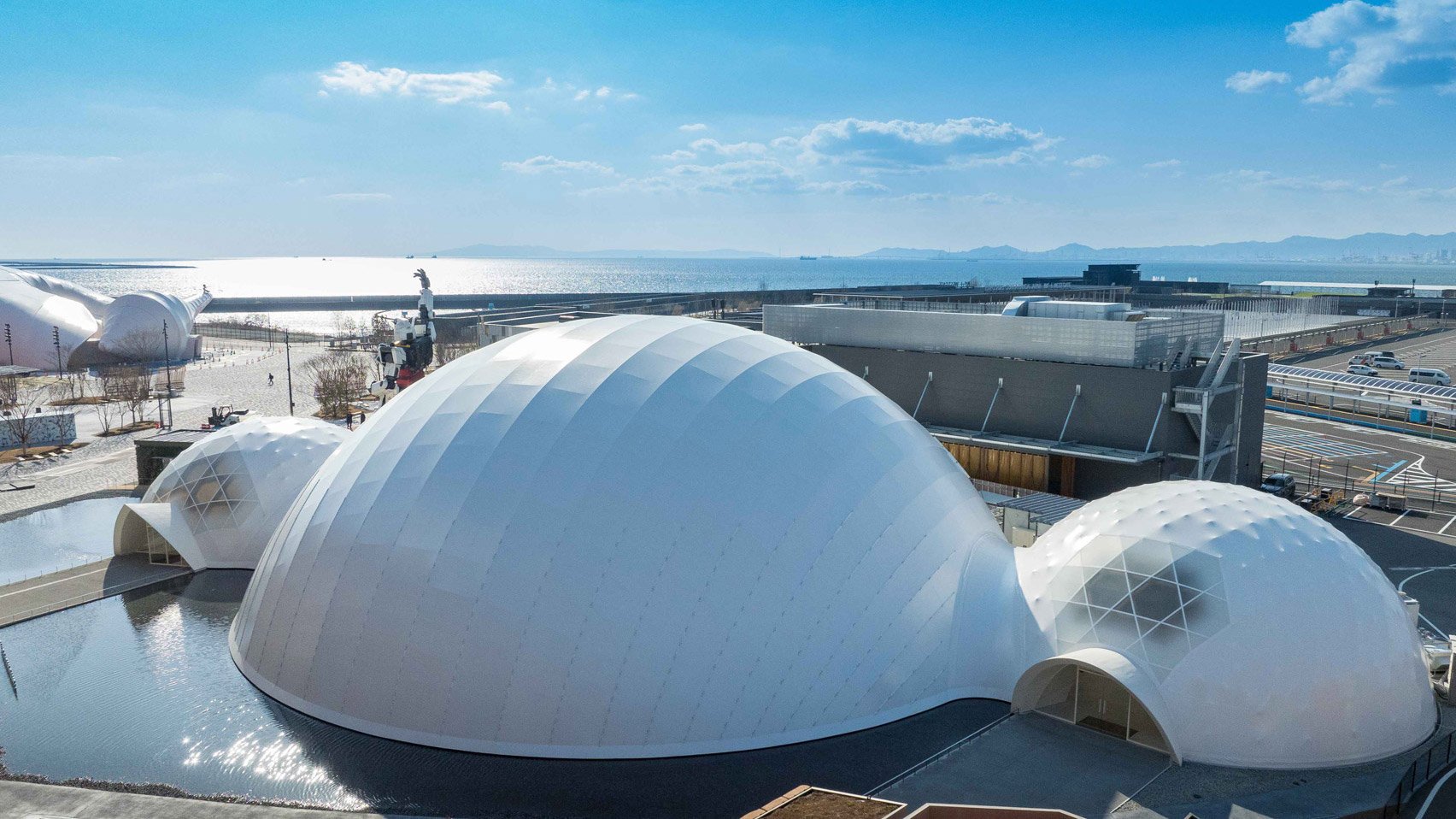
Shigeru Ban, the Pritzker Prize-winning architect renowned for his pioneering work with sustainable and disaster-relief materials, has unveiled the Blue Ocean Dome Pavilion at Expo 2025 Osaka. Far from being a traditional exhibition hall, this pavilion is an architectural manifesto built as a structural trilogy, where three distinct dome forms champion three fundamentally different, yet equally innovative, materials.
Located prominently on Yumeshima Island, the project is a collaboration with ZERI JAPAN (Zero Emissions Research Initiative) and serves as an urgent call to action regarding ocean revitalization and material circularity. Ban's design ethos—that architecture should be a solution, not a burden—is central to this dramatic composition of temporary structures. The use of temporary, demountable architecture here carries profound weight, demonstrating that even a structure built for a world's fair can be designed without waste.

A Structural Trilogy: Ban's three distinct domes - bamboo, paper, and carbon fiber—unite to form an architectural manifesto for material circularity
The Domes: An Experiment in Material Performance
Each of the three 'bubbles' is a critical case study in material science and performance, challenging conventional construction norms:
1. Dome A (Laminated Bamboo): Utilizing a fast-growing, bio-based resource, this dome showcases the immense structural potential of laminated bamboo. It highlights how engineered natural materials can meet modern architectural demands, providing a warm, organic entry point to the exhibition and symbolizing humanity's connection to nature's renewable gifts.

Dome A (Bamboo): Showcasing renewable power, the laminated bamboo structure proves natural materials can meet modern architectural demands
2. Dome C (Recycled Paper Tubes): Embodying Ban's signature material, Dome C reinforces the principle of modularity and recyclability. Constructed from recycled cardboard tubes, it demonstrates that low-impact, readily available materials can be used for significant, demountable structures, fitting the Expo's temporary nature perfectly while minimizing the carbon footprint.

Dome C (Paper Tubes): Ban's signature material reinforces modularity and recyclability, demonstrating low-impact design for large, demountable structures
3. Dome B (The Carbon Fibre Innovation): The largest and most technically daring of the three is the central dome, spanning 42 meters. It is constructed using tubes made of Carbon Fibre Reinforced Plastic (CFRP). Ban's surprising choice of this high-tech, typically aerospace material was not about luxury, but about lightweight strength. This allowed the dome to stand without heavy, costly concrete piles—a nod to minimal foundation impact. The web-like pattern of the CFRP structure evokes both marine biology and advanced engineering, symbolizing a future where high-tech performance aligns with ecological responsibility. The large central space houses a 360-degree film projection, immersing visitors in the pavilion's ocean conservation narrative.

Dome B (Carbon Fibre Innovation): The 42 m CFRP lattice symbolizes a high-tech future where structural performance aligns with ecological responsibility
From Osaka to the Maldives: A True Legacy Architecture
The Blue Ocean Dome transcends the typical fate of an Expo pavilion, which is often demolition and waste. In a powerful commitment to the project’s theme, the entire structure has been designed for complete demountability and reuse. Following the Expo's conclusion in October 2025, the pavilion will be carefully disassembled and relocated to the maritime nation of the Maldives. There, it will be repurposed as a permanent facility, becoming a tangible legacy for ocean conservation and a "Blue Innovation" from Japan to the world.

The largest dome's core structure utilizes Carbon Fibre Reinforced Plastic (CFRP) tubes
Through its multi-material approach and clear circular economy mandate, Shigeru Ban Architects has created more than just an exhibition space; they have delivered a structural metaphor for the sustainable use of resources—a beacon of hope demonstrating that responsible, high-performance architecture is indeed possible, and that an architectural footprint can be both temporary and globally impactful.
Save this story. A free account keeps your reading list and the 07:00 email in one place.
CREATE FREE ACCOUNT →SIGN IN