Project Info
Project Name: D·Origen Coffee Shop
Location: Casa Calvet, Barcelona, Spain
Designer / Studio: LOWPOLY
Client: D·Origen Coffee Shop
A New Blend of Material, Form, and Memory
Step into D·Origen Coffee Shop in Barcelona and you’ll smell coffee long before you see it—not from brewing, but from the furniture itself. Conceived by LOWPOLY (lead designers Gianluca Pugliese, Arturo Tedeschi, and Ilaria Marzano), the café transforms spent coffee grounds into the “LOWIMPACT®” material: a blend of recycled PLA and coffee waste that’s 98 % organic, biodegradable, and petroleum-free.

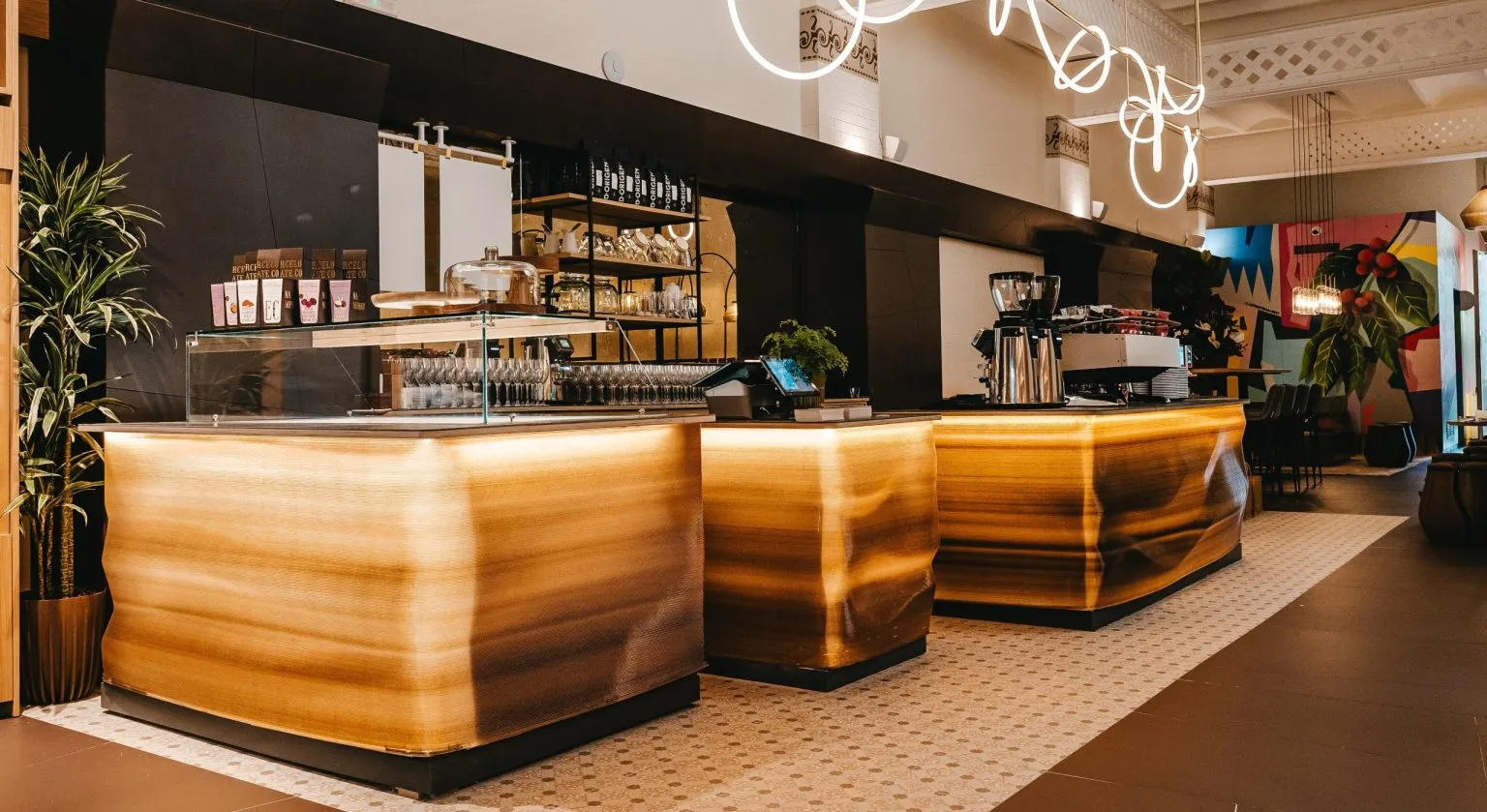
The coffee bar, made from a unique coffee-waste material, showcases D·Origen’s commitment to sustainable, innovative design
Located in the elegant Casa Calvet—a masterpiece by Antoni Gaudí—the café embraces its architectural heritage while rewriting its internal character. Custom counters, lamps, stools, and lighting elements were all made using large-scale 3D printing and robotic arms with modified extruders. The amber tones and natural flecks of coffee grounds transform backlit surfaces into sensory statements—where texture, opacity, and color shift with light and viewing angle.

Fluid, sculptural curves of the 3D-printed coffee bar create a unique visual and tactile experience
Sensitive Design Meets Circular Innovation
Each furniture piece emerges from parametric design processes that respect both form and material behavior. Geometry echoes the fluidity of poured coffee: curved counters, lamp shades with soft folds, stools shaped like beans. Imperfections—flecks, shifts in shade—aren’t hidden; they become character.
The material workflow is circular: spent grounds are collected from cafés, processed off-site, turned into printable feedstock, printed, used, then eventually recycled back into new material via LOWPOLY’s take-back scheme. The café thus becomes a small loop of waste, reuse, design, and eventual renewal.

The beauty of sustainability is revealed as the unique texture of the coffee-based material is highlighted by light, transforming waste into a design statement
Atmosphere & Lighting: Coffee’s Glow
Lighting in D·Origen isn’t just functional—it’s sculptural. Backlit counters glow from within, lamplight softens shadows across the LOWIMPACT surfaces, and natural daylight filtering through Casa Calvet’s windows animates the textures and finishes. The ambiance blends heritage architecture, warm materiality, and a sustainability story told through form and light.

The warm, inviting atmosphere is defined by soft curves and gentle lighting, inviting guests to enjoy a creative and conscious coffee experience
Beyond Coffee: A Model for Future Retail Design
This Barcelona experiment is more than a novelty—it’s a proof of concept. By embedding circular design into daily rituals like coffee drinking, D·Origen and LOWPOLY demonstrate how sustainable design can be accessible, scalable, and emotionally engaging. The café shows that waste doesn’t have to be hidden—it can be celebrated, reshaped, and elevated into a tactile reminder of mindful consumption.
For Barcelona, a city already at the intersection of design, gastronomy, and culture, this project signals a new path forward: where local identity, innovation, and sustainability converge. The café not only honors Gaudí’s legacy of experimentation but also writes a new chapter for what 21st-century hospitality can be—conscious, beautiful, and circular by design.
Save this story. A free account keeps your reading list and the 07:00 email in one place.
CREATE FREE ACCOUNT →SIGN IN