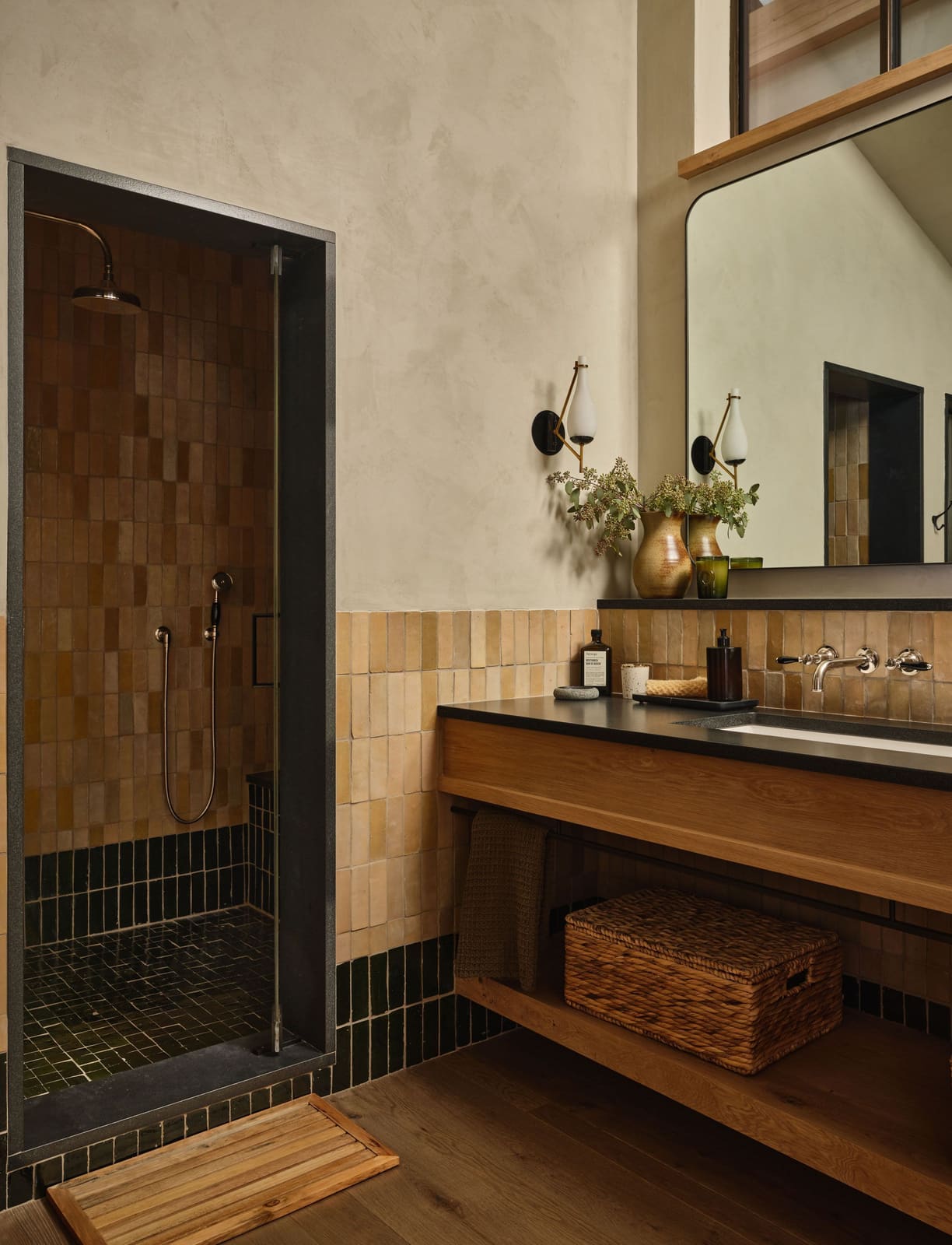
The Case Against Perpetual Dampness
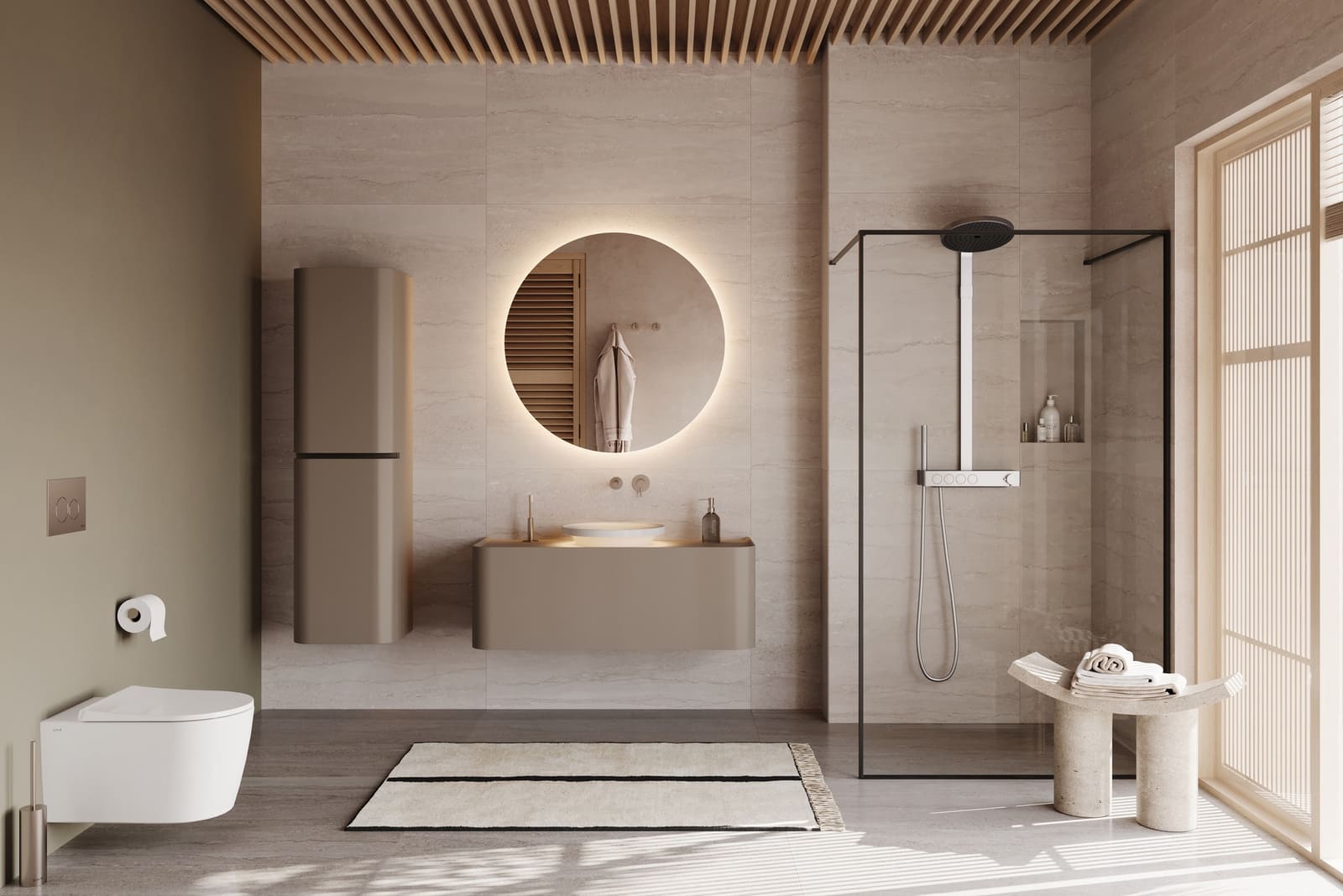
Every residential bathroom shares a common flaw: the liminal zone between shower and sink becomes a breeding ground for microorganisms the moment air circulation falters. Terry loops and cotton weaves may feel forgiving underfoot, but in spaces without adequate exhaust or natural light, they transform into petri dishes within days. The question isn't whether fabric absorbs moisture - it's whether that moisture ever truly leaves.
At World Archi Design, we've watched architects grapple with this mundane problem for years. Specification sheets call for porcelain tile, frameless glass, and rainfall showerheads, yet the bath mat remains an afterthought - a soft accessory presumed to handle itself. It doesn't. Walk into a bathroom six months after move-in and you'll often find a musty textile that no amount of laundering can resurrect. The solution, it turns out, lies not in better fabrics but in abandoning fabric altogether.
Material Intelligence: Stone, Wood, and the Physics of Drying
Hard-surface bath mats operate on a fundamentally different principle than their textile cousins. Rather than trapping water within fibers, they allow moisture to pool briefly on the surface before evaporating or draining through gaps. The best examples leverage material science in ways that feel almost alchemical.
Diatomaceous earth, for instance, has become a quiet darling among industrial designers. Composed of fossilized algae, the porous stone pulls water from skin and air alike, drying in minutes through capillary action. The Dorai mat exemplifies this approach: a slab of compressed diatoms that functions less like a rug and more like a high-performance sponge. Its appeal isn't purely utilitarian - the matte surface and monolithic form read as sculpture, a nod to minimalist sensibilities that prize restraint over ornament.
Wood brings different virtues. Teak, hinoki, and oak each respond to humidity in ways honed by centuries of maritime and bathhouse use. Teak's high oil content renders it naturally water-resistant, a trait that made it indispensable in shipbuilding and explains why it survives tropical downpours without warping. Hinoki, a Japanese cypress prized in onsen culture, releases a citrus-like aroma when wet - a biochemical bonus that transforms a functional object into an olfactory experience. The choice of species becomes an architectural decision, one that ties material performance to sensory ambition.
Six Models That Reconcile Function and Form
The CB2 lateral teak runner demonstrates how industrial fabrication can honor vernacular wisdom. Thin planks of stained wood run parallel across a flexible base, creating negative space for drainage while maintaining a continuous visual plane. The black finish lends it a contemporary edge, yet the construction logic descends directly from traditional Japanese engawa platforms. It's a study in cultural translation - taking a building element designed for outdoor thresholds and condensing it into bathroom scale.
For those drawn to textile-like warmth without the moisture trap, jute offers middle ground. The Rejuvenation flatweave rug employs natural fiber in a tightly woven structure that resists saturation. Unlike cotton or bamboo blends, jute dries quickly and maintains dimensional stability even in high-traffic powder rooms. It won't perform miracles in a windowless ensuite, but for spaces with modest ventilation, it bridges the gap between hard and soft underfoot experiences.
Crate & Barrel's lattice mat takes a different tack: thin wood chips woven into a basketweave pattern so tight that water can't seep through to the floor below. The technique borrows from furniture caning traditions, applying chairmaking logic to bathroom infrastructure. The result feels almost textile in its flexibility, yet behaves like a solid surface. It's the kind of hybrid thinking that emerges when designers refuse to accept category boundaries.
Stone returns in monolithic form with options like the Dorai, but also in modular expressions. A single slab commands attention through sheer material presence - cool to the touch, visually grounding, unapologetically minimal. Pair it with a thin grip pad and you've eliminated the slip risk that plagues wet tile, all while introducing a tectonic quality rarely associated with bath accessories.
The Jinen hinoki mat elevates utility into ritual. Crafted from narrow cypress slats, it releases volatile organic compounds when moisture activates the wood's cellular structure. The scent isn't added - it's intrinsic to the species, a reminder that material choices carry embedded experiences. In a spa-inspired bathroom, this detail shifts the mat from pragmatic necessity to sensory anchor.
Hawkins New York offers a Scandinavian interpretation: Swedish oak planks curved slightly and strung with water-resistant cord. The assembly method allows the mat to drape over a tub edge when not in use, a gesture toward adaptability in compact spaces. The oiled finish protects the wood while preserving its grain, a balance between durability and tactile warmth that defines Nordic design philosophy.
Precedent and Context: When Bathhouses Inform Bathrooms
The lineage of hard-surface bathing floors stretches back millennia. Roman thermae employed stone benches and marble floors precisely because they could withstand constant moisture and rigorous cleaning. Japanese sentō and onsen relied on hinoki duckboards for the same reason - wood that improved with exposure to water rather than degrading. These weren't aesthetic choices; they were material necessities in environments where humidity remained constant.
Contemporary residential design has largely ignored this wisdom, defaulting instead to absorbent textiles that require weekly laundering. The recent resurgence of stone and wood bath mats signals a rediscovery of pre-industrial logic, filtered through modern manufacturing and minimalist aesthetics. It's adaptive reuse at the scale of the bathroom floor.
Implications for Residential Design
Specifying a non-fabric bath mat isn't merely a product swap - it's a reconsideration of how moisture moves through domestic space. In new construction, pairing these mats with proper floor drains and heated tile can eliminate standing water entirely. In renovation, they compensate for inadequate ventilation without the cost of installing new ductwork.
There's also a maintenance calculus. Textile mats demand laundering, drying, and eventual replacement. Stone and wood require only periodic cleaning and, in the case of certain woods, occasional oiling. Over a decade, the lifecycle cost and environmental footprint shift dramatically. For clients prioritizing longevity and low upkeep, hard surfaces make economic and ecological sense.
Yet the real shift is perceptual. A stone or wood mat announces that the bathroom is a designed environment, not an afterthought. It signals that every surface - down to the square foot where you dry your feet - deserves material consideration. In that sense, these objects function as small-scale manifestos, arguing that thoughtful design extends into the most utilitarian corners of domestic life.
A Note on Aesthetics and Practicality
Critics might argue that hard mats feel cold or uninviting, especially in climates where bare feet meet chilly mornings. Fair enough. But that critique assumes comfort derives solely from softness, ignoring the discomfort of stepping onto a perpetually damp fabric. There's a tactile honesty to stone and wood - they don't pretend to be what they aren't. They dry quickly, harbor no mildew, and age gracefully rather than deteriorating into lint and odor.
For households with children or elderly members, the slip-resistance question matters. Most wooden mats include rubberized bases or companion pads; stone options often come with integrated grip. The key is matching the mat to the floor beneath it and ensuring the surface texture provides adequate friction when wet.
In shared bathrooms or guest powder rooms, where turnover is high and moisture accumulates from multiple users, hard surfaces prove particularly resilient. They withstand traffic without compressing, maintain their form without laundering, and present a consistently clean appearance. That reliability frees designers to focus on other elements - tile patterns, fixture finishes, lighting - knowing the floor plane can handle itself.
Looking Forward
As biophilic design gains traction and wellness-oriented interiors become standard rather than niche, expect to see more clients questioning the wisdom of synthetic bath textiles. Materials that breathe, age, and respond to their environment align better with a design ethos that values natural processes over static perfection. Stone and wood mats fit this trajectory - they're low-tech, materially transparent, and rooted in centuries of precedent.
The bathroom, long relegated to purely functional status, is finally receiving the spatial and material attention it deserves. And if a humble bath mat can catalyze that shift - reminding us that every surface is an opportunity for thoughtful specification - then perhaps the smallest details matter most.
Photo: Kate McGregor
Save this story. A free account keeps your reading list and the 07:00 email in one place.
CREATE FREE ACCOUNT →SIGN IN