A Question of Scale and Permanence
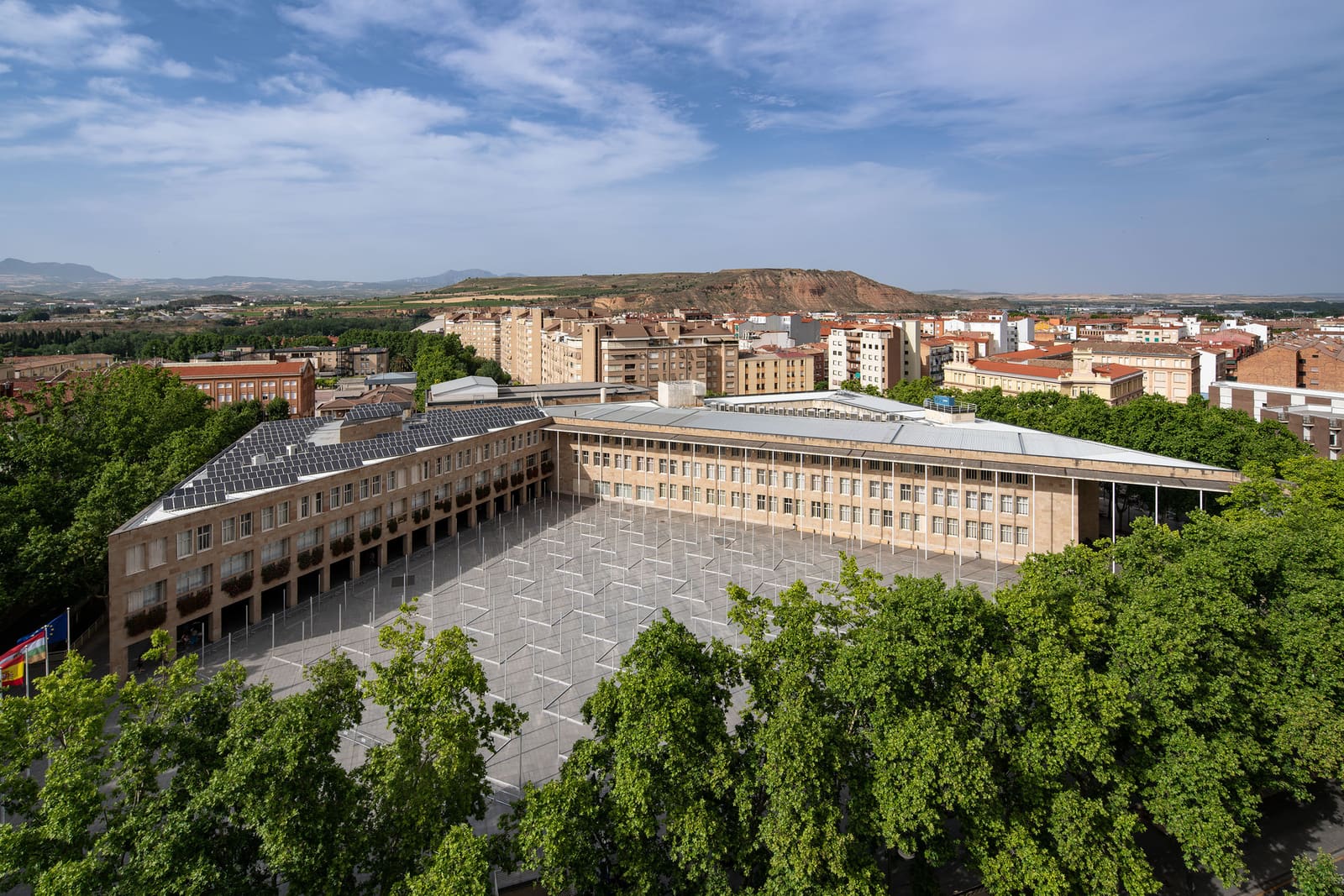
Temporary installations occupy a peculiar position in contemporary architectural practice. Unlike permanent civic structures that must negotiate decades of use and adaptation, ephemeral interventions offer studios the freedom to test ideas at full scale, to fail publicly, and to reimagine the relationship between built form and urban life. In Logroño, a city in Spain's La Rioja region better known for its wine production than its experimental architecture, PPAA has completed Resonancia, a 120-square-meter installation that asks what happens when architecture is designed not just to be seen, but to be heard.
Curated by Valentina Díaz, the project arrived in 2026 as part of a broader initiative to activate underutilized public spaces through cultural programming. At World Archi Design, we've been tracking the resurgence of installation-based work as a legitimate testing ground for tectonic ideas, particularly among studios that resist the pressure to scale prematurely. Resonancia sits within this lineage, drawing from precedents like Junya Ishigami's delicate pavilions and the community-focused interventions of Assemble, yet it carves out its own territory by foregrounding acoustics as a spatial organizing principle.
Material Choices and Structural Logic
The installation spans 120 square meters, a modest footprint that nonetheless demands precision in both material selection and assembly. PPAA's approach here leans on modularity, a strategy that allows for rapid construction and eventual disassembly without generating excessive waste. The structural system relies on lightweight framing, likely timber or steel profiles, paired with cladding elements that double as acoustic surfaces. This dual functionality is critical: every material decision must serve both the visual language of the piece and its acoustic performance.
We've observed a growing interest in biophilic materials within temporary structures, and while specific details of Resonancia's material palette remain undisclosed, the project's title suggests a focus on resonance and vibration. This points toward surfaces engineered to reflect, absorb, or diffuse sound in deliberate ways, transforming the installation into an instrument as much as an enclosure. The use of perforated panels, tensioned membranes, or corrugated metal, each of which manipulates sound differently, would align with this ambition.
Acoustic Architecture as Social Infrastructure
Resonancia is positioned within the category of public architecture and community-focused design, which tells us something essential about PPAA's intentions. This is not a sculptural object placed in a plaza for passive contemplation. Instead, it functions as social infrastructure, a space designed to host gatherings, performances, and informal encounters. The acoustic dimension becomes a tool for shaping how people interact within and around the structure.
Consider the precedent of Peter Zumthor's Serpentine Pavilion in 2011, which used a darkened interior and specific material textures to create an atmosphere of introspection. Resonancia appears to invert this logic, using sound as a medium for connection rather than withdrawal. By amplifying certain frequencies or creating zones of acoustic clarity, the installation can guide movement, encourage conversation, and establish a sense of shared experience. This is architecture operating at the scale of the body and the voice, not the monument.
Logroño as Context
Logroño is not a city typically associated with avant-garde architectural experimentation. Its urban fabric is largely defined by historic masonry buildings, narrow streets, and a network of plazas that serve as social anchors. Into this context, Resonancia introduces a contemporary vocabulary, one that does not attempt to mimic vernacular forms but instead establishes a dialogue through contrast. The installation's lightness and temporality stand in opposition to the permanence of its surroundings, a deliberate gesture that highlights the elasticity of public space.
Spain has a rich tradition of temporary pavilions and festival structures, from the elaborate fallas of Valencia to the ephemeral constructions of Barcelona's neighbourhood festivals. Resonancia taps into this cultural lineage while pushing it toward a more conceptual register. The project is less about spectacle and more about creating conditions for resonance, both literal and metaphorical, within the civic realm.
Photography and Representation
Documented by photographers Josema Cutillas and Milo Huet, Resonancia benefits from visual representation that captures not just form but atmosphere. Cutillas, known for his architectural work across Spain, brings a sensitivity to light and shadow that is essential for conveying the spatial qualities of a project designed around sound. The challenge in photographing acoustic architecture is that the medium is inherently silent; the images must suggest what cannot be directly seen.
This raises a broader question about how we evaluate ephemeral work. Unlike a building that can be revisited and experienced across seasons and years, an installation exists for a fixed duration, and its legacy depends heavily on documentation. The photographs become the primary record, shaping how the project is understood by those who never encountered it in person. In this sense, the collaboration between architect and photographer is not secondary but foundational to the work's cultural impact.
Implications for Practice
Resonancia offers a model for how small-scale interventions can test ideas that might later inform larger commissions. For PPAA, a studio that has demonstrated versatility across residential, commercial, and cultural projects, this installation serves as a laboratory for exploring acoustic design principles that could be applied to concert halls, community centres, or adaptive reuse projects. The 120-square-meter footprint is small enough to be executed quickly and affordably, yet large enough to generate meaningful spatial experiences.
We are seeing more studios use installations as a form of research and development, a way to prototype tectonic strategies without the constraints of a conventional client brief. This approach has precedents in the work of offices like SO-IL and Höweler + Yoon, both of which have leveraged temporary commissions to refine ideas that later migrate into permanent buildings. The risk, of course, is that installations can become ends in themselves, disconnected from the broader ambitions of architectural practice. Resonancia avoids this trap by embedding itself firmly within the category of public architecture, ensuring that its experiments are always in service of civic life.
A Closing Thought
As cities grapple with questions of accessibility, engagement, and the role of public space in an increasingly privatized world, projects like Resonancia offer a reminder that architecture can operate at multiple scales and durations. Not every intervention needs to last a century. Sometimes, the most productive work is that which appears, activates, and dissolves, leaving behind not a monument but a memory of how space and sound and community can intersect. In Logroño, for a brief moment in 2026, PPAA created a place where architecture could be heard as much as seen, and in doing so, expanded our understanding of what public space can be.
Save this story. A free account keeps your reading list and the 07:00 email in one place.
CREATE FREE ACCOUNT →SIGN IN