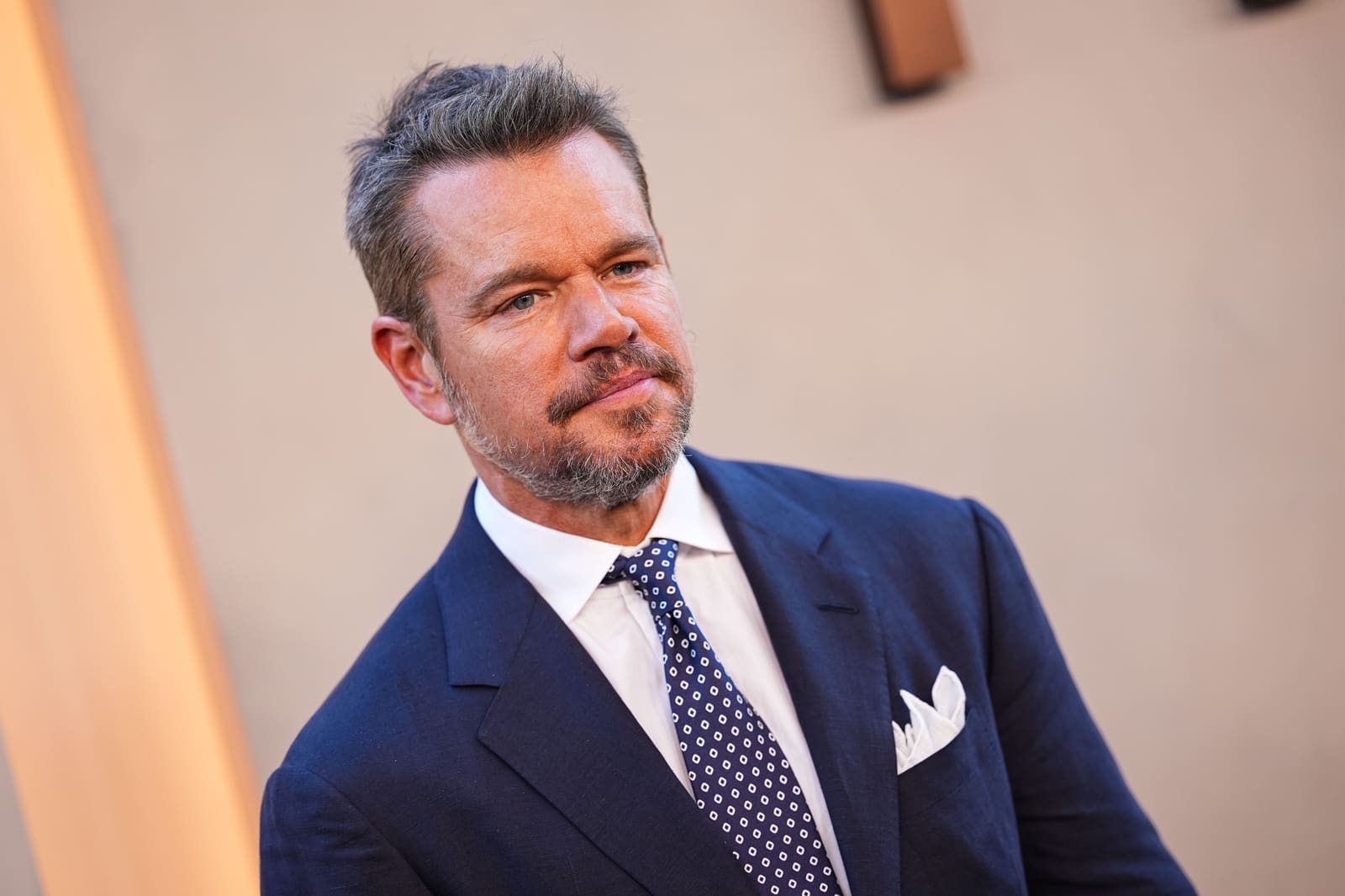
The Geography of Stardom
There is something quietly instructive about the way certain actors arrange their lives across real estate. While many Hollywood figures chase trophy addresses or sprawling compounds that double as social theater, Matt Damon has spent two decades assembling a portfolio that reads less like a vanity project and more like the architectural footprint of someone trying to solve a problem: how to maintain a grounded family existence while working in an industry that demands bicoastal flexibility.
The actor, currently starring as Odysseus in Christopher Nolan's The Odyssey, has become famous for playing characters desperate to return home. In his actual life, Damon has constructed not one home but several, each serving a distinct function in the carefully calibrated ecosystem of a career that spans blockbusters, independent films, and the relentless production schedules that accompany both.
The Miami Beginning
Damon's first significant property acquisition came in 2005, the year he married Luciana Barroso in the city where they met. He assembled a one-acre Miami Beach compound by purchasing two adjacent parcels for $14.5 million, creating an estate with 170 feet of Biscayne Bay frontage. The property comprised a two-story Mediterranean-style main residence and a separate guesthouse, together spanning more than 12,000 square feet with seven bedrooms and nine-and-a-half bathrooms.
The amenities catalog reads like a standard-issue celebrity checklist: pool with integrated spa, cabana with summer kitchen, rooftop terrace, screening room, wine cellar, private office. What matters more than the inventory is the timeline. Damon held the property for nearly a decade before selling it in 2014 for $15.4 million, a modest appreciation that suggests the home served its purpose as a family base during his daughters' early years rather than as a speculative investment.
Pacific Palisades and the Zen Aesthetic
The actor's next West Coast anchor was a Pacific Palisades mansion acquired in 2012 for $15 million. Spanning 13,500 square feet with seven bedrooms and ten bathrooms, the residence was notable for its extensive use of rich mahogany across floors and ceilings, an attempt at spatial continuity that unified what could otherwise feel like a sprawling collection of rooms.
The architectural centerpiece was a 35-foot-tall atrium hosting a central sitting area, flanked by a dining space and billiards lounge. Floor-to-ceiling glass doors opened the interior to a 0.68-acre site that included a pool, a Hawaiian-inspired lanai, and a koi pond. The design language leaned toward a West Coast interpretation of Zen minimalism, the kind of aspirational serenity that requires significant staff to maintain.
Damon listed the property in January 2021 for $21 million, a figure that reflected both the Los Angeles luxury market's trajectory and his stated intention to make New York his primary residence. The home eventually sold that November for $18 million, a reduction that underscores the gap between asking ambition and market reality, even for high-end properties.
Brooklyn Heights and the Record
The centerpiece of Damon's current residential strategy is a penthouse triplex in The Standish, a converted Beaux-Arts building in Brooklyn Heights. He paid $16.745 million for the unit in late 2018, setting a record at the time for the most expensive residential sale in Brooklyn (a record since surpassed by a Gravesend mansion that traded for $32 million in November 2025).
The Standish, originally erected as the Standish Arms Hotel in 1903 by Frank S. Lowe, carries the kind of architectural pedigree that appeals to actors seeking cultural legitimacy alongside luxury. The building has appeared in Death of a Salesman and served as Clark Kent's residence in Superman. Emily Blunt and John Krasinski own a unit; Adam Driver recently sold his.
Damon made local headlines in 2020 when he closed an entire block to accommodate a crane stretching over 14 stories, depositing furniture and mature trees onto his sprawling terrace. The 6,200-square-foot, six-bedroom triplex represents a commitment to New York living that goes beyond the usual celebrity gesture. He still owns the property.
The Westchester Retreat
In the summer of 2022, Damon added a Bedford estate in Westchester County for $8.5 million, a stone-and-clapboard Colonial built in 2004 with four bedrooms and five-and-a-half bathrooms across roughly 7,200 square feet. The primary suite includes a gym, coffee bar, luxurious bathroom, and private porch. Common areas feature two fireplaces, a study with wet bar, an eat-in kitchen with a substantial stone island, and a formal dining room with built-in cabinetry.
The 13.5-acre property offers a 45-foot saltwater pool, covered stone terraces, a stream, a pond, woodland trails, rope bridges, a treehouse, a greenhouse, a barn, a basketball hoop, and a tennis court. This is architecture as infrastructure for family life, a landscape designed for children to occupy during the years before they leave.
Damon has spoken about the importance of nightly family dinners, a ritual that takes on added weight when two of his four daughters (ranging from 15 to 27 years old) have already moved out. The Bedford property functions as a buffer zone between the intensity of Brooklyn and the demands of production schedules, a place where the actor can perform the ordinary rituals of parenthood without the compression of urban density.
The West Hollywood Solution
Despite his New York focus, Damon maintains a pragmatic foothold in Los Angeles. In 2024, he purchased an $8.6 million condominium in a West Hollywood building originally designed by Richard Dorman in 1964 as the Los Angeles International Design Center. The nine-story midcentury-modern structure was converted into residential use by Olson Kundig, a firm known for its rigorous approach to adaptive reuse.
The two-bedroom, two-bathroom unit spans 2,600 square feet and includes a 1,600-square-foot terrace with views of the Hollywood Hills. Details include handcrafted brass-and-leather door hardware, high-end appliances, white oak floors, wood ceilings, and travertine walls. Building amenities feature a 2,300-square-foot fitness and yoga facility, a resort-style pool with adjacent fireplace and alfresco dining area, plus 24-hour concierge and valet services.
This is the pied-à-terre as professional tool: compact, well-appointed, strategically located, requiring minimal maintenance. It is the architectural equivalent of keeping a good suit in the closet for occasions that demand it.
Precedent and Pattern
Damon's residential choices invite comparison with other actors who have attempted to maintain family stability while navigating Hollywood's geographic demands. Tom Hanks and Rita Wilson have long maintained a primary residence in the Pacific Palisades while keeping a New York presence. George Clooney famously decamped to Italy, treating Los Angeles as the place he visits rather than lives.
What distinguishes Damon's approach is its evident pragmatism. He has not chased architectural spectacle or remote compounds that require helicopters. His properties are substantial but not ostentatious, located in established neighborhoods with good schools and proximity to airports. The pattern suggests someone who views real estate as a logistical solution rather than a statement of identity.
The Bicoastal Calculus
At World Archi Design, we have been tracking the residential patterns of creative professionals whose work demands geographic flexibility, and Damon's portfolio offers a case study in how high-net-worth individuals navigate the tension between rootedness and mobility. The actor maintains three properties: the Brooklyn penthouse as primary residence, the Westchester estate as family sanctuary, and the West Hollywood condo as professional outpost.
This tripartite structure reflects a broader shift among actors, directors, and producers who have children and want to anchor them in a specific community while maintaining access to production centers. The pandemic accelerated this trend, demonstrating that physical presence in Los Angeles is often necessary only during active production. The rest of the time, life can happen elsewhere.
Damon's real estate decisions over the past two decades chart a movement from Miami (the honeymoon phase) through Pacific Palisades (the Los Angeles years) to Brooklyn and Westchester (the New York commitment), with a compact Los Angeles unit retained for practical reasons. It is a portfolio that prioritizes function over flash, family rhythms over social positioning, and the long view over short-term market opportunism.
What the Homes Reveal
Architecture, when examined through the lens of individual choice rather than theoretical discourse, reveals priorities. Damon's homes collectively suggest an actor attempting to construct normalcy within an industry structured around disruption. The Brooklyn penthouse offers urban cultural access and a neighborhood with other families. The Westchester estate provides space, privacy, and the kind of outdoor amenities that give teenagers reasons to stay home. The West Hollywood condo solves the problem of where to sleep between meetings and shoots without the overhead of maintaining a full house.
None of these properties push architectural boundaries or experiment with radical form. They are, in that sense, conservative choices. But there is a kind of discipline in that conservatism, a recognition that for someone whose professional life involves embodying other people in constructed realities, home should perhaps be the place where construction gives way to something more stable.
The actor who keeps playing characters trying to get home has, in his actual life, built several versions of home, each calibrated to a different set of needs. It is a practical solution to an essentially unsolvable problem: how to be simultaneously present in multiple places, how to maintain continuity in a profession built on discontinuity, how to raise children in a stable environment while working in an industry that treats geography as infinitely flexible.
In the end, Damon's real estate portfolio is less about the individual properties than about the system they comprise. Together, they form the infrastructure of a carefully managed life, the architectural scaffolding that allows a Hollywood career to coexist with the ordinary demands of family, routine, and place. That he has managed this without architectural spectacle or tabloid drama is perhaps the most telling detail of all.
Credit: John Nacion / Getty Images
Save this story. A free account keeps your reading list and the 07:00 email in one place.
CREATE FREE ACCOUNT →SIGN IN