Amidst the rapidly changing streets of Bac Giang (Viet Nam), a recently completed villa by LandDecor proposes a quieter counterpoint. Rather than adopting the vocabulary of new-build suburban houses, the project revisits Indochine architectural language - not as pastiche, but as a framework for exploring proportion, materiality, and climatic response in a contemporary Vietnamese home.
Reframing Indochine Aesthetics through Contemporary Composition
From the exterior, the house immediately establishes its reference points. The yellow plastered façade and tiled roof allude to French-colonial domestic structures, while the black-stained wooden railings and curved details recall familiar motifs of early 20th-century urban Vietnam. Yet these elements are not reproduced wholesale; they are abstracted and reorganized.
The massing is more deliberate than nostalgic - volumes are composed with clarity, daylight is prioritized, and the façade reads less as retro styling and more as a study in texture and rhythm. The house acknowledges the lineage of Indochine architecture but does not depend on literal replication. It operates instead through reinterpretation.
A contemporary reinterpretation of the Indochine façade, balancing French-colonial geometry with regional material cues
Interior Spaces: Material Restraint and Functional Discipline
Inside, the project continues this negotiation between regional memory and contemporary life. LandDecor’s approach is notably restrained: rooms are defined by measured proportions, filtered light, and a palette that prioritizes natural materials over decorative flourish. Rather than layering motifs, the interior strategy relies on hierarchy - identifying which surfaces carry visual weight and which remain neutral.
Furniture placement and muted palettes foreground comfort while maintaining a contemporary interpretation of regional style
The interplay between light and dark wood tones introduces a measured contrast across the living areas
The Design Process as a Tool for Calibration
One of the project’s more compelling aspects lies in its method rather than its imagery. The design was shaped through ongoing calibration between homeowner and architect - a process of adjusting light levels, refining junctions, comparing material samples, and reconsidering even minor details. This iterative approach suggests that the project’s success stems less from stylistic decisions and more from an evolving understanding of how the occupants intend to inhabit the space.
The villa demonstrates that Indochine design, often simplified into a set of predictable gestures, can instead be treated as a lens through which to question comfort, thresholds, and the emotional qualities of domestic architecture.
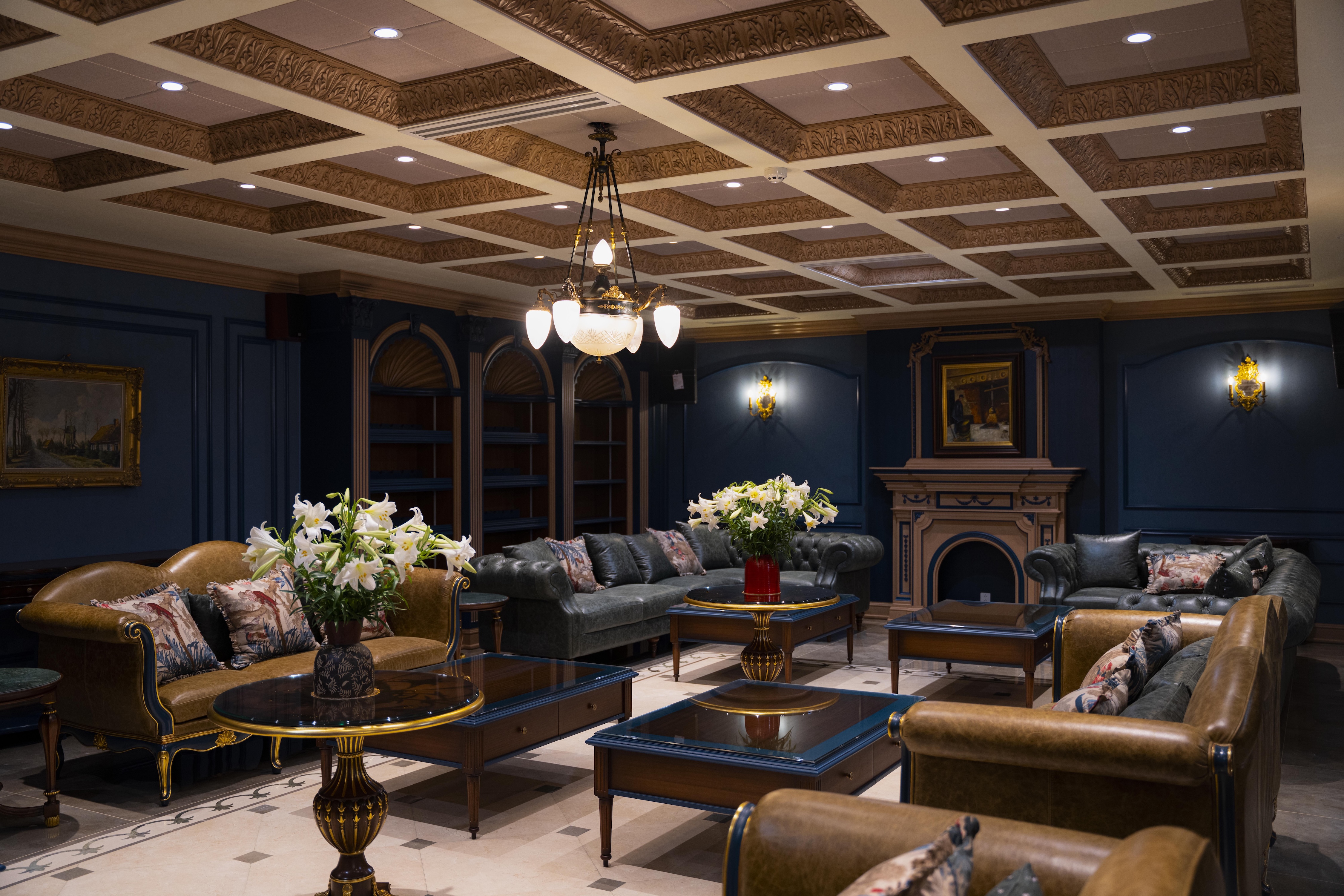
The villa’s foyer balances ornate craftsmanship with measured composition, revealing LandDecor’s pursuit of spatial harmony and cultural resonance
Toward a Sustainable Vernacular
Although the project does not present itself as overtly “green,” its architectural strategies reflect a sensitivity to climate and longevity. Ventilation paths, daylighting, and the use of natural materials suited to northern Vietnam’s weather point to a careful consideration of long-term habitability. In this sense, the house aligns with a more grounded form of sustainability - one embedded in material logic and environmental fit rather than technological add-ons.
A Modest Argument for Regional Continuity
The villa ultimately offers a modest but clear argument: regional architectural identity can be advanced not by imitation but by reinterpretation. LandDecor’s project does not attempt to recreate the Indochine villa; instead, it interrogates the qualities that made the typology meaningful - proportion, climate responsiveness, tactile materials - and applies them to contemporary domestic life.
In an environment where rapid development often leads to stylistic fragmentation, the project stands as a reminder that architectural continuity is possible when designers treat tradition not as a template, but as a set of principles open to negotiation.
Photo Credit: LandDecor
Save this story. A free account keeps your reading list and the 07:00 email in one place.
CREATE FREE ACCOUNT →SIGN IN