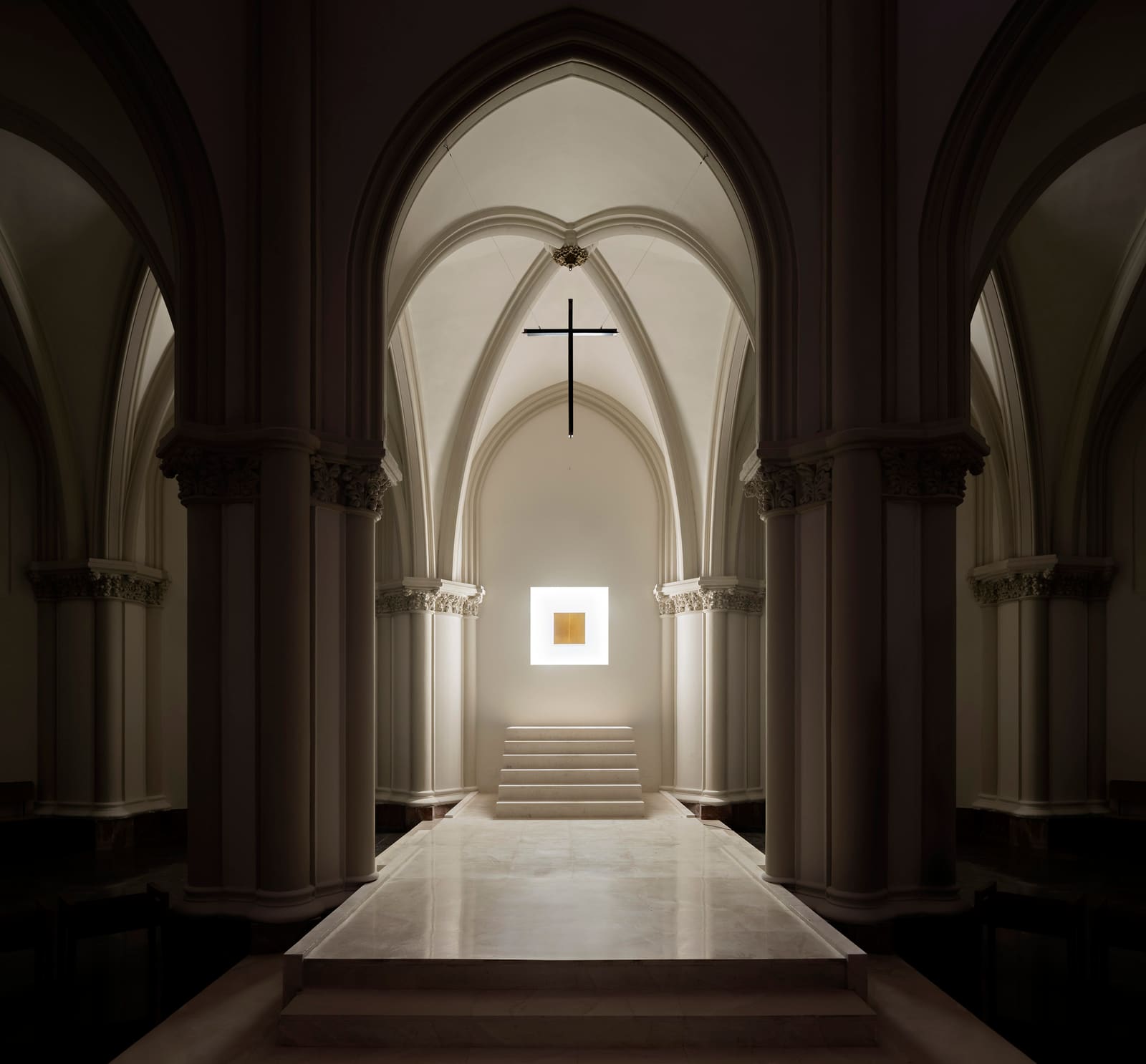
The Problem of the Contemporary Altarpiece
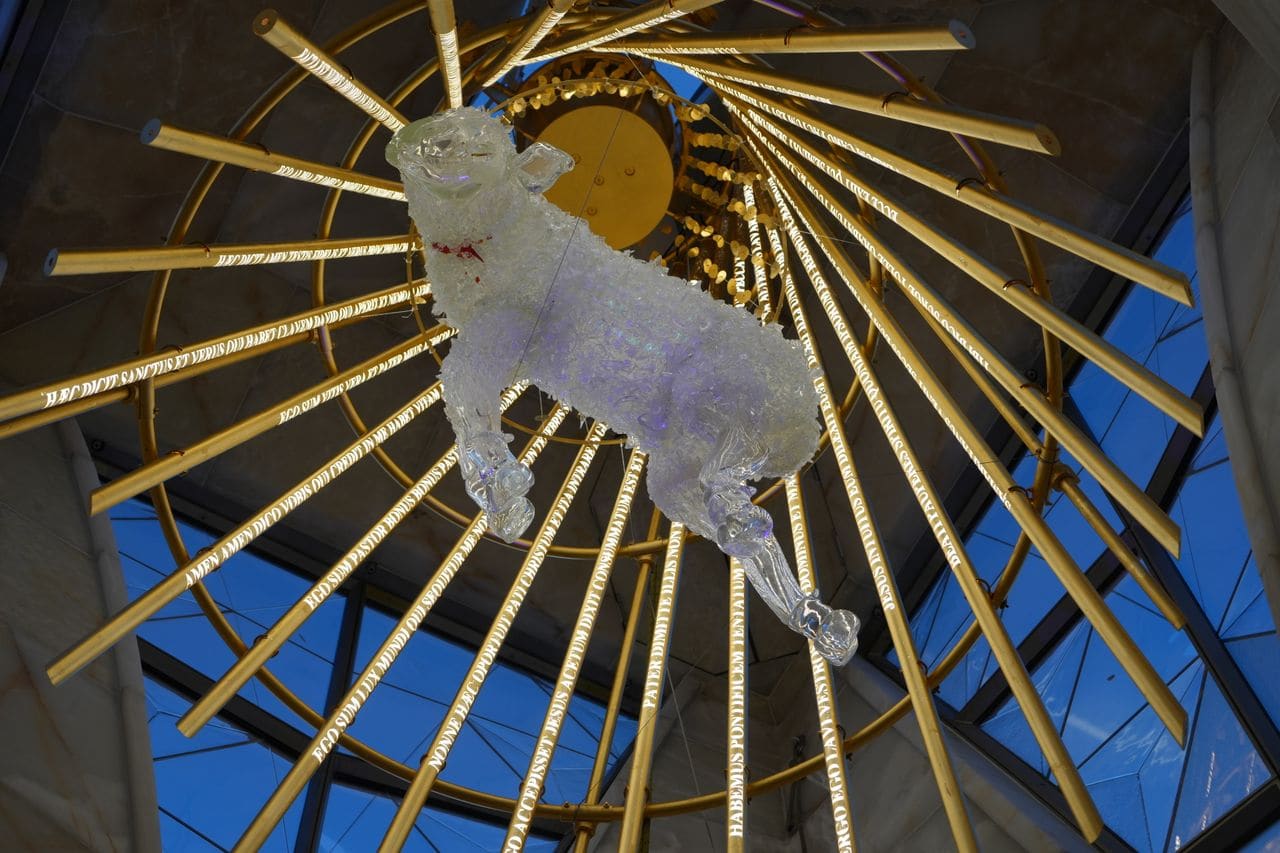
When sacred architecture confronts modernity, the results often split between nostalgic pastiche and awkward minimalism. The altarpiece, historically a vehicle for narrative opulence, presents a particular challenge: how does one honor liturgical function while speaking in the vocabulary of contemporary spatial practice? Alberto Campo Baeza's recently completed intervention at Madrid's Basílica La Milagrosa suggests an answer rooted not in compromise but in reduction. Titled "Lumen de Lumine," the project recasts the altarpiece as a study in how light can become both subject and structure.
Campo Baeza has spent decades refining an architectural language predicated on what he calls "the idea of light." From his 2001 Caja Granada Savings Bank to the more recent Offices for Junta Castilla y León, his work consistently privileges luminous clarity over formal complexity. At La Milagrosa, completed in 2024, that sensibility meets the constraints of adaptive intervention within an existing ecclesiastical volume. The result is a piece that reads less as insertion and more as revelation of the spatial logic already latent in the basilica's nave.
A Tectonic Reading of Illumination
The design strips away conventional altarpiece rhetoric. There are no gilded frames, no sculptural figures, no narrative reliefs. Instead, Campo Baeza and his collaborators, including Juanjo Sánchez Rivas, Alejandro Cervilla García, and Ignacio Aguirre López, construct a monolithic plane that functions simultaneously as backdrop, light source, and spatial terminus. The surface, rendered in a material that appears to absorb and emit light in equal measure, establishes a vertical datum against which the basilica's existing architecture is measured.
Lighting consultant Óscar del Río worked with Margarita Remacha and Marcos López to choreograph how natural and artificial illumination interact across the installation's surface. The effect is not theatrical; there are no dramatic spotlights or colored washes. Rather, the altarpiece becomes a luminous field, its intensity modulating with the time of day and liturgical calendar. This approach recalls James Turrell's Skyspace series, where light is treated as a perceptible substance rather than a tool for revealing other objects. But where Turrell isolates light within purpose-built chambers, Campo Baeza embeds it within a working place of worship, negotiating between contemplative experience and institutional function.
Structural engineer Andrés Rubio Morán developed a system that conceals all mechanical and electrical infrastructure within the altarpiece's depth. The construction, executed by Serviteco Obras under the direction of Alejandro Ruiz, Jose Manuel Rodriguez, and Fernando Sánchez, involved precise calibration of material thickness to achieve the desired luminous quality without exposing the technical apparatus. This is architecture as sleight of hand, where apparent simplicity masks considerable logistical complexity.
Precedent and Divergence
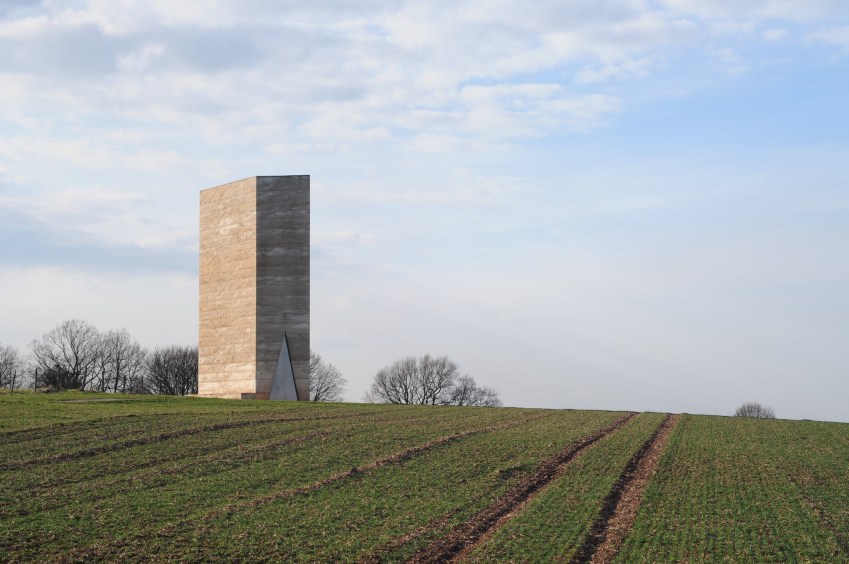
Campo Baeza's approach invites comparison with other architects who have grappled with sacred space through abstraction. Peter Zumthor's Bruder Klaus Field Chapel, completed in 2007, similarly employs reduction and material honesty to evoke the numinous. Both projects rely on a single, powerful gesture rather than accumulation of elements. Yet where Zumthor's chapel is a hermetic object, built from the ground up in a rural landscape, Campo Baeza's altarpiece must negotiate the ornate language of an existing basilica. The intervention succeeds precisely because it does not attempt to erase that context but rather establishes a dialogue through contrast.
The project also resonates with the spatial experiments of Luis Barragán, whose Chapel of the Capuchinas Sacramentarias in Mexico City uses a golden box of light as the focal point of worship. Barragán's chapel, completed in 1960, demonstrated that modern architecture could engage religious experience without recourse to historical iconography. Campo Baeza extends that lineage, pushing further toward dematerialization. Where Barragán's light box retains sculptural presence, the La Milagrosa altarpiece approaches the condition of atmosphere.
Materiality and the Question of Presence
One of the more intriguing aspects of the project is how it handles the question of materiality. In traditional altarpieces, material richness, marble, gold leaf, precious stone, signals the sacred through literal value. Campo Baeza inverts this logic. The altarpiece's surface appears almost immaterial, its exact composition subordinated to its luminous effect. This strategy aligns with a broader trajectory in contemporary architecture toward dematerialization, seen in projects ranging from SANAA's glass pavilions to Herzog & de Meuron's experiments with translucent facades.
But dematerialization in a liturgical context carries different stakes. The altarpiece must still function as a focal point for collective attention, a spatial anchor for ritual. Campo Baeza resolves this by making light itself the material presence. The installation does not disappear; rather, it occupies space through radiance. Worshippers direct their gaze not at an object but toward a field of illumination that, paradoxically, gains presence through its refusal of solid form.
This tactic also addresses a perennial challenge in adaptive work within heritage structures: how to mark contemporary intervention without overwhelming the host building. By working primarily with light, Campo Baeza's design maintains a low physical profile while achieving high visual impact. The altarpiece can be read as deferential to the basilica's existing fabric, yet it fundamentally reorients the spatial experience of the nave.
Implications for Sacred Space
At World Archi Design, we've been tracking a shift in how architects approach religious commissions. The last two decades have seen a move away from either literal historicism or aggressive modernism toward strategies that foreground experience over iconography. Projects like John Pawson's renovation of the Church of St. Moritz in Augsburg or Álvaro Siza's Church of Saint-Jacques de la Lande demonstrate that contemporary interventions can honor liturgical tradition while expanding its spatial language.
Campo Baeza's La Milagrosa altarpiece contributes to this discourse by proposing that the sacred can be articulated through architectural fundamentals: light, proportion, material, and the orchestration of perception. The project does not proselytize; it offers a space calibrated for contemplation, equally legible to believers and those who enter the basilica as visitors rather than congregants.
There is also a broader lesson here about the potential of constraint. Working within an existing structure, with a client bound by liturgical requirements and a site embedded in urban fabric, Campo Baeza could not pursue the tabula rasa approach often associated with signature architecture. Instead, the project demonstrates how limitations can generate clarity. The altarpiece's power derives not from formal invention but from disciplined reduction, from the architect's willingness to let light perform the work that, in other hands, might have been delegated to form.
A Quiet Radicalism
In an era when architectural discourse often privileges spectacle, Campo Baeza's intervention at La Milagrosa practices a quiet radicalism. It proposes that the most profound spatial experiences may arise not from novelty but from the careful intensification of elemental conditions. The altarpiece does not announce itself as innovation; it reads, at first glance, as almost inevitable, as if the basilica had always been oriented toward this luminous plane.
That sense of inevitability is, of course, the product of meticulous design. The collaboration between architect, lighting consultants, structural engineer, and construction team yielded a work that conceals its complexity beneath an appearance of simplicity. This is architecture that rewards sustained attention, revealing its sophistication not through formal pyrotechnics but through the subtlety of its effects.
The project also raises questions about the future of sacred architecture in secular societies. As religious practice becomes less central to public life in many Western contexts, churches and basilicas increasingly function as cultural rather than exclusively liturgical spaces. Campo Baeza's design accommodates that shift, creating an environment that supports worship while remaining accessible to those who seek aesthetic or contemplative experience outside religious frameworks. The altarpiece becomes a hinge between the sacred and the secular, a spatial device that operates across both registers.
Whether this approach can be replicated in other contexts remains an open question. Campo Baeza's design is site-specific, calibrated to the particular conditions of La Milagrosa. The danger, as with any successful project, is that it will spawn imitators who adopt the formal language without understanding the underlying logic. Light-filled altarpieces could become as formulaic as any other architectural trope. But at its best, the La Milagrosa intervention offers a model for how contemporary architecture can engage historical contexts: not through mimicry or contrast, but through a careful rereading of spatial fundamentals.
Photo: Javier Callejas Sevilla
Save this story. A free account keeps your reading list and the 07:00 email in one place.
CREATE FREE ACCOUNT →SIGN IN