When Architecture Confronts Loss
There is a particular weight that settles over a place after disaster, a silence that hovers between what was and what might be. In Córrego do Feijão, a community in southeastern Brazil, that weight arrived with violent suddenness in January 2019, when a tailings dam collapsed and swept away homes, lives, and the very ground on which memory stood. The question that followed was not simply how to rebuild, but whether a community severed from its landscape could ever reconnect to it.
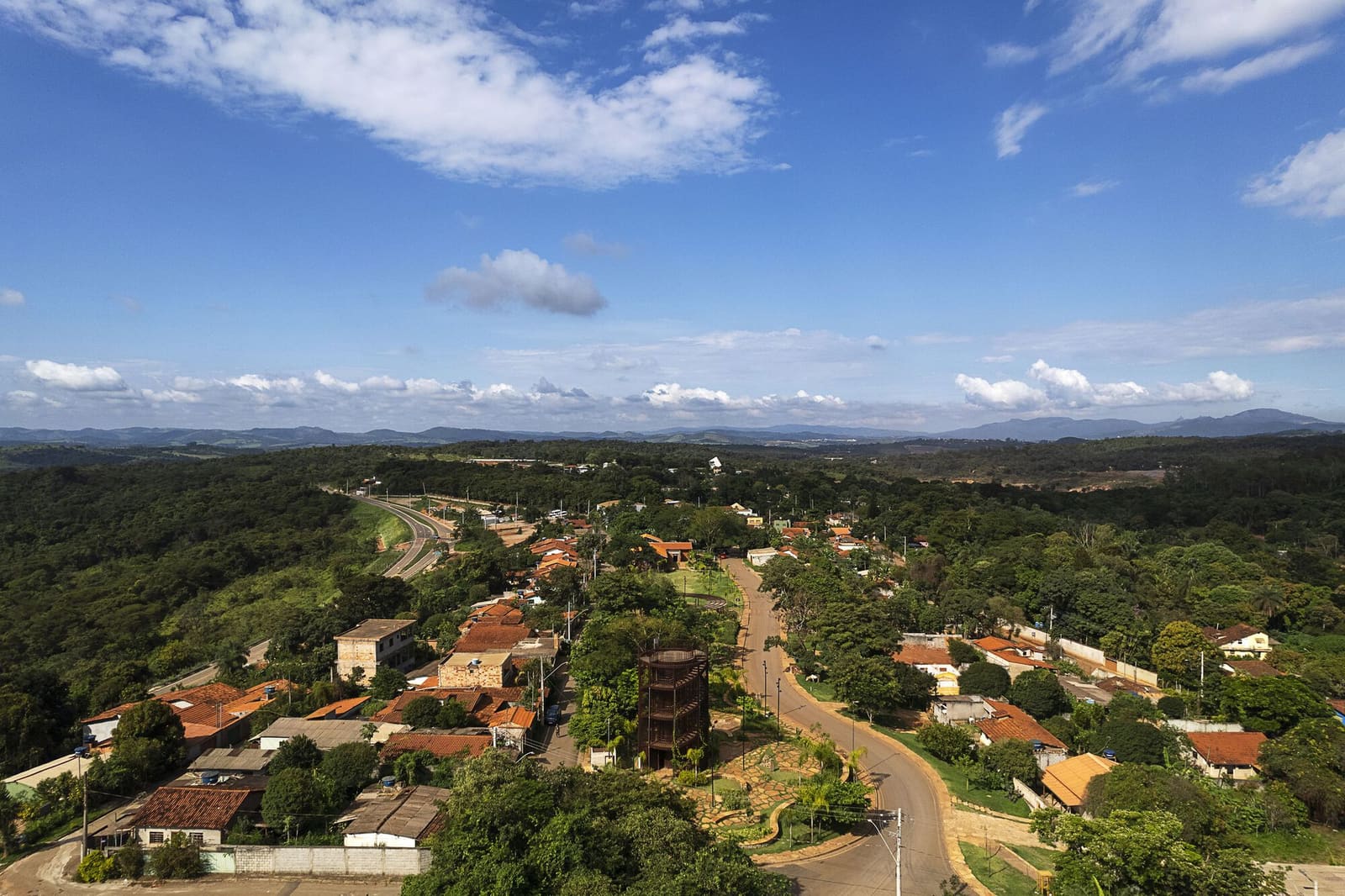
The Território-Parque project, completed by MACh Architects in collaboration with Connatural, attempts an answer. Designed for the displaced residents of Córrego do Feijão, the intervention is less a conventional park and more an act of spatial reconciliation. The design team, led by Fernando Maculan and Mariza Machado Coelho of MACh alongside Edgar Mazo and Sebastian Mejía of Connatural, approached the site with an understanding that architecture here could not be neutral. It had to absorb grief, acknowledge rupture, and still offer a framework for return.
At World Archi Design, we've been tracking projects that operate at the intersection of landscape recovery and social infrastructure, and this work stands apart for refusing to erase what happened. Rather than imposing a pristine vision over scarred ground, the design incorporates the remnants of the community's former life into its spatial logic.
A Landscape Rewired by Trauma
The site itself is a palimpsest. Where residential streets once ran, the earth now bears the marks of violent displacement. The project does not attempt to restore the terrain to its pre-disaster state, a gesture that would feel both technically impossible and emotionally dishonest. Instead, the architects worked with what remained, a strategy that recalls the adaptive reuse ethos more commonly applied to buildings than entire territories.
The landscape architecture, developed with FLP Paisagismo, organizes the site into zones that balance commemoration with utility. Pathways trace the former routes of the community, creating a pedestrian network that doubles as a mnemonic device. Walking these routes becomes an act of remembering, a way to inhabit the ghost of the old settlement without pretending it still exists. The materiality underscores this: permeable surfaces replace asphalt, native vegetation reclaims areas once dominated by built form, and water management systems, designed by Inovativo Soluções Sustentáveis, are made visible rather than buried.
This transparency in infrastructure is deliberate. After a dam failure caused by invisible systemic neglect, making water flow legible becomes a form of accountability. Drainage channels are articulated as landscape features, their geometries echoing the region's natural watercourses. The sanitation strategy integrates bioswales and retention basins that filter runoff while serving as gathering spaces during dry periods.
Spatial Memory and the Architecture of Presence
One of the more compelling moves is the preservation and adaptive reuse of structures that survived the collapse. A handful of buildings, some partially damaged, were stabilized by Lire Arquitetura e Restauração and incorporated into the park's program. These fragments serve as both literal anchors and symbolic ones, grounding the new landscape in physical continuity with the past.
The largest of these structures now functions as a community center, its renovated interior housing meeting spaces, a library, and a small exhibition area documenting the history of Córrego do Feijão. The building's facade retains visible scars from the disaster, a choice that may unsettle those accustomed to restoration that erases damage. But here, the imperfection is the point. The cracks and repairs become part of the narrative, a tectonic record of resilience.
Lighting design by Atiaîa ensures the park remains active after dark, with low-intensity fixtures that follow the pathways and highlight key gathering nodes. The illumination strategy avoids monumentalizing the space, instead treating light as a tool for safety and orientation. Graphic design by Hardy Design provides wayfinding that integrates historical photographs and oral histories collected from residents, turning signage into a distributed archive.
Public Space as Social Contract
Mixed-use programming extends the park's function beyond passive recreation. Small-scale commercial pavilions, designed with local vendors in mind, occupy strategic points along the main circulation routes. These structures, modest in scale and material, provide economic footholds for residents rebuilding livelihoods. The architectural language is deliberately understated: timber frames, corrugated metal roofing, and open facades that blur the line between interior and exterior.
This approach aligns with what we might call vernacular modernism, a design sensibility that respects regional building traditions while employing contemporary construction techniques. The pavilions reference the informal commercial structures common in rural Brazilian communities, but their detailing, proportions, and material junctions reveal a more refined hand. It is architecture that knows when to step back.
Sustainability measures are woven throughout. Photovoltaic arrays on pavilion roofs generate power for lighting and irrigation systems. Rainwater harvesting supplements the park's water needs, reducing reliance on external infrastructure that failed so catastrophically before. These systems are not hidden or aestheticized into abstraction; they are presented as working components of the landscape, a pedagogical gesture that makes environmental stewardship visible and comprehensible.
Precedents and Departures
The project invites comparison to other post-disaster interventions, particularly Alejandro Aravena's incremental housing work in Chile following the 2010 earthquake, where architecture acknowledged limited resources and empowered residents to complete their own spaces over time. Território-Parque shares that ethos of humility and participation, though it operates at the scale of public infrastructure rather than private dwelling.
There are also echoes of landscape urbanism's emphasis on ecological process over fixed form, seen in projects like James Corner's Fresh Kills Park in New York, where a former landfill is gradually transformed through phased planting and adaptive programming. Both projects understand landscape as temporal, unfolding over years rather than completed at ribbon-cutting.
Yet Território-Parque diverges in its explicit engagement with trauma. Where many post-disaster projects prioritize forward momentum and optimism, this one holds space for mourning. The design does not rush toward healing; it acknowledges that healing is slow, uneven, and may never be complete. That emotional honesty is rare in public works, which tend to favor rhetoric of renewal over the messier realities of loss.
Conclusion: Architecture After Certainty
What MACh Architects and Connatural have produced in Córrego do Feijão is not a solution, and the design does not pretend to be one. It is, instead, a framework within which a fractured community might begin to reassemble itself. The park does not replace what was lost, because replacement is impossible. It offers something else: a place to gather, to remember, to start again.
This kind of work demands a different metric for success than typical public space projects. User counts and program density matter less than whether residents feel the site is theirs, whether it holds their history without suffocating under the weight of it. Early indications, drawn from community engagement documentation coordinated by Luciana Czechmeister and Instituto Kairós, suggest that the park is being used, inhabited, and gradually claimed.
In an era when climate disaster and infrastructural failure are becoming routine, projects like Território-Parque offer a template, not for avoidance or erasure, but for confrontation and care. They show that architecture, when practiced with empathy and rigor, can help communities endure the unendurable and still imagine a future worth building.
Credit: Leonardo Finotti
Save this story. A free account keeps your reading list and the 07:00 email in one place.
CREATE FREE ACCOUNT →SIGN IN