Minimalism has entered a new phase of global relevance. No longer a niche aesthetic, it has become a shared design language that crosses cultures, climates, and building traditions. Its appeal lies in the clarity it offers - spatial efficiency, material honesty, and a lifestyle shaped by intention rather than accumulation. As designers, we see this shift not as a fleeting trend but as a recalibration of how people want to live and inhabit space.
Spatial Efficiency: Doing More with Less
Maximizing functionality without sacrificing quality of life is central to minimalist design. Thoughtful layouts, multipurpose spaces, and visual openness are all hallmarks of this approach.
Hiaven House (Cotswolds, UK)
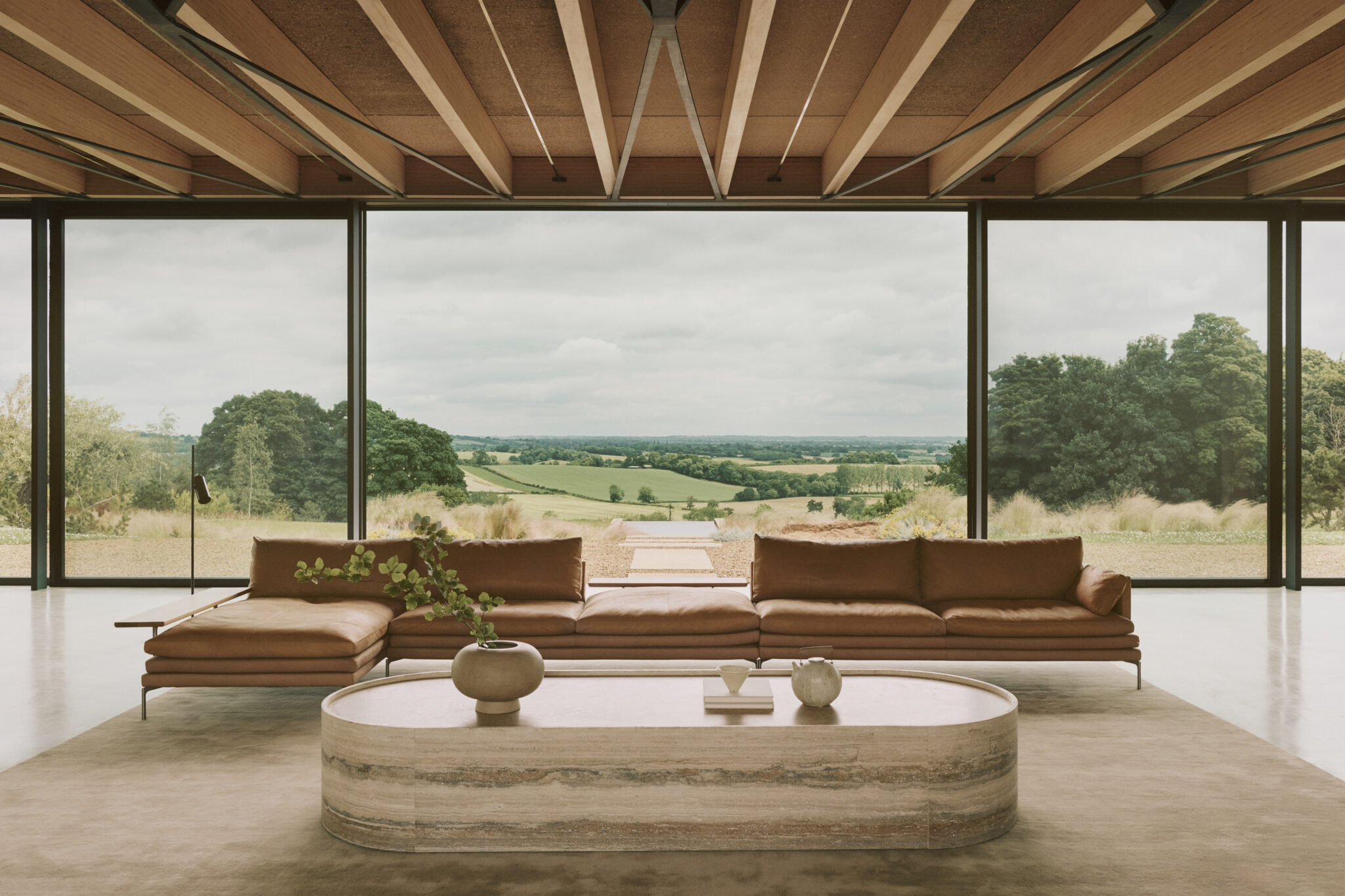
Designed by McLaren Excell in collaboration with BPN Architects, this single-story concrete farmhouse uses a horseshoe layout around a central courtyard. Large glazed walls allow natural light to fill the interior, while sightlines create a sense of openness without expanding the building footprint unnecessarily. Every space feels purposeful and connected to the landscape.


Soft daylight, tactile finishes, and grounded proportions give Hiaven House its serene, contemporary rural identity
Photo Credit: McLaren Excell
Little House (Tokyo, Japan)
In one of Tokyo’s densest districts, Little House demonstrates how minimalism unlocks surprising spaciousness on a tiny 25 m² footprint. Unemori Architects uses stacked volumes, double-height spaces, and carefully placed openings to create fluid circulation and abundant daylight. Every surface works hard - stairs double as storage, walls conceal utilities, and compact rooms expand visually through strategic glazing - showing how minimalist thinking transforms extreme urban constraints into livable, uplifting space.


A 25 m² micro-home in Tokyo using stacked volumes and double-height space to achieve remarkable openness within dense urban limits
Photo Credit: Kai Nakamura
Both projects demonstrate that minimalism is not about reducing size arbitrarily, it’s about enhancing usability, circulation, and comfort while maintaining simplicity.
Material Restraint: Honesty, Texture, and Sustainability
Minimalism thrives on material restraint: using a limited palette, celebrating natural textures, and emphasizing craftsmanship over decoration.
Casa M (Alvor, Algarve, Portugal)
Created by A‑Lab Architecture, this house uses a simple cement-block exterior and sculptural volumes cut into the hillside. It leverages thoughtful orientation and passive-cooling design to suit the Mediterranean climate. Inside and out, Casa M emphasizes spatial simplicity: clean geometries, use of raw materials, and clever use of “cobogós” (hollow brick screens) to allow airflow while shading interiors - proving that minimalism can be climate-sensitive and context-aware.


Minimal volumes and porous brick screens give Casa M its calm, climate-attuned presence
Photo Credit: Alexander Bogorodskiy
The Arbor House (UK)
The Arbor House, built by Brown & Brown Architects, reuses stone from a previous building on the site, combining it with new larch wood cladding and large glazing surfaces. Through reuse and careful material selection, the house reduces waste and resource consumption while providing a contemporary, yet grounded, minimalist dwelling. Its design embraces site context: the sloped terrain, views, and natural light become part of the living experience - reinforcing minimalism’s potential for harmony with nature and sustainability.


The Arbor House frames daily life through timber, light, and landscape, revealing beauty in the simplest structural rhythms
Photo Credit: Jim Stephenson
These examples show how minimalism isn’t a restriction but a deliberate, considered design choice. The use of natural materials and subtle textures promotes sustainability, reduces waste, and enhances sensory experience.
Cultural Adoption: Minimalism Across Contexts
Minimalism has evolved into a global language of design, adapted to local climates, materials, and traditions.
DDAR Villa (Essaouira, Morocco)
Designed by Othmane Bengebara, the villa integrates solar energy, natural ventilation, and water-conservation strategies while blending minimalist geometry with Moroccan craftsmanship. Minimalism here is contextual, respectful of both culture and environment.


Moroccan minimalism integrates climate-responsive strategies with local craftsmanship
Photo Credit: Iman Zaoin
Bunkie on the Hill (Muskoka, Canada)
Designed by Dubbeldam Architecture + Design, this compact timber cabin blends A-frame tradition with contemporary efficiency, framing forest and lake views, using natural materials, and integrating passive design strategies - showing minimalism’s flexibility across contexts while respecting landscape and heritage.


A compact timber cabin with split‑roof geometry that frames forest and lake views, maximizes light and space, and embodies minimalist interior
Photo Credit: Riley Snelling
These projects illustrate that minimalism transcends geography: it adapts to the environment, engages local traditions, and accommodates modern lifestyles worldwide.
Why the Surge - and What It Means for Design’s Future
Minimalism is booming now for several intertwined reasons:
Practical constraints: With urbanization and rising property costs worldwide, architects and homeowners seek to optimize space rather than expand endlessly. Projects like Hiaven and Huis Zuidkamp show how minimalism can offer generous, flexible living without waste.
Sustainability & material mindfulness: As environmental concerns intensify, minimalism’s lean use of materials, its respect for context, and its embrace of natural finishes and passive design make it a smart, responsible choice.
Cross-cultural adaptability: Minimalism is no longer a “Western export”, it’s being reinterpreted globally, blending with vernacular techniques, climates, and materials (as with the DDAR villa in Morocco). That adaptability makes it a powerful, universal language of design.
Psychological and lifestyle appeal: Minimalist spaces tend to feel calm, orderly, and contemplative, offering respite in a fast, crowded world. For many, “less” provides mental clarity as much as physical clarity.
Conclusion
The minimalist boom reflects more than a design trend, it reflects changing priorities. In a world wrestling with space constraints, environmental challenges, and cultural complexity, the ethos of “less is more” resonates deeply. Through exemplary projects, we see how minimalism today is about efficiency and humanity: honest materials, thoughtful layouts, respect for context, and a quieter, more intentional way of living.
As designers and inhabitants grow more conscious of our impact on environment, resources, and well-being, minimalism is likely to remain not just relevant, but essential.
Save this story. A free account keeps your reading list and the 07:00 email in one place.
CREATE FREE ACCOUNT →SIGN IN