In contemporary architecture, tinted light and colored glass have evolved far beyond mere functional glazing. These materials have become expressive design elements that shape the aesthetic identity of buildings, influence interior atmospheres, and modulate the quality of natural light. Modern architects harness colored and tinted glass not only for visual impact but also for performance, from solar control to creating dynamic lighting effects that shift throughout the day.
The Role of Tinted and Colored Glass in Architecture
At its core, tinted and colored glass serves two intertwined purposes in modern buildings:
Environmental Performance
Tinted glass can reduce glare and solar heat gain, improving interior comfort and energy efficiency while still admitting daylight. Modern coatings and interlayers allow precise control over hue and transmissivity, enabling architects to balance brightness with performance.
Aesthetic and Experiential Impact
Colored glass transforms ordinary light into chromatic illumination that animates spaces - inside and out. Designers often use it to establish a building’s identity, convey cultural narratives, or evoke emotional responses through light.
Together, these aspects make tinted and colored glass a distinctive medium in the design vocabulary of contemporary architecture.
Case Studies in Design
1. Vertical Rainbow Office Building - Tokyo, Japan
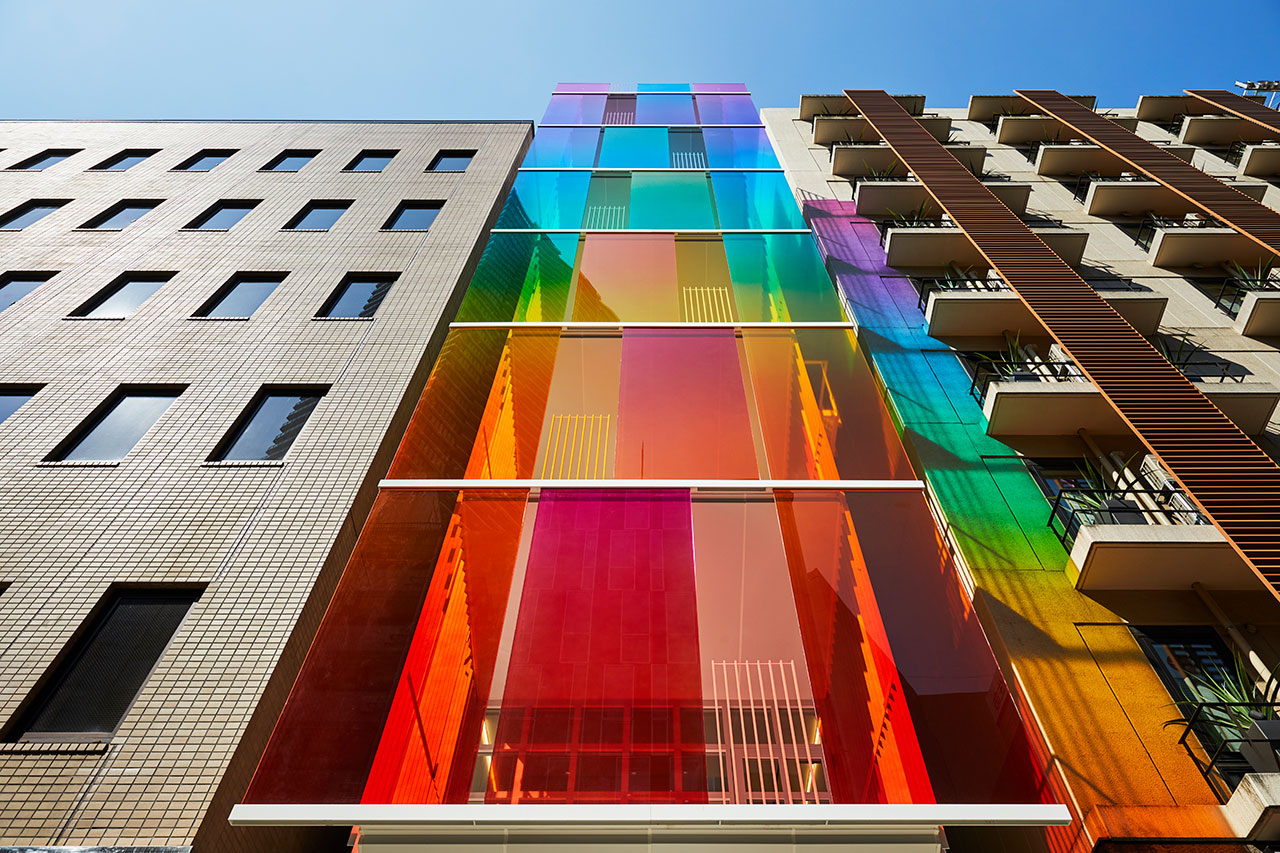
One of the most striking contemporary examples of colored glass architecture is the Vertical Rainbow Office Building by SAKO Architects in Tokyo. The building’s facade features a gradient of multi-colored glazed panels, essentially a vertical spectrum of hues, that transforms sunlight into vibrant bands of colored light throughout the day. This creates dynamic interior illumination and a distinct visual identity in the urban streetscape.


A chromatic gradient climbs the façade, turning the office tower into a shifting spectrum as daylight changes
Photo Credit: Koji Fujii
2. Kaleidoscope Kindergarten - Tianshui, China
This contemporary educational building features dozens of colored glass panels distributed across its façades and balustrades. As sunlight passes through these elements, the interior spaces are periodically bathed in shifting hues, creating a playful, kaleidoscopic effect that engages children and visitors alike.


Fragments of colored glass scatter sunlight across learning spaces, creating an ever-changing, playful interior atmosphere
Photo Credit: CreatAR Images
3. ONS İNCEK Residential/Commercial Building - Ankara, Turkey
This mixed-use building features angled colored glass panels in shades of orange, green, and blue that envelope the facade. These tinted panels create shifting hues with changing sunlight, generating a lively visual effect while addressing solar control and privacy.


Angled glazing captures and reflects sunlight, casting subtle color shifts across the building’s mixed-use surfaces
Photo Credit: Yazgan Design Architecture
4. Arc en Ciel - Bordeaux, France
As a mixed residential and office development, Arc en Ciel by Bernard Bühler Architects is distinguished by vertical bands of colored glass wrapping its upper façades. The alternating hues act as light filters, subtly transforming daylight as it enters interior spaces while giving the building a vivid, rhythmic presence within Bordeaux’s urban fabric. As sunlight shifts throughout the day, the façade animates with changing chromatic depth, reinforcing the project’s name and identity.


Vertical glass accents introduce rhythm and color, enlivening the façade with light-driven variation
Photo Credit: Bernard Bühler Architects
5. IMI International Management Institute - Kolkata, India
This educational facility uses a curved façade composed of multicolored glass panels, inspired by the shifting colors of the sky. Designed by Abin Design Studio, the colored laminated glass creates a non-repetitive pattern that animates the exterior and symbolizes youthful energy and innovation, giving the institute a vibrant visual presence in its urban context.


A curved envelope of tinted glass echoes the sky’s changing hues, giving the campus a vibrant, contemporary identity
Photo Credit: Pradip Sen
How Colored Glass Shapes Light and Space
Chromatic Modulation of Light
Colored glass filters natural light, imbuing interior spaces with hues that vary with time and weather. This enhances spatial character without artificial lighting and often establishes emotional or symbolic qualities appropriate to a building’s function, for instance, contemplative warmth in a chapel or vibrant energy in a public building.
Visual Identity and Urban Impact
Buildings like the Arc en Ciel demonstrate that colored glass can be central to a structure’s identity. In urban environments, façades with tinted or colored glass stand out against neutral backdrops and contribute to a city’s visual dialogue through changing light and color dynamics.
Contextual and Cultural Expression
Beyond aesthetics, colored glass can reference cultural context, natural phenomena, or social narratives. Whether evoking the hues of local landscapes or expressing a civic spirit through chromatic exuberance, this material becomes a tool for architectural storytelling.
The use of tinted light and colored glass in modern architecture reveals a deep integration between material innovation and design expression. From performance-driven facades that control light and energy to expressive installations that celebrate color and atmosphere, glass continues to redefine how buildings interact with light and the people who inhabit them. Through thoughtful design and technical precision, colored glass enriches both the physical and experiential realms of contemporary architecture.
Save this story. A free account keeps your reading list and the 07:00 email in one place.
CREATE FREE ACCOUNT →SIGN IN